Hotel Towel Sourcing Quality Control Inspection for Europe
By Vincent Xi, Editorial Author
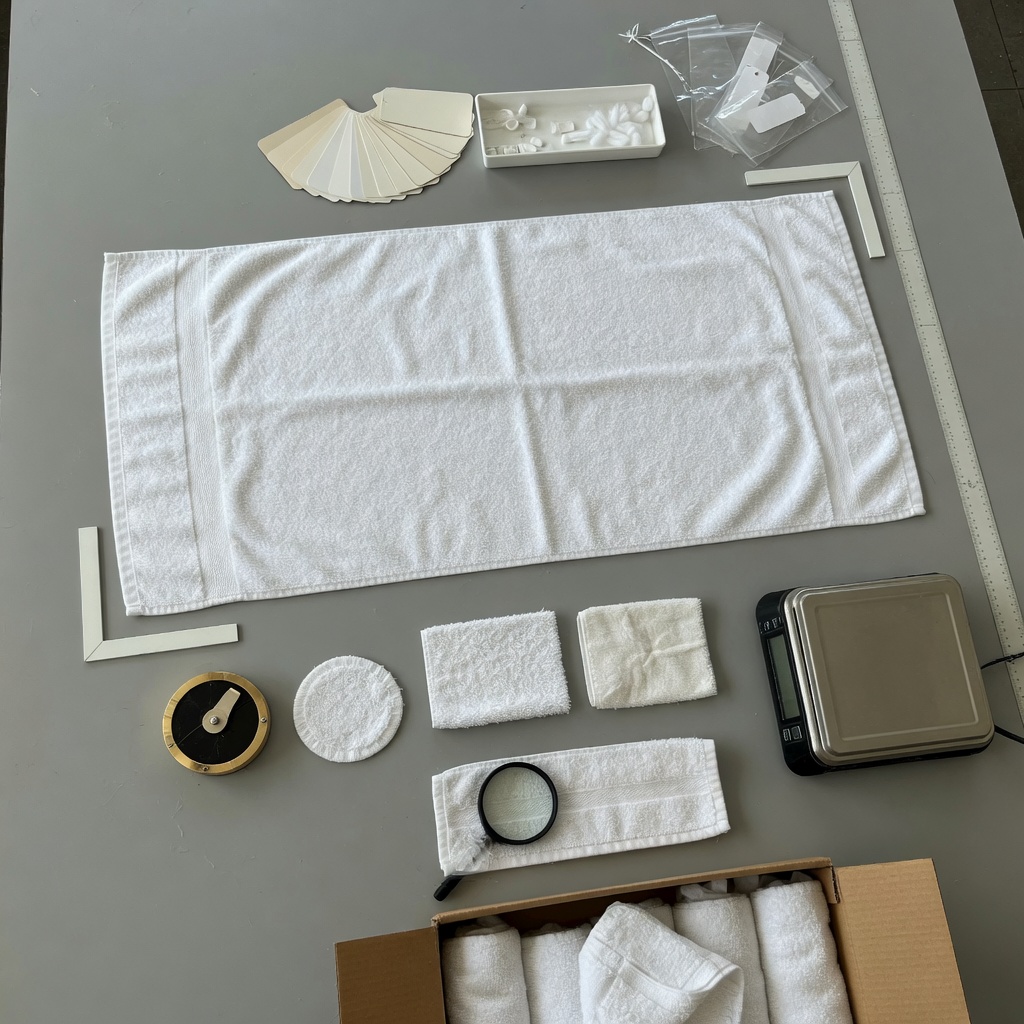
Hotel towel sourcing quality control inspection for Europe should be specified before suppliers quote, not improvised when production is ready to ship. For each order, the RFQ should identify the hotel towel SKU, production lot, inspection methods, acceptance rules, packaging configuration, and named European destination.
The release decision should answer a narrow procurement question: does the offered lot match the purchase order and its controlled files? A supplier statement that production has passed is not enough. The buyer's approver should receive lot-linked measurements, test results, sampling records, defect counts, packaging checks, and destination evidence before authorizing shipment.
The controls below are proposed buyer requirements. The cited sources support relevant inspection categories and sampling topics, but they do not establish the capability, conformity, certification, or inspection practice of any supplier, manufacturer, inspection company, or Plait & Mill.
Europe hotel towel quality control inspection release gates
Build each gate into the RFQ and purchase order, including the evidence needed to pass and the condition that places the lot on hold.
| Release gate | RFQ or PO requirement | Release evidence | Hold condition |
|---|---|---|---|
| Lot identity and readiness | Define the SKU, color, size, batch boundaries, offered quantity, completion state, and required packing state. | PO reference, lot identifier, offered quantity, packing status, and sample-selection record. | The lot is incomplete, mixed, inaccessible, or not traceable to the order. |
| Physical specification | State material, construction, finished dimensions, GSM, piece-weight use, appearance, workmanship, and tolerances. | Identified specimen measurements, raw readings, calculations, and comparison with the controlled specification. | A result is outside a limit, a substitution is unapproved, or required evidence is absent. |
| Performance | Name each test method or attach the complete buyer protocol, conditions, threshold, and failure rule. | Lot-linked report showing the method, conditions, specimen identity, raw result, and conclusion. | The method differs from the contract, a threshold fails, or the specimen cannot be linked to the offered lot. |
| Sampling and defects | Incorporate the complete sampling plan and an order-specific defect catalogue. | Lot-size input, sample derivation, random-selection record, defect counts by class, and acceptance calculation. | Selection is not demonstrably random, the plan is incomplete, or a rejection condition is met. |
| Destination and packaging | Name the European destination country and attach the approved destination, artwork, packaging, and traceability files. | Controlled-file references, comparison photographs, pack counts, carton checks, and scans where contracted. | The destination is unclear, a file is uncontrolled, or the inspected configuration differs from the approved version. |
| Final disposition | Name the buyer representative authorized to release a lot or waive a deviation. | Signed report, corrective-action evidence, deviation record, and written disposition. | Mandatory evidence remains open or a deviation lacks authorized written approval. |
Use disposition terms only as defined in the contract. Approval should mean that every mandatory gate passed. Conditional approval should identify the deviation, affected quantity, corrective action, deadline, and approver. A hold should prevent shipment authorization until the missing or corrective evidence is accepted. Rejection should invoke only the remedies agreed in the executed contract.
Put measurable hotel towel requirements in the RFQ
The Circe towel checklist identifies GSM, post-wash size, absorbency, colorfastness, lint shedding, stitching, and packaging as inspection checkpoints. The Lumaco bath towel guide discusses piece weight, commercial-wash shrinkage, pile recovery, hem durability, and testing aligned with expected laundering. These sources identify useful categories; they do not supply universal limits for a hotel towel order.
The following figures are editorial example assumptions, not source findings, market norms, supplier specifications, or test results. Each applies only to an illustrative white cotton-terry bath-towel SKU and becomes effective only if confirmed or replaced in the supplier quotation and purchase order as of their respective issue dates. No actual quotation or issue date was supplied.
| Procurement data point | Editorial example assumption to verify in the supplier quote | Measurement control to contract |
|---|---|---|
| Finished dimensions | 70 cm x 140 cm after 3 buyer-defined wash-and-dry cycles, for the illustrative SKU only and subject to confirmation in the dated quotation and PO. | Define measuring points, conditioning, laundering equipment, load, detergent, water conditions, drying method, rest period, and directional tolerances. |
| Conditioned areal mass | 500 g/m2 with an illustrative buyer tolerance of +/-5.0%, producing an illustrative range of 475-525 g/m2, for the same SKU only and subject to confirmation in the dated quotation and PO. | Define specimen location, test method, instrument resolution, conditioning, and whether the limits apply to each result, the sample average, or both. |
| Directional dimensional change | A maximum of 5.0% in length and 5.0% in width after 3 buyer-defined wash-and-dry cycles, for the same SKU only and subject to confirmation in the dated quotation and PO. | Define the original measurement state, calculation, laundering program, drying method, and separate limits for skew, border distortion, or shape retention where required. |
A controlled reference sample can support comparisons of pile appearance, border execution, shade, hand feel, and workmanship. The PO should identify how the sample is approved, dated, sealed, stored, and ranked against the written specification. It should not replace written tolerances, test methods, destination files, or acceptance rules.
Convert checkpoints into lot-linked inspection evidence
| Inspection subject | Source context | RFQ and PO fields | Evidence required for release |
|---|---|---|---|
| GSM, piece weight, and dimensions | GSM and post-wash size appear in the Circe checklist; piece weight and shrinkage appear in the Lumaco guide. | Measurement state, specimen location, method, instrument requirements, nominal value, tolerance, and unit-versus-average rule. | Raw specimen results, calculations, before-and-after measurements where applicable, and lot linkage. |
| Absorbency and colorfastness | Both are identified as checkpoints by the Circe checklist. | Named method or complete buyer protocol, preconditioning, water or laundering conditions, timing, calculation, approved reference, and threshold. | Specimen-level observations or readings under the contracted conditions. An informal demonstration should not replace the specified method. |
| Lint, pile, hems, and workmanship | Circe identifies lint shedding and stitching; Lumaco discusses pile recovery and hem durability. | Laundering and drying conditions, lint collection or grading method, pile criteria, seam and hem criteria, and an illustrated defect catalogue. | Raw lint results or grades plus records of pulled loops, pile loss, seam openings, puckering, stains, holes, and edge damage covered by the specification. |
| Packaging and traceability | Packaging is identified as a checkpoint by Circe. | Fold, inner quantity, protective material, carton configuration, SKU marks, barcode data, and lot traceability. | Inner-pack and carton counts, condition photographs, contracted scans, and records connecting the packed goods to the inspected lot. |
The buyer must select the methods, limits, reporting rules, and remedies. A category mentioned by a source is not an acceptance threshold and does not show that a supplier has tested the offered lot.
Specify sampling and defect decisions in the PO
The Anabyn hotel-linen sampling explainer discusses lot sampling, reports, photographs, and failed-lot remedies. It also associates its sampling discussion with ISO 2859-1. ISO 2859-1 is a standard identifier, not a measured product value. The source does not provide a complete contractual plan in this article package, and its publication or revision date was not supplied.
If a buyer selects that standard for an order, the applicable edition as of the PO issue date and every required plan input should be verified against the primary standard or with a qualified inspection professional. Referencing the standard does not certify a hotel towel, supplier, buyer, or inspector.
An executable sampling clause should state:
- The production-lot boundaries and treatment of different SKUs, colors, sizes, and batches.
- The required production-completion and packing state before selection begins.
- The sampling-plan source, applicable edition, inspection level, and switching rules where selected.
- The sample size or every controlled input needed to derive it.
- Random-selection instructions across relevant carton, pallet, and lot positions.
- Order-specific definitions for each defect class.
- Acceptance and rejection values for each applicable class.
- The rule for multiple defects found on the same towel.
- Whether measurement or performance failures override the visual-defect decision.
- The response to an incomplete, inaccessible, substituted, or incorrectly booked lot.
- Sorting, correction, retesting, reinspection, waiver, and final-disposition rules.
An AQL label alone is not a complete sampling instruction. The report must show how the sample and decision values were derived for the actual offered lot.
Separate quality control inspection files across Europe
No primary EU, non-EU EEA, UK, or country-specific legal source was supplied with this package. Substantive legal requirements are therefore outside this article's evidence base. The RFQ should instead identify the exact destination and reference a controlled destination file approved through the buyer's current legal, customer, and operational review.
| European destination scope | Buyer-controlled RFQ input | Inspection boundary |
|---|---|---|
| Named EU destination country | Attach the approved file for the named country and any national or hotel-program overlay identified by the buyer's review. Record its title, version, effective date, and approver. | Compare the product, labelling, packaging, and documents only with the controlled requirements supplied for that order. |
| Named non-EU EEA destination country | Maintain a separate destination row and approved file. Do not assume that an EU order file transfers unchanged. | Record the exact file inspected and escalate conflicts or omissions to the buyer. |
| UK destination | Maintain a distinct UK order file where required by the buyer's current review. | Do not substitute stock configured for another destination without written buyer approval for the UK order. |
| Country-specific or hotel-program overlay | Define the approved language, artwork, laundry, barcode, traceability, packaging, and customer requirements applicable to the named order. | Compare each listed attribute with the controlled version and report conflicts separately. |
Inspection records a comparison with approved order requirements. It is not legal advice and does not establish conformity with every rule effective in a destination. Avoid an unqualified conclusion such as Europe compliant. State the destination, document set, inspection scope, evidence, and approving authority instead.
Contract report content and failed-lot remedies
The final report should identify the PO, SKU, destination, production lot, offered quantity, inspected quantity, sampling basis, selected cartons, raw measurements, reviewed test reports, defects by class, packaging findings, deviations, corrective actions, and recommended disposition. Photographs should show sample identity and defect location, but they should not replace measurements, selection records, or test data.
The Anabyn source recommends obtaining reports and photographs before specified payment or shipping-document decisions and defining remedies for failed lots. Treat that as a negotiable procurement control, not a universal payment, title, or shipping rule. The executed contract should state whether payment, document release, or shipment authorization depends on inspection approval and who may approve, conditionally approve, hold, reject, or waive a deviation.
Agree the available remedies before production: segregation, sorting, rework, replacement, retesting, reinspection, price treatment, delay responsibility, or rejection. Define deadlines, cost allocation, sample ownership, evidence required to lift a hold, and whether corrected goods retain the original lot identity or receive a new controlled identity.
A test report or standard reference is not evidence of certification. When a supplier presents laboratory accreditation, product certification, or conformity documentation, require the current document and verify its issuer, scope, covered product, covered method, issue and expiry information, destination relevance, and any stated limitation. Do not infer certification from a logo, standard reference, or inspection result.
Hotel towel procurement RFQ handoff checklist
- [ ] Identify the hotel towel SKU, intended hotel use, production-lot basis, and named European destination country.
- [ ] Classify the destination file as EU, non-EU EEA, UK, or a country-specific overlay approved for the order.
- [ ] Record the title, version, effective date, and approver for each controlled specification and destination file.
- [ ] State document precedence among the RFQ, quotation, PO, product specification, controlled sample, test plan, artwork, and packaging instruction.
- [ ] Specify material, construction, dimensions, GSM, tolerances, laundering conditions, and prohibited substitutions.
- [ ] Name each performance method or attach the complete buyer protocol, threshold, and failure disposition.
- [ ] Define lot readiness, random access, sampling-plan inputs, defect classifications, and acceptance and rejection rules.
- [ ] Identify destructive-test specimens, sample ownership, test timing, test location, and lot linkage.
- [ ] Define packaging, carton counts, marks, barcode data, and traceability evidence.
- [ ] Name the inspection stages, booking responsibility, reporting deadline, and buyer approver.
- [ ] Require raw measurement sheets, selection evidence, reports, photographs, deviations, corrective actions, and signed disposition.
- [ ] Contract the remedies, cost allocation, deadlines, reinspection process, and waiver authority before production starts.
Evidence method, author basis, and limitations
The evidence method mapped the checkpoint categories in the Circe checklist, the sampling and remedy topics in the Anabyn explainer, and the performance categories in the Lumaco guide to buyer-authored RFQ fields, report evidence, release gates, and failed-lot clauses. The measurable baseline uses only clearly labelled editorial assumptions; none of its figures was derived from supplier, market, laboratory, or keyword-demand data.
The cited towel pages are secondary commercial or editorial source contexts. Their publication or revision dates were not supplied in this package. They do not replace primary standards, current destination-specific legal review, current certification documents, lot-linked laboratory reports, an actual supplier quotation, or the executed purchase contract.
The approved Vincent Xi author profile identifies Vincent Xi as Editorial Author. It does not substantiate factory visits, physical towel testing, supplier audits, certifications, customer outcomes, or other first-person experience, so none is claimed here.
Before issuing the order, verify the requirements effective for the named destination and shipment date, applicable standard editions, test methods, laboratory scope, supplier capability, product tolerances, laundering conditions, lot definition, sampling calculation, defect catalogue, packaging configuration, reporting format, remedies, and approval authority. Confirm or replace every illustrative value in the dated supplier quotation and purchase order.
Discuss Your Requirements
Review our manufacturing capabilities, then share your specifications for a supplier-fit review.