Key Takeaways
- A useful custom canteen brief should lock size, material, lid, logo method, and carton pack before you ask for price.
- For most canteen vendors, MOQ starts at 500 to 1,000 pcs, with 25 to 35 days production after sample approval.
- A 500 ml stainless custom canteen often lands around USD 2.20 to 3.80 FOB China at 1,000 pcs, depending on finish and print.
- For Europe and North America, ask for REACH, food-contact reports, BSCI, ISO 9001, and AQL 2.5 inspection records.
Canteen vendors lose margin for one simple reason: the brief is loose. Ask five canteen suppliers for a quote without locking capacity, lid type, finish, logo area, and packaging, and you will not get five comparable prices. You get five different products. We see it on the line all the time. A buyer sends a PO with “silver lid” and the sample room has to stop and ask whether that means matte or polished, 500 ml or 750 ml, single-wall or insulated. In Zhejiang, that is how a factory quote gets misread and a launch slips by 12 days.
A clean custom drinkware brief turns a canteen manufacturer into a source you can actually use. It lets you compare a promotional canteen, a retail-ready customized canteen, or a heavier custom growler on the same sheet, with the same MOQ, the same print method, and the same packing spec. The wrong question is “who is cheapest.” The math does not work that way. We have seen buyers chase a low unit price, then get hit by artwork rework, a failed drop test, or a carton spec that does not pass QC. The better setup is predictable quality, LFGB or FDA paperwork where needed, and a lead time the sales team can sell against.
Lock the Brief Before You Quote
If you want usable pricing from a canteen vendor, send a complete brief. A loose request for a custom canteen is not enough. State the capacity, target weight, material, lid style, and decoration area. On the line, a 0.5 mm body and a 0.6 mm body do not quote the same, and the gasket choice changes the cost too.
A practical brief should include the following:
- Capacity: 350 ml, 500 ml, 750 ml, or 1,000 ml
- Material: 304 stainless, 316 stainless, Tritan, or aluminum
- Wall thickness: 0.4 mm, 0.5 mm, or 0.6 mm for stainless bodies
- Lid type: screw lid, flip lid, straw lid, carabiner lid, or wide-mouth cap
- Decoration: one-color screen print, laser engraving, wrap print, or embossed logo
- Pack-out: polybag, kraft box, gift box, or retail-ready inner carton
For distributor canteen programs, the brief should also name the sales channel. An Amazon FBA drinkware order needs a carton spec that survives labeling, palletizing, and warehouse handling, and we have seen a 12 kg drop test knock loose a weak inner tray. A sports chain order may need retail hang tags and a cleaner finish. If you only say custom canteen, the factory will fill in the blanks, and those blanks usually show up as extra cost later.
Rule of thumb: if the brief fits on one page, the factory can quote it faster and with fewer assumptions. That is the right question to ask. When we quote a Zhejiang canteen factory job, the same base cup can turn into six different builds, and a missing lid spec can swing the price by 8% before QC even pulls the sample.
Match Material To Use Case
Material choice is where canteen vendors overbuy or underbuy. The right call is not the thickest body; it is the material that fits the channel and how the buyer will use it. We ran a 500-piece sample last month, and the 0.5 mm Tritan bottle passed drop checks for cold retail. For premium outdoor sets or office gifting, stainless steel gives a better base. For a custom growler or a distributor growler program, double-wall 304 stainless stays the default that keeps the math clean.
Use 304 stainless when you need cost control, corrosion resistance, and broad food-contact acceptance. Move to 316 only when the buyer wants stronger salt resistance or a clearer premium pitch. We had a coastal buyer flag tea staining after a 48-hour salt-spray test, and 316 solved it. For a canteen customized for coastal markets, 316 can make sense, but the extra USD 0.20 to 0.60 per piece has to be earned in the quote.
Where thickness matters
Wall thickness changes the feel more than first-time buyers expect. A 0.4 mm shell can work for a promotional canteen, but a 0.5 mm or 0.6 mm shell feels steadier in hand and dents less in carton transit. We saw 12 dented units in a 1,000-piece shipment when the carton drop test ran with 0.4 mm walls. If you sell to distributors who watch shelf appeal, that tactile difference matters. It also changes forming yield and scrap at the line.
Do not pay for metal you do not need. Pay for the wall gauge, finish, and lid system that fit the channel.
For a customizable canteen or customized growler, ask the supplier to confirm whether the inner liner is electropolished, passivated, or left with standard finishing. We had one PO with a typo on the finish spec, and QC pulled the sample before it reached AQL 2.5. That detail changes taste retention, stain risk, and how your quality team reads the report.
Choose The Right Decoration Method
Decoration decides whether the canteen looks like a real program or a cheap giveaway. On the line, we see the gap fast: a 1-color logo with silkscreen is usually the cleanest answer for MOQ 1,000, while a wrapped graphic on a 500 ml canteen can push sampling from 5 days to 12. Match the method to the sales price and the art, or the math does not work.
For brand-owner programs, this is the wrong question to ask: which print looks best. The real question is what survives 20 dishwasher cycles, a gym bag toss, and distributor handling. QC pulled the sample after a 50-cycle rub test, and the buyer flagged the worn edge. If the logo is small and technical, laser engraving stays cleaner. If the shelf needs color, screen print usually wins. You can compare methods in more detail with silkscreen vs laser engraving for drinkware and plan the logo setup around your margin.
Keep file control tight. Send vector artwork, Pantone references, and the exact logo size in millimeters, not a screenshot from WeChat. If you need multi-position artwork, confirm each print area separately. A canteen manufacturer will normally quote one position and one color as the base. Add another color or side print and the price often moves by USD 0.05 to 0.30 per unit, plus setup cost.
For larger retail programs, ask whether the factory can print on powder-coated surfaces without chipping. We have seen this go sideways when the coating was approved, then the ink cracked at the bend after AQL 2.5 inspection. That is a common failure point on customized drinkware, and it usually means the coating type was never matched to the print process.
Check Compliance Before Production
Compliance is not paperwork on the side. It is part of the product. A canteen supplier serving Europe and North America should show food-contact documents, REACH test coverage, and basic quality records before mass production starts. On one 2,000-piece PO, a missing test file held the line for 12 days. If the factory cannot show that stack, you are not buying a finished item; you are buying a problem.
For EU-bound orders, ask for REACH declaration coverage and, when relevant, migration testing under LFGB-aligned methods. For the U.S. market, ask for food-contact declarations and any available FDA-related material statements. If the item is for children, tighten the review. We have seen a lid pass on paper and fail a 24-hour leak check at 50°C. A canteen manufacturer should be able to show that inks, coatings, seals, and straws all clear the same spec, not just one loose material sheet.
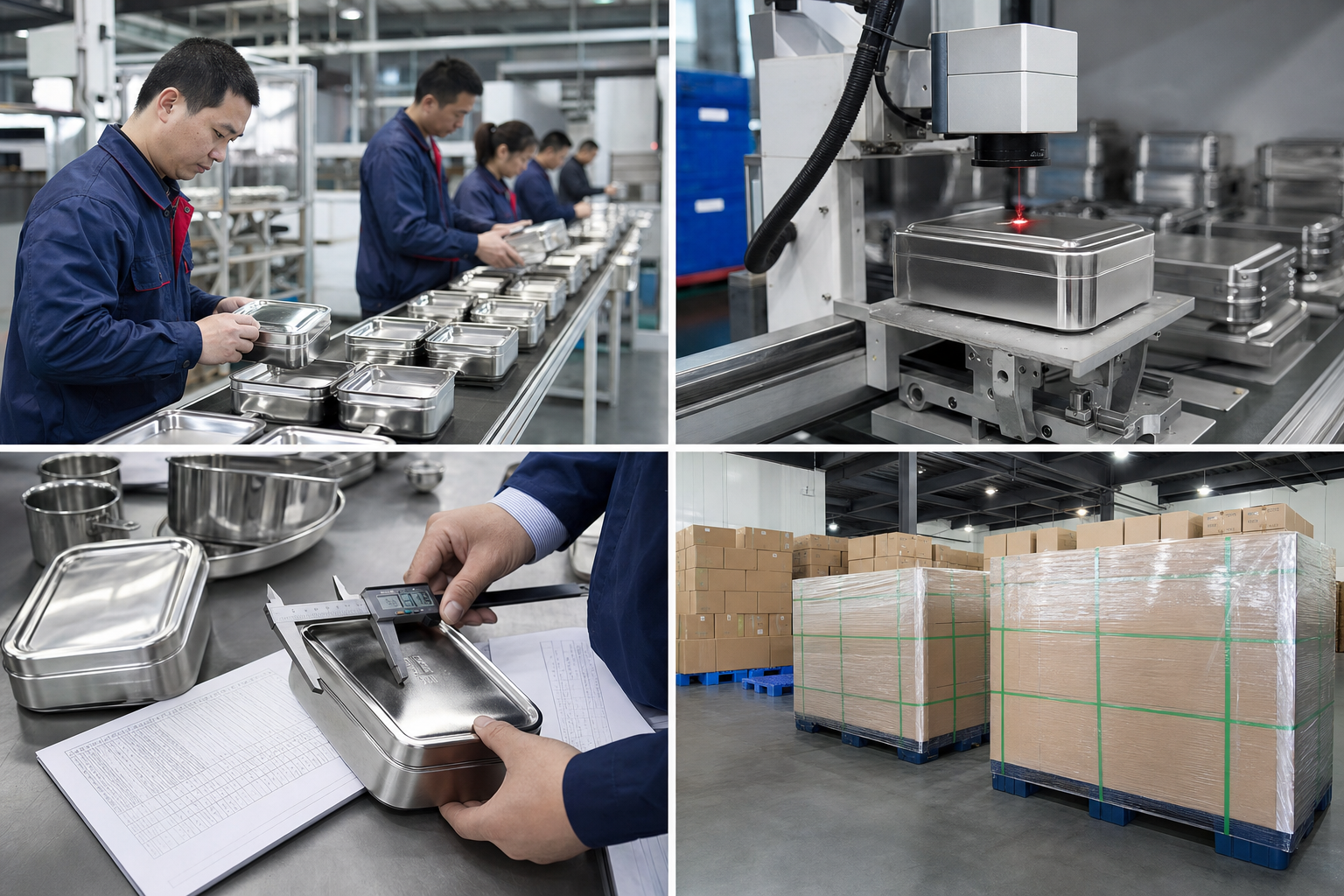
Factory systems matter too. A serious canteen factory in Zhejiang or elsewhere in China should be comfortable with ISO 9001 process control, BSCI social compliance, and lot traceability. Ask how they run inspection: incoming material check, in-process sampling, final inspection, and carton drop test. QC pulled three cartons from lot 2407 and found two dented lids before packing. AQL 2.5 for major defects and 4.0 for minor defects is a common export baseline, but only if the factory writes it down and follows it.
For export shipments, do not forget packaging. A good carton spec protects margin better than a cheaper cup body. If you are shipping a customized canteen to Europe, request barcode placement, carton quantity, and pallet pattern in writing. We once caught a PO typo on the outer carton count, and it would have broken a 48-carton pallet build. If the factory uses the wrong outer carton or misses an FNSKU label for a retail or FBA order, your landed cost goes up fast.
Understand MOQ And Lead Time
MOQ is not one fixed number. It moves with the material, finish, print count, and packing method. For a plain custom canteen, most China factories start at 500 to 1,000 pcs per SKU. Add two colors, embossed tooling, or a custom lid, and the floor starts asking for more units. If a vendor quotes 300 pcs on that kind of build, the math does not work. We have seen the cost turn up later in the unit price or a sample charge the buyer did not expect. QC pulled a sample with a 1.2 mm lid gap last month, and that kind of miss is why cheap quotes should be read twice.
Lead time is just as sensitive. After artwork approval and deposit, a standard order usually needs 25 to 35 days. Tooling changes add 7 to 15 days. Gift boxes or retail cartons add another 5 to 10 days because the print team and carton line become the bottleneck, and that is where schedules slip. A good canteen manufacturer should tell you monthly output by line, not throw out a big factory number. On our Zhejiang export line, 200,000 to 300,000 units per month across mixed drinkware categories is normal, but a canteen buyer should ask for the exact line that will run the order, not a brochure figure.
Price should be checked as FOB China unless you have a clear reason to ask for DDP. For a 500 ml 304 stainless canteen customized with one-color print, a realistic FOB range at 1,000 pcs is often USD 2.20 to 3.80, depending on the lid, coating, and pack-out. Powder coating can add USD 0.25 to 0.60. Laser engraving may use less material but more setup time. A custom mold, special lid, or retail gift box can move the number faster than buyers expect. We had a PO last quarter with a typo on the lid color code, and the rework cost more than the buyer thought the whole upgrade would.
If the quote looks too low, check what is missing. It is usually packaging, testing, or a weaker finish that will show up later. That is the wrong question to ask if you only compare the first-page number. Ask what the carton spec is, what test report is included, and what happens if the buyer changes the print file after approval. We ship enough orders to know this goes sideways fast when those details are left vague.
Qualify The Factory, Not The Sample
Samples can look clean from almost any canteen supplier. That is not the test. The real question is whether the factory can repeat the result at 5,000 units, with the same lid fit, same weld line, and the same coating. Qualify the production system, not just the pre-production sample. Ask how they separate sample development from mass production, who signs off on first article inspection, and what happens when a batch drifts by 0.2 mm.
A practical factory check for canteen distributors should cover response time, tooling control, packing control, and after-sales support. If the sales rep answers in one hour but the technical team cannot explain wall gauge, coating thickness, or seal material, the line is not ready. We ship with current line photos, recent inspection reports, and export carton photos within 24 hours; if they need a week, the buyer should move on. If you are comparing canteen manufacturers in Zhejiang and elsewhere in China, ask each one for the same data. Otherwise the math does not work.
For custom drinkware programs, the fastest screen is simple: ask for monthly capacity, defect handling, and sample turnaround. A serious partner will give you a sample in 5 to 7 days, a written production plan, and one owner for quality issues. QC pulled the sample, checked the laser mark, and found a 1.5 mm lid gap once on a 3,000-piece run; that is the kind of detail that tells you whether the factory is real.
Use this as your final filter: can the factory explain why a customized drinkware order fails, not just how to sell it? The better teams can. That matters when your customer wants a canteen customized for a retail launch and the PO has one typo on the color code. We have seen that go sideways fast.
Send your canteen brief for a real quote
We can review specs, suggest the right build, and quote FOB China with the MOQ, lead time, and compliance file you actually need.
Frequently asked questions
What MOQ should canteen vendors expect for custom drinkware?
For most custom canteen projects, a realistic MOQ is 500 to 1,000 pcs per SKU when you use standard molds and one logo position. If you add a special lid, a new handle, or a fully custom growler shape, MOQ can move to 2,000 pcs or more because the factory has to recover tooling and setup time. If the supplier offers 300 pcs, check whether the unit price includes a hidden surcharge or whether the product is actually a stock item with a logo added. For distributor canteen programs, the better move is to keep one base body and vary only print or packaging.
How do I compare quotes from canteen suppliers correctly?
Compare only like-for-like quotes. Lock the same capacity, steel grade, wall thickness, lid style, logo method, carton spec, and test requirements before you ask for price. A 500 ml 304 stainless canteen with screen print is not comparable to a 500 ml 201 stainless item with laser engraving and a plain box. In China, small changes in coating, seal material, or packaging can shift cost by USD 0.20 to 0.80 per unit. Ask every canteen supplier to quote FOB China, then add freight and duty separately so you can see the real landed cost.
What documents should a canteen manufacturer provide for Europe or the US?
At minimum, ask for material declarations, food-contact statements, REACH coverage for EU shipments, and any applicable migration or coating reports. For North America, ask for food-contact support, packaging details, and a clear bill of materials. If the product is aimed at retail or kids, tighten the file further with colorant and seal documentation. A good canteen manufacturer should also show ISO 9001 or BSCI status, plus final inspection records. If the factory cannot show these documents before deposit, treat that as a warning sign, not a small gap.
What is a reasonable lead time for a customized canteen order?
Once artwork and samples are approved, a standard customized canteen order usually takes 25 to 35 days. Add 7 to 15 days if you need tooling changes, and add another 5 to 10 days for printed retail boxes or special inserts. If your order includes multiple colors or a custom lid, the canteen factory may need extra time for test runs and quality checks. For a distributor drinkware launch, build in a buffer of at least one week so you can handle carton rework, label fixes, or freight delays without missing the ship date.
Can I source both promotional and retail canteens from the same factory?
Yes, but only if the factory can handle both price points without changing the control process. A canteen promotional program may use a lighter body, single-color print, and basic carton, while retail stock needs cleaner coating, tighter appearance standards, and stronger pack-out. Ask the canteen vendor whether they run separate QC standards for promo and retail items. A capable factory in Zhejiang or another export region of China can do both, but the brief, inspection plan, and packaging specs should be different. That is how you protect margin and avoid mixing up channels.