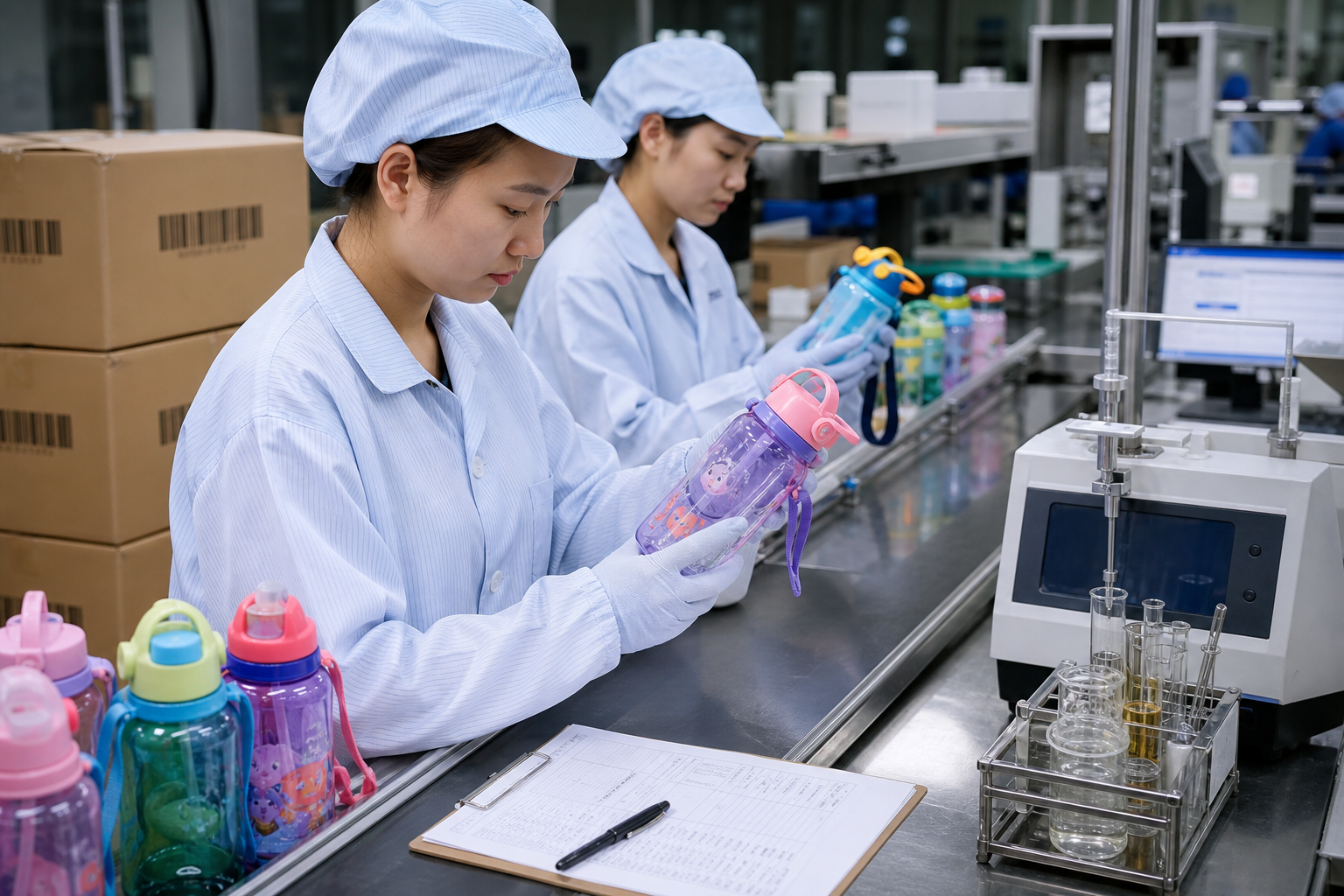
Key Takeaways
- A CPSIA kids water bottle usually needs third-party testing for lead, phthalates, and small parts, with reports tied to the exact SKU and material mix.
- For 2026, many importers are also asked for EN-71 testing, especially when the bottle has toy-like features, detachable charms, or soft accessories.
- A compliant kids bottle program in China should include a Children’s Product Certificate, batch traceability, and factory controls such as AQL 2.5/4.0 inspection.
- Typical pre-shipment compliance testing runs USD 180-450 per model in China, while molded MOQ is often 3,000-5,000 units and lead time 25-35 days.
If you import a CPSIA kids water bottle, the bottle itself is usually not the problem. The trouble shows up in the resin, the print, the cap parts, and the file set that customs, Amazon, or a retailer asks for before they release a carton. In 2026, buyers want children's product safety files tied to the exact SKU, colorway, and age grade, not a loose lab report from a similar sample. We saw one PO with a 24 oz bottle listed as 12 oz, and QC pulled the sample before the line ran any farther.
From our Zhejiang factory, we see the same mistake every week: the buyer approves a cute bottle, then asks about testing after the packaging is already printed. That order of work does not hold up. For kids drinkware, the resin, ink system, and test plan need to be set before mass production starts. The math does not work any other way. If you want fewer delays, fewer re-tests, and less risk on a Prop 65 bottle claim, build compliance into the product spec first. We ship a lot of these, and the shipments that pass cleanly are the ones where the buyer flagged the paperwork early, not after the first carton is packed.
What CPSIA actually covers
CPSIA is not a label you stick on a carton. For a CPSIA kids water bottle, we check lead in the substrate, lead in surface coatings, phthalates in accessible plastic parts, and the paper trail behind the run. If the bottle is sold for children 12 and under in the U.S., third-party testing is the normal path unless the material stack is clearly exempt. We run the check on the bottle body, lid, straw, silicone spout, clips, printed graphics, and any decorative insert.
People like to stare at the shell. Wrong focus. A bottle can pass on 304 stainless or Tritan body material and still fail because of a soft silicone straw tip, a PVC decal, or a painted logo with lead in the ink. On our line in Zhejiang, we build the file from the component level: resin declaration, color masterbatch declaration, ink SDS, and contact-point mapping. QC pulled the sample, then the buyer flagged a 0.3 mm artwork shift; the old report no longer matched the finished article.
For importers, the question is simple: can you prove the exact production run matches the tested sample? Under U.S. enforcement, vague language does not help. Keep the purchase order, approved sample, test report, and photos of the marked SKU. We have seen this go sideways over a PO typo on the lid color code. Ask for English documents before shipment, not after the container is on the water.
EN-71 testing and when it matters
EN-71 testing is the European safety standard, but it still matters on North American orders. We ship plenty of kids bottles that go to the U.S., EU, and U.K. under one SKU, and buyers ask for both CPSIA and EN-71 from day one. That is common with insulated bottles that have animal lids, detachable handles, sticker sheets, key clips, or any toy-like add-on. Once the bottle starts acting like a toy accessory, the compliance scope changes fast.
For a children's bottle, the main EN-71 parts are mechanical and physical safety, flammability for certain soft parts, and migration limits for elements in decorative pieces. If the bottle has a silicone sleeve, printed icons, a push-button lid, or a removable figure topper, EN-71 can become the gate. QC pulled a sample last week and checked sharp edges with a 0.5 mm feeler gauge, small parts, torque and tension, accessible openings, and migration from coatings or decorative layers. That is the work.
Do not assume a U.S.-only bottle skips EN-71 data. If the buyer is a distributor in Germany, France, or the Netherlands, they may ask for both reports before the PO is even signed. We see this on Zhejiang export jobs all the time: same bottle, three sales channels, one compliance file. If the file is weak, the carton gets held in Europe and the math does not work. A clean plan saves a second round of testing and avoids the ugly surprise of a rejected pallet at the warehouse.
2026 test matrix for kids bottles
In 2026, set the test matrix before tooling is locked. That saves pain later. A clean CPSIA kids water bottle plan usually covers the bottle body, lid assembly, straw or spout, decorative print, and any accessory pack. If the bottle is sold for children 12 and under, plan for CPSIA lead in substrate, surface coating lead, phthalates on accessible plasticized parts, and ASTM F963-aligned small-parts checks where they apply. If the product goes into California, add Prop 65 screening for the materials and inks that touch the user or migrate through wear. On the line, we have seen one PO call out “blue lid” on the carton and “navy lid” in the spec sheet; the lab caught the mismatch before shipment.
Typical items to test
- Lead in substrate: plastic, stainless steel, silicone, and zinc or alloy accessory parts
- Surface coating lead: paint, spray coating, UV print, pad print, electroplated decoration
- Phthalates: any flexible plastic or vinyl component
- Mechanical safety: small parts, torque, tension, sharp points, lid retention
- Migration / elemental limits: relevant for EU and EN-71 programs
For most importers, the cheapest path is the one that cuts re-test triggers. The fastest sample approval is not the goal. Keep one resin grade, one ink system, one gasket compound, and one lid family across the line if you can. Every extra material variant raises the odds of a test mismatch. We run a 5,000-unit MOQ line with 25-35 day lead time only when the material BOM is frozen before mass production starts. Change the bottle color after testing, and you may need a new surface-coating or migration test. QC pulled the sample on a 2 mm print edge once; the buyer flagged it, and the retest bill was bigger than the mold tweak. The math doesn't work any other way.
Lab costs vary, but a normal pre-shipment compliance package for one kids bottle model usually lands around USD 180-450 in China, depending on how many components need separate analysis. Add more when the bottle has accessory packaging, printed plush parts, or a complex lid assembly. If you are sourcing 3 SKUs, combine them only when the BOM is truly identical. Labs do not like guesses. Customs officers do not either. We once saw a PO typo swap “silicone straw” for “silicone brush”; that single line forced a new component check and burned 12 days.
What documents buyers should demand
Testing alone is not enough. You need a paper trail that proves the bottle you bought is the same one the lab touched. For a CPSIA kids water bottle, we usually ship a Children's Product Certificate, the third-party lab report, supplier declarations for each material, and purchase records that connect the finished SKU to the test sample. If the shipment goes to the EU or U.K., keep EN-71 reports and declaration files in one folder, not split across five emails.
Here is the cleanest way to structure the file:
- Commercial invoice and packing list with exact SKU and quantity
- Bill of materials listing body, lid, straw, gasket, print, accessory
- Lab reports with model name, date, sample photos, and test scope
- Supplier declarations for resin, silicone, coating, and ink
- Production photos showing the same design and marking as the tested sample
For importers selling through Amazon or big-box retail, put barcode and carton label control into the file as well. If FNSKU stickers or retail cartons are part of the pack-out, check that the labels do not hide required warnings or age markings. We have seen a 3 mm label shift stall clearance for 12 days while the chemical report itself was fine. The buyer flagged it, and the math does not work in your favor.
Customs and marketplace review teams want traceability more than pretty certificates. If your supplier cannot show which batch used which resin lot, you are guessing.
When you source from China, ask whether the factory keeps incoming material COAs, in-process inspection records, and final AQL results by batch. On our line in Zhejiang, QC pulled the sample against the PO, checked the cap torque, then matched the resin lot to the production card. A serious drinkware plant can show you that chain in 10 minutes. If they cannot, this is the wrong supplier to trust.
Factory controls that prevent failures
Most compliance failures start on the line, not in the lab. We have seen a bottle pass EN-71 and CPSIA testing, then fail in production after someone swapped a gasket compound, changed the print ink, or added a cheaper straw clip after approval. That is why buyers should inspect factory controls, not just certificates. A solid kids-bottle line runs incoming QC on resin and silicone, inline checks for print and assembly, and final inspection at AQL 2.5 for critical defects and AQL 4.0 for minor appearance issues. QC pulled a sample with a 0.3 mm flash edge last month; that sort of thing turns into a claim fast.
Ask directly how the factory controls the risk points:
- Does the lid supplier issue material declarations by lot?
- Are color masterbatches locked to approved formulas?
- Is the printing ink food-contact safe, or only decorative?
- Are sharp-edge and torque checks done every shift?
- Are retained samples kept for at least 12 months?
We usually tell buyers not to overbuild the product if compliance is the priority. A straight-walled bottle with a one-piece cap and one decoration method is easier to certify than a novelty lid with three moving parts. We've seen that go sideways more than once. For children's product safety programs, every extra feature adds another test point. If you need a 316 stainless bottle, a Tritan bottle, or a BPA-free plastic bottle, pick one structure and freeze it. The buyer flagged a PO last season because the cap sketch had two vent holes on one revision and one hole on the next.
For most Zhejiang factories, the production discipline is there if you ask for it. A monthly capacity of 200,000-300,000 units is normal on a serious line, but output does not equal compliance. Ask for the process sheet, the sample approval record, and the lot traceability code. If the supplier cannot send those in 10 minutes, you do not have a compliance partner; you have a price quote. We ship plenty of those orders, and the ones that stay clean usually have a stamped batch card at the packing table and a 1.5 mm torque spec written on the work instruction.
How Prop 65 changes the risk picture
If you sell into California, a Prop 65 review can matter even when the bottle already cleared CPSIA. The two checks are not the same. CPSIA covers children's product safety for the U.S. market; Prop 65 looks at warning duties when exposure to listed chemicals may pass safe harbor levels. For drinkware, the usual trouble spots are lead in metal parts, surface coatings, pigments, or accessories, plus migration from inks and decorative pieces. We saw one sample pass CPSIA and still get flagged because a printed icon used the wrong ink set.
The right move is to screen early. A bottle with a metal logo plate, a decorative charm, or a colored coating should get a Prop 65 material review before production starts. On the line, a 2 mm plating layer or a cheap ink swap can change the result fast. In a lot of cases, the fix is a formula change, not a redesign. Use compliant inks, cut out extra plated decorations, and keep contact parts simple. If you buy from China, ask the supplier to list the exact chemicals in the finish system. "Food grade" on its own does not answer the buyer's question.
For retailers and distributors, one open Prop 65 issue can slow listings, trigger warning-label demands, or bring legal pushback from customers. We have seen this go sideways over a single missing test note on a PO. So treat Prop 65 as a parallel check, not a side task. If the product is already under CPSIA and EN-71 review, add California review at the same stage. That costs less than fixing the carton, artwork, and launch plan after the first shipment lands.
A practical buying workflow for 2026
If you want fewer surprises, put compliance into sourcing from day one. Start with the product brief, not the quote. Define the age grade, target market, materials, print method, and accessory count. Then ask the supplier for a pre-production compliance map showing which parts need CPSIA kids water bottle testing, whether EN-71 testing is needed, and what documents ship with the goods. We run it this way because a missing label line on the PO can turn into a week of back-and-forth.
A simple workflow works best:
- Lock the SKU, color, and decoration method
- Request material declarations and test scope before tooling
- Approve one physical sample with exact packaging
- Run third-party testing on the final pre-production sample
- Freeze the BOM and produce by batch with retained samples
If you buy in volume, settle the test burden upfront. We’ve seen this go sideways when a buyer assumed the unit price covered everything. Some importers split the cost with the supplier, some roll it into the unit price, and some pay it separately. A cheap quote from China often leaves out testing, label fixes, carton redraws, and the second inspection after a failed sample. That math does not work. One audit last season found a 0.3 mm print shift that triggered a relabel job on 8,000 cartons.
If you work with a factory in Zhejiang that knows export compliance, the process stays clean. The factory should quote FOB price, production lead time, and testing scope in one line. If you need a 3,000-unit MOQ with a 30-day lead time, that can be realistic for a standard kids bottle, but only when the approval chain is tight and QC pulled the sample before the line ran. Good sourcing is not about the cheapest bottle. It is about getting one that clears customs, passes marketplace review, and does not come back as a chargeback.
Send your kids bottle brief for compliance review
We’ll check CPSIA, EN-71, and Prop 65 risk points before tooling, so your China order ships with fewer delays and cleaner paperwork.
Frequently asked questions
Does every CPSIA kids water bottle need third-party testing in 2026?
If the bottle is marketed for children 12 and under in the U.S., you should assume yes unless the material and component set clearly fall outside the rule. In practice, most CPSIA kids water bottle programs need third-party testing for lead, surface coating lead, and phthalates where applicable. If the product has soft parts, decoration, or accessories, test scope expands. Typical lab cost in China is USD 180-450 per model, depending on the number of components and whether you need extra migration or mechanical checks.
When do I need EN-71 testing for a kids bottle?
You need EN-71 testing when the product enters the EU or U.K. market, and especially when the bottle has toy-like features such as detachable charms, animal heads, clips, or soft accessories. Even if the bottle is mainly drinkware, EN-71 mechanical and physical safety can apply to lids, handles, and decorative parts. Many buyers test both CPSIA and EN-71 at the same time so the SKU can move across markets without duplicate redesign. One sample set can often cover both, if the BOM is truly identical.
What documents should my supplier provide before shipment?
At minimum, ask for the third-party lab report, the Children’s Product Certificate if the product is for the U.S., a bill of materials, material declarations, and production photos that match the approved sample. If you are shipping to Europe, keep EN-71 reports with the same SKU file. For Amazon or retail, add carton labels, barcode placement, and any age warnings. If the supplier cannot match the tested sample to the production batch, the paperwork is not good enough.
How does Prop 65 affect a kids bottle?
Prop 65 matters if you sell into California. A bottle can pass CPSIA and still raise Prop 65 concerns if coatings, pigments, metal parts, or decorative elements create exposure risk. The usual action is to screen materials early, especially around lead-containing finishes and printed surfaces. If needed, change the ink or coating system before mass production. Fixing a Prop 65 issue after shipment is expensive and can trigger warning-label demands or delayed listings.
What are realistic MOQ and lead times for compliant kids bottles from China?
For a standard kids bottle line in China, a realistic MOQ is often 3,000-5,000 units per design, sometimes more for custom tooling or complex lids. Lead time is commonly 25-35 days after sample approval and deposit, assuming the BOM is frozen and no new compliance issues appear. In Zhejiang, a good export factory should also tell you the monthly capacity; 200,000-300,000 units is common for a mature line. Compliance work should be planned before production starts, not after.