Key Takeaways
- For growler wholesale, expect MOQ from 500 to 1,000 units and a typical lead time of 20 to 35 days after sample approval.
- 304 stainless steel is the safe default for bulk growler programs; 201 steel can work only when the price target is aggressive and the buyer accepts tradeoffs.
- AQL 2.5 for critical defects is common, but you should lock in leak, drop, and coating checks before production starts.
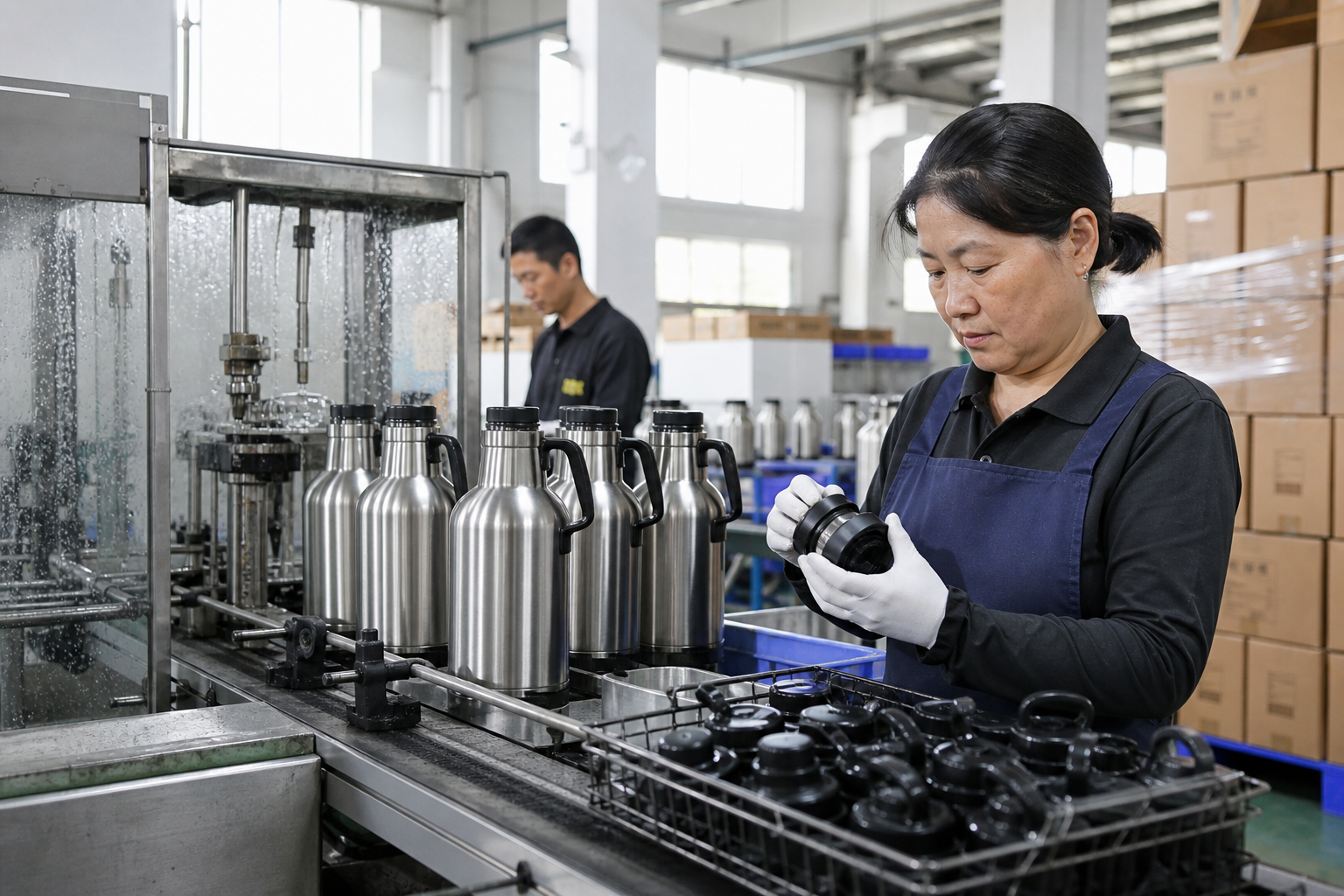
- A Zhejiang factory with 80,000+ units/month capacity is better suited for repeat wholesale drinkware programs than a trading-only supplier.
Growler wholesale sounds simple until you start comparing steel grade, lid construction, coating, and shipping terms. We have seen a 0.2 mm seam mismatch turn into a buyer complaint after QC pulled the sample. For buyers in Europe and North America, the issue is not finding a supplier in China. The issue is finding one that can hold tolerances, pass REACH or food-contact checks, and keep pricing steady when the order moves from samples to 5,000 units.
If you are buying beer growler wholesale, beer growler wholesale bulk, or a related bulk drinkware program, you need a factory partner that understands decoration, packaging, and export paperwork. On a good line in Zhejiang, we run 80,000 to 150,000 units per month, with MOQ starting around 500 to 1,000 pieces depending on the model. We have seen buyers push back on this all the time, but the math does not work with a trading setup. That is the difference between a supplier and a sourcing risk.
What buyers mean by growler wholesale
In sourcing terms, grower wholesale means a repeatable container program built for beverage resale, taproom merchandising, promotions, or subscription bundles. Most buyers start with beer grower wholesale, then move into bulk grower orders for hospitality, branded retail, and distributor programs. The wrong question is the product name. The real question is whether the bottle clears your fill system, holds your print, and lands at the shelf price you need. QC pulled the sample at the bench before we signed off.
For China sourcing, the spec usually covers capacity, neck finish, lid type, wall thickness, coating, and packing method. A 32 oz or 64 oz stainless grower is common, but some programs shift to a slim canteen form to cut freight and improve gift appeal. We run 1.2 mm and 0.8 mm bodies on different lines, and that changes carton count fast. That is why you see bulk canteen, canteen bulk, and canteen wholesale requests bundled with wholesale drinkware orders. The buyer wants one supplier to manage several SKUs, not just one bottle.
From a commercial standpoint, good grower wholesale should give you three things: stable repeat pricing, clear decoration options, and export-ready compliance. If a supplier cannot state the steel grade, the surface finish, or the carton drop-test standard, you are not comparing real offers. You are comparing guesses. We have seen a PO typo on the cap color turn into a 12-day delay, so this is the wrong question to ask after the order is placed.
Materials and build choices
The material choice drives shelf appeal and scrap rate. For most beer growler in bulk programs, 304 stainless steel is the default because it holds up against corrosion, stays neutral on taste, and keeps the unit cost in line. If the buyer is chasing a lower retail point, 201 stainless works in some drinkware bulk projects, but we treat it as a price-led pick, not a premium spec. On the line, QC pulled a 10-piece sample last week and the buyer still pushed back on staining after a 24-hour salt spray check. For a high-end best wholesale drink bottle position, 18/8 stainless with a matte powder coat usually moves better than bare metal.
Wall thickness matters more than first-time buyers expect. A typical outer shell sits around 0.4 to 0.5 mm, and a double-wall vacuum structure changes weight, insulation, and carton count. We ship cleaner at 0.4 mm when the order is 500 units, while thicker builds add grams fast and the freight math moves against you. For alcohol flask bulk or alcohol flask wholesale bulk programs, the shape and seal are different, but the sourcing logic stays the same: check the liner material, lid gasket, and leakage test before you sign off artwork. We have seen this go sideways when a PO typo changed the gasket spec by one digit.
- 304 stainless: the safest pick for wholesale growler and wholesale drinkware orders when you need a clean finish and steady QC.
- 201 stainless: fine for price-sensitive bulk drinkware when the margin is tight and the buyer accepts a lower spec.
- Powder coat: gives grip, more color options, and hides light scuffs on the line.
- Laser engraving: stays sharper than low-cost print on higher-volume runs, especially when the buyer wants permanent branding.
If the supplier also handles beer tumbler wholesale or beer tumbler bulk, you can put the cartons on one pallet plan and cut per-unit packaging cost. We have shipped mixed drinkware loads this way and seen 12 days versus 18 days when the buyer splits the order into two bookings. That matters when you are comparing canteen wholesale and growler wholesale in the same buying cycle. The wrong question is whether the unit price is 2 cents lower; the real test is whether the pack-out, foam insert, and carton size work across both SKUs.
MOQ, pricing, and lead times
Buyers ask for price first. We do not start there. MOQ is the number that shapes the quote. For a standard growler wholesale order from Zhejiang, the real MOQ is often 500 to 1,000 units per color or per design. Once you add deep embossing, a custom lid, or a special coating, the line usually wants a higher run. We had a buyer flag a PO typo on "300" units when the tooling sheet was set for 800; the math did not work. If a quote looks low and there is no quantity break, the extra cost is usually hiding in tooling, print cartons, or freight.
Typical FOB pricing for a plain 32 oz stainless bulk growler sits in a wide band tied to steel grade, finish, and lid style. A basic 18/8 body with a spun base can stay in the low single dollars. Add vacuum insulation or a powder coat over a brushed surface, and the number moves fast. QC pulled the sample with a thickness gauge last week; 0.45 mm versus 0.5 mm changed the cost sheet. This is the wrong question to ask if the offer is not broken out by body, lid, and packaging, because you cannot compare drinkware wholesale suppliers in China on a fair basis.
Lead time belongs in the first round of talk, not after the deposit. A workable production window is 20 to 35 days after sample sign-off and deposit, with another 7 to 12 days for custom printed packaging. A Zhejiang factory that runs 80,000 to 150,000 units per month can usually hold a re-order calendar better than a small workshop with one spray line. We ship to peak season buyers by building raw material stock before the order lands, and that saves 12 days versus waiting for a steel coil release in August. Ask for a rolling forecast if you plan beer growler wholesale bulk or wholesale drinkware programs.
Rule of thumb: if the supplier cannot explain why the price changes with lid type, coating, and packaging, the quote is not ready for procurement.
Compliance and quality control
For North America and Europe, compliance is not optional, and it is not just a certificate PDF. For wholesale drinkware and growler wholesale shipments, ask for food-contact declarations, REACH where it applies, and a written limit on coatings or inks. We had a buyer flag a PO typo on the ink spec once, and that small miss would have stalled customs. If the product goes to retail, add ASTM-oriented testing for performance claims or lab support for migration and odor checks.
Quality control needs to sit in the purchase order. AQL 2.5 is common for major defects, but it is not enough for a bottle that must seal under pressure, hold its finish, and survive freight. We run leak tests, vacuum retention checks on insulated models, carton compression checks, and finish inspection under the same lighting each shift. For wholesale growler orders, the cap and gasket fail first, so check them on their own instead of burying them in the general lot sample.
If you are buying canteen bulk or alcohol flask wholesale too, use the same QC framework across categories. One factory, one test method, one failure limit. That is the right way to keep the line clean. A supplier in Zhejiang that ships to the EU and the U.S. every week will already know how the paperwork changes between markets, and that saves days when QC pulled the sample and found a 0.3 mm print shift before packing started.
- Ask for pre-production samples with final decoration.
- Lock AQL levels for leakage, finish, and packaging.
- Request lot photos and carton dimensions before shipment.
Branding that actually sells
Branding is where a lot of bulk drinkware programs get sloppy. We see a buyer approve a logo on PDF, then the mark looks dull on the 0.8 mm steel body or gets lost near the weld. For growler wholesale, the decoration method has to fit the channel. Laser engraving holds up on brewery runs and gift sets. Screen print is the cheaper call when the art needs strong color. UV print gives fine detail, but the line needs tighter control on rub testing and chemical exposure.
If you want wholesale drink bottle positioning that actually moves, treat the surface as part of the design. A matte powder coat with a tone-on-tone logo usually sells better than a glossy shell with a huge print. We have seen that play out on 64 oz growlers, beer growler wholesale orders, and adjacent bulk canteen lines. The math does not work if the finish fights the mark. The buyer’s job is margin protection, not ink coverage.
Ask the factory for a branding proof on the exact substrate, not a generic mockup. On stainless steel, a 3 mm shift in curvature can warp text, especially around the shoulder and narrow neck. QC pulled the sample and the buyer flagged a thin line that vanished under side light. If you are mixing drinkware wholesale with a retail Amazon launch, lock the FNSKU label area, carton mark, and retail hangtag before the line starts. Otherwise you end up repacking in the U.S. and paying for a problem you could have caught in Hangzhou.
What to specify in the artwork file
- Logo size in mm, not just pixels.
- Exact Pantone or CMYK reference.
- Decoration method: laser, silk screen, or heat transfer.
- Placement tolerance, especially near seams and welds.
Shipping, packaging, and reorder control
Freight can wipe out a good factory price if the pack is loose. A 500 ml growler in a thin inner box looks fine on paper, then the corner crush shows up at destination. We run a fixed insert in the inner box, usually EPE 10 mm or molded pulp, then a master carton that holds stack pressure on the line. If the order ships by sea, ask for palletization details and a carton count per 1.1 x 1.1 m pallet before you sign the PO. The math does not work otherwise.
For Europe and North America, carton size changes landed cost faster than buyers expect. Save 4 mm on each unit and you can fit one more layer, which can cut a 40 HQ from 18 pallets to 17 on a full run. That matters when you compare beer growler wholesale bulk with beer tumbler wholesale bulk or canteen wholesale orders. We had one buyer flag a 2 mm carton typo on the PO, and QC pulled the sample before the line ran 8,000 pcs. Low ex-factory price is not the target. Low landed cost with fewer claims is.
Reorder control is where serious buyers sort good factories from the rest. Keep one approved spec sheet with version control, one retained sample in QC, and one batch numbering system tied to the cap liner lot. If the program grows, a Zhejiang factory with steady capacity can repeat a SKU at 3,000 pcs MOQ without changing lid fit or finish. We have seen this go sideways when a supplier swaps a 38 mm lid for a 40 mm one and nobody catches it until the buyer opens the second shipment. That consistency is what turns a one-time bulk growler order into a predictable wholesale drinkware line.
If you want the same sourcing logic in another category, the same factory can run custom logo growler orders, canteen wholesale, or alcohol flask in bulk with the same pack spec and test plan. We ship faster when the artwork file is clean and the carton mark matches the 2024 PO, not the typo version. One packaging system across SKUs saves 12 days versus 18 days on repeat work.
Source growler wholesale with clear specs
Send your target capacity, MOQ, and artwork. We will quote the right material, decoration, and packing for your market.
Frequently asked questions
What is a normal MOQ for growler wholesale from China?
A normal MOQ is 500 to 1,000 units per design or color for a standard stainless growler wholesale order. Simple single-color printing may stay near 500 units, while custom lids, vacuum walls, or special coating often push MOQ to 1,000 or 2,000 units. For a Zhejiang factory with real export capacity, the key is not the lowest MOQ on paper. It is whether the supplier can repeat the same color, lid torque, and logo placement on the next production run without drift. Ask for the MOQ by SKU, not a vague factory-wide number.
How long does beer growler wholesale production usually take?
For most beer growler wholesale or beer growler wholesale bulk programs, production takes 20 to 35 days after sample approval and deposit. If you add custom packaging, printed cartons, or a new lid tool, plan for another 7 to 15 days. Sample development usually takes 5 to 10 days depending on decoration and mold availability. If you are shipping to Europe or North America during peak season, you should also buffer ocean transit and customs time. A factory in Zhejiang with 80,000 to 150,000 units per month can keep a tighter schedule than a small workshop, but only if your artwork and specs are locked early.
Which material should I choose for wholesale growler orders?
For most wholesale growler programs, 304 stainless steel is the safest choice because it handles corrosion better and supports premium positioning. If your target is price-sensitive drinkware bulk, 201 stainless can reduce cost, but you should confirm taste neutrality, coating durability, and customer expectations. For insulated models, focus on the wall structure and seal quality, not just the exterior finish. If you are also buying canteen wholesale or alcohol flask wholesale bulk, use the same material logic: match the material to the channel, not just the lowest quote. In practical terms, 304 is the better long-term commercial bet for export.
What QC checks should I require before shipment?
At minimum, require AQL 2.5 for major defects, then add 100 percent leak checks on sample pulls from each carton. For growler wholesale, ask for coating adhesion, gasket fit, lid torque, drop resistance, and carton compression checks. If the product is vacuum insulated, ask for thermal retention testing too. You should also request first-article approval on logo placement and color. For wholesale drinkware shipped into retail or Amazon channels, packaging integrity matters as much as the bottle itself. A good supplier will show you lot photos, test records, and carton dimensions before the shipment leaves China.
Can I combine growler wholesale with other drinkware categories?
Yes. Many buyers combine growler wholesale with bulk canteen, canteen bulk, beer tumbler wholesale, or even alcohol flask wholesale lines to improve freight efficiency and simplify vendor management. This works best when the factory already handles multiple bottle geometries and decoration methods. The benefit is not just a broader assortment. It is lower per-unit logistics cost, fewer suppliers to audit, and more leverage on packaging. If you are sourcing from China, especially Zhejiang, ask whether the factory can keep one QA standard across the entire wholesale drinkware range so your reorder process stays predictable.