Key Takeaways
- MOQ for lead-free glass tritan bottle custom projects typically starts at 500-3,000 pcs, with 25-35 days lead time.
- For export, ask for FDA/LFGB, REACH, and food-contact declarations before you approve samples.
- Tritan parts usually tolerate repeated use better than low-grade plastic, while glass improves perceived value and aroma neutrality.
- Private label orders with one-color logo printing often land around USD 1.20-2.80 per unit FOB China, depending on size and packaging.
If you are buying a lead-free glass tritan bottle wholesale, the first trap is assuming “glass tritan” means one simple material. It does not. On our line, we split it into borosilicate glass, Tritan copolyester, or a hybrid build with a glass-look body and a Tritan cap, sleeve, or base. That choice hits breakage rates, unit cost, logo method, and compliance.
In Zhejiang, and across China, a loose product sheet will get almost anything labeled “premium.” We ask for the material stack, wall thickness, test standard, and packing detail before we quote. QC pulled a sample at 1.8 mm and found a weak neck finish, so the buyer flagged it and we reworked the mold. A serious lead-free glass tritan bottle manufacturer should show a clean spec sheet, an MOQ of 500-3,000 pcs depending on decoration, and a production lead time around 25-35 days. If the numbers are fuzzy, the final invoice usually tells the story.
What buyers mean by glass Tritan
Buyers searching for lead-free glass tritan bottle wholesale usually want three things: a premium look, a clean feel in hand, and no “cheap plastic” vibe on shelf. The name gets used loosely, so the first job is to pin it down. We see 3 builds on the line: a glass bottle with Tritan lid parts, a Tritan body with glass-like clarity, or a hybrid bottle that pairs glass and Tritan for better impact resistance. If a supplier cannot say which structure they are quoting, stop the call. We had one PO where the buyer wrote “glass Tritan” in the item line and forgot the lid spec; QC pulled the sample, and the mismatch showed up in 2 minutes.
A real lead-free glass tritan bottle supplier should specify:
- Material grade: borosilicate glass, Tritan copolyester, or PP/Tritan lid components
- Capacity: 350 ml, 500 ml, 600 ml, 750 ml, or 1000 ml
- Wall thickness: often 1.8 mm to 2.5 mm for glass, depending on shape
- Lid sealing: silicone ring, usually food-grade, 30-50 Shore A
In Zhejiang, a lot of factories can send a sample in 5 to 7 days, but that does not mean 10,000 units will match on clarity, tolerance, and seal performance. We run into this all the time. Ask for dimensional tolerance, drop-test target, and whether the bottle is built for hot-fill, cold beverage use, or both. On one bulk order, the buyer flagged a 0.8 mm neck variation because the cap started cross-threading after 400 cycles; the math does not work if the spec is loose. If you are building a lead-free glass tritan water bottle wholesale program for retail, put the structure in the spec sheet and the carton marking, not in a product photo.
Compliance that actually matters
For North America and Europe, compliance is a purchase condition. Full stop. A lead-free glass tritan bottle manufacturer should have food-contact files ready before you send a deposit. We usually tell buyers to ask for FDA food-contact statement, LFGB for Germany or broader EU retail use, REACH for chemical compliance, and a declaration on phthalates, BPA, and heavy metals. If the bottle has printing or coatings, request migration testing on the decorated unit, not just the bare bottle. We ran into a case last month where QC pulled the sample, and the ink passed on glass but failed after coating.
Do not accept “lead-free” without paper behind it. For glass parts, ask for lead and cadmium migration results or a material declaration from the glass supplier. For Tritan, ask whether the resin is Eastman Tritan or another copolyester equivalent, and request resin batch traceability if the order is 10,000 pcs or more. If you are building a private label line, your retailer or Amazon compliance team may also want carton labeling, country of origin, and barcode placement. The logo color is not the issue. We had a buyer flag a PO because “Made in China” was missing on the master carton, one line only, and the shipment sat for 6 days.
Practical rule: if your supplier cannot show test reports for the exact final product, not just raw material, treat the compliance claim as unfinished.
We see buyers chase the lowest quote, then lose 2 weeks on re-testing. That is the wrong question to ask. A credible lead-free glass tritan water bottle factory in Zhejiang should know which labs EU buyers accept and should quote testing time at the start, usually 7-15 days depending on scope. On our line, the lab booking alone can take 2 days if the schedule is tight.
Pricing, MOQ, and factory reality
Lead-free glass tritan bottle bulk pricing comes down to size, decoration, lid type, and packaging. For a plain 500 ml bottle with one-color logo, basic carton, and standard lid, FOB China pricing usually lands around USD 1.20-1.80 on higher-volume orders. Add custom molded parts, matte coating, gift box packaging, or a premium leakproof lid, and the number moves to USD 2.20-4.50. We saw one buyer flag a PO typo on “5000 pcs” versus “500 pcs,” and that kind of slip changes the quote fast. Glass thickness, print complexity, and whether the lid uses Tritan or stainless steel hardware all push cost up.
An honest lead-free glass tritan bottle factory in China should break down the cost, not hide behind a clean quote. We run the line and this is the wrong question to ask if you only want the cheapest number. Here is what usually changes the price:
- MOQ: 500 pcs for simple logo work, 1,000-3,000 pcs for custom color or packaging
- Lead time: 15 days for stock base + logo, 25-35 days for full custom
- Tooling: USD 150-800 for simple print fixtures or minor lid changes, much more for new molds
- Loss rate: fragile glass parts can add 2%-5% allowance depending on carton spec
In Zhejiang, factories with steady export work usually run 80,000-200,000 units per month across drinkware lines. That scale matters because it shows whether they can take peak-season orders without slipping your container plan. QC pulled the sample on one 0.8 mm wall batch and found edge chipping at the carton drop test, so the packing spec had to change. If you want a lead-free glass tritan bottle bulk program for distributors, ask for monthly output, then compare it with your forecast. A factory that can make 100,000 units a month but only packs 20,000 cleanly is not a good fit for branded retail.
Customization without killing margin
Custom work is where buyers lose margin. We see it on the line. A lead-free glass tritan bottle custom program stays profitable when you keep the decoration simple and the SKU count tight. One size, one lid color, one print position, one carton spec. That is the clean setup. Every extra lid color or packaging insert adds labor, stock, and defect risk. If you want a lead-free glass tritan bottle for retail, choose the decoration that fits the use case, not the one that looks flashy in a sample photo.
Common custom methods include screen printing, laser engraving on metal parts, UV printing, and paper label application. For a lead-free glass tritan bottle private label program, screen printing is usually the best value at 500-5,000 pcs. Laser looks clean on stainless steel caps, but it does little on glass. If your design has fine lines, check minimum line thickness before you approve the artwork; many factories need at least 0.2-0.3 mm for stable print results. QC pulled one sample with 0.15 mm text and it broke up after two washes. The buyer flagged it, and the order moved three days.
OEM, ODM, and branded: what changes
If you need lead-free glass tritan bottle oem, you are usually sending a ready design or a modified existing model. That keeps cost lower and timing shorter. Lead-free glass tritan bottle odm means the factory adds the structure or cap design, which works if you want a different retail line without paying for a full mold. A lead-free glass tritan bottle branded order is simpler: existing model, your logo, your carton, your barcode. For a first order, branded or light OEM is the safer route. We run into buyers who ask for ODM looks with OEM money. The math does not work.
Ask for a pre-production sample with the final print, final lid, and final carton. If the factory sends a “reference sample” without the real decoration, you are not checking the actual product. That is a common miss in lead-free glass tritan water bottle custom programs from China, and it turns into surprise color shifts when bulk production starts. One PO typo on carton color can cost a reprint and delay the ship date by 7 days. Ask for the signed sample card and match it against the production sheet.
How to check quality before shipment
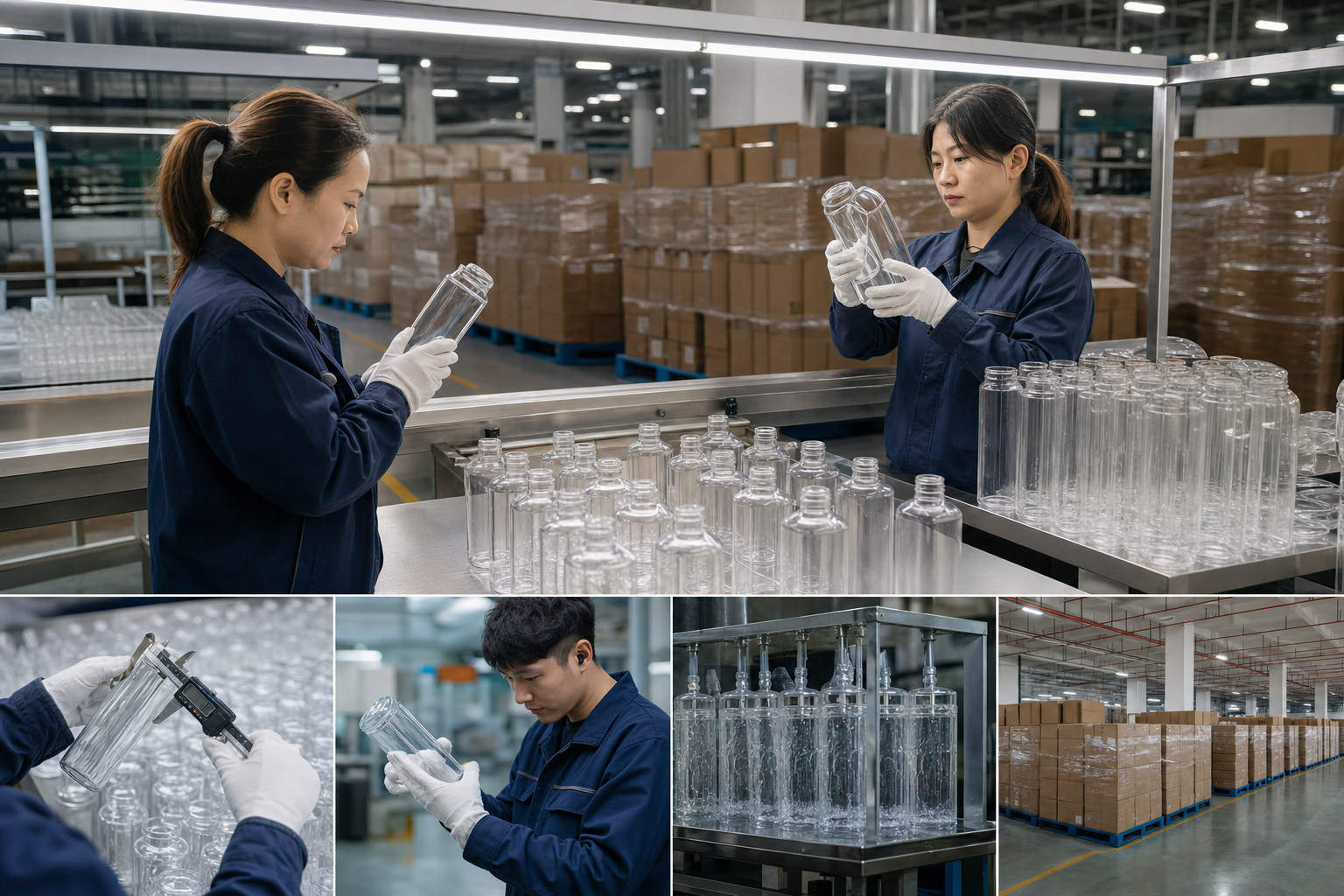
Quality control has to be measured, not hoped for. A lead-free glass tritan water bottle factory should accept AQL inspection, usually AQL 2.5 for critical and major defects and AQL 4.0 for minor defects, unless your retail program asks for tighter limits. We run this on the line every week. For fragile glass, check carton drop resistance, cap torque, seal leakage, print adhesion, and cosmetic consistency. If the bottle has a Tritan lid or insert, check the assembly fit after 24 hours, not straight off the line. QC pulled the sample once and found a 0.8 mm gap that only showed up after overnight resting.
Useful factory checks include:
- Leak test: inverted fill for 30 seconds to 2 minutes, depending on cap design
- Drop test: 80 cm to 100 cm onto cardboard or specified surface
- Thermal check: hot water and cold water cycling if the bottle is rated for it
- Odor test: especially important for Tritan parts and silicone gaskets
Do not skip packaging validation. A lead-free glass tritan water bottle wholesale shipment can pass product inspection and still fail in transit if the inner tray is weak. We saw a buyer flag this after a 1.2 kg sample carton crushed in a pallet corner test. Double-wall cartons, molded pulp, or partitioned inserts cut breakage fast. In export work from China, packaging is part of quality, not an afterthought. If your order goes to Amazon or a distributor warehouse, ask for carton compression data and confirm FNSKU placement or retail barcode needs before mass packing starts. The math does not work if the outer box is 2 mm short and the label shifts 6 mm.
For larger programs, ask whether the factory uses ISO 9001 procedures and whether social compliance audits such as BSCI are available. They will not make the bottle better by magic, but they do show whether the plant keeps the same process from PO to PO. We have seen this go sideways when the buyer skipped the audit and the cap color drifted on the second 5,000-piece run.
Sourcing from Zhejiang and China
If you are buying from Zhejiang, you already know the region is packed with packaging plants, mold shops, and drinkware lines. That helps only when you use the cluster properly. A lead-free glass tritan bottle manufacturer in Zhejiang can run glass forming, lid assembly, logo printing, and carton packing inside one industrial zone, which cuts handoffs. We have seen a 3-day delay disappear when the bottle body and cap were made 8 km apart instead of 80. The catch: trading companies sit on the same streets, so you need to tell a real lead-free glass tritan bottle factory from a middleman before you send a deposit.
Ask straight questions: how many lines do you run, what is your monthly output in pcs, do you own the mold, and where does final packing happen? A real lead-free glass tritan water bottle factory answers fast. Last month QC pulled the sample on a 28 mm neck finish because the cap torque was off by 0.6 N·m, and that is the kind of detail a factory knows on the spot. If they are serious, they will quote FOB Ningbo or Shanghai, explain pallet rules, and tell you whether mixed SKUs can share one container without rework.
For European buyers, China sourcing is about balance: enough customization for a private label line, but not so much that cash gets stuck in dead stock. For North American buyers, speed and compliance usually carry more weight. The best lead-free glass tritan water bottle supplier can handle both. The buyer flagged a typo on a PO once—“matte lidd” instead of “matte lid”—and the carton mark got delayed a day, so this is the wrong question to ask if you are chasing perfection on paperwork instead of getting the spec right. If you need to grow the assortment later, keep the base model stable and change only the lid color or print artwork. That is the cleanest way to build a repeatable wholesale program from Zhejiang without making the line messy.
Request a quote with your exact bottle spec
Send capacity, lid type, logo method, and target market. We’ll price your lead-free glass tritan bottle wholesale order with clear MOQ and lead time.
Frequently asked questions
What is the usual MOQ for lead-free glass tritan bottle wholesale orders?
For stock-based orders with logo printing, MOQ is often 500 pcs. For custom colors, new lids, or private label cartons, 1,000-3,000 pcs is more realistic. If you need a new mold, some factories in China will ask for 5,000 pcs or a tooling deposit. The smaller the batch, the more you pay per unit. A 500 ml bottle with one-color print may be around USD 1.20-1.80 FOB China at higher quantity, but that rises fast with premium packaging.
Is lead-free glass tritan safe for hot drinks?
Usually yes, but only if the full assembly is designed for it. Borosilicate glass handles thermal shock better than soda-lime glass, and Tritan lids or sleeves generally tolerate hot use well, but the seal, print, and any metal parts must also be rated. Ask for the maximum recommended temperature, typically 80-95°C for many consumer designs. If the bottle is meant for boiling water, you need explicit test data, not a sales claim. Always check the final decorated sample, because coatings and inks can change performance.
What compliance documents should I request before ordering?
At minimum, ask for FDA food-contact declaration, LFGB if you sell in Germany or the EU, REACH compliance, and a heavy metals or migration test report for the final product. If the bottle uses printed graphics, request testing on the decorated version. For larger retail programs, ask for ISO 9001 certification and BSCI if social compliance is required by your buyer. If the supplier says “lead-free” but cannot produce documents, treat it as unfinished sourcing, not approved compliance.
How do I choose between OEM, ODM, and private label?
Choose OEM if you already have a design and want the factory to make it to spec. Choose ODM if you want the factory to contribute structure, cap ideas, or a market-ready model with less tooling investment. Choose private label if you want a standard bottle with your logo, carton, barcode, and marketing identity. For first orders, private label is usually the safest. It reduces tooling cost, keeps MOQ lower, and lets you test sell-through before investing in a full custom mold.
How can I reduce breakage in shipment?
Use partitioned inner packaging, not loose packing. For lead-free glass tritan bottle bulk orders, ask for molded pulp, EPE inserts, or corrugated dividers, and confirm the carton passes compression and drop expectations. Many buyers add 2%-5% spare units for fragile glass shipments. Also check pallet height, carton stacking, and whether the factory can do full-case pack instead of mixed loose pack. A good export factory in Zhejiang will know how to pack for ocean freight, not just for a showroom sample.