Key Takeaways
- Typical MOQ for a lead-free glass water bottle bulk order is 3,000 units for standard molds, with 30-45 days lead time after approval.
- A serious lead-free glass water bottles manufacturer should provide REACH, food-contact declarations, and batch traceability, not just photos.
- For private label, expect decoration costs to change by method: one-color silk screen is often USD 0.18-0.35 per unit, laser etching higher.
- Borosilicate-style glass and thicker walls around 2.5-3.2 mm reduce breakage, but packaging still drives landed cost more than the bottle alone.
If you are sourcing a lead-free glass water bottle wholesale program, the first trap is assuming “glass is glass.” It is not. We run into this on the line all the time. For wellness brands and sustainable retailers, the real checks are glass composition, wall thickness, closure fit, decoration method, and whether the factory can show REACH and food-contact paperwork without a delay. In Zhejiang and across China, plenty of factories can quote a pretty bottle; fewer can keep a private label run moving without cracks, leaks, or a missed ship date.
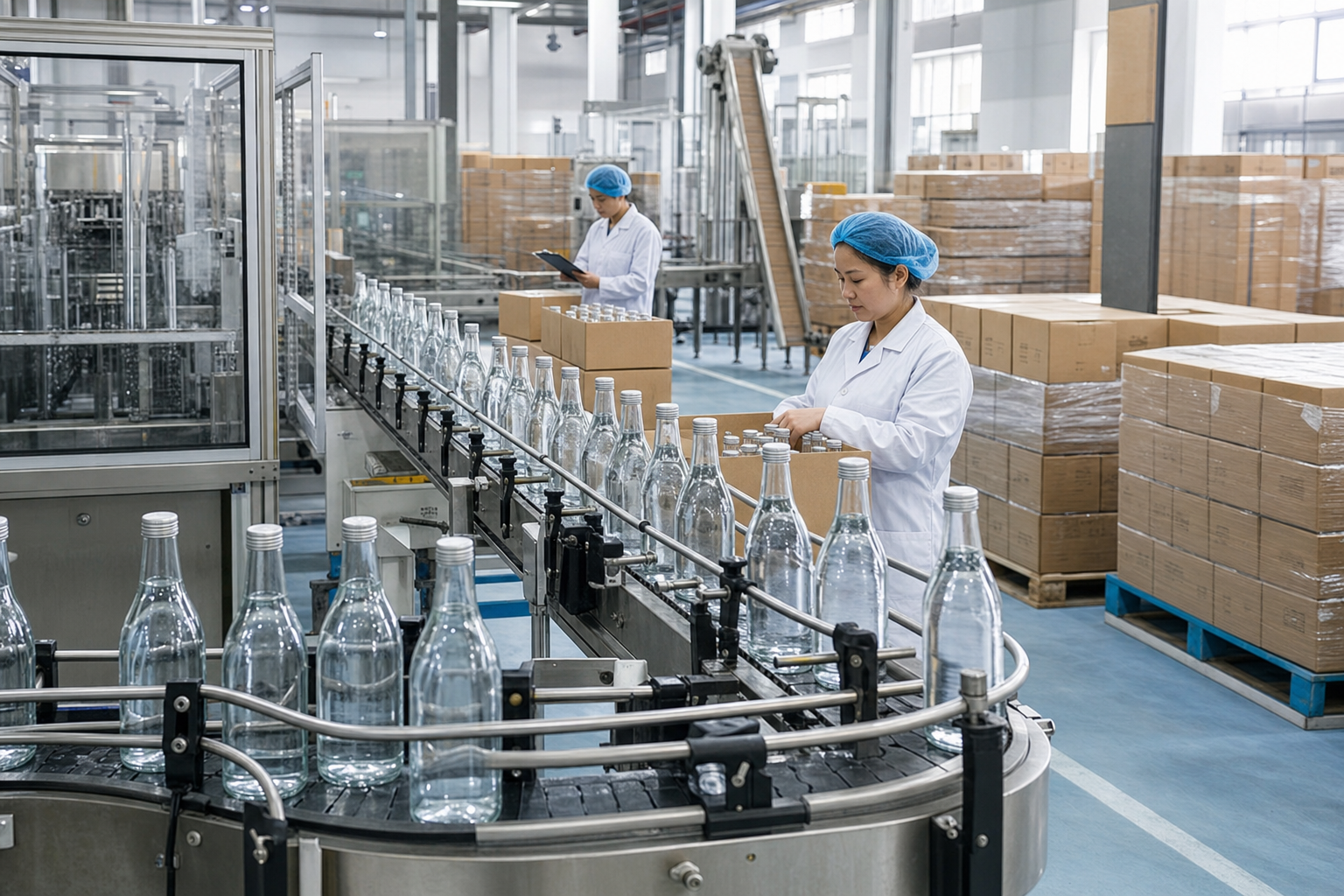
You also need to look past unit price. A lead-free glass water bottle manufacturer should answer on MOQ, carton pack-out, AQL levels, and what happens when you ask for a lead-free glass water bottle custom design with silicone sleeves or bamboo lids. We had one buyer flag a PO typo on the closure spec, and that saved a 12-day remake. At BottleForge in Hangzhou, Zhejiang, we build around factory reality: about 300,000 units per month across glass and stainless lines, MOQ from 3,000 units for standard glass SKUs, and typical lead time of 30 to 45 days after sample approval.
What “lead-free” should mean
Buyers searching for lead-free glass water bottle wholesale usually want a yes-or-no answer. That is the wrong question to ask. On our line, “lead-free” means no intentionally added lead in the glass formula, plus current test paperwork for food-contact use. If a supplier cannot show a declaration, ask for the exact glass type, the lab standard, and whether the bottle was screened for REACH or California Prop 65. We had a buyer flag a PO typo on the material spec once, and that saved a bad shipment before QC packed 2,400 pcs.
For wellness brands, soda-lime or borosilicate-style glass with traceability is the cleanest path. The bottle can pass, and still fail in the closure. Caps, printed inks, and decorative coatings all sit in the compliance check. A lead-free glass water bottle for Europe can still get blocked if the liner is not food-safe or the ink system is wrong. We ship a lot of 350 ml and 500 ml bottles, and the first thing QC pulls is the closure sample, not the bottle body. Ask for:
- Material declaration for glass, lid, and gasket
- Migration or food-contact test reports
- Batch coding method
- Country of origin and HS code support
That is the gap between a seller and a lead-free glass water bottle factory that runs export work every week. If the supplier pushes back on paperwork, the math does not work for your market.
Glass types and wall thickness
Most buyers do not need museum-grade glass. You need a bottle that survives carton drops, shelf handling, and daily use. For lead-free glass water bottles bulk programs, we usually quote two options: standard soda-lime glass and borosilicate-style glass. Soda-lime costs less and fits still water, infused water, and cold drinks. Borosilicate-style glass takes thermal shock better, so it suits buyers whose customers pull a bottle from the fridge and fill it again at the counter. Do not call it “heat resistant” unless the lab report backs it up; we had one buyer flag that claim after QC pulled the sample at 80°C and saw stress marks at the shoulder.
Wall thickness matters more than first-time buyers expect. A normal range is 2.5 mm to 3.2 mm for retail bottles in the 450-750 ml class. Go too thin and breakage climbs. Go too thick and the bottle looks sturdy but drives up pack-out weight and freight. We once ran a 3.8 mm prototype for a chain customer; the math did not work, and the carton weight jumped by 1.6 kg per case. In Zhejiang, plenty of factories can cut a new mold, but the real question is whether they hold weight variation within tolerance. Ask for:
- Nominal capacity and overflow capacity
- Glass wall thickness tolerance
- Net weight per unit
- Drop-test standard used in-house
If you are planning a lead-free glass water bottle custom design, lock these numbers before sample tooling. We saw a PO with “750ml” typed as “750 ml x 1” and the buyer still got the capacity wrong because the artwork file and spec sheet did not match. Fix it early. It saves weeks later.
OEM, ODM, and private label
For a lead-free glass water bottle OEM program, you bring the concept and we build to spec. ODM is simpler: the factory opens an existing mold, and you change color, logo, lid, or packaging. Private label sits in the middle. We often run it with a standard lead-free glass water bottle supplier mold, then add a custom print, sleeve, or carton. For a retailer that wants a fast launch, ODM usually wins because it skips tooling and can shave 12-18 days off the schedule. QC pulled one sample with a 1.2 mm base thickness last week, and that sort of detail is what decides whether the line moves or stalls.
Do not mix up cosmetic changes with real product customization. A lead-free glass water bottle custom order can mean any of the following:
- New bottle shape or base diameter
- Embossed logo in glass
- Silicone sleeve in a Pantone match
- Bamboo or stainless lid upgrade, or a PP lid if the buyer wants a lower-cost version
- Retail-ready gift box and FNSKU labeling
A new glass mold tool can cost USD 2,000-6,000, depending on cavity count and wall thickness, while a simple private label print may add only USD 0.20-0.60 per unit. If your volume is under 5,000 units, ODM is usually the better call. If you want one branded hero SKU for 3 years, OEM can pay back. We had a buyer flag a PO typo on the carton size, and the math stopped the shipment for a day; that is why export-grade pack testing matters. If one pallet lands broken, your brand takes the hit.
Pricing, MOQ, and lead time
Here is the part buyers care about first: what does lead-free glass water bottle wholesale actually cost? For a standard 500 ml clear bottle with a basic PP or bamboo-look lid, ex-works pricing from a lead-free glass water bottle manufacturer in China usually lands around USD 0.85-1.70 per unit at 3,000-10,000 pieces. If the buyer adds a silicone sleeve, print, or a premium cap, the number moves to USD 1.40-2.80 depending on spec. Freight can blow up the math fast, especially for breakable goods going to Europe or North America. We ship a lot of these, and one 20GP carton spec change can add more pain than the bottle price itself.
At a real lead-free glass water bottle factory, MOQ depends on whether we are running an existing mold or opening new tooling. Standard SKUs often start at 3,000 units; custom molds usually need 5,000-10,000 units before the numbers make sense. Lead time is usually 30-45 days for standard orders and 45-60 days when the job needs new tooling, decoration samples, and export carton sign-off. A buyer once pushed back on a 10-day promise for a custom glass bottle. He was right. The line cannot skip mold checks, and QC pulled the sample for a 2 mm cap mismatch before packing.
Pay attention to the quote structure. A clean quote should separate:
- Bottle unit price
- Cap or closure price
- Decoration cost
- Packaging cost
- Testing or certification fees
That is how you compare one lead-free glass water bottles supplier against another without getting fooled by a low headline price. We saw a PO last month with “bottle + lid” typed as one line item, and the buyer later asked why the carton insert was charged separately. That is the wrong question to ask after the quote is approved.
Quality control that prevents breakage
Glass looks simple until you put 20,000 units on a truck, then send them by sea, then hand them to a last-mile courier. The biggest risk in lead-free glass water bottles wholesale is not the bottle itself; it is breakage in packing, loading, and delivery. A proper lead-free glass water bottle factory runs QC as a line process, not as luck. We ask for incoming inspection, in-line checks, and final carton sampling at AQL 2.5 for major defects and AQL 4.0 for minor defects, or the standard your buyer signed off on. QC pulled one carton from a 1,200-carton lot last month and found a 2 mm neck chip. That saved a claim.
Good factories in Zhejiang and other export hubs use a few controls:
- Gauge checks for neck finish and lid thread fit
- Weight sampling every 2-4 hours
- Drop tests on full cartons from 70-90 cm
- Compression checks for master cartons
- 100% visual inspection for chips, bubbles, and seams
We run these checks with a go/no-go gauge, a digital scale, and a carton tester. The buyer flagged one PO because the neck size was written as 28 mm on the spec sheet and 28.0 mm on the drawing; that mismatch slows the line. Ask about dividers, egg-crate inserts, or molded pulp. The cheapest pack-out usually creates the most claims. For a lead-free glass water bottle branded for retail shelves, molded pulp can add USD 0.08-0.20 per unit, but it often cuts breakage and returns. If a supplier cannot explain why one pack-out is safer than another, the math does not work. Export-ready quality is a process, not a certificate on a wall.
Decoration and brand presentation
For wellness brands, the bottle has to look calm, clean, and credible. Decoration is part of the sale, not a nice-to-have. On our line, we usually quote silk screen printing, hot stamping, frosted etching, and laser marking on lids or metal parts. Each method has a different cost, wear resistance, and minimum line width; for a 1.2 mm logo stroke, silk screen can fail where laser still reads clean. If your artwork has small text, the wrong question is “which finish looks best?” The real question is whether the print survives handling and washing.
Silk screen is usually the lowest-cost choice for a lead-free glass water bottle private label launch. One-color print holds up well for retail if the ink matches the glass surface and the curing temperature stays under control. We had a buyer flag a 28 mm logo because the typeface was too thin, and QC pulled the sample before packing. Frosted finishes look premium, but masking shifts can drive scrap up fast. If you want a lead-free glass water bottles branded line for premium retail, ask for digital mockups and pre-production samples before mass production. Do not approve artwork from a flat PDF alone.
Brand presentation also includes the carton. If you sell on Amazon or through specialty retail, the outer box may need barcode placement, country-of-origin marking, and FNSKU labels in the right spot. We once caught a PO typo on an FNSKU code and saved a rework batch before printing. A lead-free glass water bottles manufacturer should line up decoration, packaging, and compliance text before production starts, because fixing it after the goods hit the line costs time and money.
How to source from China safely
If you are buying from China, do not chase the cheapest quote. We ship enough cartons to know that the real test is repeatability on the second and third order. China has a deep supply base, but not every seller is a real manufacturer. Some are trading companies. Some are small workshops with 12 workers and one cutting table. A real factory should open the line, show mold inventory, and explain how they control defects. If you are dealing with a lead-free glass water bottle supplier in Zhejiang, ask for video of the furnace line, forming line, and packing area.
Before you approve, check these points:
- Business license and export scope
- Food-contact and lead-free declarations
- BSCI or equivalent social compliance if required
- Sample consistency against mass production
- Production capacity and current load
At BottleForge in Hangzhou, Zhejiang, we keep one rule on the floor: if a buyer cannot read the quote in five minutes, the math does not work. The same goes for any lead-free glass water bottle manufacturer in China. Ask straight questions. Can they do 3,000 units MOQ? Can they ship in 35 days? Can they support OEM, ODM, or private label without changing suppliers midstream? We had a buyer flag a PO typo once—35,000 pcs became 53,000 pcs—and QC pulled the sample before it hit packing. If the factory answers cleanly, you have a workable partner. If they dodge, keep looking.
Request a factory quote and sample today
Send your target capacity, logo file, lid choice, and order volume. We’ll quote standard or custom lead-free glass water bottles with clear pricing and lead time.
Frequently asked questions
Is a lead-free glass water bottle safe for daily drinking water use?
Yes, if the bottle, lid, and gasket all meet food-contact requirements and the supplier can document the material. For Europe, ask for REACH-related declarations; for North America, check food-contact and any state-specific screening. A proper lead-free glass water bottle should also pass leak testing and basic drop testing. In practice, I would not approve a program unless the factory provides batch traceability and a sample carton test. For a 500 ml bottle, wall thickness around 2.8-3.0 mm is a sensible starting point for daily use.
What is the usual MOQ for lead-free glass water bottles wholesale?
For standard molds, MOQ is often 3,000 units. If you need a new mold, expect 5,000-10,000 units because tooling and setup costs have to be spread across more pieces. A lead-free glass water bottle wholesale program can sometimes mix colors or lids if the factory agrees, but do not assume that automatically. If you want private label or a special sleeve, the supplier may ask for a higher MOQ on the decorated parts even if the bottle itself stays at 3,000.
How much does a lead-free glass water bottle cost from China?
At factory level, a standard clear 500 ml bottle usually lands around USD 0.85-1.70 per unit at moderate volume. Add a silicone sleeve, premium lid, or complex decoration and the price can move to USD 1.40-2.80. Freight, duty, and carton damage reserve should be budgeted separately. In Zhejiang and other China export hubs, the cheapest quote is rarely the cheapest landed cost once breakage and packaging are included.
Can I order lead-free glass water bottle private label products with my own logo?
Yes. Private label is usually the easiest path if you want to launch fast without paying for a new mold. Most factories can add one-color silk screen, frosted logo, or laser marking on metal parts. For a standard lead-free glass water bottle private label order, decoration may add USD 0.18-0.60 per unit depending on method and color count. Ask for a pre-production sample and approve the exact Pantone, placement, and logo size before mass production.
What testing should I ask from a lead-free glass water bottle manufacturer?
Ask for food-contact material declarations, lead-free glass composition confirmation, closure material specs, and a carton drop test report. If you ship to Europe or North America, ask whether the supplier can support REACH-related documentation, migration testing, and batch coding. A good lead-free glass water bottle manufacturer will also give you tolerance data for capacity, weight, and neck finish. I would also request an AQL inspection plan and photos of packed master cartons before shipment.