Key Takeaways
- Typical MOQ for polypropylene stainless steel bottle bulk orders starts at 1,000 units per SKU, with 35-45 days lead time after sample approval.
- FOB China pricing for a 500 ml polypropylene stainless steel water bottle custom model often ranges from USD 2.10 to 4.80 depending on lid, print, and finish.
- A reliable polypropylene stainless steel bottle factory should provide AQL 2.5/4.0 inspection, REACH documentation, and vacuum leak testing on every batch.
- OEM and private label projects in Zhejiang usually need 7-12 days for sample development and can reach 300,000 units/month in peak production.
If you are sourcing polypropylene stainless steel bottle wholesale, the first trap is thinking “stainless bottle” means one simple SKU. It does not. The PP cap, the 304 or 316 liner, the lid gasket, the vacuum seam, and the print method all move the price and the leak rate. We run this line every week in Zhejiang, and the math changes fast when a buyer jumps from 3,000 units to 20,000 units. The real test is repeatability, not a pretty sample on the table.
At BottleForge, QC pulled a sample with 1.2 mm wall thickness and still caught a lid torque issue before packing. That is the kind of detail a real polypropylene stainless steel bottle manufacturer talks about: AQL, REACH, carton drop tests, and the typo on a PO that turned “matte black” into “matte blue.” If you want a polypropylene stainless steel bottle custom program that can survive Amazon, outdoor retail, or distributor replenishment, you need to see how OEM, ODM, private label, and bulk pricing work on the shop floor — not in a brochure.
What you are actually buying
Buyers searching for polypropylene stainless steel bottle wholesale are usually pricing three things at once: the bottle body, the cap assembly, and the trade terms. On the line, we call it the full stack. A polypropylene stainless steel bottle is usually a vacuum-insulated piece with a stainless steel inner liner and PP parts on the lid, handle, or drinking top. Some buyers use polypropylene stainless steel tumbler or polypropylene stainless steel flask, but the build is what decides the result, not the product name.
The grade of steel, lid structure, and surface finish move the price more than the listing copy. A 304 inner liner works for most retail programs. If the drink is acidic or the bottle stays in storage for months, 316 is the safer pick, and the price goes up. A PP lid weighs less than a full stainless cap and gives more room for logo placement. If a supplier cannot tell you the gap between a 0.4 mm and 0.5 mm inner wall, the math does not work.
For a polypropylene stainless steel water bottle wholesale order, ask for the full build: inner liner thickness, outer shell thickness, vacuum process, lid material, gasket material, and print method. QC pulled the sample on a 2,000 pcs run and found the lid fit changed after the second mold shot, so this is where orders go sideways. A clean render is not a spec sheet.
How OEM and ODM really differ
For most buyers, the choice between polypropylene stainless steel bottle oem and polypropylene stainless steel bottle odm comes down to who owns the drawing, who pays for the mold, and how fast the first 1,000 pcs can ship. OEM means you bring the concept, dimensions, decoration, and packaging spec. ODM means we start from a line we already run and change the parts that make sense: lid color, logo, coating, box art, and sometimes the handle or straw system. Last month a buyer sent a PO with the cap size written as 28 mm; the drawing showed 38 mm, and QC pulled the sample before the line even started.
A good polypropylene stainless steel water bottle manufacturer in China will offer both, but the math is different. OEM usually needs more time and a higher setup fee because you are changing molds or modifying components. ODM is faster if you want to test the market. On our side in Zhejiang, OEM sample approval often takes 10-15 days and mass production 35-50 days, while an ODM refresh can move quicker if the base model is already on the line. I’ve seen buyers push back on the tooling fee, then come back after the first sell-through and say the original ask was the wrong question.
If you want a polypropylene stainless steel bottle branded for retail, ask who owns the mold and whether the logo plate or print file is archived for repeat orders. That detail matters when you reorder 12 months later and need the same color match, same 1.2 mm wall thickness, and the same lid feel. A serious polypropylene stainless steel bottle factory should keep Pantone references, lid hardness, and print tolerance in the approval file. We ship a lot of repeat work this way, and the orders that go sideways are usually the ones where nobody checked the archive before signing off.
MOQ, price, and lead time
Procurement teams often ask for one number, but polypropylene stainless steel bottle bulk pricing changes with capacity, finish, lid complexity, packaging, and order volume. A 500 ml model in brushed 304 stainless with a PP lid and one-color silk screen can land around USD 2.10 to 2.90 FOB China at 3,000 units. Add powder coating, laser engraving, or a lockable lid and the range moves to USD 3.20 to 4.80. We had a buyer flag a PO that said “500ml” in one line and “550 ml” in the next; that typo cost two days before QC pulled the sample and we rechecked the carton label.
MOQ is usually 1,000 units per design for a standard run in a polypropylene stainless steel bottle supplier's catalog. If you want a custom lid color, special finish, or mixed SKU carton pack, expect 3,000 units or a mold cost. For specific retail colorways, some factories in China will ask for 5,000 units to keep the line moving. The math does not work any other way; every color swap adds cleaning time, and on our side that means one extra hour on the injection machine and more scrap in the first 20 kg of pellets.
Lead time is where buyers lose money. A factory in Zhejiang with stable production can usually make 300,000 units per month across multiple stainless lines, but your order still needs raw material allocation, vacuum process scheduling, and QC. For a normal polypropylene stainless steel water bottle bulk order, allow 35-45 days after pre-production sample approval. If you need peak-season delivery before back-to-school or Q4 retail, lock the purchase order early. We ship faster when the artwork is clean and the deposit is in; if the print file shows a 0.2 mm logo shift, the line stops.
Private label that actually sells
Private label is not just a logo on the cup. A workable polypropylene stainless steel bottle private label or polypropylene stainless steel water bottle private label program has to fit the channel. Outdoor shops want 1 mm wall detail on the cap area, clear capacity marks, and cartons that survive hangtag display. E-commerce buyers care about a clean main image, no bad claims, and FNSKU-ready carton labels. Distributors want steady replenishment and defect rates they can live with, not fancy packaging that blows the margin. We’ve had buyers reject a 5,000 pcs order because the retail tray crushed in a 60 cm drop test.
For polypropylene stainless steel water bottle branded or polypropylene stainless steel bottle branded stock, name the branding method at the start. Silk screen is low cost and stable for one or two colors. Laser engraving looks sharp and does not fade, but it works best on bare stainless or coated surfaces with contrast checked on the sample. UV print gives more artwork freedom, yet it needs abrasion testing before you go to market. A good polypropylene stainless steel bottle manufacturer will pick the method for your target price. That is the point. We had one buyer push for laser on a painted body; the first rub test failed after 200 cycles on the line.
For retail packs, ask for carton compression data, drop testing from 80 cm, and barcode placement that scans on day one. If the carton is going to Amazon, the outer case has to match FNSKU rules and pallet patterns. For Europe wholesale, the label set needs importer details, capacity, and wash instructions in the target language. We also check for simple PO mistakes, like a buyer typing 750 ml as 7500 ml. QC pulled that one before print, which saved a rework run.
Quality checks worth paying for
Most buyers say they want quality, then leave it vague. That gets expensive fast. A dependable polypropylene stainless steel water bottle factory should put the test list in writing before mass production starts: vacuum retention, lid leak test, dishwasher resistance if the bottle is rated for it, and coating adhesion. For food-contact exports, ask for REACH declarations for Europe and material safety documents for the PP parts. If the order goes to North America, we check whether the supplier can line up with FDA food-contact expectations and keep batch traceability. One PO typo on batch codes can turn into a customs headache.
We run AQL 2.5 for critical defects and 4.0 for major cosmetic issues on retail programs. That is not a theory piece. QC pulled the sample from the line, logged the lot number, and kept rework aside before packing. On stainless vacuum products, the usual issues are false vacuum, lid misfit, misaligned print, and carton crush from the drop test. A Zhejiang factory shipping 20,000 pcs a month should already have a QC flow, but the math does not work unless your acceptance criteria go into the purchase order. Put it there.
If the supplier refuses to discuss defect classification, they are not protecting your brand. They are protecting their shipment date.
Ask the PP question too. Virgin or recycled? For food-contact bottles, most buyers choose virgin PP because odor control and color consistency hold up better on the line. If recycled content is part of the brief, pin down the exact percentage and ask for supporting documents, not a sales promise. We’ve seen this go sideways when the carton says one thing and the test report says another. China can supply both, but the paperwork has to match the claim.
How to source from China with less risk
China is still the most practical place to source stainless vacuum drinkware because the supply chain is dense. In Zhejiang, we run metal forming, PP injection, spray coating, and export packing within a few industrial parks, so a lid change can move fast if the factory is real. A buyer once pushed for the lowest quote on a 500 ml cup, then the PO showed the wrong cap code and QC pulled the sample on the first check. Cheap is fine. Blind is not.
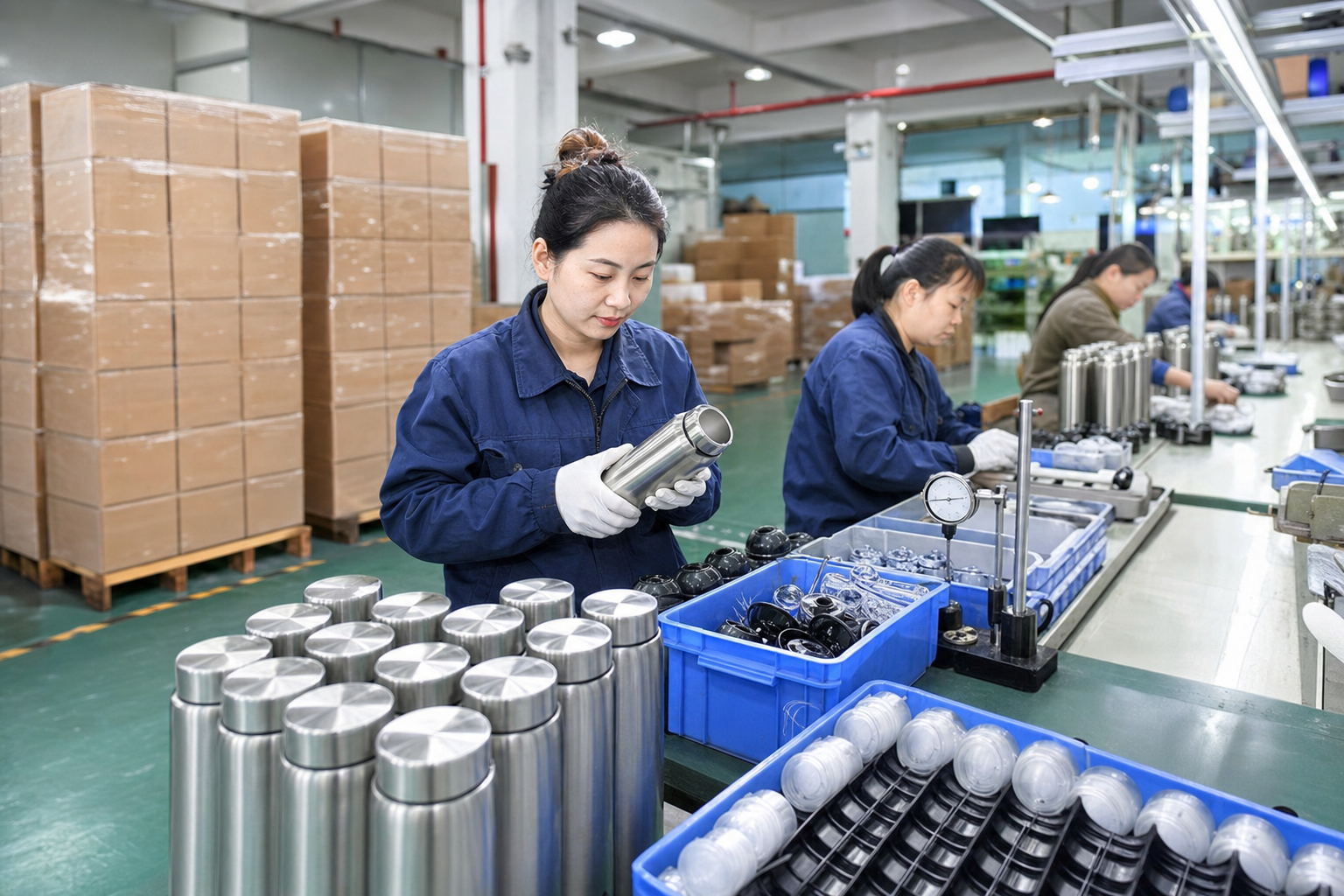
Before you approve a polypropylene stainless steel bottle supplier, check the business license, factory address, export records, and who owns molding plus vacuum assembly. A real polypropylene stainless steel bottle factory should show line photos, monthly capacity, and a basic BOM, not just a sales brochure. Ask for samples from the same line that will ship your order. If they send a hand-finished piece from a sample room and the bulk runs in another plant, we’ve seen that go sideways. One buyer even sent a PO with “poly propylene” split two ways; that typo told us they were not reading the spec closely.
Use a simple sourcing sequence: RFQ with exact capacity and material, sample approval, pre-production sample, then mass order with written QC terms. We ship this way for a polypropylene stainless steel bottle custom SKU, a polypropylene stainless steel water bottle OEM run, or a polypropylene stainless steel bottle branded assortment for distributors. The math works because each step catches a different fault: lid fit at 0.5 mm, insulation at 12 hours, carton drop at 1.2 m. Good suppliers in China respect a buyer who asks for numbers, not vague promises.
Source your bottle program from Zhejiang today
Send your target capacity, logo file, and annual volume. We will quote the right polypropylene stainless steel bottle wholesale spec, not a vague guess.
Frequently asked questions
What is the usual MOQ for polypropylene stainless steel bottle wholesale orders?
For a standard catalog model, MOQ is usually 1,000 units per SKU. If you want custom lid colors, a new mold, or mixed packaging, 3,000 units is more realistic. For highly specific polypropylene stainless steel bottle custom projects, some factories in Zhejiang ask for 5,000 units to keep line efficiency and color consistency. Always confirm whether the MOQ applies per color or per design, because that changes your landed cost quickly.
How much does a custom polypropylene stainless steel water bottle cost from China?
A basic 500 ml model with 304 stainless, a PP lid, and one-color print can be FOB China at USD 2.10 to 2.90 at 3,000 units. Add powder coating, laser engraving, or premium packaging and you may see USD 3.20 to 4.80. If you choose 316 stainless or a more complex lid system, expect higher pricing. China pricing is competitive, but only if the spec is locked before sampling.
What certifications should I ask a polypropylene stainless steel bottle manufacturer for?
For Europe, ask for REACH-related documentation, food-contact declarations for PP parts, and traceability by batch. For North America, request material compliance aligned with FDA food-contact expectations and a written QC report. If you sell into retail, ask for AQL inspection records, carton drop test results, and leak test data. A professional polypropylene stainless steel water bottle manufacturer should have these ready without delay.
What is the difference between OEM and ODM for these bottles?
OEM means you define the product and often control the design details, which gives you more brand ownership but usually takes longer and costs more. ODM means you start from an existing factory platform and customize the color, logo, packaging, and sometimes the lid. For a fast market test, ODM is usually better. For a proprietary polypropylene stainless steel bottle branded line, OEM gives you more control over the final product.
How long does production take for polypropylene stainless steel bottle bulk orders?
After sample approval, typical lead time is 35 to 45 days for a standard order. If the program needs new tooling, special print, or unusual packaging, it can move to 50 to 60 days. A well-run polypropylene stainless steel bottle factory in Zhejiang can produce up to 300,000 units per month across multiple lines, but your slot still depends on material booking and QC schedule. Plan early for Q4 and back-to-school season.