Key Takeaways
- A practical thermos customizable program usually starts at 1,000-3,000 units, with 25-35 day lead time after sample approval.
- For most stainless thermos builds, 304 inner steel is the safe default; 316 is worth asking for when corrosion resistance matters.
- Decoration choice affects cost and durability: one-color silkscreen is cheaper, laser engraving lasts longer, and full-wrap printing raises scrap risk.
- A factory thermos program should include leak tests, vacuum checks, drop checks, and AQL 2.5 sampling before shipment.
When you buy a thermos customizable for retail, promos, or distributor programs, the lid color is the easy part. The real check is whether the line holds vacuum performance, finish consistency, and print quality at scale. A good custom thermos needs to survive cartons, daily use, and repeated washing without leaking, fading, or denting after a 1.2 m drop test.
If you are sourcing from China, especially from Zhejiang, the gap between a true thermos factory and a trading desk shows up fast. We see it in MOQ, lead time, steel thickness, coating adhesion, and whether QC pulled the sample at AQL 2.5 or just sent a pretty photo. A serious manufacturer thermos partner should quote FOB terms, show REACH or food-contact compliance, and explain what changes when the order moves from 1,000 units to 50,000 units.
What Customizable Really Means
When a buyer says thermos customizable, I ask one plain question: which parts can move, and which parts stay fixed? Too many supplier quotes blur the line and call everything customization, but on the line we split it into four buckets: structure, finish, decoration, and packaging. Structure covers capacity, lid type, and whether you want a handle or strap. Finish covers powder coating, soft-touch paint, matte spray, or bare steel. Decoration covers silk screen, laser engraving, heat transfer, or full-color wrap. Packaging covers a single box, a mailer, or a retail carton with barcode and FNSKU if the buyer is feeding Amazon. QC pulled the sample on a 500 ml vacuum bottle and found the logo was 6 mm too high, which is the kind of miss that turns a clean quote into a dispute.
For outdoor retailers and promotional brands, the right custom thermos changes just enough to match the channel. A 500 ml bottle with a screw lid and one logo color is easy to run. A 750 ml travel thermos with a carry loop, two imprint positions, and gift boxing needs more handoff between printing, packing, and carton control. That is normal. What goes sideways is a vendor promising endless options without showing a sample hierarchy. Ask which items are stock, semi-custom, or fully custom. The buyer flagged a PO once because the carton said 24 pcs but the packing list said 20, and the math did not work.
Useful rule: if the change touches tooling, expect a real cost and a longer lead time. If it only changes logo placement or carton art, the quote should stay tight. A lid mold or a new handle insert can add 12 days; a one-color artwork change should not. We run the same stainless body through the line all the time, and a good thermos distributor knows where that line can stay standard and where it cannot.
Steel, Wall, And Vacuum Specs
The bottle build matters more than the brochure copy. For a stainless thermos, we start with the steel grade, wall thickness, and vacuum gap. On the line, QC checks the inner shell first, and most reliable factory thermos runs use 304 stainless there because it balances corrosion resistance and cost. If the drink is acidic, salty, or sits for long periods, 316 is the safer call, but the unit price goes up. For the outer wall, 201 steel cuts cost, yet I would not put it in a premium retail thermos custom line.
Wall thickness is where budget and performance split fast. A typical inner wall sits around 0.4-0.5 mm; the outer wall can be similar, with the vacuum layer between them. If a quote looks too cheap, check whether the supplier thermos is thinning the steel or skipping the full polish pass. We have seen that go sideways: one buyer flagged dents after a 1 m drop test, and the vacuum hold dropped with it. A proper manufacturer thermos will give the tested hold time, for example 12 hours hot and 24 hours cold, and spell out the test setup instead of hiding behind vague claims.
- 304 inner steel for general retail use
- 316 inner steel for harsher beverage chemistry
- Double-wall vacuum construction with verified seal rate
- Powder coat or baked paint for grip and scratch resistance
Ask for a sample cutaway if you are buying bulk thermos for a chain or distributor thermos program. QC pulled one last week with a 0.45 mm inner wall and a clean vacuum seam, and that told us more than the catalog ever will. The wrong question is whether the sample looks nice.
Decoration That Survives Shipping
Decoration is where a lot of custom thermos jobs go off the rails. A logo can look clean on a white sample and still fail on the line if the coating is too slick, the art file is too fine, or the pad shifts 2 mm during batch work. For promo thermos orders, one-color silkscreen is usually the cleanest route and the lowest cost at volume. Laser engraving costs more per piece, but it stays put when the buyer wants a mark that will not scratch off. UV printing works for complex graphics, but we only run it after we test the exact coating, not a similar one.
For a real China sourcing job, the factory should show a decoration limit chart before you place the order. Line thickness, font size, and minimum gap are not cosmetic details. A 0.2 mm stroke may look fine on screen and disappear after curing. We have seen buyers push back on this, then the PO comes in with a tiny slogan and a 6 mm logo height. The math does not work. Check color under daylight and warm indoor light too, because matte powder coat can look like two different shades on the same bottle. QC pulled the sample for this exact issue more than once.
Ask for a pre-production sample with final artwork, final coating, and final carton before you approve the bulk run. A blank sample is not a production sample.
If you are building thermos promotional kits, packaging is part of the sale. A printed belly band, molded insert, or kraft gift box can lift the perceived value without changing the bottle. We run that way when the buyer wants a sharper shelf read without adding parts to the bottle itself. I would not overengineer it. A 1,000-piece MOQ on a printed box is often easier to manage than a fancy cup body finish, and the line can ship it without extra handling headaches.
MOQ, Pricing, And Lead Time
Buyers often ask for a price before they define the order structure. That causes trouble. A thermos customizable quote changes with capacity, coating, logo method, carton style, and annual forecast. For a standard 500-750 ml stainless model, MOQ usually starts at 1,000 to 3,000 units per design and color. If you want three logo versions or mixed lids, the MOQ goes up because the line needs separate setup and inspection. We run into this all the time on the filling line, and a quote that ignores setup cost is just hiding it somewhere else.
On pricing, use the right basis. FOB China is the cleanest starting point for export buyers because it separates product cost from freight. In Zhejiang, a solid manufacturer thermos should quote fast and keep a stable lead time once the sample is approved. A normal production window is 25-35 days, with another 5-7 days for carton and label coordination. QC pulled the sample last week and found a 2 mm print shift on the lid, so we held the run until the artwork was corrected. If a supplier says 10 days for a fully customized run, check whether they are offering stock inventory with a logo only.
For bulk thermos programs, ask how the price changes at 5,000, 10,000, and 30,000 units. A real thermos factory should break down steel usage, decoration yield, and packaging changes at each step. The math does not work any other way. We have seen buyers push back on this, then discover the 304 stainless body cost drops by a small amount while the carton spec adds 0.18 USD per set at 10,000 units. This matters most in distributors thermos deals, where margin depends on repeatability, not just the first landed cost.
Use this structure in your RFQ:
- Capacity, lid type, and insulation target
- Artwork method and logo size
- MOQ, unit price, and mold cost if any
- Packing spec, barcode, and carton strength
- Lead time from sample approval to shipment
Quality Control You Should Demand
Quality control is not a slogan. It is the gate that keeps a custom thermos from turning into a claims file. On our side, the line does not pass a cup unless it clears vacuum retention, a 24-hour leak check, coating adhesion, logo rub test, and a drop test on packed cartons. For export orders, AQL inspection must be written down before we run the first lot, usually AQL 2.5 for major defects and 4.0 for minor defects, unless the buyer wants tighter limits. If the factory cannot explain how it sets the AQL lot size, the math does not work.
China has strong drinkware clusters, but standards still vary by plant. In Zhejiang, the better thermos makers keep incoming steel mill certificates, check weld seams with a 0.2 mm feeler, and log batch numbers so QC can trace one lot back in minutes. That matters when a distributor asks for a recall response or a retailer wants proof of lot control. If your market needs food-contact compliance, ask for the document pack before you pay the deposit: REACH, LFGB if applicable, FDA declarations, and test reports tied to the material version you are buying. We have seen a PO typo on the resin code blow up customs paperwork, so this is the wrong question to ask after shipment.
The best practice is simple: approve one golden sample, one packaging sample, and one production spec sheet. Then lock them. When you place a thermos bulk order, the factory should not be improvising between carton 1 and 10,000. A stable manufacturer thermos line runs on discipline, not luck, and the buyer who skips sample sign-off usually gets a surprise on the first 500 pcs.
How To Source In China
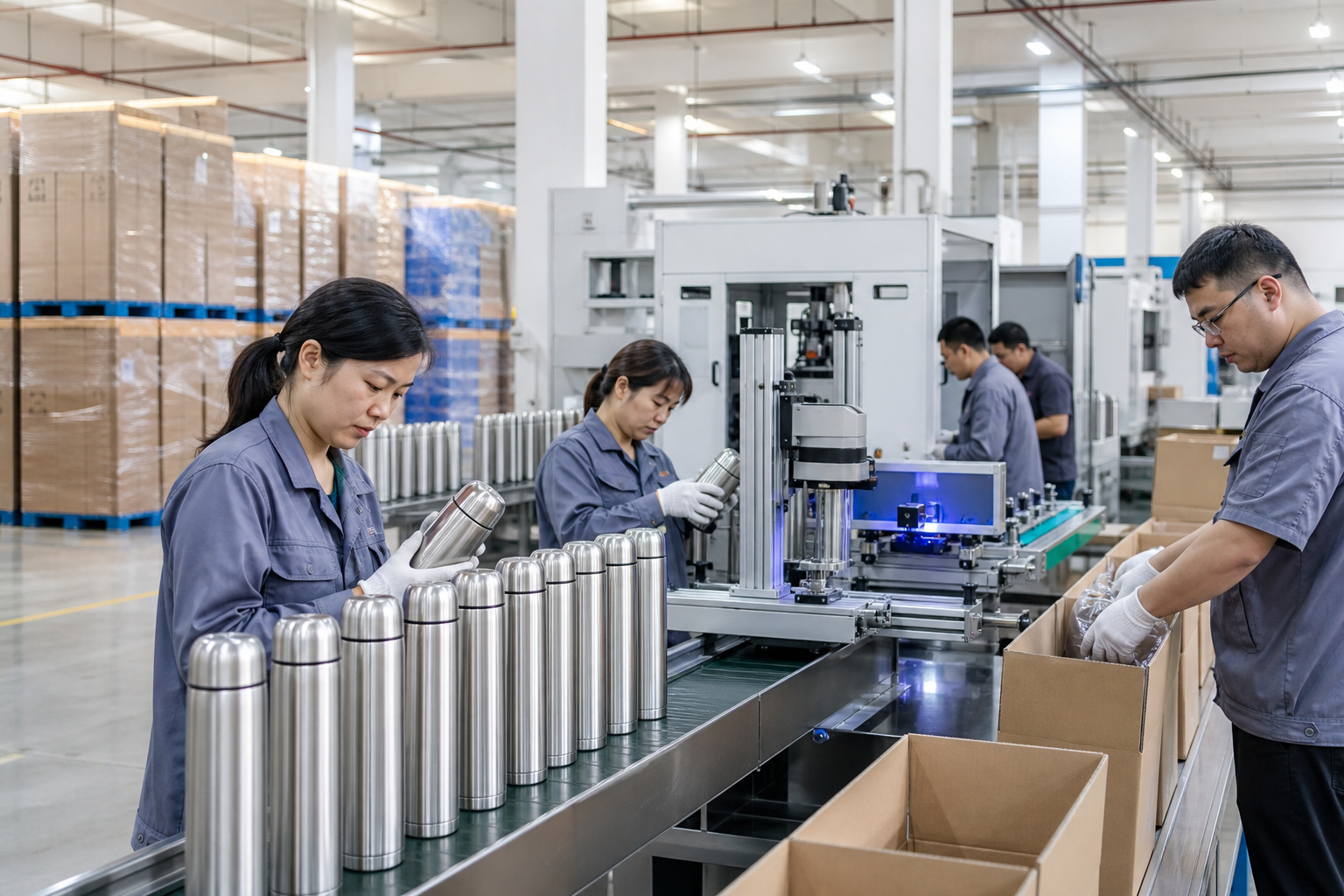
Buying from China works when you treat it like a line audit, not a price hunt. Start by checking whether the thermos factory owns the vacuum line, coating line, and packing line, or pushes half the jobs out. If they own the core steps, the process is tighter and the handoff mistakes drop fast. On a real site in Zhejiang, you can spot the difference in 5 minutes: labeled bins, fixed QC stations, and a schedule board with today’s output target.
Before you confirm the PO, ask for three things: live production photos, a recent inspection report, and the carton drop standard in writing. If you buy for a thermos distributor or retail chain, ask whether the plant can mix SKUs in one shipment and print carton labels for your warehouse system. That saves a week of back-and-forth. For custom logo work, we run smoother when the supplier can handle artwork revision, proof approval, and pre-production sample signoff without losing 3 days between emails. A typo on a carton code is enough to stall the booking.
For outdoor retailers and promotional brands, the right supplier is not the cheapest one. It is the one that can repeat the same bottle 6 months later with the same finish, the same lid fit, and the same retention curve. QC pulled the sample, checked the lid torque at 0.8 N·m, and that is the kind of detail that keeps the program stable. We have seen this go sideways when a buyer chases a lower quote and the second batch comes in with a different coating feel. That is the wrong question to ask.
When you compare thermos manufacturers, keep the decision on four points: steel spec, decoration durability, compliance proof, and delivery discipline. A 304 stainless callout with a clean test report matters more than a glossy catalog. Everything else is noise.
Build your custom thermos program with control
Send your target capacity, logo file, and annual volume. We will match the right factory thermos spec, MOQ, and lead time for your market.
Frequently asked questions
What MOQ should I expect for a custom stainless thermos?
For a standard thermos customizable program, MOQ usually starts at 1,000 to 3,000 units per SKU, color, or logo version. If you add special lids, multiple prints, or retail gift boxes, the MOQ can rise because setup and inspection costs increase. For a China factory thermos order, ask whether the MOQ is tied to one design or one decoration. That detail changes your inventory risk more than the headline number. A good supplier will also tell you the price break at 5,000 and 10,000 units.
Is 304 stainless enough for a custom thermos?
Yes, 304 is the standard choice for most custom thermos and promotional thermos programs. It handles coffee, tea, and plain water well, and it keeps cost under control. If you expect acidic drinks, salt exposure, or long storage, 316 is the better upgrade, but it will raise the unit price. Ask the manufacturer thermos partner to confirm the inner wall grade in writing, not just in a sales sheet. For export, pair that with material test documents and a clear traceability record.
How long does production take in China?
For a normal thermos custom order, production is often 25-35 days after sample approval and deposit. Add 5-7 days if you need carton changes, barcode labeling, or Amazon FNSKU work. If the order needs tooling or a new mold, lead time extends further. A Zhejiang thermos factory with stable capacity should be able to explain this schedule clearly and show where your order sits in the queue. Fast answers are useful, but a realistic schedule is more valuable.
Which logo method lasts the longest?
Laser engraving is usually the most durable option because it removes the top layer instead of sitting on it. For a customized thermos that will be handled daily, tossed into backpacks, or used outdoors, laser is hard to beat. Silkscreen is cheaper and works well for simple branding, but it can wear faster if the coating is abrasive or the bottle is washed aggressively. UV printing is a good middle ground for color-rich artwork, provided the coating is compatible and the factory tests adhesion before mass production.
What compliance documents should I request?
At minimum, request food-contact declarations, REACH where relevant, and material test reports tied to the exact SKU you are buying. If your market needs it, ask for LFGB or FDA-related documentation. For a distributor thermos program, also request the AQL inspection standard, carton drop test details, and batch traceability notes. A serious China supplier will not hesitate to provide this. If they delay or send generic certificates without matching product codes, treat that as a warning sign.