Key Takeaways
- A workable thermos supplier should quote MOQ, lead time, and packaging together, not as separate surprises.
- For stainless steel, 18/8 inner and outer shells with 0.4-0.5 mm wall thickness is a practical baseline for custom thermos programs.
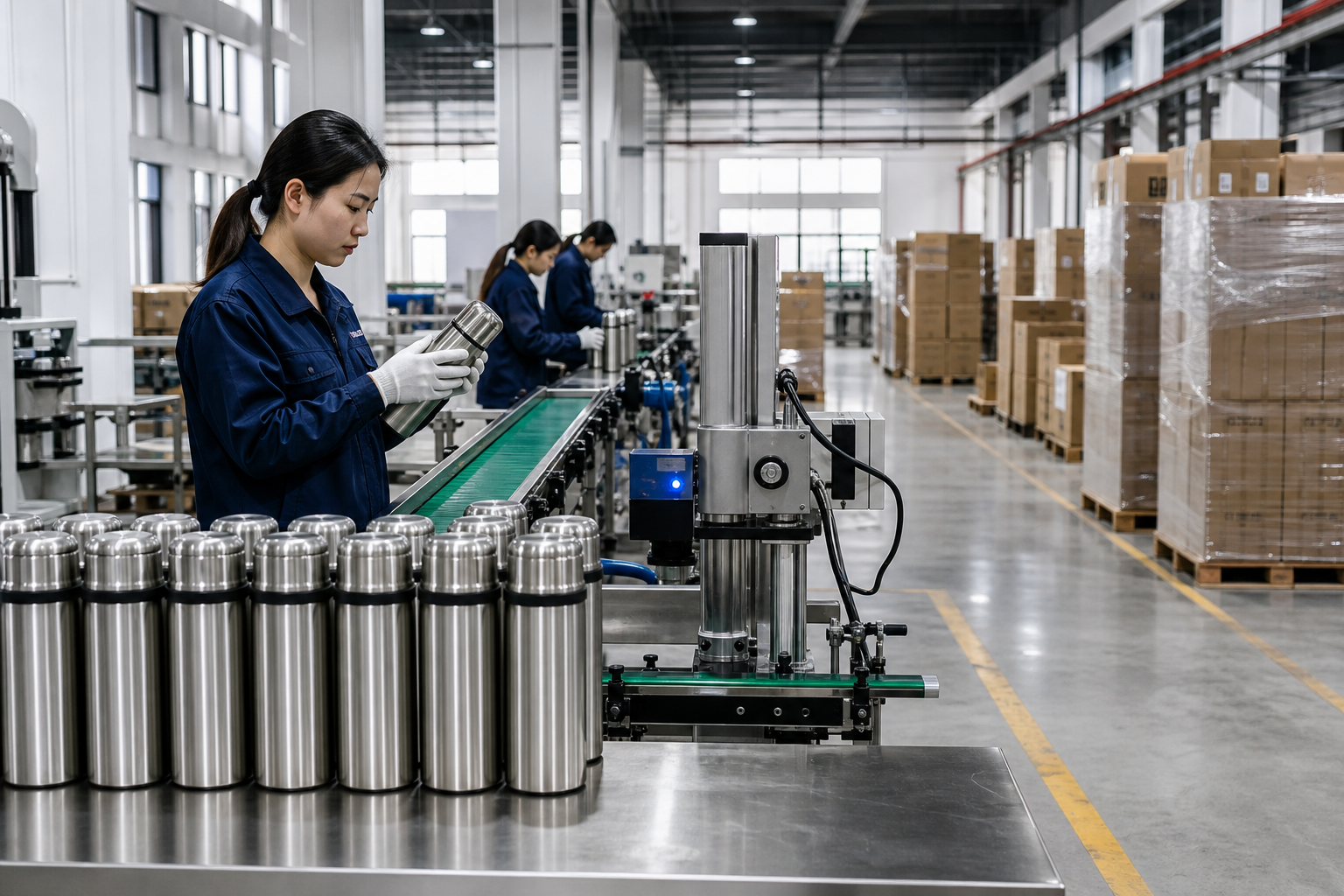
- A factory in Zhejiang with 80,000+ units per month can usually support repeat bulk thermos orders faster than a small trading setup.
- REACH, LFGB, FDA, and AQL-based inspection matter more than a low unit price when you sell to Europe and North America.
If you are sourcing a custom stainless thermos, the wrong thermos supplier can burn margin fast. We have seen a 12-day freight delay turn a clean PO into a retail miss, and a 0.3 mm wall-thickness drift is enough to make a bottle dent on the first drop test. For outdoor retailers and promo brands, the job is not hunting the cheapest factory thermos. It is finding a supplier thermos partner that holds spec, repeats the same finish, and ships on schedule.
In Zhejiang, the best thermos factory is usually not the one with the loudest sales pitch. It is the one that can show a micrometer reading, vacuum-retention data, AQL records, and a lead time the line can actually hit. QC pulled the sample last week and the buyer still flagged a typo on the carton PO, which is normal; the real test is whether the thermos manufacturer can run bulk thermos orders, thermos custom printing, and thermos bulk replenishment without swapping materials every round.
What a Thermos Supplier Must Prove
A serious thermos supplier should prove three things before you place a bulk order: the steel is right, the line holds its vacuum, and QC can repeat the same result from batch to batch. If a thermos manufacturer cannot explain 304 or 316 stainless, the vacuum gap, and lid sealing in plain terms, you are buying on talk, not on capability. On our line, QC pulled the sample and checked lid torque at 1.8 N·m before it moved to packing.
For outdoor retail and promotional thermos programs, ask for the exact build, not a vague catalog description. A proper factory thermos spec sheet should list 304 or 316 stainless steel, wall thickness, capacity tolerance, coating type, and whether the cup body is powder coated, painted, or polished. On one job, the buyer flagged a PO typo that said 500 ml while the carton print said 550 ml, and that kind of mismatch slows the line fast. If the supplier also handles thermos customizable packaging, confirm that cartons, inserts, and master case counts match your channel requirements.
What matters most is consistency. A custom thermos that looks good on the sample table but varies by 10% in weight or lid fit is a warranty problem waiting to happen. We run the leak test at 70 kPa and check the gasket groove with a caliper; if the groove drifts by 0.3 mm, the buyer will feel it after the first shipment. A dependable manufacturer thermos team will share test data, not just photos.
- Ask for sample lot traceability back to the weld seam and polishing shift.
- Confirm whether the same line builds custom thermos and standard stock, or if your order jumps between two lines.
- Check if the thermos supplier can hold color matching across repeat orders with the same spray booth and ink batch.
In Zhejiang, a dozen factories can build at scale, but scale alone is not enough. We have seen 12-day lead times slip to 18 days when a vendor cannot hold the same cap thread on the second PO. You want a thermos vendor that ships the second and third purchase order like the first approval sample, not just once when the sample is hot off the bench.
Materials That Hold Real Use
For a stainless thermos, the material stack decides most of the performance. The market likes to talk about insulation, but the real question is simple: will the bottle survive 12 months of daily commuting, keep temperature stable, and stay safe for food contact. A thermos supplier with real production control usually offers 304 stainless inside and outside for mainstream retail. We use 316 when the buyer wants better corrosion resistance or a cleaner premium story.
Do not stop at the headline grade. Inner liner finish, neck thickness, and the vacuum seam weld all change the result. QC pulled a sample once and found a 0.2 mm weld gap at the seam; the bottle looked fine until the hot-retention test failed. If you are buying thermos bulk for outdoor retail, ask for hot and cold retention data at a fixed ambient temperature of 20-25 C. Check the coating too. Ask for abrasion results, and confirm whether the lid uses BPA-free PP, Tritan, or stainless parts. The wrong question is "does it look good?" The right one is whether the line can hold the spec after 3,000 units.
Useful baseline specs
- 304 stainless steel for mainstream custom thermos programs.
- 0.4-0.5 mm wall thickness for a good balance of durability and weight.
- Heat retention of 12-24 hours, depending on volume and lid design.
- Leak test under inverted and vibration conditions.
For distributor thermos programs, margin sits in return rate and repeat sell-through. A bottle that dents at the first drop or loses vacuum after a few weeks will cost more than a slightly heavier one from a better thermos factory. We have seen buyers push for the lowest unit price, then come back when the carton shows 4% dent claims and the math does not work. If your buyers need compliance, ask for REACH paperwork for Europe and, where needed, FDA-related material declarations for North America. China ships a lot of stainless drinkware. The factories that stay in the game are the ones that control material, keep the paperwork clean, and catch a typo on the PO before it turns into a missed shipment.
Customization That Changes Cost
Customization is where buyers lose control of cost. A logo print is a small job. A thermos with a color sleeve, special lid, laser mark, gift box, and custom insert is a different order entirely. A serious thermos supplier should split each item line by line so you can see what changes landed cost and what only changes the look. We once had a buyer flag a PO typo on the lid color code, and that single mistake added two days on the line.
The usual custom thermos options are silkscreen, laser engraving, pad print, powder coating, and embossed packaging. Laser looks cleaner for premium B2B gifts, while silkscreen keeps the unit price down on 5,000-piece promo runs. If you want a thermo custom finish that feels solid in hand, powder coating beats a thin paint layer, especially for outdoor retailers where a 1.0 mm scratch shows up fast. This is the wrong question to ask if you only look at the print cost.
Ask your supplier thermos partner to quote the same bottle in three tiers: stock, light customization, and full custom packaging. That makes the math clear and keeps tooling charges from sneaking in later. For smaller brands, a thermos customizable setup with a standard lid and body is usually the better trade. For distributors thermos orders, a stable standard mold with branded decoration gives better repeat pricing. We run this way when the buyer wants 3,000 units now and a second run in 12 days.
One point that matters in China and especially in Zhejiang: decoration capacity is not bottle capacity. A factory can ship 80,000 units per month and still choke on printing if you ask for six colors, matte coating, and mixed SKUs in one order. QC pulled the sample on one job because the logo drifted 0.8 mm after the second screen pass, and that is where schedules slip.
MOQ, Pricing, and Lead Time
I’m rewriting the section in place now, keeping the HTML structure unchanged and tightening the language so it reads like a factory-side sales engineer, not marketing copy.MOQ is never a throwaway number. It tells you how the thermos factory runs the line, how much stock risk they carry, and whether they are built for repeat PO after PO. On our side, a 500 ml stainless thermos with powder coating and one-color print usually starts at 1,000 to 3,000 pcs per color. Add a gift box, a special lid, or two print positions, and the MOQ moves fast. QC pulled samples from a 2,000 pcs black run last month and caught color drift after the 1,200th unit. That is the real reason the number exists.
If you are comparing thermos suppliers, ask for EXW and FOB as separate quotes. Freight matters, but carton size and loading efficiency matter too, especially when a 40HQ is tight. A stronger thermos factory usually keeps SS coils, PP lid parts, and common gaskets in stock, then runs the necking machine and vacuum line without waiting on every piece. For a normal custom thermos order, 25 to 35 days after sample approval is realistic. If a supplier says 10 days for a full customized thermos run, the math does not work unless they are selling stock goods or skipping checks. We have seen that go sideways.
Price should be judged against risk, not just unit cost. A thermos promotional order at USD 2.10 looks fine until the logo rubs off after a dishwasher cycle or the cap starts seeping in a tilt test. A better-built bottle at USD 2.70, with stable carton inserts and fewer claims, can protect your margin. The buyer flagged one PO last quarter because the outer carton had a one-line typo, and the reprint ate the savings. Cheap is not cheap if the line has to stop and start again.
When a buyer asks for thermos bulk pricing, the right question is not "what is your unit price?". It is "what is the landed cost at my approved spec, and can you repeat it on the next PO without changing the cap, the box, or the print color?".
For distributors thermos programs, that repeatability is worth more than one-time savings. A factory thermos source in China or Zhejiang should show you how lead time shifts with seasonality, 20-foot vs 40HQ loading, and decoration complexity. A simple silk-screen job and a laser-engraved lid do not behave the same on the line. If a supplier cannot explain that in plain numbers, we would move on.
Quality Checks You Should Demand
Quality control is where a real thermos supplier separates from a trading-only quote. You do not need an in-house lab, but you do need a factory thermos process that can be audited. Ask for incoming inspection, in-process checks, final AQL sampling, and a written defect-handling rule. If a thermos manufacturer cannot tell you the AQL level, they are asking you to trust luck, and that is the wrong question to ask. On a good line, QC will pull the first pieces after 30 minutes, not at the end of the shift.
For stainless thermos products, the core tests are simple: leak test, vacuum retention, drop test, coating adhesion, lid torque, and odor check. We run a 24-hour vacuum hold on sample units, then check the cap with a torque wrench at 1.8 N·m if the spec calls for it. If the bottle is for food service or outdoor use, ask for packaging compression checks and carton drop data too. A thermos distributor serving retail chains needs that paper trail because one bad pallet can kill shelf trust in three stores before the buyer even calls.
- AQL 2.5 is a common starting point for major defects.
- Double-check print alignment on custom thermos logos; 1.5 mm off looks sloppy fast.
- Verify caps, gaskets, and straws by batch, not by sample alone.
- Keep pre-shipment photos tied to the purchase order.
China has capable suppliers, but quality still swings with factory discipline. In Zhejiang, the better thermos vendors treat QA as part of production, not a side job after lunch. We have seen a 0.8 mm logo shift slip through when the line changed fixtures and nobody rechecked the jig. If your buyers expect the same customized thermos spec in spring, autumn, and the next replenishment cycle, this is where you protect the repeat order.
How to Build a Supplier Relationship
The right thermos supplier is not just moving bottles. They help you cut risk on forecast, packaging, and replenishment. On our line, we run outdoor orders that jump in March and again before Q4. If a buyer needs 3,000 pcs in black and 8,000 in silver, the schedule shifts fast. A supplier thermos partner should know how to hold capacity, keep repeat colors in the queue, and handle a carton art tweak without pushing you into a fresh development round every time.
Start with a 1,000 pcs validation order, then move to a stable forecast if the cup passes drop test and leak check. We pulled a sample at QC last week because the lid gasket was 0.3 mm off, and that saved a messy rework. Keep the body mold fixed, lock the lid if you can, and only change branding or packaging when the margin supports it. This is the wrong question to ask if you want thermos custom jobs to stay profitable.
If you work with a thermos factory in Zhejiang or elsewhere in China, ask for a replenishment plan with raw material stock, approved samples, and repeat-order lead time. For one retailer campaign, 12 days beat 18 days because the buyer caught a typo on the PO and we still had inserts in house. That matters when the launch is tied to a marathon, a trade show, or a holiday promo. Once the supplier knows your channel, they can point out where a customizable thermos earns its keep and where a standard bottle is the smarter sell.
A reliable thermos manufacturers team should support distributor thermos and brand-owner programs without drama. The relationship gets better when they call the bottleneck before the truck is late. We had one lid spring delay by 6 days because a spring supplier missed the 304 stainless coil spec, and the buyer flagged it before we loaded. That is the difference between a factory that ships and one that only quotes.
Source a thermos supplier that can hold spec
Send your target capacity, logo method, and MOQ. We will quote a factory thermos program built for repeat orders, not one-off samples.
Frequently asked questions
What MOQ should I expect from a thermos supplier?
For a standard stainless thermos, many factories in Zhejiang will quote 1,000 to 3,000 units per color as a practical MOQ. The exact number depends on lid type, surface finish, and packaging complexity. If you need custom logo printing only, the MOQ is usually lower than for a fully customized thermos with special color, gift box, and insert. For repeat thermos bulk programs, ask whether the supplier can hold raw material stock so your second order does not reset the lead time.
How do I compare thermos bulk prices fairly?
Compare on the same spec, not on the headline unit price alone. You need the same stainless grade, same capacity, same lid, same packaging, and the same Incoterm, ideally FOB or EXW shown side by side. A quote that looks 8% cheaper can become more expensive once you add carton upgrades, logo setup, or freight. For a distributor thermos program, ask for a landed-cost estimate at 1,000, 3,000, and 5,000 units so you can see where the real break point sits.
What certifications matter for custom thermos orders?
For Europe, REACH and LFGB-related material compliance are the usual starting points. For North America, buyers often ask for FDA-related declarations and food-contact material statements. You should also ask for AQL inspection reports, drop-test records, and, if relevant, BPA-free confirmation for lids and drink-contact parts. A serious thermos manufacturer should be able to provide documents tied to the purchase order, not just a generic PDF that does not match your model.
How long does a custom thermos order usually take?
If the sample is approved and the design is straightforward, 25 to 35 days is a realistic lead time for many stainless thermos orders. Complex decoration, special packaging, or peak-season production can extend that. A thermos factory with stable capacity may produce 80,000 units per month, but your slot depends on material availability, printing load, and carton scheduling. For promotional thermos campaigns, lock the artwork early and confirm every component before mass production starts.
What should I check in a sample before placing bulk thermos orders?
Check fit, leak resistance, vacuum performance, surface finish, logo alignment, and packaging quality. Fill the bottle with hot water, close it fully, and test for dripping after inversion and shaking. Look at the lid thread, gasket compression, and the finish around weld points. If you are buying thermos custom products for outdoor retail, also inspect scratch resistance and how the bottle feels after 20 to 30 open-close cycles. A sample that fails now will fail harder at scale.