Key Takeaways
- Most Tritan Renew insulated bottle MOQs start at 1,000 pcs per SKU, with custom lids often requiring 3,000 pcs.
- A workable FOB China price is usually USD 4.20-7.80 per unit, depending on 500 ml vs 750 ml, coating, and lid complexity.
- Double-wall 18/8 stainless with 0.4-0.5 mm wall thickness is the practical baseline for export retail quality.
- For private label programs, allow 35-50 days after sample approval, plus 7-12 days for carton and label prep.
If you are comparing tritan renew insulated water bottle wholesale options, you are trying to solve three things at once: material credibility, insulation performance, and landed cost that still leaves room for margin. The spec sheet is easy to copy. The trouble starts at 0.5 mm wall thickness, lid gasket fit, coating rub test results, and whether the factory can hold the same finish on 5,000 pieces after QC pulls the sample.
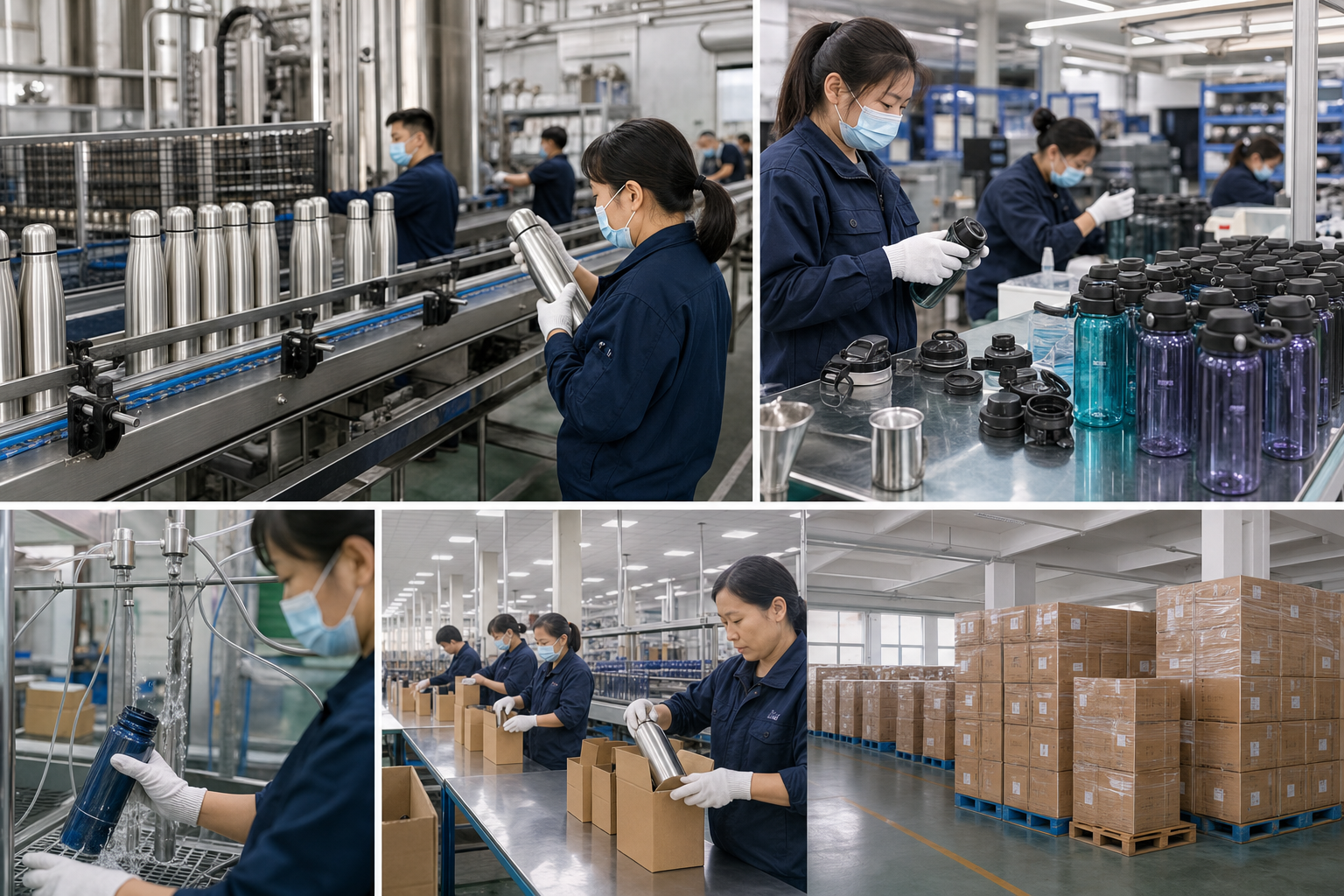
At BottleForge in Zhejiang, we run stainless thermos and hybrid drinkware for export buyers who do not want surprises on the packing line. A buyer once sent a PO with “TRITAN NEW” typed in the item line, and that one word changed the carton artwork and the approval round. For a typical tritan renew insulated water bottle manufacturer, the real question is not “can you make it?” but “can you ship 8,000 units/month, pass REACH and food-contact checks, and stay inside the target unit cost?” That is the right test when you talk to any tritan renew insulated water bottle supplier in China.
What Tritan Renew Actually Changes
When buyers search for tritan renew insulated water bottle wholesale, they usually want a bottle that feels premium, weighs less than an all-metal model, and still gives them a clean sustainability story. Tritan Renew is not a coating. It is a copolyester resin used in lids, mouthpieces, sleeves, and sometimes outer shells. We run those parts on the injection line with 18/8 stainless steel for the thermal body, so the bottle keeps heat performance while the Tritan Renew section cuts down the plastic smell complaint that comes up in first samples.
The decision is commercial. A buyer touches the lid, checks the gloss, and asks whether this piece belongs in a hiking program or a corporate gift catalog. For a tritan renew insulated water bottle branded line, the lid is often where the return rate starts. We had one buyer flag a 0.3 mm gate mark on the cap, and that tiny issue was enough to slow approval. A Tritan lid should pass repeated hot-fill cycles and dishwasher exposure without warping. We normally run the lid at 70-80°C under repeated wash conditions, then check thread wear after 1,000 open-close cycles on the torque tester.
If you are evaluating a tritan renew insulated water bottle manufacturer in China, ask for the exact resin grade, not the brand name on the brochure. Ask whether the lid is pure Tritan Renew, a blend with other copolyesters, or only a cosmetic insert. That is the difference between a real spec and a sales pitch. We see this every week in Zhejiang. One PO came through with “Tritan Renw” typed in the remarks, and QC pulled the sample before packing because the buyer had already mixed up the part callout. Ask early, or you pay for it later.
Sourcing Specs You Must Lock
Do not start with logo placement. Start with build specs. For a tritan renew insulated water bottle custom order, ask the supplier to confirm body construction, insulation time, coating system, cap type, and packaging structure before any quote means something. We run this on the line all the time: if the PO says one thing and the sample says another, the buyer flags it later. A clean baseline is 18/8 stainless steel inner and outer walls, 0.4 mm to 0.5 mm wall thickness, vacuum level suitable for 12 hours hot / 24 hours cold, and a Tritan Renew lid with silicone gasket.
- Capacity: 500 ml, 600 ml, 750 ml, or 1,000 ml
- Finish: powder coat, matte spray, or brushed steel
- Lid: straw lid, screw lid, flip lid, or dual-use cap
- Testing: leak test, drop test from 1.2 m, dishwasher cycle, thermal retention
- Compliance: FDA food-contact, REACH, LFGB if you sell into Germany, and BPA-free declaration
In China, some factories can send a price in 2 hours and still miss the parts that drive sell-through. A tritan renew insulated water bottle factory should tell you the vacuum loss tolerance, paint adhesion standard, and whether the lid gasket is silicone or TPE. QC pulled the sample on one 600 ml run and found the cap seal failed after 48 hours in a 45°C chamber, which is the kind of miss that becomes a return. If your target market is outdoor retail, a tritan renew insulated tumbler variant can make sense because it adds one SKU family without new tooling for every shape.
Lock the technical sheet before you ask for final pricing. That is the right order. Otherwise, you are comparing a finished spec against a half-written sample note, and the math does not work.
MOQ, Price, and Lead Time
Most buyers check the numbers first. Good habit. For tritan renew insulated water bottle wholesale, a realistic spec usually gives a clean quote. A standard 500 ml bottle with one-color logo and a plain carton lands around USD 4.20-5.60 FOB Ningbo or Shanghai at 1,000 pcs MOQ. If the buyer asks for a complex lid, matte powder coating, or a premium gift box, the quote moves to USD 5.80-7.80. Custom tooling is separate. A new cap mold often sits at USD 2,500-8,000, and we had one buyer flag a PO that missed the tooling line by mistake.
Lead time is usually 35-50 days after sample approval and deposit. If artwork comes in late or the carton structure changes, add 7 days. QC pulled the sample on the line last week and found a lid torque issue at 18 N·cm, so we held the packing slot and fixed it before mass run. A solid tritan renew insulated water bottle supplier in Zhejiang should show monthly output, not just talk capacity. At BottleForge, our drinkware lines run at roughly 180,000 units/month across stainless and hybrid insulated models, so we schedule mold slots, coating windows, and packing by the calendar, not by guesswork.
For tritan renew insulated water bottle bulk programs, price breaks usually start at 3,000 pcs and improve again at 10,000 pcs. If you sell on Amazon or through wholesale distribution, ask for landed-cost numbers with carton dimensions, gross weight, and pallet count. A carton change from 12 bottles to 10 bottles can move freight by 8-15%. The math doesn't work if you skip that line item. We ship a lot of these, and the buyer who ignores pallet height usually pays for it later.
Private Label and OEM Setup
If you want a tritan renew insulated water bottle private label program, start with a clean product setup. We usually begin with an existing bottle body, then add a logo, a custom Pantone cap, and a branded lid insert. That is the practical side of tritan renew insulated water bottle OEM. If you need a new shoulder line or a different wall profile, you are in tritan renew insulated water bottle odm territory, and the mold bill goes up fast.
For brand owners, the best trade-off is usually an existing stainless shell, a custom Tritan lid color, a laser logo or silk-screen logo, and a retail box with hang tag. That keeps the line moving without waiting for new tooling on every part. We shipped one outdoor buyer at 1,000 pcs MOQ with a 2-color mark; QC pulled the sample after the logo rubbed at 50 rub cycles, so we widened the print area and switched the artwork. If you want a tritan renew insulated water bottle branded line for retail, check the mark size first. Laser engraving works on stainless, but it does nothing on a colored Tritan lid.
“A good private label bottle does not need the most exotic shape. It needs repeatable finishing, stable lid fit, and packaging that survives export freight.”
In Zhejiang, the good factories are the ones that can move from sample to production without changing the sealing ring, print position, or carton spec. That is the difference between a true tritan renew insulated water bottle factory and a middleman. We ask for tooling drawings, packing photos, and a pre-shipment inspection checklist before PO release. One buyer once sent a PO with the carton size typed as 45 x 45 x 30 mm instead of 45 x 45 x 30 cm, and the math did not work at all.
Compliance, Testing, and Risk
Do not skip compliance because the product looks simple. A tritan renew insulated water bottle manufacturer selling into Europe and North America should support food-contact documents, REACH declarations, and material traceability down to resin lot. On one 20,000 pcs run, QC pulled the sample when the batch code on the outer carton did not match the bottle base stamp. If you are selling through retail chains, ask whether the factory can provide AQL 2.5 or AQL 1.5 inspection reports, depending on your product class. For decorative coatings, ask for abrasion testing and dishwasher resistance results, not a sales promise.
Thermal claims need controlled test conditions, not “keeps hot for 24 hours” copy. Ask for the water temperature, starting temperature, ambient temperature, and the measurement interval. A usable report will state 95°C fill water, 23°C ambient, measured at 6, 12, and 24 hours. We had a buyer flag a 3°C gap between lab data and the PO spec, and the math did not work until the test setup was rewritten. That is the version a procurement manager can actually use.
For U.S. e-commerce and wholesale programs, you may also need carton barcodes, case labeling, and FNSKU-ready pack-outs if your customer is feeding Amazon. Even if you are not doing FBA yourself, distributors now ask for this structure. A supplier in China that understands export logistics will save you money by optimizing carton count and cutting rework. On our line, a simple carton change from 24 pcs to 20 pcs per case reduced damage claims on a 1.2-meter drop test, and that is the kind of detail a buyer notices fast. Zhejiang factories that run OEM drinkware every day are usually better at this than generalists because the packing flow is already set.
Risk usually comes from the small things: a lid seal that shrinks after hot wash, a logo that flakes after 30 dish cycles, or a box that bursts under pallet compression. You do not want to find that after the container leaves Ningbo. We once caught a 0.3 mm gasket mismatch on a pre-shipment fit check, and it would have turned into a leak claim by week two. This is the wrong question to ask: “Can you fix it after shipment?” Fix it on the line, before we ship.
Choosing the Right Supplier
Plenty of suppliers can answer email fast. Far fewer can hold color, seal, and carton quality at volume. When you vet a tritan renew insulated water bottle supplier, ask for five numbers: sample lead time, monthly output, quality docs, real line photos, and whether they own or control the critical tooling. If they stay vague, walk away. A real export supplier answers with dates, quantities, and the PO typo they caught before shipping.
- Sample time: 7-12 days for existing tooling
- Mass production: 35-50 days after sample approval
- MOQ: 1,000 pcs per color or SKU is common
- Inspection: incoming material check, in-process leak test, final AQL sampling
- Export experience: palletized sea freight packing and retail carton labeling
We see buyers push for five lid colors and two body sizes on 1,000 pcs total. The math does not work. Setup gets spread too thin, and the unit price jumps. A practical tritan renew insulated water bottle wholesale program keeps volume on fewer SKUs, then adds variants after sell-through data comes back. That is how distributors keep cash tied up in stock, not in slow movers.
Because BottleForge is in Hangzhou, Zhejiang, we run inside one of China’s strongest drinkware supply clusters. Powder coating, carton sourcing, gasket parts, and freight booking can all land in the same week. One 0.3 mm gasket shift can turn into a leak report, so we keep QC on the line and catch it early. The buyer flagged it, we fixed the tooling, and the next run held. Best buyers do not chase the cheapest quote. They choose the supplier that can repeat the same bottle 12 months later with the same finish and the same seal.
Launch Strategy for Outdoor Retail
If your customer base is outdoor retail, the product needs more than a spec sheet. It has to survive shelf handling, trail use, and reorder math. A tritan renew insulated water bottle line works best as a family: 500 ml for city carry, 750 ml for day hikes, and a tritan renew insulated tumbler for travel and desk use. We run one artwork set, one carton structure, and in some cases the same lid parts across all three SKUs. That saves setup time on the line.
For merchandising, keep the color palette tight. Two body colors and one lid color usually beat a messy 10-color range because buyers read it as a real program, not leftover stock. A buyer once flagged a PO that listed 3 lid colors for a 2,000 pcs run; the math did not work, and we cut it back before production. If you want tritan renew insulated water bottle custom packaging, use one retail carton template with SKU stickers instead of printing a new box for every small run. That shaved 6 days off replenishment on one order.
Outdoor buyers also want durability claims they can trust. A bottle with a 1.2 m drop test result and a leak-proof cap sells better than a line of glossy lifestyle copy. QC pulled the sample after a cap torque check came in at 0.8 N·m instead of the 1.0 N·m target, and we fixed it before shipping. If you are working with a tritan renew insulated water bottle factory in Zhejiang, ask for sample photography, carton drop tests, and carton master data. That gives your sales team cleaner listings and gives distributors less to argue about.
Done right, this product is not just another stainless bottle. It becomes a private label platform that can move into mugs, tumblers, and accessory lids without rebuilding the business from scratch. We ship this kind of program in phases, and the first 500 pcs often tell us whether the retail plan is realistic or just a pretty pitch.
Get a quote on your Tritan Renew bottle line
Send your target size, logo method, and monthly forecast. We will match you with a production spec, MOQ, and FOB price that actually works.
Frequently asked questions
What is a realistic MOQ for Tritan Renew insulated bottle OEM orders?
For most OEM programs, 1,000 pcs per SKU is the practical MOQ if you use existing tooling and standard decoration. If you need a new lid mold, expect 3,000 pcs or more to justify setup. Multi-color orders may also raise MOQ by color, especially for powder coating and printed cartons. A factory in Zhejiang with stable export volume should tell you the MOQ by body color, lid color, and packaging type, not just one headline number.
How much should I budget per unit for wholesale pricing?
For a 500 ml Tritan Renew insulated bottle with simple logo and standard carton, a sensible FOB China budget is USD 4.20-5.60 at 1,000 pcs. Better finishes, more complex lids, or gift boxes can move it to USD 5.80-7.80. Freight, duties, and inland trucking are extra. If someone quotes far below that, check whether the wall thickness, vacuum performance, and compliance documents are actually included.
Can I get samples before placing a bulk order?
Yes, and you should. Existing samples usually take 7-12 days. If the project needs a new Pantone body color or a custom lid insert, sample time may extend to 15-20 days. Pay attention to whether the sample includes production-grade gasket material and final print method. A good sample is only useful if it matches the factory’s actual line process, not a hand-finished showpiece.
What compliance documents do I need for Europe and North America?
At minimum, ask for food-contact compliance, REACH support, and BPA-free material declarations. For Germany or retailers with stricter sourcing rules, LFGB testing is often requested. If you sell on Amazon or through major distributors, carton labels, barcodes, and batch traceability should be ready too. For retail programs, AQL inspection reports help prove the factory controlled defects before shipment.
Is Tritan Renew better than a full stainless steel bottle?
It depends on the channel. Full stainless steel is stronger on premium thermal positioning, while Tritan Renew parts can improve clarity, weight perception, and sustainability messaging. Many brands use stainless for the body and Tritan Renew for the lid or outer components. If your buyers want a lighter look and a modern retail story, that hybrid format is often easier to sell than a plain metal bottle.