Key Takeaways
- A 500 ml vendor thermos often starts at 500 pcs MOQ and 25-35 days lead time after sample approval.
- For FOB China, a custom stainless thermos usually falls around USD 4.20-9.50 depending on finish, lid, and packaging.
- Ask for 18/8 stainless steel, a silicone gasket, and documented leak testing before you approve mass production.
- AQL 2.5 for major defects and 4.0 for minor defects is a practical baseline for bulk thermos inspection.
For a vendor thermos used in retail or promotion, the stainless steel is usually not the weak point. The gap shows up later, when the approved sample and the bulk shipment do not match. We run this check on the line every day: capacity, lid style, insulation time, finish, and packaging all need to be locked before anyone starts arguing about logo size or unit price. QC pulled the sample, and that is where the real spec work starts.
If you are sourcing from China or Zhejiang, treat the purchase order like a spec sheet, not a shopping list. At our Zhejiang factory, monthly output reaches 120,000 units, MOQ is often 500 pcs per design, and standard lead time is 25-35 days after sample approval. That level of detail keeps a custom thermos, customized thermos, or promotional thermos program from turning into a claims problem later. The math does not work any other way.
Start With The Sales Channel
Before you compare supplier thermos quotes, pin down the sales channel first. A 500 ml retail bottle for outdoor stores is a different job from a 750 ml worksite thermos or a giveaway mug for a trade show. We run both on the line, and the packaging test changes fast: a drop from 80 cm that passes for retail can still fail carton crush in promo shipping.
The brief should answer real buyer questions. Will the thermos bulk order go to camping shops, commuters, staff gifts, or a seasonal campaign? Do you need a 500 ml travel shape, a 750 ml worksite bottle, or a wider mouth for tea leaves? One distributor came in asking for “one universal thermo,” then flagged the MOQ at 3,000 pcs because the math on three lid SKUs was cleaner than forcing one lid on every channel.
- Retail: focus on insulation test data, leak resistance, and a matte coating that holds up after 50 rubs in QC.
- Promotion: give the logo a clear print area, keep sampling fast, and lock the landed cost before the PO goes out.
- Distribution: keep the carton size fixed and repeat the same customized thermos spec on every reorder.
Write the brief this way and the vendor thermos quote starts to mean something. You can see whether the supplier is a real thermos manufacturer or just a trading desk copying numbers into an Excel sheet. We’ve seen the wrong PO typo turn “500 ml” into “500 pcs” before; that sort of mistake tells you who is actually reading the order.
Lock Down The Thermos Build
The body build is where most buyer mistakes start. For a real stainless thermos, ask for the steel grade, wall structure, vacuum method, coating, and lid materials in writing. A solid thermos factory should state the inner and outer wall grade, usually 18/8 stainless steel for food-contact parts, and say whether the shell is brushed, powder coated, or spray painted. If the quote only says stainless steel, the spec is too thin to run.
For bulk thermos orders, wall thickness and vacuum performance need a hard check. Thin walls dent in transit; we saw a 0.4 mm shell fail a carton drop test last quarter. Poor vacuum sealing cuts temperature retention. A good manufacturer thermos spec should call out a silicone gasket, BPA-free PP or Tritan lid parts where needed, and a leak test for each production lot. If the bottle is for hot drinks, ask for the hot-hold target in hours at a stated fill temperature, not a loose promise.
Useful spec points to lock before production:
- Capacity in ml and usable fill volume
- Inner and outer stainless grade
- Finish type and coating thickness where relevant
- Lid style: twist, push-button, cup lid, or tea filter
- Temperature retention test standard and test conditions
If your supplier thermos quote cannot answer these items, the low price is probably hiding a narrower margin for error, not a smarter build. We have seen this go sideways on a 3,000-piece PO where the buyer missed the lid thread pitch by 1 mm.
Choose Decoration That Lasts
I’m rewriting the section now, keeping the HTML structure intact and tightening the copy so it reads like factory-side sales language rather than generic marketing.Decoration is what turns a custom thermos into a branded SKU, not a plain utility item. On the line, we see the split fast: outdoor retail wants a finish that survives carton rub, dishwashing, and 6 months in a DC; promo buyers want the logo to pop at the lowest unit cost. Those two briefs do not point to the same method. QC pulled a scuffed sample after a 300-cycle abrasion test, and the buyer flagged it on the spot.
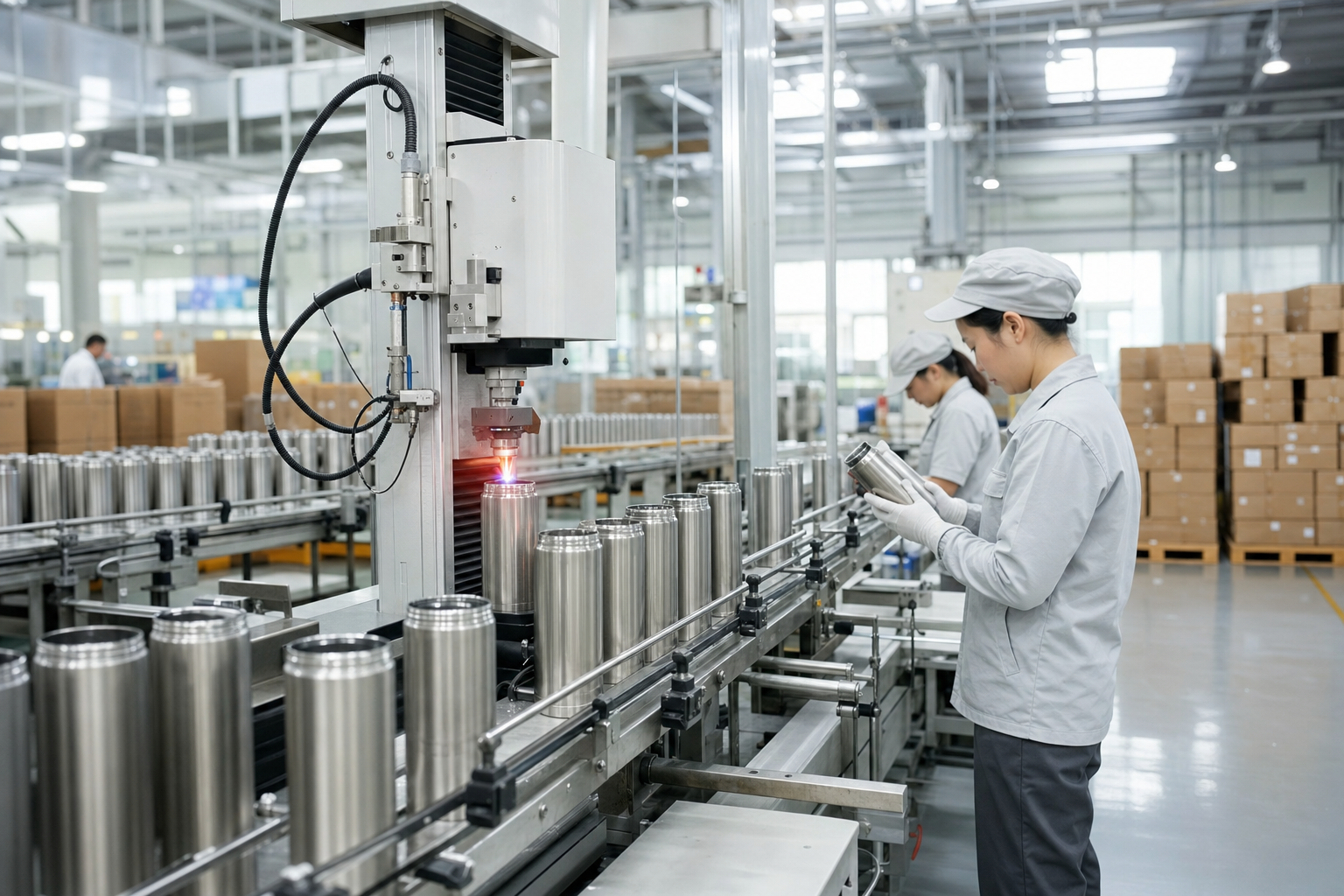
Laser engraving is clean and holds up well on coated stainless. We run it on the fiber laser table at 0.12 mm depth, and it stays sharp on distributor thermos programs after repeated washing. Silk screen still wins when the art is one color and the batch is large; at MOQ 1,000, the setup cost is easy to absorb. If you want a full wrap or more than two colors, check how the ink behaves after 20 hand washes. A thermos custom job that looks fine on day one and starts peeling by week two is a bad buy. We have seen a PO typo turn a 38 mm logo into 48 mm, and the client paid for a replate.
Decide decoration by use case:
- Laser engraving: best for long-life branding and premium factory thermos lines on coated or bare stainless.
- Silkscreen: best for larger logo areas and lower MOQ, usually one-color jobs at 500 to 1,000 pcs.
- Pad print or UV print: useful for detailed artwork on flat zones, especially when the panel is under 12 mm wide.
- Full-color wrap: good for seasonal promotions, but confirm abrasion resistance with a 30-day rub test.
If you are comparing thermos manufacturers, ask for a photo of the same decoration on a 30-day abrasion test sample. We keep those samples on a wire rack next to the packing table, so there is no dressing it up. That tells you more than a polished sales deck.
Price, MOQ, And Lead Time
Most buyers ask for price first. Fine. For a custom stainless thermos quote, we need three numbers on the table: MOQ, unit price at each tier, and lead time after sample approval. On a 500 ml stainless custom thermos made in China, we usually see FOB USD 4.20-6.80 at 1,000 pcs for a standard finish and a single-color logo. If the buyer asks for matte coating, a premium lid, or gift box packaging, the price moves to USD 6.50-9.50. That spread is normal. We run these numbers every week, and the buyer flagged it once after a PO typo showed 10,000 pcs instead of 1,000.
For promotional thermos orders, tiered pricing is the clean way to quote. Ask for 500, 1,000, and 3,000 pcs, then you can see where the line cost drops once the machines are loaded. A serious vendor thermos program should list sample charges too, plus sample lead time: 7-10 days for a standard shape, 12-15 days for a new mold or a special lid. For reorder planning, 25-35 days production is a realistic baseline in Zhejiang when artwork and packaging are already approved. We had a buyer push back on 18 days; the math does not work unless they want a rushed line and a higher reject risk.
If you are buying for distributors, do not accept a quote without carton dimensions and gross weight. Freight can wipe out the savings fast. A 58 x 38 x 28 cm carton and an extra 1.2 kg gross weight can change the landed cost more than a USD 0.20 unit-price gap. In practice, a slightly higher ex-factory price with better pack density is often cheaper landed than the lowest thermos bulk quote. We’ve seen that go sideways on sea freight more than once.
Cheap unit price is not the same as low landed cost. Packaging, carton loading, breakage rate, and freight class decide the real number.
Quality Checks Buyers Should Demand
Bulk thermos quality needs three checkpoints: pre-production, in-process, and pre-shipment. Skip one and you usually pay later in returns, freight claims, or a lost slot on retail shelves. We run batch cards tied to the production lot number, not a pretty photo pack. That matters.
Ask for an inspection plan built on AQL 2.5 for major defects and 4.0 for minor defects. That is a solid starting point, not a magic number. For a manufacturer thermos order, we also ask for vacuum leak checks, lid torque tests, hot-hold and cold-hold verification, plus a 1 meter drop test on packed cartons. QC pulled the sample on a recent 5,000 pcs run, and the buyer flagged a lid cap typo on the PO before packing started. For Europe or North America, request REACH-related material declarations and food-contact compliance papers where they apply. This is the right question to ask before you talk price.
What a strong QC file usually contains:
- Incoming steel and plastic material records
- Vacuum and leak test data by batch
- Logo alignment and color approval sample
- Carton drop-test results
- ISO 9001 or BSCI audit status when available
At a Zhejiang thermos factory, this is what separates a 12-day correction cycle from an 18-day mess after shipment. If your thermos manufacturers cannot show records, treat the quote as risk, not a bargain. We’ve seen that go sideways on a 3,000-unit stainless order when the insulation data was missing from the file.
Pack For Retail And FBA
Packaging is part of the product, not an afterthought. Outdoor retailers want a carton and shelf box that can sit on a pallet without scuffing the finish. Promotional brands often need a clean presentation box for gifting. If you sell through ecommerce, the bar goes up because the unit has to survive courier handling and still look sharp when the customer opens it. On our line, a 2 mm rub mark on the gift sleeve is enough to trigger a rejection.
For Amazon or similar channels, ask the thermos vendor to build the carton around the true outer dimensions after the bottle is inserted into its molded tray or inner box. Last week, QC pulled a sample with 8 mm of slack and the bottle rattled in transit. If the pack is too loose, the bottle dents. If it is too tight, assembly slows and freight volume climbs. When a thermos distributor is planning FBA, barcode placement, FNSKU labeling, and master carton count should be settled before production, not after. We have seen a PO typo turn 24 pcs/carton into 12 pcs/carton, and that costs a week.
Practical pack rules that save money:
- Keep master cartons under 16 kg if you want easier warehouse handling.
- Use molded pulp or EPE inserts for premium custom thermos sets.
- Confirm carton drop resistance with the actual finished pack.
- Print retail barcodes in a position that does not conflict with artwork.
For distributors thermos programs, the right pack is the one that cuts damage and keeps reorders identical. That is the wrong question to ask if you are chasing pretty packaging only. We ship the same die-cut box again and again, and the buyer will flag it if the flap moves even 2 mm. That is how a supplier thermos relationship stays stable instead of turning into a new negotiation every season.
Request a vendor thermos quote today
Send your capacity, logo, target price, and packing needs. We will return a clear spec, FOB quote, and sample timeline.
Frequently asked questions
What MOQ should I expect for a custom vendor thermos?
For most stainless steel vendor thermos orders, 500 pcs per design is a realistic MOQ from a China factory, especially for standard shapes and one-color decoration. If you need a new lid, special coating, or custom mold, expect 1,000 pcs or more. In Zhejiang, a well-run thermos manufacturer can usually sample in 7-10 days and move to 25-35 day production after approval. If you are testing a new channel, ask for tiered pricing at 500, 1,000, and 3,000 pcs so you can see the real cost curve before committing.
What is a fair FOB price for bulk thermos units?
For a 500 ml stainless custom thermos made in China, a fair FOB range is often USD 4.20-6.80 at 1,000 pcs for a standard body, basic lid, and single-color logo. Add premium powder coating, a leak-proof push lid, or gift box packaging, and it can move to USD 6.50-9.50. The cheapest quote is not always the best supplier thermos option because packaging, breakage, and freight can change the landed cost. Ask for a quote with carton size and gross weight so you can compare apples to apples.
Which decoration method lasts longest on a thermos?
Laser engraving usually lasts the longest because it removes or reveals the finish instead of sitting on top of it. It is a strong choice for outdoor retailers and distributor thermos programs. Silk screen printing is still useful for simple logos and lower MOQs, but it can wear faster if the bottle is washed aggressively. For a promotional thermos with detailed artwork, confirm scratch resistance and wash testing before you approve the bulk order. If you want a premium feel, laser plus a matte-coated body is often the most reliable combination.
What tests should my thermos supplier provide?
At minimum, ask for leak testing, vacuum retention data, lid torque testing, and a packed-carton drop test. For a bulk thermos program, AQL 2.5 for major defects and 4.0 for minor defects is a common inspection baseline. If the order ships to Europe or North America, request material declarations for food-contact parts and any REACH-related documentation that applies. A strong thermos factory in Zhejiang or elsewhere in China should be able to show batch records, not just a summary photo set.
How should I pack thermos products for retail or FBA?
Use a rigid inner box, molded insert, and a master carton sized to the finished packed unit. For Amazon FBA, ask for FNSKU labeling, scannable barcodes, and carton counts that fit the warehouse plan. Keep master cartons around or below 16 kg when possible so handling stays easy. For promotional thermos gifts, presentation matters, so a clean sleeve or gift box can justify a slightly higher unit price. The important point is consistency: if the first shipment works, the reorder should match it exactly.