Key Takeaways
- Typical MOQ for a custom bottle in our Zhejiang factory starts at 500 units, with 25-35 days lead time after sample approval.
- Expect FOB pricing from about USD 1.20 to 4.80 per piece depending on material, insulation, and decoration.
- For promo use, print area, lid style, and leak resistance matter more than fancy packaging.
- REACH, LFGB, and FDA-related requirements should be confirmed before you place a water bottle for promotional gifts order.
Buying a water bottle for promotional gifts is not about finding a bottle. It is about finding one that still looks clean after 3 drops on a desk, prints without bleeding, clears compliance, and leaves margin after freight, cap, and decoration. A bottle that leaks after one week is not a promo item. It is a complaint with your logo on it.
For B2B buyers in Europe and North America, the math usually comes down to 3 points: material, decoration method, and landed cost. We run a 500 ml stainless steel bottle a lot in Zhejiang, then adjust by MOQ, lid style, and the end use—employees, students, conference kits, or ecommerce packs. QC pulled the sample if the laser mark shifted by 0.3 mm, and that is the kind of detail that saves you from a PO typo and a slow back-and-forth later.
Choose the right bottle type
The first mistake buyers make is treating every water bottle for promotional gifts as the same SKU. It is not. A 500 ml stainless steel vacuum bottle, a 600 ml Tritan sports bottle, and a 750 ml aluminum bottle solve different jobs, hit different price points, and carry different imprint limits. If you are sourcing a water bottle for business gifts, pick a shape that feels useful on day one and still looks clean after 90 days of commuter abuse. We had a buyer flag a 26 mm mouth as “too narrow” after QC pulled the sample on a Monday, and he was right.
For offices, events, and water bottle for companies programs, stainless steel usually wins because it feels premium and holds temperature. For water bottle for schools and water bottle for students campaigns, Tritan and PP bottles are lighter and cheaper, usually USD 0.65-1.40 FOB in plain form. For water bottle for gym, water bottle for fitness, water bottle for athletes, or water bottle for runners, a one-handed lid and carry loop matter more than double-wall insulation. If you are targeting water bottle for cyclists or water bottle for hiking, check that the cap seals under movement and the bottle fits a standard cage or backpack pocket. The wrong question is “which bottle is best?” The better one is “where will it be carried, and by whom?”
- Stainless steel: 304 inner, 201 outer for budget; 304/304 for better corrosion resistance.
- Tritan: clear, BPA-free, good for water bottle for ecommerce and retail packs.
- Aluminum: light, but liner quality and coating durability need checking.
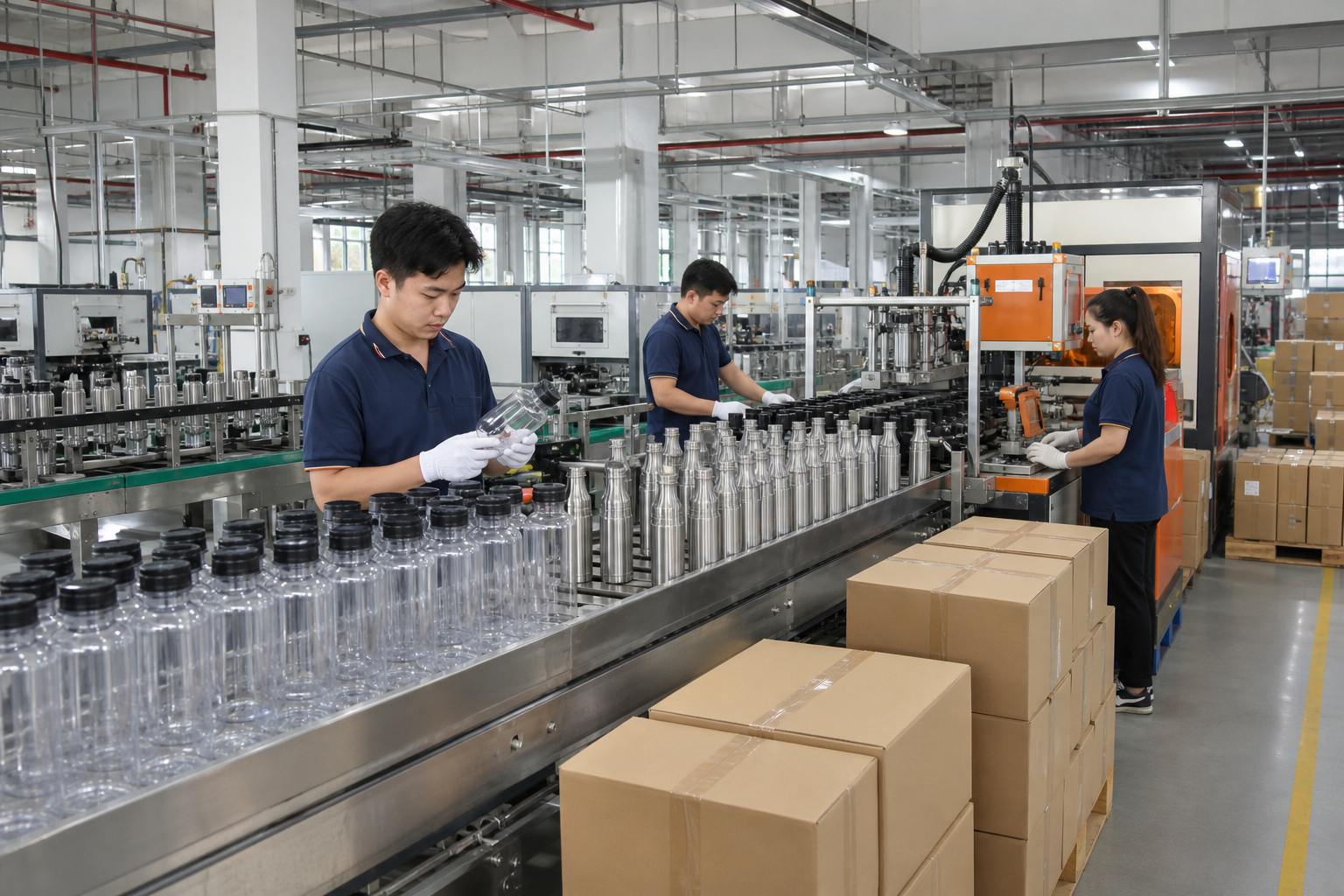
In Zhejiang, we run several bottle families on the same line, so you can switch decoration from screen print to laser engraving without changing the whole tool. That matters when one PO wants water bottle for giveaways, water bottle for swag, and employee onboarding kits on the same shipment. We once caught a buyer’s PO typo on “5000 pcs” versus “500 pcs”; the math did not work, and the packing list would have been a mess. That kind of error costs a week.
Match decoration to the channel
Your logo is not decoration; it is a durability test. The right decoration method depends on where the bottle gets used and how much handling it takes. For a water bottle for promotional gifts handed out at conferences or events, screen printing is usually the cheapest path at USD 0.08-0.25 per color per piece, with strong visibility on flat areas. We had one buyer flag a PO typo on the logo size, 35 mm instead of 3.5 mm, and that sort of mistake shows up fast on the line. Laser engraving works better on stainless steel if you want a cleaner, permanent mark and less risk of peeling.
If your water bottle for marketing program goes through ecommerce, retail shelves, or water bottle for sale online listings, the finish must photograph well. Matte powder coat hides fingerprints and gives a more premium look, but it needs controlled curing. UV printing can handle full-color artwork and gradients, though abrasion resistance needs a hard check. QC pulled the sample after a 24-hour tape test once, and the ink lifted at the edge, so we do not green-light a run until it passes that test or a 50-cycle dishwasher rub test.
Decoration choices that actually matter
- Screen print: best for 1-2 spot colors and large orders.
- Laser engraving: best for stainless steel and executive gifts.
- UV print: best for logos with multiple colors or fine details.
- Heat transfer: useful when you need wraparound art for water bottle for restaurants, cafes, or hotels.
Do not overdesign a promo bottle. A clean 1-color mark often beats a crowded print, especially for water bottle for businesses that want a practical, reusable item instead of a throwaway giveaway. We run 2-color proofs all the time, and the buyer usually comes back and drops the second color after seeing the mockup on a curved 750 ml bottle. That is the wrong question to ask if the piece is meant to live in a bag, not on a shelf.
Know your MOQ and pricing
Most procurement headaches start with a buyer saying, “I need a low price” before anyone has checked the mold, print area, or carton spec. For a standard water bottle for promotional gifts order, a serious supplier in Zhejiang should break out MOQ, tooling, and sampling on the quote. We usually start at 500 units per design for stock shapes, and 2,000 units if the job needs a new mold or a custom lid. Sample lead time runs 7-10 days. Mass production is usually 25-35 days after sample approval, unless the buyer changes the packaging three times and slows the line.
FOB pricing tracks material and structure. A basic single-wall PP bottle can land around USD 0.65-0.95. A 500 ml stainless steel vacuum bottle often sits around USD 2.10-4.80 FOB, depending on steel grade, finish, and lid style. Add gift boxes, sleeves, or individual polybags, and you need another USD 0.10-0.45 per unit. Freight can swing the landed cost more than the bottle itself, and we’ve seen a 20-foot container quote wipe out the margin on a “cheap” order for water bottle for ecommerce shipments because the carton size was too big.
What looks cheap at quote stage can turn expensive once you add print setup, carton pack, and palletizing. Ask for landed-cost logic, not just unit price.
Good suppliers in China will tell you how many units per month they can actually ship. A mid-size Zhejiang factory may run 300,000-500,000 pieces monthly across several lines, with one automatic silk-screen machine and two packing lines keeping things moving. That matters when you need a repeat order for water bottle for employees or a seasonal campaign for water bottle for giveaways. We had a buyer flag a PO typo once—5,000 pcs turned into 500 pcs—and the math stopped working fast.
Check materials and compliance
Never place an order for a water bottle for promotional gifts until you know what touches the liquid, what touches the mouth, and where the shipment is going. That is day-one sourcing work. For North America, we ask the factory for FDA food-contact declarations and the test report behind them; for Europe, we check REACH and, when the part is for food contact, LFGB too. If the bottle has a silicone seal, ask for the material spec and a compression check after repeated opening. QC pulled one seal at 5,000 cycles last month, and the buyer flagged it because the rebound was off.
For stainless steel, 304 inner is the standard choice for most beverage use. If the program is a premium water bottle for business, 316 inner gives better corrosion resistance, but the unit cost goes up and the margin math changes fast. On vacuum bottles, wall thickness usually sits between 0.35 mm and 0.45 mm, depending on the structure. I have seen a 0.32 mm cup dent in transit, and I have seen a 0.48 mm body draw complaints because the bottle felt heavy. For Tritan or PP bottles, ask for BPA-free declarations and impact data if the item is for water bottle for children, water bottle for kids, or school use.
- Ask for material specs on body, lid, seal, and coating.
- Request test reports for migration, odor, and leak performance.
- Check whether inks and coatings are REACH compliant.
Factories in Zhejiang do not all keep the same paperwork standard. We run into this on the line all the time. A clean export supplier sends certificates, batch traceability, and a sample photo with part numbers, not a vague “safe” claim. The buyer once sent a PO with the lid code wrong by one digit, and that single typo delayed the inspection by 3 days.
Design for real-world use
A promo bottle has to get carried, not tossed into a desk drawer. We run samples that way on the line: one hand, subway strap, cup holder, backpack pocket. If the grip is slick or the lid rattles, the buyer flags it fast. For water bottle for conferences or water bottle for events, one-hand opening and a tight leak test matter because people drink while walking between sessions. For water bottle for athletes, runners, and cyclists, a straw lid or push-pull cap usually wins over a screw cap. We’ve seen that go sideways when the lid takes two hands.
For water bottle for hotels, restaurants, and cafes, keep the logo calm and the pack size efficient. QC pulled the sample on a stack test at 12 pcs per carton, and the cartons still needed to stay clean. For schools and kids programs, the mouthpiece and lid need easy washing, and small loose parts are a bad idea. If your market is water bottle for employees, think about the commute: 500 ml or 750 ml is easier to carry than a bulky 1 liter model. The sweet spot for mass gifting is often 600 ml to 750 ml because it feels solid without turning awkward in a tote. One PO last month had “750ml” typed as “7500ml”; the buyer caught it before we cut tooling.
Practical rule: if the bottle weighs more than 420 g empty, you need a reason tied to insulation or a higher target price. If not, customers will call it heavy and stop using it. The math doesn’t work otherwise.
Request factory quotes with specs today
Send your target size, decoration method, and delivery market. We will quote FOB China pricing, MOQ, and lead time with no guesswork.
Frequently asked questions
What is the usual MOQ for a water bottle for promotional gifts?
For stock shapes, MOQ is often 500 units per color or print version. If you need a new mold, custom lid, or special packaging, plan for 2,000 units or more. In our Zhejiang production lines, sample lead time is usually 7-10 days and mass production 25-35 days after approval. For repeat orders, the MOQ can sometimes be reduced if the same material and decoration are used. Always ask whether the MOQ applies to one design, one size, or one carton spec, because that changes your real buying threshold.
How much should I budget per bottle FOB China?
A basic PP or PET-style promo bottle can start around USD 0.65-0.95 FOB. A Tritan bottle usually lands around USD 1.10-2.10. A 304 stainless steel vacuum bottle is commonly USD 2.10-4.80 FOB depending on capacity, finish, and lid. Add USD 0.08-0.25 for simple printing, more for laser engraving or full-color UV. If you need gift boxes, insert cards, or individual polybags, budget another USD 0.10-0.45. Freight and duty can add 15-40% to landed cost depending on route and carton density.
Which decoration method lasts longest on a promo bottle?
Laser engraving lasts the longest on stainless steel because there is no ink layer to peel. For coated bottles, screen printing can be durable if the surface is properly cured and the logo area is flat. UV print gives strong color but should be tested for abrasion. Ask for a tape test, rub test, and if possible a dishwasher cycle test. If your bottle is for businesses, employees, or high-use giveaways, durability matters more than a perfect first-day appearance. For ecommerce, also check that the finish photographs cleanly under soft and hard light.
What compliance documents should I request for Europe and North America?
For Europe, ask for REACH compliance and food-contact support, and if the bottle touches beverages directly, request LFGB test reports where relevant. For North America, request FDA food-contact declarations and any supporting third-party test data. If the product includes silicone, PP, Tritan, or stainless parts, confirm each component separately. Also ask for batch traceability, carton count verification, and AQL inspection records. A common export standard is AQL 2.5 for major defects and 4.0 for minor defects. A supplier in China should be able to provide these documents without delay.
What bottle styles work best for different buyers?
For water bottle for schools and students, use lightweight Tritan or PP with a leak-resistant lid. For water bottle for gym, fitness, athletes, runners, and cyclists, choose a one-hand lid and grip-friendly body. For water bottle for businesses, conferences, events, and swag, a stainless steel vacuum bottle or premium aluminum bottle looks more professional. For water bottle for hotels, restaurants, and cafes, keep the branding subtle and the size moderate, usually 500-600 ml. For water bottle for children, prioritize safe materials, easy cleaning, and a cap that cannot be lost easily.