Key Takeaways
- Typical MOQ for alcohol flask customized orders starts at 500 units per SKU; mixed colors usually raise it to 1,000.
- A 304 stainless flask with 0.6 mm wall thickness is the safer baseline for export drinkware.
- Lead time is usually 25-35 days after sample approval; complex plating can add 7-10 days.
- For Europe and North America, ask for REACH, food-contact declarations, and AQL 2.5/4.0 inspection terms.
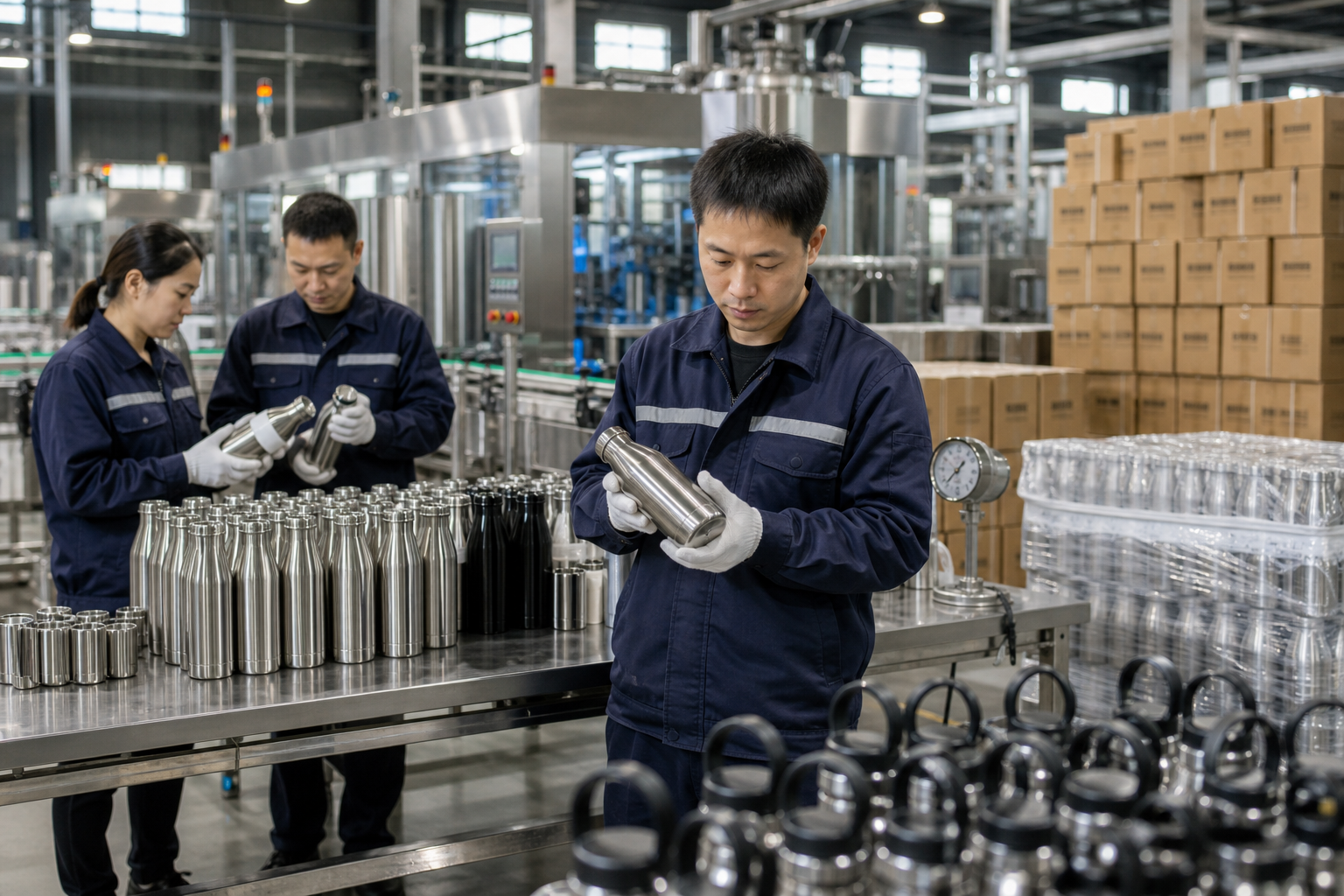
If you are buying alcohol flask customized products for retail, promotions, or private label, the hard part is not the shape. It is the metal gauge, leak test, decoration method, and export paperwork. Skip one of them and you pay for it later. A flask can pass a quick glance and still fail the job if the lid torque is weak, the interior polish is rough, or the finish flakes after a 1-meter drop test. We have pulled samples off the line for a 0.5 mm wall check and found the buyer’s “same spec” sample was not the same at all.
At BottleForge Industrial in Hangzhou, Zhejiang, we see the same thing every season. The buyer says “just a 6 oz flask,” then the PO comes back with a typo on the carton spec, a 500 pcs MOQ question, and a color chip that misses by a mile. If you are sourcing from China or comparing canteen custom options for a broader drinkware line, you need a supplier you can audit, not a nice brochure. That is the right question. At 5,000 units, not 50, the math changes fast, and QC will catch the difference before shipping.
Packaging, shipping, and margin
Packaging moves landed cost more than a lot of buyers expect. A plain polybag and bulk carton keeps the unit price down, but that package will fail retail and Amazon FBA tests fast. If the flask has to sit on a shelf, we run a printed box, barcode label, and carton marks. For a distributor growler or canteen promo order, master carton strength matters; I’ve seen 0.6 mm stainless bodies come off the line with corner dents after a rough truck run.
For sea freight, carton size decides how many sets you pay to move per pallet. A 6 oz flask packed tight can cut freight density by 8-12% versus a loose gift set. QC pulled the sample on one order because the outer carton was 5 mm over the buyer’s pallet limit, and that one typo on the PO cost a week. If you need FNSKU labels or retail barcodes, have the factory apply them before sealing. That is faster than relabeling 10,000 units in your warehouse. On mixed drinkware orders, keep the flask in its own SKU family from the custom canteen or customized growler; receiving teams mix them up if the codes look too close.
If you want better margin, cut the extras that do not change how the customer uses the product. One decoration position, one lid color, one carton spec. Put the money into body thickness and sealing, because that is where returns start. We’ve seen this go sideways when a buyer chased a fancy insert, then got leaks on 3% of the batch. That is the wrong question to ask. The smarter distributor buyers do not overdesign the box; they buy the flask that arrives intact and sells without complaints. That is how we ship repeat orders.
Margin rule: spend on structure and sealing before you spend on extra packaging layers.
Get a flask spec built for your market
Send your capacity, logo, and target price. We will quote the right factory spec, decoration method, and lead time from Zhejiang.
Frequently asked questions
What is a realistic MOQ for alcohol flask customized orders?
For a standard stainless flask, 500 units per design is a realistic MOQ from a real canteen factory. If you want multiple colors, special plating, or premium packaging, expect 1,000 units or more. Mixed artwork usually increases both setup time and inspection time. Many buyers in Europe and North America also forget that MOQ can change by decoration method: laser engraving is easier to run at lower quantities than multi-color UV print. If you are bundling with a custom canteen or custom growler line, the factory may quote a combined MOQ per SKU family rather than per item.
How much does a custom flask cost FOB China?
For a basic 6 oz 304 stainless flask with one-color logo, FOB China pricing often lands around USD 1.20-2.20 at 500-1,000 units. Add around USD 0.15-0.40 for laser engraving, more for UV print, and more again for plated finishes or gift boxes. Thickness matters: 0.6 mm body stock costs more than 0.4 mm but gives a better hand feel and fewer dents. A supplier in Zhejiang should quote body, lid, decoration, and packaging separately so you can see where margin is going.
What compliance documents should I ask for?
At minimum, ask for a food-contact declaration for the body and lid materials, plus any REACH-related documentation if you sell into Europe. For North America, request batch traceability, carton labeling details, and confirmation of BPA-free lid materials if plastic components are included. If the flask has coatings or inks, ask for supporting test reports from the canteen supplier. A proper export-ready Chinese factory should also provide AQL inspection terms and retain sample records. Do not rely on verbal claims from a vendor or trading company.
Which decoration method lasts longest on stainless flasks?
Laser engraving is usually the most durable because it removes or marks the surface rather than sitting on top of it. It is a strong option for premium custom drinkware, distributor drinkware, and repeat retail programs. Silkscreen is cost-effective, but it can wear faster if the end user carries the flask with keys or tools. UV print gives the most graphic flexibility, but it depends heavily on surface prep and coating adhesion. If you need a canteen promotional item with sharp branding and controlled cost, one-color silkscreen is often the best balance.
Can one factory handle flasks, canteens, and growlers?
Yes, many factories in China and Zhejiang can produce a flask, canteen custom items, and customized growler products under one roof, but only if their tooling and finishing lines are actually set up for it. Ask whether they have separate lines for vacuum bottles, flasks, and simple stainless drinkware. The benefit is lower supplier count and easier artwork coordination. The risk is that a canteen manufacturer may overpromise on a flask if the cap or polish process is not optimized. Ask for production photos, recent inspection reports, and a sample from the exact product line you plan to order.