Key Takeaways
- Typical MOQ for a custom flask program is 1,000–3,000 pcs per design, with 25–35 day lead time after sample approval.
- 304 stainless steel flasks usually use 0.4–0.5 mm wall thickness; 201 grade is cheaper but weaker on corrosion resistance.
- Laser engraving often adds USD 0.15–0.40 per piece; color print or UV decoration can add USD 0.20–0.60 depending on coverage.
- A serious Zhejiang canteen supplier should support leak testing, REACH-ready materials, and AQL 2.5 / 4.0 inspection levels.
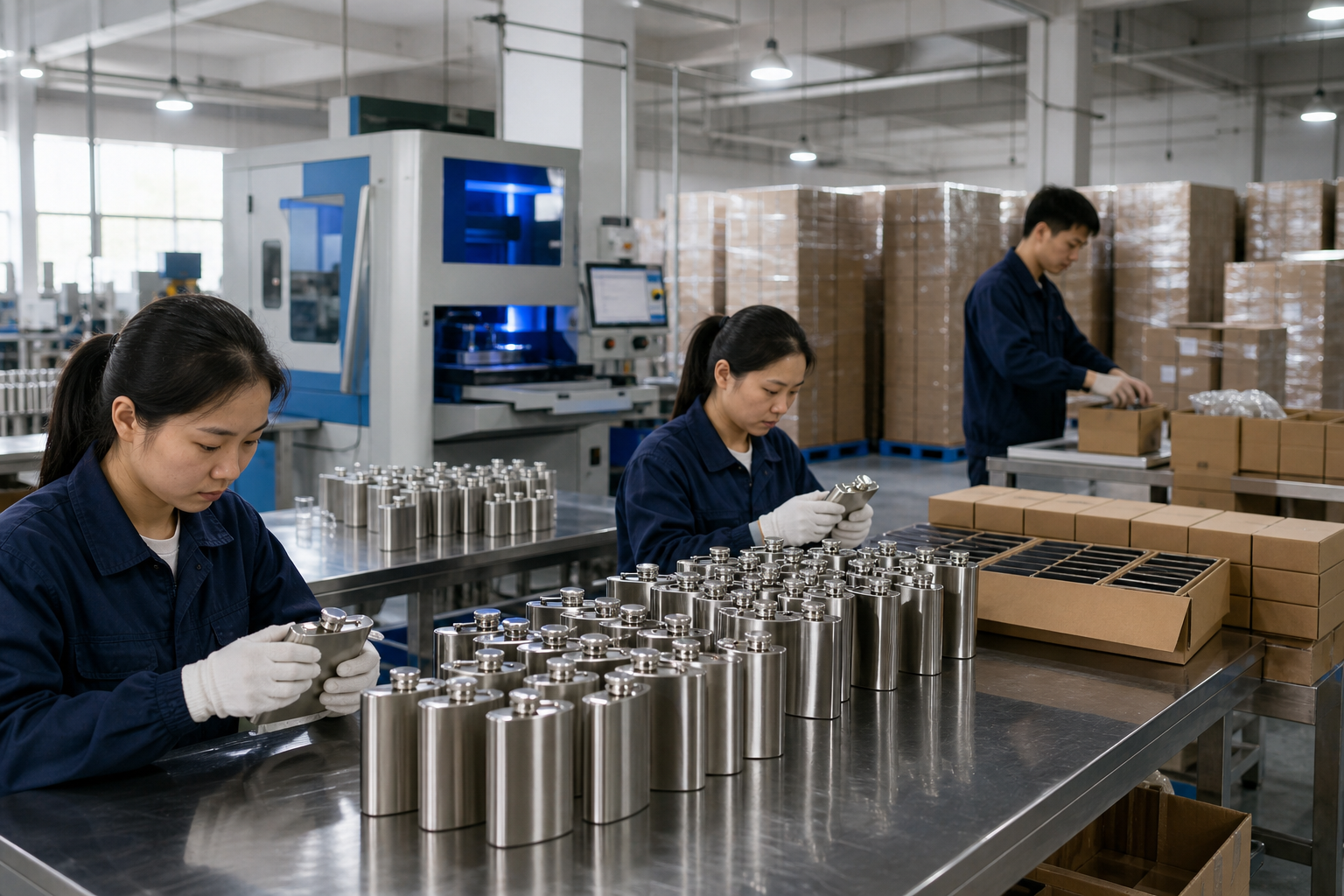
If you are sourcing as alcohol flask distributors, the first mistake is treating every flask like a simple metal bottle. It is not. A flask has to survive filling lines, 1.2 mm seam checks, 8–12 N·m cap torque, leak testing, logo decoration, customs scrutiny, and rough handling in retail or promo channels. On our line in Zhejiang, we sort by material grade, seam quality, finish method, and packing efficiency first. Unit price comes after the sample passes.
The right supplier should offer custom drinkware that matches your market, whether you need a 6 oz pocket flask, a 12 oz gift set, or a canteen custom program with mixed SKUs. If you are buying from a canteen factory or a canteen manufacturer in China, ask for MOQ, lead time, sample cost, packaging spec, and pass/fail standards in writing. We have seen buyers lose a week because the PO said “brushed” and the sample was “satin.” That is the wrong question to ask if you want the shipment to land clean.
What buyers really need to check
For alcohol flask distributors, the spec beats the sales pitch every time. A flask can look sharp in the photo and still fail a carton drop, leak at the seam, or scuff hard after 2 weeks on a retail shelf. We run the same check on the line: 304 stainless steel grade, wall thickness, lid construction, finish consistency. For most distributor drinkware programs, 304 stainless steel is the safer default. It costs more than 201, but the corrosion resistance is better and it keeps the product in a cleaner market position.
For a standard pocket flask, 0.4 mm to 0.5 mm body thickness is the range we ship most often, with food-contact safe lining if your market asks for it and a tight-thread or captive cap that survives repeated opening. If you are sourcing a customized drinkware range, ask the canteen manufacturer for actual test data: leak test method, salt spray results if any coating is used, and carton drop test outcomes. QC pulled the sample, saw a pinhole at the seam once, and that was enough to stop a bad batch. “Passed” without a number is not a spec.
- Material: 304 stainless steel preferred for premium retail and distributor canteen programs
- Thickness: 0.4–0.5 mm for balanced cost and durability
- MOQ: usually 1,000 pcs per artwork, sometimes 3,000 pcs for special finishes
- Lead time: 25–35 days after sample sign-off
A canteen supplier in Zhejiang that runs like a real export factory will talk through these points before you ask twice. We had one buyer flag a PO typo on the logo code, and that saved a 3,000 pcs headache. This is the wrong question to ask: “Can you make it?” The math has to work before production starts.
Which flask styles sell fastest
Not every shape moves at the same speed. In North America and Europe, the quickest sellers are still the 6 oz and 8 oz curved pocket flasks, then gift-boxed 6 oz sets and matte-finish 8 oz options. For promo programs, we run black powder coating, brushed steel, and soft-touch paint on the line because buyers keep asking for a familiar feel, not a weird silhouette. The buyer flagged one sample at 122 mm wide for pocket carry; that sample lost the order.
Some retailers ask for a custom growler, customizable growler, or customized growler because they want a wider gifting range. That is a different product from a flask. We still see canteen distributors bundle them, since the decoration steps and packing inserts are close enough to share cartons and artwork costs across 3 to 5 SKUs. QC pulled the sample with a crooked logo on the 12 oz growler lid, and the buyer rejected it on the spot.
Think in sell-through, not just unit margin. A matte black 8 oz flask with laser logo can move at USD 3.20 landed better than a shiny novelty shape at USD 2.70 landed, because the markdown risk is lower and returns stay down. The math works. If a canteen vendor cannot model landed cost, carton loss, and replenishment timing, we see the deal go sideways fast.
Decoration choices change the order economics
Logo decoration is where a custom canteen program turns profitable or turns into rework. We see it on the line all the time. The right method depends on artwork shape, order quantity, and target price. Laser engraving stays the cleanest for stainless surfaces, and it holds up after 200 wash cycles in our abrasion check. Screen printing can come in cheaper for a simple one-color logo, but the buyer flags it fast if the carton gets rubbed in transit.
For a canteen customized for promotions, UV printing or pad printing fits when you need color and a short lead time. On our side, laser engraving runs about USD 0.15–0.40 per piece, one-color silk screen about USD 0.10–0.25, and multi-color UV about USD 0.25–0.60 depending on coverage and setup. The math changes fast if the PO asks for a 65 mm wrap logo. Ask for a true print area drawing before you approve the file, not after QC has already pulled the sample.
Practical rule: if your selling price is under USD 5 FOB, keep decoration simple. If you go above that, a cleaner finish can carry the extra cost. We had one buyer write “screen prinnt” on the PO and then argue about the setup fee; that is the wrong question to ask. A canteen factory in Zhejiang should break out factory cost, decoration cost, and export packing cost line by line. No bundle pricing.
Compliance is not optional paperwork
If you sell into Europe or North America, compliance sits in the product spec, not in a folder on someone’s desk. For metal drinkware, we ask for food-contact declarations, material traceability, and test reports matched to the target market. REACH coverage matters for coatings, paints, and decorative compounds. If the flask has a silicone gasket or plastic lid part, that component needs its own paperwork. Some buyers still ask for LFGB or FDA documents depending on channel and end customer.
A credible canteen manufacturer or canteen suppliers network in China should be able to show batch-level records, especially on a 10,000-piece distributor program. We run lot cards, inkjet batch codes, and retain-sample tags on the line. For retail and marketplace orders, carton marking, country of origin, and barcode placement have to match the PO exactly. If you ship through Amazon or other online channels, add FNSKU labels, suffocation warnings where required, and carton sizes that fit warehouse limits. One missed 2 mm barcode shift has killed a lot release before.
Do not treat compliance as a certificate you collect once. Treat it as a repeatable factory process with traceable lots, dated reports, and controlled materials.
In Zhejiang, the better factories build this into the workflow. The weaker ones wait until inspection day and then start hunting for missing papers. We’ve seen that go sideways. QC pulled the sample, the buyer flagged a carton typo, and the shipment sat for 12 days instead of 18 days to port because the file set was incomplete. If your launch date is fixed, that is the wrong place to save money.
How MOQ and pricing really work
The MOQ talk is where first-time buyers get tripped up. A custom flask job does not price like stock bottles. Change the logo, finish, carton, or cap color, and we run a new job on the line. For most alcohol flask distributors, 1,000 pcs per design is the normal start for standard decoration, 3,000 pcs for special coating, and more if you need custom molded parts. We’ve had buyers push for 500 pcs, then the unit price jumped so hard the math stopped making sense.
For a plain 6 oz 304 stainless flask, FOB often sits around USD 1.20–1.80, depending on thickness, finish, and cap style. We once had a PO typo that said “gift box” instead of “gift box with insert,” and that one line changed the packing cost enough for the buyer to flag it. Add engraving, a gift box, and an insert card, and you can reach USD 1.80–3.20 fast. Ask for tiered pricing at 1,000, 3,000, and 5,000 pcs. If the factory gives one flat number for all three, QC should pull the sample and check whether they are guessing.
Do not chase the lowest quote by itself. That is the wrong question to ask. A cheap number can hide thin metal, weak welding, bad coating, or no real inspection on the 0.5 mm seam. A stable Zhejiang canteen factory with 300,000 units per month may quote higher, but it usually saves you from scrap, rework, and angry claims later. We have seen this go sideways too many times.
Quality control you can actually trust
Quality control for flask orders should be practical, not theatrical. Ask for in-line inspection, final inspection, and one agreed AQL standard. For most distributor canteen programs, AQL 2.5 for major defects and AQL 4.0 for minor defects is a fair starting point. If your customer base is strict, tighten it. Leak failure, dents, logo misalignment, and finish inconsistency are the defects that hit the margin and trigger claims. We run these checks on the line, not in a meeting room.
Ask the canteen factory for the actual test method. We mean the written one, not “we test before shipment.” A 24-hour upright and inverted leak test, thread torque checks on caps, and carton drop tests at 60 cm or 80 cm depending on carton height are standard asks. If the flask has a coated surface, require abrasion checks. For one buyer, QC pulled the sample after a 10 kg rub test showed scuffing on the logo ring. If you buy customized drinkware for a seasonal campaign, confirm color consistency across batches so the next reprint does not arrive three shades off. The buyer flagged it on the PO, and the math did not work to “fix it later.”
Many alcohol flask distributors overlook packaging. Bad inner trays and weak master cartons turn a good flask into a dented return. A good canteen manufacturer in China should suggest packing by the carton, not just by the piece. That matters if you are consolidating mixed custom canteen SKUs into one container. We ship cartons with clear barcode logic, 12 pcs per inner box in some programs, and pallet stacking that holds through a 1.2 m forklift move. If the factory only says “safe packing,” push back. We have seen that go sideways.
Request a flask quote from Zhejiang
Send your artwork, target MOQ, and destination market. We will quote the right custom drinkware spec, not a guess.
Frequently asked questions
What MOQ should I expect for alcohol flasks from China?
For standard custom decoration, expect 1,000 pcs per design as a practical MOQ. If you want special coating, gift packaging, or a unique cap, 3,000 pcs is more realistic. Some canteen manufacturers in Zhejiang can offer 500 pcs for sample-level orders, but the unit price will usually rise by 20% to 40%. Always ask for pricing at 1,000, 3,000, and 5,000 pcs so you can see the break. For alcohol flask distributors, that tiered quote tells you whether the factory is set up for real export work or just small trial jobs.
Is 304 stainless steel worth the extra cost?
Yes, usually. For a pocket flask or distributor drinkware program, 304 stainless steel offers better corrosion resistance than 201 and is the safer choice for long-term brand reputation. The price difference is often USD 0.10 to 0.35 per piece depending on thickness and order volume. If you sell into Europe or North America, 304 also makes it easier to support compliance and consumer confidence. A canteen supplier should be able to show material certificates and confirm the steel source by batch.
Which decoration method lasts longest on a custom flask?
Laser engraving usually lasts the longest because it removes or alters the surface rather than sitting on top of it. For a customized canteen or customized drinkware program, laser is the best choice when you want a clean premium look and low risk of rubbing off. It commonly adds USD 0.15–0.40 per piece. Screen print can be fine for short-run canteen promotional orders, but it is less durable under abrasion and washing. If the design has multiple colors, ask for UV printing and request an abrasion sample before approval.
How long does production take for a custom canteen order?
A standard order usually takes 25–35 days after sample approval and deposit, assuming no unusual packaging or tooling changes. If you need a custom growler, special lid, or a canteen custom mold, add 15–25 days for tooling and first articles. In Zhejiang, experienced factories often keep a monthly output around 300,000 units, which helps them absorb repeat orders faster. Still, the real schedule depends on decoration queues, raw material stock, and inspection approval.
What documents should I ask from the factory?
At minimum, ask for commercial invoice, packing list, material declaration, and any relevant food-contact or chemical compliance reports such as REACH-related documentation. If you sell on marketplaces, also request barcode placement confirmation and carton dimensions. For a canteen distributor or canteen vendor relationship, you should insist on sample photos, pre-shipment inspection records, and a defect AQL agreement. If your market needs it, ask for LFGB, FDA-related, or traceability documents by lot number. A professional canteen factory in China should be able to organize these without panic.