Key Takeaways
- A credible alcohol flask supplier directory should show MOQ, lead time, compliance, and factory capacity; 500 pcs and 25-35 days are common for custom runs.
- 304 stainless steel with 0.5-0.7 mm wall thickness is the safest default for most custom drinkware buyers.
- Decoration choice matters: laser engraving is durable, while silkscreen and color print need tighter process control for alcohol flasks.
- A factory in Zhejiang or China should be able to support REACH, food-contact documentation, and AQL inspection before shipment.
Most buyers open an alcohol flask supplier directory because they need more than a bottle. They need a factory that can hold capacity within 2 mm, keep the brushed finish steady across 5,000 units, and pack cartons that survive a 35-day ocean trip from China to your warehouse. We run into this all the time. The wrong supplier does not just change unit price; it shows up later as leaks, weak engraving, late reorders, and customs headaches.
For buyers in Europe and North America, the smarter starting point is a short list of factories in Zhejiang or other parts of China that can show material control, compliance, and repeatability on paper and on the line. A good canteen factory or canteen manufacturer should answer MOQ, lead time, decoration methods, and test reports without playing games. If they dodge those basics, the math does not work. We have seen buyers approve a sample, then find a typo on the PO or a 304 stainless claim that did not match the paperwork.
What a real supplier directory shows
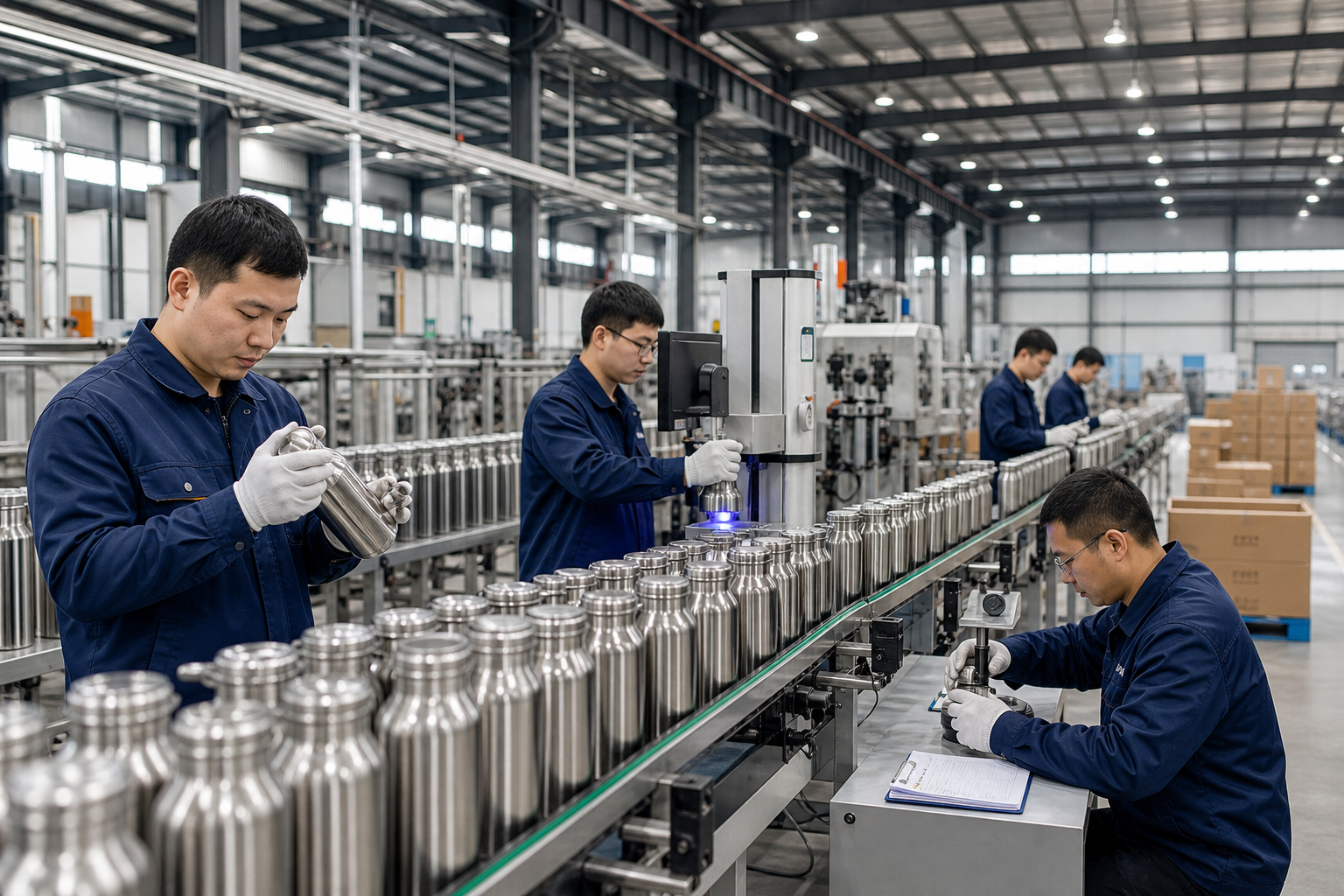
A useful alcohol flask supplier directory should tell you more than a company name and a phone number. You need to know whether the seller is a canteen supplier, a canteen vendor, or a true canteen manufacturer with its own tooling, welding, and finishing lines. That split matters. A trading company can source product, but it does not own the seam welder or control leak testing, and that is where we see problems on the line.
Look for hard data. A serious factory should publish or share MOQ, monthly output, lead time, and the product range it actually makes. A midsize factory in Zhejiang might run 300,000 units per month, accept a 500 pcs MOQ for a standard custom canteen, and ship in 25 to 35 days after sample approval. If the supplier also handles custom drinkware, custom growler, and customized drinkware programs, ask which items run on the same polishing wheel and which ones move to a different line. The math does not work if they claim one setup does everything.
- Ask for factory photos, audit reports, and recent export markets. A stamped audit from last quarter beats a stock photo of a loading bay.
- Check whether the supplier can provide FOB quotes, not just EXW. We have seen buyers get stuck when the carton size changed by 8 mm and the inland trucking fee was never included.
- Confirm whether samples are blank, decorated, or production-grade. QC pulled the sample apart once and found a logo print that looked fine but failed rub test after 50 cycles.
Directories are starting points. The real filter is whether the supplier answers production questions like a factory, not a brochure writer, and whether they can explain a typo on a PO without making excuses.
Materials that survive real use
For an alcohol flask, material choice is where margin and brand protection live. We usually start with 304 stainless steel. It is the practical baseline for a custom alcohol flask because it handles corrosion, holds its shape on the press, and keeps cost in line. If a supplier pushes 201 stainless for a premium retail item, ask why. We’ve seen that go sideways fast: a buyer flagged rust spots after 3 wash cycles, plus odor in the cap area, and the whole order came back hot.
Wall thickness matters too. For a standard flask, 0.5 mm to 0.7 mm is common. Below that, the body feels thin and dents on the drop test. Above that, unit weight climbs, and freight and shelf handling both take a hit. On the line, we check with a micrometer, not a guess. For canteen custom programs, the same logic applies: a customizable canteen or customized canteen has to survive use, not just sit clean in a catalog. If you are sourcing a distributor drinkware line, ask for the material certificate and whether the factory can support ASTM or food-contact declarations for your market.
Cap and lining details matter just as much. A stainless flask with a loose cap thread or weak gasket will fail no matter how good the body looks. Ask for leak test standards and whether the line uses silicone or TPE seals. We run a 1 m drop test and a 24-hour inversion test on sample lots; QC pulled one batch where the gasket sat 0.3 mm off-center, and that tiny miss caused a leak claim. If the supplier also sells a customizable growler, check whether the lid architecture is shared or adapted. Growler closures and flask caps do not behave the same under pressure and transport — the buyer’s PO typo on “shared lid” can turn into a costly assumption.
Decoration methods buyers actually keep
I’m rewriting the section in place, keeping the HTML structure intact and tightening the language so it reads like a factory-side sales engineer wrote it. I’m also checking the phrasing against the style constraints so it stays direct and specific.Decoration is where a lot of custom drinkware orders go sideways. A supplier worth working with will tell you which method matches the material, the 500 pcs MOQ, and the sales channel. Laser engraving wins on a custom flask because the mark is cut into the steel, not sitting on top of ink. We run a 20W fiber laser on the line for clean logos, serial numbers, and a restrained premium finish.
Silkscreen printing is cheaper for larger areas and colored branding, but it needs tight process control. On curved stainless surfaces, registration and curing matter more than buyers expect. On the line, a 10 mm shift from the jig can push the logo off center, and if the factory cannot explain ink type, bake temperature, and abrasion resistance, QC will catch the weak point before the carton closes. The buyer flagged it once, and six months later the returns told the same story. For a canteen promotional program or custom canteen run, that difference shows up fast in reseller complaints.
What to ask before you approve artwork
- Can the supplier provide vector setup and a digital proof with exact placement?
- Will the decoration remain legible after alcohol wipe tests or abrasion testing?
- Is the logo applied before or after final leak testing?
If you are buying for a canteen distributor network, keep the design language simple. One or two imprint colors, one placement, and one SKU structure usually beat a crowded decorated line. Three imprint colors on one PO sounds neat on paper. The math does not work. We have seen this go sideways when the carton mark, the logo file, and the shipping label all need different versions, especially when you are moving customized drinkware and distributor canteen assortments through the same warehouse.
MOQ, pricing, and lead times
Price only means something when you line up the production spec behind it. A quoted USD 1.10 flask and a USD 1.85 flask are not the same job unless the steel grade, polish level, decoration, packaging, and test plan match. We have seen buyers compare them anyway, then the PO lands with 304 stainless on one side and a cheaper sheet on the other. The math does not work.
For most custom alcohol flask programs, MOQ sits at 500 to 1,000 pcs per design. If the cap needs a new mold or the body has a deep emboss, the number goes up fast. Lead time is usually 25 to 35 days after sample approval. Sample making takes 5 to 7 days when the artwork is clean and the buyer does not keep changing the logo size by 2 mm. If a canteen manufacturer says 10 days for a full custom stainless flask, ask what is already on the shelf and what is still on the line.
Freight can move the deal more than the unit price. A compact flask saves space, yet a custom carton, insert card, and pallet rule can add 12% to landed cost. We quote carton size, master carton qty, and gross weight because Amazon sellers get hit hard when a 48 pcs carton turns into 36 pcs after drop test changes. QC pulled the sample last week at 0.8 kg gross, then the buyer flagged the carton mark typo on the PO. That is the difference between a margin that works and one that looks fine only in the spreadsheet.
How to vet a factory or distributor
Directory listings help only when you can tell a real factory from a broker in a clean office. Start with the paper trail: business license, export history, and whether the company owns the production line or just passes orders to someone else. A Zhejiang canteen factory should be able to show audit reports, BSCI status if available, and the compliance files for your market. If they stall on that, the answer is already in front of you.
Then check how they run the line. Ask who inspects incoming steel, how they catch welding marks, what they do about polishing scratches, and whether leak testing is 100% or just a spot check. Ask which AQL level they use at final inspection. A factory that knows AQL 2.5 or AQL 1.5 usually also knows packaging control. We have seen this go sideways when a buyer skipped that step and ended up with 18-day rework instead of a clean 12-day shipment.
“If the supplier cannot explain material traceability, sample approval, and final QC in plain language, you are not talking to a production partner.”
Check the adjacent product lines too. A supplier that already makes a custom growler or customizable growler usually has tighter lid sealing and surface finishing control. That does not make them the right choice on its own, but it gives you a useful benchmark when you are building a distributor drinkware program or a custom canteen range for retail. One typo on a PO, one wrong lid code, and QC pulled the sample before packing.
Build a sourcing workflow that works
The cleanest sourcing process is plain. Start with a directory, then move fast. Shortlist 3 to 5 factories in China or Zhejiang, send the same spec sheet to each, and compare line by line. We ask for capacity, material grade, wall thickness, finish, decoration, packaging, compliance, and target Incoterm. On one recent RFQ, the buyer left out wall thickness and the quotes came back 0.3 mm apart; the math did not work until we fixed the sheet.
Next, order samples from the top two suppliers. For an alcohol flask supplier directory search, you want production-intent samples, not hand-polished display pieces. Check cap fit with a torque wrench, seam finish under a 10x loupe, odor, logo alignment, and carton strength. If you are also sourcing a canteen customizable or customized canteen line, keep the sample criteria the same so your team can judge scale-up risk. We once had QC pull a sample because the lid gasket sat 1.5 mm off-center; the buyer flagged it before the line even started.
Then lock the production standard in writing. Put artwork approval, packaging spec, inspection standard, and the action if AQL fails on the PO. A good canteen vendor will sign off on a clear purchase order and a QC checklist. We had one order where the buyer typed the carton size wrong as 48 x 32 x 28 cm instead of 46 x 30 x 26 cm, and the whole pallet plan had to be redone. Clean paperwork saves a shipment.
If you are building a broader portfolio, run the same workflow for custom drinkware across flasks, canteen custom items, and custom growler SKUs. The process does not need polish. It needs to be repeatable, documented, and enforceable at the factory gate. We ship this way because the line tells you fast if the spec is real or just talk.
Request quotes from a verified flask factory
Send one spec sheet, compare three factories in Zhejiang or China, and lock your production standard before you place a custom order.
Frequently asked questions
What should I ask first in an alcohol flask supplier directory?
Start with the questions that expose capability, not marketing. Ask whether the supplier is a factory or trading company, what steel grade they use, what MOQ they require, and what lead time they can commit to. For a standard custom flask, 304 stainless and 500 pcs MOQ are common starting points. Then ask for leak test method, decoration options, and compliance documents such as REACH or food-contact declarations. A supplier in Zhejiang or wider China should answer these without guessing. If they need days to respond with basic production data, they are not organized enough for a time-sensitive B2B order.
How do I judge if a custom flask price is fair?
Compare like for like. A low quote can hide thinner steel, weaker caps, simpler packaging, or no final inspection. For a normal production run, the price may move from around USD 1.10 to USD 1.85 depending on material, decoration, and carton requirements. If you want laser engraving, custom gift boxes, or tighter leak testing, the price should rise. Ask for FOB pricing so you can separate factory cost from freight. A fair quote is one that clearly states material grade, wall thickness, packaging, and sample charge, not just a headline unit price.
Can one factory handle flasks, canteens, and growlers?
Yes, but only if the factory has the right equipment and process control. A canteen manufacturer that also produces custom growler or customizable growler items often shares welding, polishing, and cap assembly lines. That can help on pricing and consistency. The key question is whether each product family has its own tooling and inspection standard. A flask and a growler do not use the same closure logic, so you should not assume the same QC plan works for both. Ask for product-specific samples, not a generic sample kit. One capable factory is better than three weak vendors, but only if it can prove repeatability.
What compliance documents should I request for Europe or North America?
At minimum, ask for material declarations, test reports for food-contact safety, and any market-specific documents your importer needs. REACH is common for EU-bound orders, and buyers often request verification tied to food-contact regulations. If you are selling through retail or online channels, keep carton labeling, country of origin, and traceability records in order. If the supplier offers BSCI or another social compliance audit, that is useful but not enough by itself. You still need product-level documentation. A serious canteen supplier in China should know how to prepare a document pack without improvising at the last minute.
What is a realistic MOQ and lead time for custom drinkware?
For many custom drinkware projects, 500 to 1,000 pcs per design is a realistic MOQ, especially when the item uses standard tooling. Lead time is often 25 to 35 days after sample approval. If your design needs special caps, unique molds, or multiple decoration steps, expect longer. For a canteen custom program or customized canteen line, the factory may need extra time for process setup. A supplier that promises rush production without asking for artwork, carton specs, and shipping terms is usually underestimating risk. Build in sample time, too; 5 to 7 days is normal for a straightforward sample.