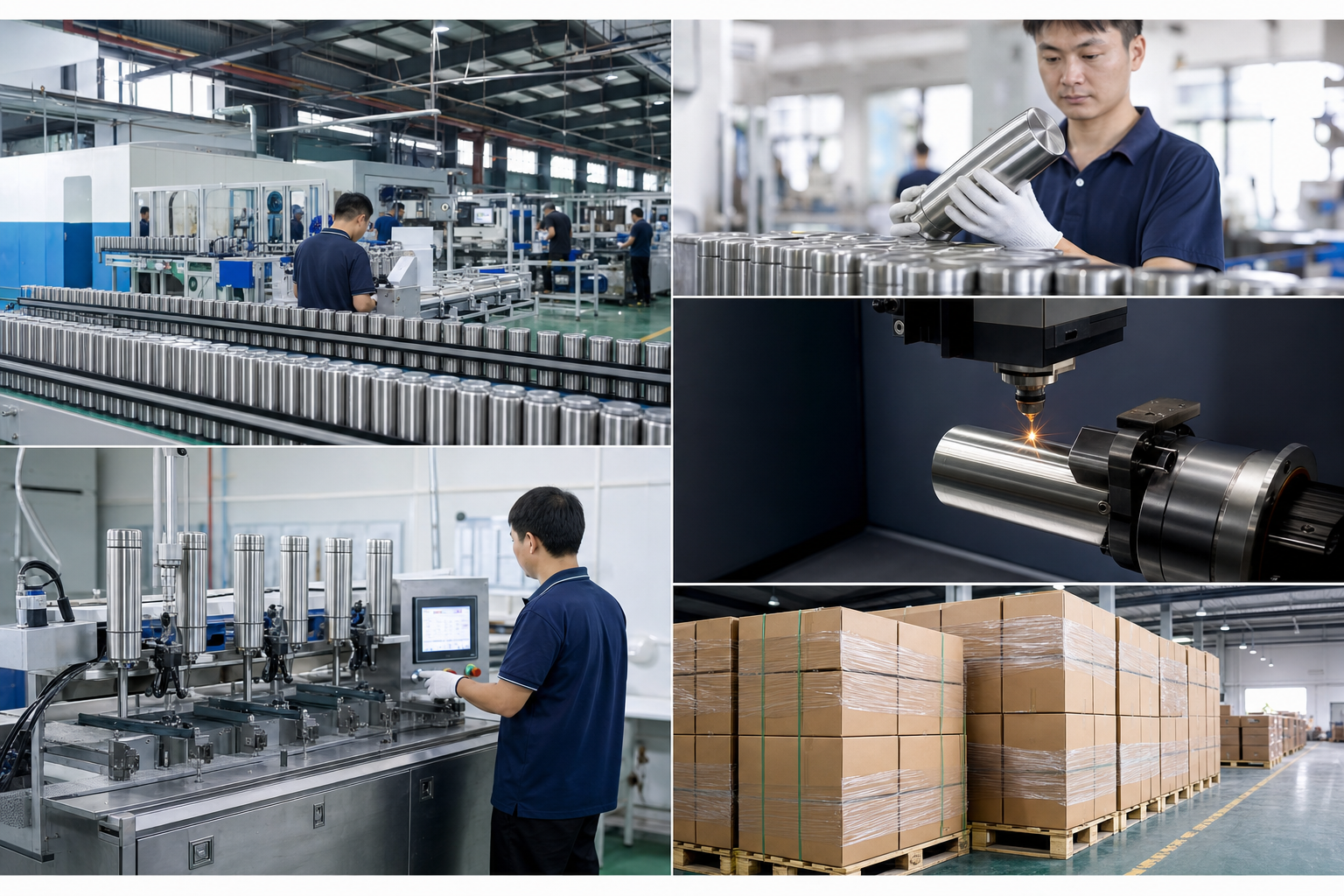
Key Takeaways
- For a standard 6 oz flask, 304 stainless at 0.5-0.6 mm is the practical baseline; 316 is for premium or harsher use.
- Typical MOQ is 500-1,000 pcs for a blank flask, and 3,000 pcs is common once you add custom packaging or special finishes.
- A Zhejiang factory with 300,000 units/month capacity can still need 20-35 days after sample approval, so lead time is not just about machine speed.
- Use AQL 2.5 for major defects, ask for REACH and LFGB where relevant, and request leak testing on every production lot.
If you are buying alcohol flask wholesale bulk, the real risk is not the unit price. The problem is paying for a flask that looks fine in photos and then leaks, dents, or gets held at customs after you have already committed inventory. We run this kind of order in Zhejiang all the time, and the failures usually come from loose specs: steel grade, wall thickness, closure seal, decoration, carton drop test. Last month QC pulled a sample with a 0.6 mm seam mismatch, and the buyer flagged it before the line packed 5,000 pcs.
For Europe and North America, the paper trail has to match the product. REACH, LFGB, FDA food-contact declarations, carton testing, and a QC plan that fits real use are not side items. A PO typo on the closure spec can cost more than a 2% price cut. Treat an alcohol flask like any other wholesale drinkware item: define the use case, lock the materials, and ask for measurable proof before you place the PO.
Start With The Right Use Case
Do not start with a product photo. Start with the use case. A 4 oz pocket flask for gift retail is a different buy than a 12 oz bar-back item, and a bulk canteen or bulk growler order follows another spec sheet again. We had a buyer flag a PO typo once—“4oz” on the quote, “6oz” on the carton label—and the line had to stop for 2 hours. If your customer is a spirits brand, a corporate gift buyer, or a souvenir distributor, the priorities change fast.
For alcohol flask bulk programs, capacity and profile matter more than many buyers expect. The common sizes are 2 oz, 4 oz, 6 oz, 8 oz, and 12 oz. The 6 oz format usually gives the best balance of margin, pocket fit, and packaging efficiency. On our caliper check, the slimmer 6 oz shell also sits better in a 22 mm pocket slot than a fat 8 oz body. If you are selling into travel retail or premium gifting, a slimmer shoulder and cleaner cap line usually beats a heavy shell. The math works better.
Be specific about the product promise. A flask sold as reusable drinkware wholesale should survive repeated hand washing, not just one event. If it will sit with spirits for long periods, ask the supplier how they handle odor control and internal polishing. QC pulled the sample on one lot because the inner weld line still held residue after a 48-hour soak test. If you also source canteen wholesale or wholesale growler programs, do not assume the same hardware, carton size, or logo method will transfer cleanly.
- Gift use: focus on finish, box presentation, and logo placement.
- Retail use: focus on leak rate, scratch resistance, and shelf appeal.
- Promotional use: focus on low tooling cost and stable MOQ.
Choose Steel And Closure Carefully
For most alcohol flask wholesale bulk orders, 304 stainless steel is the default we run. It gives steady corrosion resistance, keeps odor carryover down, and avoids the surprises we see with cheaper grades. If the buyer wants a premium shelf position, or the cartons will sit through humid sea freight and warehouse storage, 316 stainless is the cleaner upgrade. QC pulled one sample after a 72-hour humidity box test, and that is where 201 usually starts to show its weakness. I would only use 201 when the end market accepts the lower spec and you have already beaten it up in testing; we've seen that choice go sideways after a few months.
Wall thickness matters. A practical range is 0.5 mm to 0.6 mm for mainstream flasks. Go too thin and you get denting, seam stress, and a cheap feel. Go too thick and you add weight without helping the user. For cap systems, ask for a food-grade silicone seal and test the closure under real fill conditions. Spirits are not carbonated, but a 40 C truck ride and a cold warehouse floor can push weak caps into slow seepage. On the line, we run a 0.55 mm shell and do an inverted leak check for 24 hours before release.
Do not ignore the inside finish. A polished internal surface cuts taste carryover and makes cleaning easier. If the supplier uses any welding or forming process that leaves residue, request a documented passivation step, ideally aligned with ASTM A967 or an equivalent factory procedure. We once opened a carton and found brown dust at the weld seam after polishing, and the buyer flagged it before shipment. This is not a cosmetic nit. It is the sort of detail that separates best wholesale drinkware from a cheap listing that looks fine until the first complaint.
The shell metal is not the only decision. Cap fit, internal finish, and seam quality decide whether the flask stays in the reorder list.
Branding Changes Your Unit Economics
Decoration is where a lot of buyers bleed margin and do not see it until the invoice lands. A blank flask is one price. A laser-engraved flask with a custom tuck box, polybag, and barcode label is another. We ran this split on a 304 stainless program last month, and the finished cost moved enough to change the margin by two points. If you are building alcohol flask in bulk for retail, the decoration method has to fit the expected sell-through, not just the artwork. Laser engraving gives a clean mark that holds up. Silk screen is the cheaper route for bigger logos and solid brand colors, but we still run ink adhesion checks. Heat transfer or UV print can work on some surfaces, but QC pulled the sample for a scratch test before we signed off.
For private label, ask the supplier for logo position drawings with exact dimensions in millimeters. A 2 mm shift on a curved surface can make the logo look crooked even when the print is inside tolerance. The buyer flagged it on one PO because the art file said 45 mm, the sample came in at 47 mm, and the carton already had the wrong barcode printed. If you also run beer growler bulk or beer tumbler wholesale bulk lines, keep the branding rules tight across the range so your packaging team is not learning a new spec for every SKU.
The best wholesale drink bottle and the best wholesale drinkware programs usually follow one rule: standardize the parts nobody sees, then spend on the part that lands in the customer hand. One cap style. One box structure. One outer carton spec whenever possible. That cuts breakage and makes reorders easier. We ship faster when the line is not stopping for a new insert or a fresh label position, and the math does not work if every SKU needs its own packaging setup.
- Laser engraving: best for premium gifts and long life.
- Silk screen: best for low-cost logos and bright brand colors.
- Custom box: best when shelf impact justifies the extra $0.25 to $0.70.
Compliance And QA You Can Defend
If you sell into Europe or North America, do not treat compliance as paperwork the factory can patch together later. Ask for the food-contact declaration before you pay the deposit. For Europe, we usually line up LFGB and REACH support, plus a statement tied to EU Framework Regulation 1935/2004. For the US, ask for FDA food-contact material confirmation. We had one buyer flag a PO because the ink on the gift box was never reviewed, and that delay cost 12 days. Check the whole system, not just the 304 stainless flask body.
Quality control needs numbers. Use ISO 2859-1 sampling and start with AQL 2.5 for major defects and 4.0 for minor defects. Leak testing is non-negotiable. We run cap torque checks with a torque meter, then an alcohol soak test and a finish adhesion test after rub and drop handling. For plated or painted caps, salt spray or corrosion screening makes sense if the goods will sit in a humid warehouse or ride ocean freight for 18 days. The math does not work any other way.
If you supply larger retail accounts, ask the factory for BSCI or an equivalent social compliance file. For online sellers, especially Amazon-style programs, confirm FNSKU placement, carton count, and warning labels before the line starts. We once found a typo on the outer carton marks, and QC pulled the sample before loading. Clean compliance papers cut customs questions and keep your reorder cycle moving.
- Europe: LFGB, REACH, 1935/2004 support.
- US: FDA food-contact declaration and packaging review.
- Factory control: AQL 2.5 major, 4.0 minor, leak test on every lot.
MOQ, Price, And Lead Time
Most buyers ask the same thing first: unit price. That is the wrong first question if the MOQ, decoration method, and carton spec are still open. For a standard 6 oz stainless flask from China, a blank FOB price usually lands around USD 1.15 to 2.40 depending on steel grade, wall thickness, and cap quality. Add laser engraving and custom packaging, and the factory price can move into the USD 1.80 to 3.60 range fast. If you want a brushed finish or a heavier cap assembly, the math shifts again. We run this with 0.5 mm shells and a 24-piece carton, and a buyer once flagged a PO typo on the cap finish because the quote and art file did not match.
Typical MOQ for alcohol flask wholesale bulk is 500 pcs for a simple stock shape and 1,000 pcs for a branded order. Once you ask for custom tooling, special plating, or a printed retail box, 3,000 pcs is normal. A Zhejiang factory with 300,000 units/month capacity can still quote 20 to 35 days after sample approval because plating, packing, and carton scheduling are usually the bottleneck, not the press line. QC pulled the sample on one 304 stainless run because the lid torque missed spec by 1.2 N·m. The buyer wanted a faster slot, but the line was already booked for a 12-day plating cycle.
If you are comparing this with beer growler wholesale, canteen bulk, or general drinkware wholesale programs, do not let the lower unit price on a larger item distort your flask economics. A 0.08 mm change in cap fit or a switch from plain laser to color print can cut margin by several points. The cheapest quote is often the one that creates the most inspection work. We have seen that go sideways on AQL 2.5 checks, where the carton looked fine and the cap thread was the problem.
Build A Spec Sheet That Works
The cleanest way to run a flask program is to hand the factory a spec sheet we can quote without guessing. Keep it tight, but make every line measurable. Put the capacity in ounces and milliliters, the steel grade, wall thickness, finish, logo method, cap type, box style, and the test standard. If the buyer flags a PO typo on “8 oz” versus “80 ml,” that turns into a scrap pile fast. The line does not read brand stories; it builds what is written.
Cover shipping and retail handling on the same sheet. Ask for master carton dimensions, net and gross weight, and whether we can apply UPC, SKU, or FNSKU labels at source. On one 10,000-piece run, QC pulled the sample carton at 12.4 kg gross, and that saved a rework round after the buyer changed Amazon prep rules. For wholesale canteen or wholesale growler orders, the same discipline applies, but alcohol flasks need tighter cap fit and cosmetic control because the visible area is small and a 0.3 mm mismatch shows up fast.
Use this checklist before you approve production:
- Material: 304 or 316 stainless, with thickness stated in millimeters.
- Seal: food-grade silicone or equivalent, leak-tested.
- Decoration: laser, screen print, or blank finish with exact logo size.
- Compliance: LFGB, REACH, FDA, and carton test documents where required.
- QC: AQL sampling, lot photos, and pre-shipment inspection.
That level of detail lets you move from one PO to repeat orders without reopening the same questions every cycle. We ship faster when the spec is clean. I’d rather see a 1-page sheet with one sharp drawing than a long brand deck that leaves the cap thread unspecified.
Get a flask spec that factories can quote
Send the use case, capacity, finish, and compliance target. We will turn it into a quote-ready spec for China sourcing.
Frequently asked questions
What is the usual MOQ for alcohol flask wholesale bulk?
For a standard stainless flask, 500 pcs is a realistic starting point for a blank or lightly branded order. If you need custom laser engraving, printed packaging, or a special finish, 1,000 pcs is more common. Once tooling, plating, or complex gift boxes are involved, 3,000 pcs is a normal factory ask. In China, some Zhejiang factories will quote lower on paper, but the real question is whether they can hold that MOQ without moving your lead time or quality down.
Should I choose 304 or 316 stainless for flasks?
304 stainless is the practical default for most alcohol flasks. It gives a good balance of corrosion resistance, cost, and availability. Use 316 when you are selling a premium product, need extra corrosion resistance, or want a stronger spec for humid storage and long shipping lanes. For most buyers, 0.5 mm to 0.6 mm wall thickness in 304 is enough. I would only use lower-grade material if the market is clearly price-driven and you have tested odor, finish, and leak performance.
What compliance documents should I request for Europe and the US?
For Europe, ask for LFGB and REACH support, plus a food-contact declaration aligned with EU 1935/2004. For the US, request FDA food-contact confirmation and packaging review. If inks or coatings are involved, treat the whole system as part of the compliance file, not just the steel body. If you sell through a retailer or marketplace, ask for AQL sampling records, carton drop test evidence, and FNSKU label handling if needed. That saves time at customs and in receiving.
What tests should be done before shipment?
At minimum, ask for leak testing on every production lot, cap torque checks, cosmetic inspection under agreed AQL levels, and a finish adhesion test. For premium or painted items, add alcohol soak testing and drop testing on packed units. If the flask has plated components, salt spray screening is useful for export routes with humidity risk. I would set AQL 2.5 for major defects and 4.0 for minor defects as a starting point, then tighten it if the product is retail-facing.
How do I protect margin on adjacent bulk drinkware orders?
Keep the spec common wherever possible. Use one cap family, one carton structure, and one decoration method across flasks, canteen bulk, and beer growler wholesale bulk programs if the product line allows it. That reduces setup cost and makes reordering easier. The same logic applies if you are sourcing drinkware wholesale across multiple SKUs. A slightly higher factory price can still produce a better gross margin if it cuts inspection failures, returns, or repacking at your warehouse.