Key Takeaways
- Typical alcohol flask wholesale MOQ starts at 3,000 pcs, with 25-35 day lead time after sample approval.
- 304 stainless is the practical baseline; 201 saves cost but raises corrosion risk in humid storage and long distribution cycles.
- AQL 2.5 major / 4.0 minor is common for export drinkware, but you should define leak testing at 100% on flask caps.
- FOB China pricing for a basic 8 oz flask often lands around USD 1.20-2.40 depending on finish, logo, and packaging.
If you are sourcing alcohol flask wholesale, the job is not picking a shiny sample. It is getting a flask that clears customs, matches your market rules, and still leaves margin after freight, duty, and packaging. We see buyers get stuck on finish photos, then the buyer flags a leak issue or a carton label error. That is the wrong question to ask. In Zhejiang, you can buy almost any flask spec you want. “Almost any” is not the same as ready to sell.
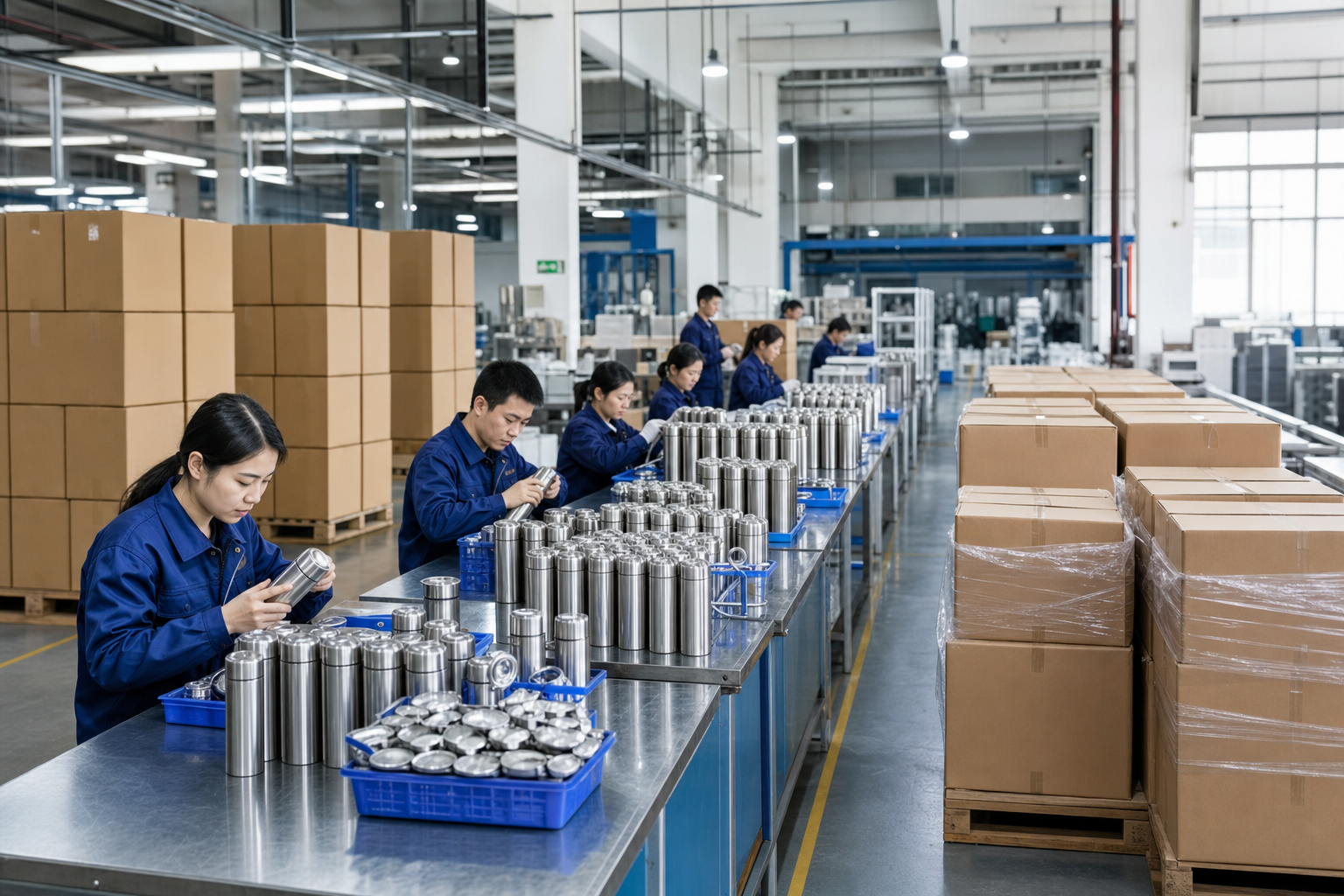
For procurement managers and brand owners, the real split is stainless grade, seal performance, logo method, and whether the factory can hold the same result across 5,000 or 50,000 units. At BottleForge Industrial in Hangzhou, Zhejiang, we run drinkware for export buyers, with monthly output above 300,000 units and a typical flask MOQ starting at 3,000 pieces per design. QC pulled the sample after a 12-hour inverted leak test on the bench, and that is where small defects show up. This is where wholesale stops being a sample exercise and turns into a supply chain decision.
What buyers really pay for
When you ask for alcohol flask wholesale pricing, do not compare only the unit price. A $1.45 flask and a $1.85 flask can look the same on a PDF and still ship like two different products. What you pay for is metal grade, weld quality, cap seal, finishing consistency, and how much rework the factory eats before the cartons leave the line. That matters more than a polished sample photo.
For a standard 6 oz or 8 oz flask in 304 stainless steel, basic FOB China pricing often starts around USD 1.20-1.60 at 3,000 pcs. Add laser logo, gift box, or brushed finish and the number can move to USD 1.80-2.40. If you want a custom shape, colored coating, or leather wrap, the mold, jig, or hand-assembly cost goes up fast. In Zhejiang, where metal drinkware supply is dense, the factories that quote too low usually save on wall thickness, cap liner, or inspection labor. We’ve seen that go sideways. One buyer flagged a PO typo on “304” and we caught it before tooling; the wrong spec would have killed the margin.
- Price driver 1: stainless grade, usually 304 vs 201
- Price driver 2: logo method, such as silk screen or laser engraving
- Price driver 3: packaging, especially retail-ready cartons
- Price driver 4: inspection scope, leak test, and drop test requirements
If you are comparing wholesale drinkware offers, ask for a cost breakdown by material, decoration, and carton format. That is the fastest way to find where the real margin sits. We run this kind of breakdown every week, and the math does not work if the supplier hides the 0.3 mm wall thickness or skips the leak test.
Choose the right flask construction
The cheapest flask is often the one that gets returned. We see it on the line: a body that looks fine on the first sample, then the seam opens after vibration test, heat cycling, and a few rounds of cap twisting. For alcohol flask bulk orders, we normally push 18/8 stainless steel, the common 304 reference, because the corrosion resistance holds up far better than a loose low-grade mix.
A solid export-ready flask usually uses:
- Body thickness: 0.5 mm to 0.7 mm stainless steel
- Cap lining: food-grade silicone or PE gasket
- Surface: brushed, mirror-polished, or powder-coated
- Leak control: 100% inverted leak test before packing
One PO typo once changed the cap spec from silicone to “silicon,” and the buyer flagged it before production. Good catch. For canteen wholesale or wholesale canteen products in adjacent categories, the same rule applies: internal structure beats outside styling. A 0.4 mm wall cuts cost, but it dents easier and the seam can fail in transit. On Europe and North America orders, we also check REACH for coatings and inks. Do not accept “food grade” with no papers. Ask for the material declaration, the test report, and the exact stainless grade.
If you are building bulk canteen, bulk drinkware, or wholesale drinkware programs, consistency across SKUs protects your brand. One sample means little. QC pulled the sample from a 3,000-piece run, and that is where the real answer shows up.
MOQ, lead time, and factory capacity
If you are buying alcohol flask wholesale bulk, the MOQ talk should be blunt. A real factory will tell you the minimum by SKU, color, and logo type, and that is where the numbers come from. For a standard stainless flask, MOQ is usually 3,000 pcs per design. If you want 2 colors and 2 logo positions, that usually turns into 6,000 pcs or more because each change means the line has to reset, and the screen frame has to come off the rack. We run that calculation every week. What is not normal is a supplier promising 500 pcs with a custom print and no surcharge. The math does not work.
Lead time for sample-approved production is commonly 25-35 days. If your packaging is custom printed, add 7-10 days. If the order includes import testing, barcode labels, or FNSKU stickers for Amazon, build in another 3-5 days. Last week QC pulled the sample on a 2 mm logo offset, and that cost us half a shift. BottleForge Industrial in Hangzhou runs above 300,000 units per month across metal drinkware lines, so we can usually absorb seasonal spikes better than small trading operations. That scale matters when you are planning growler wholesale, beer growler wholesale, or beer tumbler wholesale programs alongside flask orders.
Good wholesale sourcing is not about finding the lowest quote. It is about knowing exactly which part of the quote can change later.
Ask for a written production schedule with dates for sample sign-off, material purchase, mass production, QC, packing, and FOB handover. A serious Zhejiang supplier will have no problem putting those dates on paper, down to the carton seal step. If they dodge dates, treat it as a warning sign. We have seen a buyer lose 12 days because a PO typo changed the carton count from 24 to 42, and the line had to wait for a new packing instruction.
Compliance for Europe and North America
For alcohol flask wholesale buyers selling into Europe and North America, compliance is part of landed cost, not a paper add-on. We ask for material declarations, REACH test reports, LFGB where applicable, and the FDA food-contact basis for the US market before we quote a 5,000 pcs order. If the flask has print, the buyer should also check heavy metal limits in the ink and coating; one PO typo on “silver” instead of “matte silver” once sent us back to the sample room.
Do not assume a stainless flask is compliant just because the body is 304 stainless. The steel can pass, while the cap liner or color coating fails. We have seen that go sideways on the line more than once. If you source beer growler bulk or beer growler in bulk alongside flasks, the scope widens fast because lid fit, gasket seal, and pressure hold all matter. For growler wholesale and wholesale growler programs, we run a leak test at 30 kPa and a simple pressure hold check; that is a different job from a pocket flask.
For audit-minded buyers, ask for factory certifications and social compliance records. BSCI is common, and ISO 9001 tells you the process has some discipline. It does not promise zero defects. QC pulled the sample on one batch because the weld seam measured 0.3 mm over spec, and that saved a larger headache later. In Zhejiang and across China, the stronger exporters are the ones who can show paperwork, stable production, and clean records without excuses. That is the bar.
Logo, packaging, and shelf appeal
The decoration method can make or break a flask program. For wholesale drinkware, the right logo method depends on your brand position and the sell-through target. Laser engraving stays clean after 200 rub tests, silk screen works for larger logos at lower cost, and color coating can lift shelf appeal if the finish is controlled on the line. For premium outdoor retail and gifting channels, engraving usually wins because it does not peel. We have seen buyers push back on a shiny black coat when the mockup looked good but the first production run showed fingerprint marks.
For alcohol flask in bulk orders, packaging matters as much as the product. A plain polybag is fine for B2B replenishment, but retail needs more. A printed gift box can add USD 0.20-0.60 per unit depending on paperboard thickness, insert style, and color count. The math works only if your sell price can carry it. We shipped a 5,000-unit order last season with a 1.5 mm insert, and QC pulled the sample because the lid rubbed the foam on one corner. If you are building best wholesale drinkware assortments, match packaging to the channel, not to personal taste.
- Laser engraving: durable, premium, slower setup
- Silk screen: economical, good for simple logos
- Pad print: useful for curved surfaces and small marks
- Gift box: better for retail, corporate, and seasonal programs
For buyers also sourcing beer tumbler bulk or beer tumbler wholesale bulk, standardize carton dimensions across SKUs. We run 8-box master cartons at 12.5 kg, and that keeps pallet stacking clean and freight loss down. A PO typo on carton size, even 2 mm off, can throw the warehouse count and slow the receiving desk. Small design choices save real money when you move from 3,000 to 30,000 units. This is the wrong question to ask: "Which pack looks nicest?" Ask which pack ships cheapest and still clears the shelf.
Quality checks that actually catch defects
I’m rewriting the section in place, keeping the HTML tags and list structure unchanged while tightening the language into a more factory-floor tone with concrete QC details.Quality control for alcohol flask wholesale should be practical, not theatrical. A clean sample means little if the batch leaks or the cap thread strips on first use. Set the inspection plan before production starts, while the 0.2 mm thread gauge is still on the bench. For export drinkware, AQL 2.5 major and 4.0 minor is a common baseline, but flasks need leak checks because leakage is a functional failure, not a cosmetic one.
We recommend these checks on every production run:
- Leak test: 100% inverted hold test with water or alcohol substitute
- Thread fit: cap open-close cycle sampling with a torque check
- Drop test: packed carton from 80 cm to 100 cm, depending on route
- Surface inspection: scratches, dents, and print blur under standard lighting
For growler bulk and beer growler wholesale bulk projects, pressure and seal checks matter even more because larger containers punish weak lids fast. For flask orders, the main risk is usually cap liner quality and seam consistency. We run batch numbers on the inside carton and on the master case. If the buyer flags a leak after shipment, that traceability saves weeks of arguing and a lot of money.
In our Zhejiang facility, we split in-process inspection from final packing inspection. That sounds basic, but some suppliers check only at the end, which means the bad units get boxed with the good ones. We’ve seen 12 defective caps ride out inside a 3,000-unit lot because nobody checked the line after the capper. You want the problem caught at the line, not on the ocean.
How to source without overpaying
The cheapest quote is often the most expensive decision. If you want alcohol flask wholesale bulk pricing that actually works, start with a clear spec sheet: 250 ml or 500 ml capacity, 0.5 mm or 0.6 mm stainless wall thickness, brushed or mirror finish, logo method, packaging, carton count, and target market. We run into PO typos on this every week—one buyer wrote 5000 pcs, then the carton pack changed from 50 to 48, and the quote went sideways. Once the spec is fixed, the factory can quote accurately. Without that, you are just comparing guesses.
For established importers, the smarter move is to consolidate related categories. A supplier that can handle wholesale canteen, canteen bulk, bulk growler, and beer tumbler wholesale bulk orders is usually better positioned to keep freight, packing, and QC labor under control across the program. We ship from Zhejiang, and on mixed orders the line runs cleaner when the same team handles 304 stainless, laser logo, and carton drop-test checks. That matters in China, where a factory with broader capability can keep the production plan steady through peak season. The math does not work if you split five small orders across three vendors.
Use this procurement order:
- Confirm product spec and compliance scope
- Request a 3D drawing or sample confirmation
- Lock logo method and packaging
- Approve pre-production sample
- Place order with written QC and delivery dates
If your target is the best wholesale drink bottle or best wholesale drinkware line for a niche market, do not chase 15 cents of savings while losing consistency. QC pulled the sample on a 1.2 mm rim issue once, and the buyer flagged it before mass production started. That is the wrong question to ask. Pick the factory that can hold spec, ship on time, and document every batch. That is the difference between a one-off order and a repeatable supply chain.
Request a flask quote built for your market
Send your capacity, logo, and target price. We will quote alcohol flask wholesale with clear MOQ, lead time, and compliance notes from Zhejiang, China.
Frequently asked questions
What is the usual MOQ for alcohol flask wholesale orders?
For a standard stainless flask, MOQ is usually 3,000 pcs per design. If you add two colors, special packaging, or multiple logo positions, the effective MOQ can rise to 5,000-6,000 pcs because each variation needs separate setup and QC. A factory in Zhejiang should state this clearly in writing, not hide it until after sample approval.
How much does a custom alcohol flask cost in bulk?
For FOB China pricing, a basic 6 oz or 8 oz 304 stainless flask often runs USD 1.20-1.60 at 3,000 pcs. Laser engraving, brushed finishing, and retail packaging can move it to USD 1.80-2.40. If you want a leather wrap, color coating, or gift box, expect additional cost. Freight and duty are extra.
Which material should I choose: 201 or 304 stainless?
304 stainless is the safer choice for export drinkware. It has better corrosion resistance and gives you fewer complaints during humid storage, long shipping times, and repeated use. 201 can be cheaper, but it is more vulnerable to rust spotting and staining. For North America and Europe, 304 is the practical baseline for alcohol flask wholesale programs.
What compliance documents should I request from a Chinese supplier?
Ask for material declarations, REACH-related test reports where applicable, and evidence that inks, coatings, and gaskets are suitable for beverage contact. If you are selling into the US, request FDA food-contact supporting documentation. Also ask for BSCI or ISO 9001 if you need supplier audit comfort. Do not accept “food grade” as the only proof.
How do I reduce leak failures in flask shipments?
Set the leak test in the purchase order, not just in conversation. Require 100% inverted leak testing before packing, plus random open-close cycle checks on cap threads. For export drinkware, AQL 2.5 major and 4.0 minor is common, but leakage should be treated as a critical defect. Also confirm cap liner material and thread tolerance before mass production.