Key Takeaways
- For beer tumbler customized orders, expect MOQ from 500 to 3,000 pcs depending on decoration and packaging.
- 304 stainless steel with 0.5 mm to 0.7 mm wall thickness is the normal export range for durable beer tumblers.
- A normal factory lead time from sample approval to shipment is 25 to 40 days for repeat orders in China.
- If you need retailer-ready packaging or FBA labeling, confirm carton strength, barcode placement, and AQL before you pay deposit.
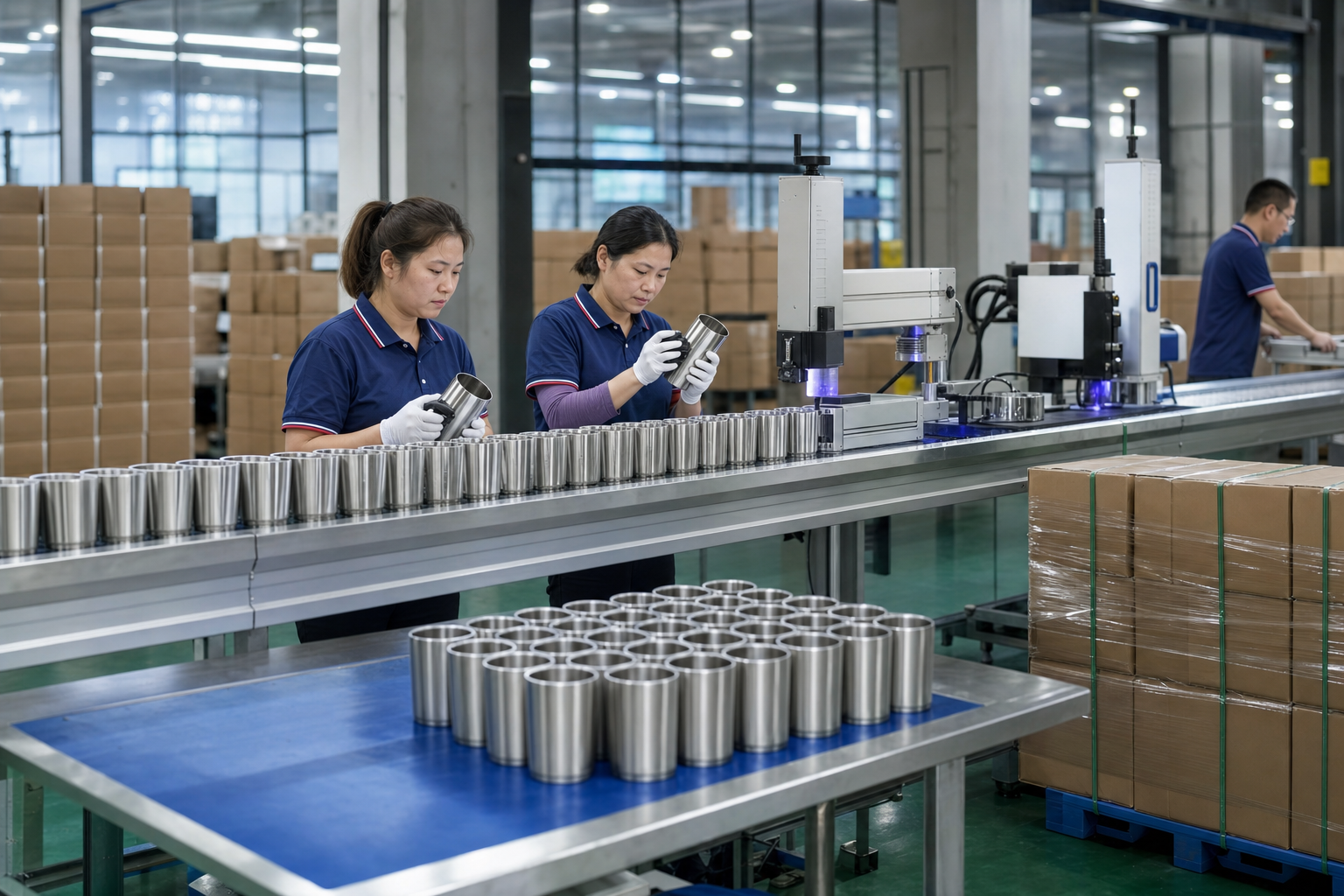
If you are buying beer tumbler customized drinkware for retail, promotions, or hospitality, the first mistake is treating it like a simple cup order. It is not. A tumbler has to handle cold fill, foam control, dishwasher wear, decoration adhesion, and export packaging that survives the trip. In Zhejiang, the shops that do this well keep the sample room and the production line separate. QC pulled one sample after a 48-hour chill test and found a 0.3 mm wall-thickness swing. That is where the trouble starts. Skip that step, and you pay later in returns, faded logos, or cups that feel uneven in the hand.
The other mistake is assuming every supplier is the same. A real canteen factory or canteen manufacturer may also offer custom canteen, customizable drinkware, custom growler, and distributor drinkware programs, but the gap between a canteen supplier and a serious export canteen manufacturer is wide. For beer tumblers, we need a stable process, clear MOQs, documented QC, and a lead time you can sell against. We have seen a buyer flag a PO because the carton count had a typo in one line and the whole shipment went back for recheck. That is the wrong question to ask if you only compare unit price. If you are a canteen distributor, distributor canteen buyer, or wholesale drinkware vendor, the details below are the ones that matter.
Start With the Use Case
Before you ask for a price, lock down how the beer tumbler will be used. A 12 oz bar tumbler for draft pours is a different job from a 16 oz promo item for a beverage brand, and both differ from a private-label gift set for a distributor growler program. If you want beer tumbler customized for retail, decide whether it will hold cold beer, mixed drinks, or everyday custom drinkware. That choice changes the wall shape, the fill line, and the print method. We have seen buyers skip this step, then come back after QC pulled the sample and the logo was in the wrong place.
A 16 oz straight-wall tumbler stacks cleanly on the line and ships in tighter cartons, while a 20 oz tapered cup feels better in hand but adds tooling cost and more packaging waste. The same logic applies if you are buying canteen customizable items or a custom canteen line. A canteen promotional SKU for a trade show can live with a simple spray finish, but a customized canteen for retail needs better coating adhesion and tougher logo retention after 50 wash cycles. The same goes for customized growler and custom growler programs. Ask what the buyer will touch, wash, and resell. That is the right question. We have seen the math go sideways when someone ordered on look alone.
In practice, a serious canteen factory in Zhejiang will ask for fill volume, lid type, print area, carton count, and MOQ before quoting. If a canteen supplier jumps straight to a low USD price, the number is not useful yet. One buyer once sent a PO with a typo on the cap spec, and we had to stop the line for 2 hours while the sample room checked the drawing again. You are not buying a single sample. You are buying repeatability across a full production run in China.
Choose the Right Material
For beer tumbler customized projects, 304 stainless steel is the default export choice. It gives solid corrosion resistance, fair cost, and buyers know what they are getting. On our line, 304 passes the usual salt-spray check cleanly, while 201 only makes sense when the target is a price-led promo run and the MOQ is tight. For retail or food-service shelves, 304 is the safe call. The wrong question is whether 201 is cheaper; the real question is whether the buyer will reorder after the first complaint.
Wall thickness matters more than first-time buyers expect. A 0.4 mm tumbler feels thin in hand and dents fast; QC pulled a sample like that last week and it marked up on a simple drop test. A 0.5 mm to 0.7 mm wall is the range we run for durable beer tumblers and customized drinkware. If you are ordering a double-wall insulated version, ask for the actual vacuum target in hours, not a sales line. A factory that knows the job can talk straight about weld quality, temperature retention, raw polished, powder coated, or painted finish. That is QC talk, not brochure talk.
This is also where product families matter. A canteen manufacturers line often overlaps with beer tumblers, custom canteen bottles, and distributor drinkware sets because the same stamping, polishing, and deco cells can run across SKUs. That sounds efficient, and it is, but only if the factory holds the same tolerance from one order to the next. We have seen this go sideways when a PO had one wrong logo code and 500 pieces went to the wrong laser mark. The math only works if the factory keeps the stack tight.
Decoration That Survives Use
The logo method is where buyers usually make the order harder than it needs to be. For beer tumbler customized runs, we ship screen print, laser engraving, heat transfer, and UV print. Screen print is the low-cost pick for one- or two-color logos. Laser engraving gives a cleaner mark and holds up better on 304 stainless. Last month QC pulled a sample after a buyer flagged a 0.3 mm logo shift on a 60 mesh screen, and that is the kind of miss that turns a simple job into a rework.
Do not choose decoration by artwork alone. Choose it by wear. If the tumbler will go through daily hand wash, laser engraving or powder coat plus engraving is the safer call than silk print. If the order is a 2,000-piece promo drop with light reuse, a cheaper print method can do the job. The wrong question to ask is “which looks best on screen?” The real question is what survives 18 months in a dish rack, a carton, and a buyer who keeps testing the same sample.
Practical rule: if the logo has to survive retail use, ask for a rub test, dishwasher test, and a pre-production sample. If the vendor cannot explain whether they ran 50 cycles or 100 cycles, you do not have a production-ready supplier.
Good Zhejiang suppliers also tell you when the logo lands on a curved shell, because a 6 mm radius changes registration and ink build-up. We run into this on the line all the time. One PO even came in with a typo on the placement note, and that 2 mm error would have buried half the mark under the seam. That is the gap between a real manufacturer and a generic vendor.
MOQ, Pricing, and Lead Time
MOQ is not a fixed number in this market. For a plain beer tumbler customized with one-color print, a lot of China factories start around 500 to 1,000 pcs. Once you add gift boxes, two or three print colors, or molded accessories, the MOQ can jump to 2,000 or 3,000 pcs fast. We see this on the line all the time. A low quote can be real, but it often means a tighter decoration setup or a higher unit price. Ask for pricing at 1,000 pcs, 3,000 pcs, and 5,000 pcs so you can see the curve, not just the headline number.
As a reference, a repeat order from a Zhejiang canteen factory may need 7 to 10 days for sample approval, 15 to 25 days for production, and another 7 to 10 days for export packing and booking. QC pulled a sample last week and found a 1.5 mm print shift, which pushed approval back two days. If a supplier says a complex customized drinkware order will ship in 10 days total, the math does not work unless it is stock goods with simple marking. A capable plant often runs 300,000 to 500,000 units per month across its drinkware lines, but that does not mean your SKU is sitting ready tomorrow.
Price should be judged on total landed cost, not only FOB. For distributor drinkware, cartons, inserts, master cases, and barcode labels can move your margin more than the cup itself. We ship orders where the inner box adds more cost than the tumbler print. If you are a canteen distributor or distributor growler buyer, ask the factory to quote with and without retailer packaging, then compare the real numbers. This is the wrong question to ask if you stop at unit price.
Compliance and Testing
If your beer tumbler customized order is going into the EU or North America, compliance belongs in the first spec sheet, not in the last email. We ask for the material declaration, food-contact statement, and REACH support files before the line starts. For the U.S. market, buyers usually want FDA food-contact testing. For Europe, the paperwork has to match the destination country, not just the file on our office server. If the same supplier is also quoting canteen custom, customizable growler, or canteen promotional orders, this is the wrong question to ask; the paperwork still has to follow each market. We had one buyer flag a PO typo on the destination port, and that alone changed which test report they would accept.
A good canteen factory should be able to work to AQL 2.5 for major defects and AQL 4.0 for minor defects, or another agreed standard if your QC team uses a different system. Put that on the PO. Ask whether the supplier already runs BSCI audits, traceability logs, and carton drop tests at 76 cm, not just on paper. If you sell through e-commerce, confirm FNSKU labels, polybag warnings, and case pack counts before the cartons hit the line. We have seen chargebacks come from a 12 mm label placement error, and the math does not work when that happens.
Do not confuse a polished sample with an approved production system. The sample room can make a 304 stainless tumbler look perfect in one afternoon. Production has to repeat it 10,000 times, with the same wall thickness and the same lid fit. QC pulled the sample, checked the rim with a caliper, and found a 0.3 mm variation that never showed up in photos. That is the real test.
Packaging for Retail and Distribution
Packaging is not an accessory. On a beer tumbler customized run, the carton spec can swing freight by 8% and decide whether the breakage claim stays at 0.3% or climbs after a 1.2 m drop from the line truck. If the order is going into club stores, food-service distribution, or Amazon-style retail, ask for carton size, drop-test plan, and inner protection before you sign off on artwork. A thin gift box may look clean in renderings, but it crushes under pallet pressure. We run the numbers first, then build the box around them.
If you are building a custom canteen or canteen customizable range alongside beer tumblers, keep the package spec tight: one insert size, one master carton count, and one barcode position. That saves a canteen supplier, a canteen manufacturer, and your warehouse team from rework when the buyer flags a PO typo on carton count. It also keeps customized drinkware and customized growler items moving through the same distributor canteen channel without mix-ups. The wrong question is "can we make each SKU look different?" The right one is "how many packing errors can we remove."
For premium sets, use a two-layer build: retail gift box inside a master carton, then a pallet spec the forwarder can stack at 1,200 kg without corner crush. On higher-volume exports from Zhejiang and other China factories, the best package is the one that protects margin, not the one that photographs best. Ask the factory to send a carton loading plan, stack height, and carton compression test, not just a mockup. QC pulled the sample, checked the 5 mm insert gap, and that saved us from a bad run later.
Send your beer tumbler spec for a factory quote
We can confirm material, decoration, MOQ, and packaging from our Zhejiang production line before you commit to a bulk order.
Frequently asked questions
What is the usual MOQ for beer tumbler customized orders?
For a standard stainless beer tumbler with one-color logo, MOQ is often 500 to 1,000 pcs. If you want special lids, premium box sets, or multiple print positions, expect 2,000 to 3,000 pcs. A serious canteen manufacturer in China will quote different MOQ levels by decoration method, because laser engraving, powder coating, and full-color print all carry different setup costs. The right question is not just the minimum order, but the minimum order at the finish level you actually need.
Which material should I choose for retail beer tumblers?
For most export programs, 304 stainless steel is the safest choice. It is durable, corrosion resistant, and easier to sell in Europe and North America than lower-grade options. If the buyer is a canteen distributor focused on price-first promotions, 201 stainless steel may be offered, but that is usually better suited to short-cycle canteen promotional use. For long-term retail or distributor drinkware, 304 with 0.5 mm to 0.7 mm wall thickness is the practical spec.
How long does a custom order take from sample to shipment?
A normal timeline from sample approval to shipment is 25 to 40 days, depending on complexity and season. Simple beer tumbler customized orders with existing tooling can move faster, while new molds, special packaging, or compliance testing can add time. In a Zhejiang factory with steady capacity, sample confirmation may take 7 to 10 days, production 15 to 25 days, and packing plus booking another week. Always confirm the lead time in writing before you issue the PO.
What decoration lasts longest on a beer tumbler?
Laser engraving usually lasts longest because it removes or marks the surface rather than sitting on top of it. Screen print is fine for promotional drinkware, but it can wear faster under heavy washing. UV print gives more color freedom, but it needs the right curing process and abrasion testing. If you are also sourcing a custom growler or customized canteen, the same rule applies: match the decoration method to how the end user will clean and handle the item.
What compliance documents should I ask for?
At minimum, ask for material declaration, food-contact support documents, and any required testing for your destination market. For Europe, REACH-related support is often requested by importers. For the U.S., buyers typically want food-contact aligned documentation and clear carton labeling. If you are working with a canteen supplier that also serves distributor growler and custom drinkware accounts, ask whether they can support AQL inspection, BSCI audit records, and export carton specs. That saves time when your compliance team reviews the file.