Key Takeaways
- A usable beer tumbler supplier list starts with factory capacity: 300,000-600,000 units/month is a practical benchmark.
- For custom drinkware, expect MOQ around 3,000 pcs and lead time of 25-35 days after sample approval.
- Ask for AQL inspection terms, material certificates, and decoration durability tests before you compare FOB prices.
- If a canteen manufacturer cannot explain coating, wall thickness, and packing method, it is not ready for distributor drinkware.
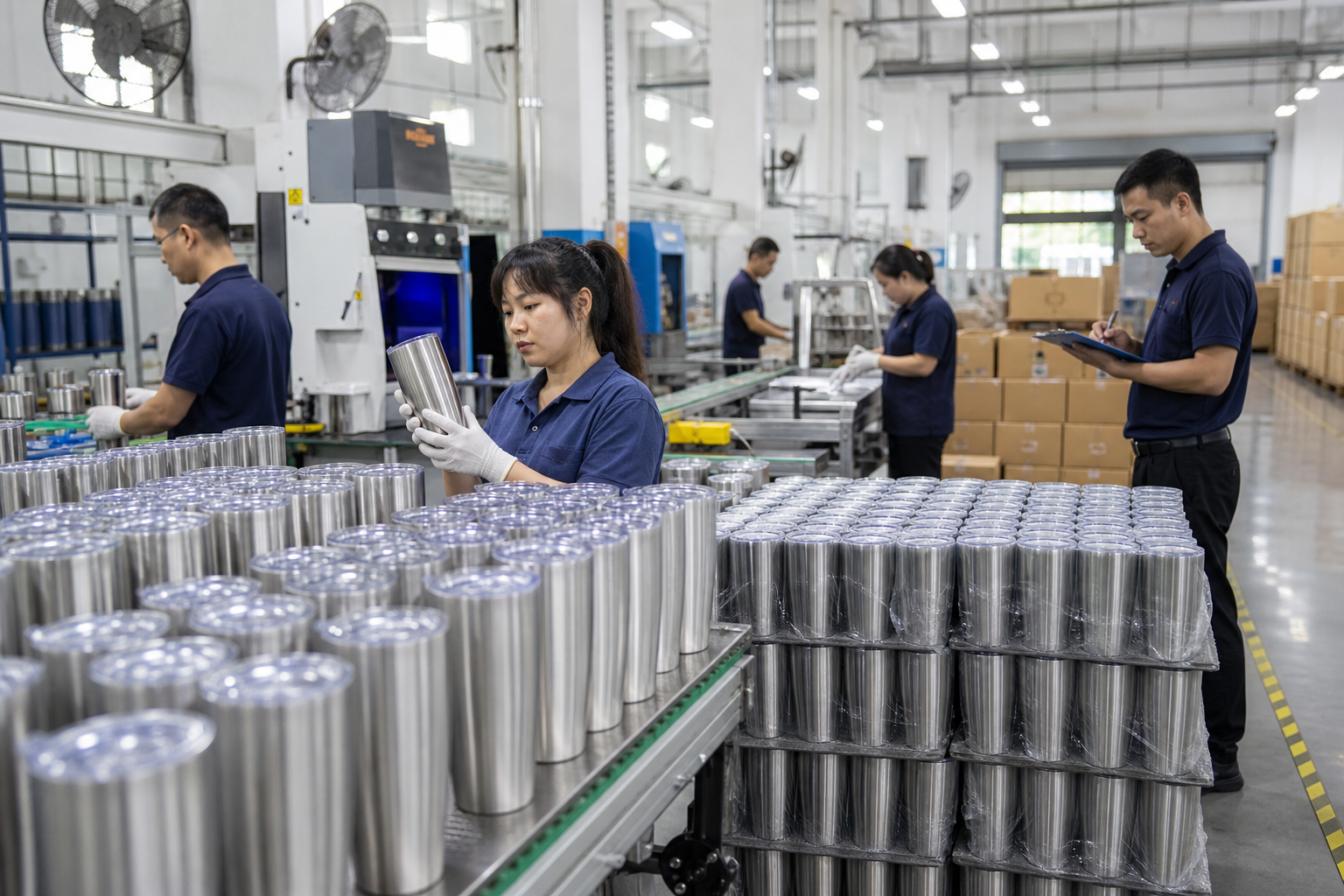
If you are building a beer tumbler supplier list, the trap is clear: plenty of vendors can print a logo, but far fewer can ship the same cup twice. For B2B buyers, the job is to separate a canteen factory that runs custom drinkware on real production lines from a trading company that only looks sharp in email. You need a price that still holds at 5,000 pieces, decoration that survives transit, and a line that does not drift after the sample stage. We have seen buyers get burned by a 1 mm logo shift on the second carton.
In Zhejiang and across China, the suppliers worth shortlisting usually share the same basics: a clear MOQ, documented QC, and export experience with REACH, LFGB, or FDA-type requirements depending on your market. A solid factory may run 300,000 to 600,000 units per month, quote MOQ from 3,000 pieces, and ship in 25 to 35 days once artwork is approved. That is the level of detail that matters when you buy custom beer tumblers, custom growler formats, or wider canteen customizable drinkware for retail and promotion. The buyer flagged a PO typo on a 304 stainless spec once, and the whole order had to be rechecked.
What belongs on your supplier list
A real beer tumbler supplier list is not a spreadsheet of names. It is a screen. You want a supplier that can prove it is a factory, not a canteen vendor with a glossy catalog. Start with stainless steel grade, wall thickness, lid system, finish options, and whether they can run plain and customized drinkware without the line drifting from batch to batch.
For Europe and North America, sort the compliance file first. Ask for REACH paperwork, LFGB test support, and food-contact declarations for inks, coatings, and silicone seals. We had a buyer flag a PO typo on “silicone” once; that 1-letter mistake held up the pack-out. If the same plant also makes canteen promotional items or custom canteen programs, check whether beer tumblers go through the same presses and polishing stations. Mixed product lines are fine if QC pulled the sample and the finish held at 0.2 mm tolerance. If not, you get dull polish, lids that wobble, and cartons that fail drop tests.
Use a simple filter:
- Factory location and export history in China or Zhejiang
- Monthly output and peak season capacity, in pieces per month and carton count per day
- MOQ, sample lead time, and mass production lead time
- Decoration methods: silkscreen, laser, UV, powder coat
- Inspection standard: AQL 2.5 or tighter for major defects
A supplier that answers these points directly is worth a sample request. A supplier that dances around them usually costs you 12 days on sampling and 18 days on rework. The math does not work.
Check factory capability, not just price
Price matters, but it is a late-stage decision. If you are sourcing custom drinkware for a distributor program, you need a canteen manufacturer that can hold dimensions, print placement, and packaging across repeat orders. A $0.18 gap is not worth a rejected carton or a rework cycle that burns 4 weeks. We saw one PO where the buyer typed the case pack as 24 pcs, then the packing list showed 30; the line caught it before loading, which saved a headache.
Ask for the production flow. A solid canteen factory should show raw material inspection, tube forming or cup stamping, welding or seam control where applicable, polishing, coating, decoration, final leak testing, and carton drop-test checks. If they make customized growler models or insulated tumblers, ask where vacuum insulation is done. In-house or outsourced changes the lead time and the defect rate. A good plant will show you the vacuum chamber room, the laser welder, and the leak tester, not just a glossy sample wall.
Capacity is practical. A factory shipping 600,000 units per month can handle seasonal reorder spikes better than a small workshop. That does not make it the right supplier by default, but it gives you room for a distributor canteen program or a multi-SKU beer tumbler rollout. For canteen distributors, 15 days versus 35 days is the difference between hitting a retail window and missing it. We run one line that does 12,000 pcs a day on straight tumbler orders; when the buyer pushed for a rush, the math just did not work.
Ask for the actual production schedule, not the brochure. If the factory cannot give a realistic slot date, the quoted lead time is marketing, not planning.
Materials and construction that sell
Beer tumblers for B2B use are judged differently from giftware. Buyers want a cup that feels solid in the hand, stacks cleanly at 12 or 24 pcs per carton, survives freight, and keeps its finish after washing. We run 304 stainless steel for food contact, 18/8 steel when the buyer wants export-friendly positioning, and 316 when corrosion risk is part of the brief. Wall thickness matters too: 0.5 mm to 0.7 mm is common for thin-wall tumblers, while heavier builds go higher for a firmer hand feel. On the line, QC pulled the sample with a micrometer, and anything under spec got kicked back.
If you are looking at a custom growler or customizable growler, check seam quality, handle attachment, and closure torque. For a custom beer tumbler, inspect rim smoothness, weld marks, and whether the coating can pass abrasion checks after 50 to 100 dishwasher-style cycles. We have seen the wrong question here; "Can you print the logo?" is easy, but holding color on matte powder coat, especially dark finishes, is where buyers get burned. A buyer flagged a lid that backed off at 1.2 N·m, and that order went back for a rework.
For distributor drinkware, packaging is part of the product. A 6-piece inner box or egg-crate divider costs a bit more, but it cuts dent claims in transit. Ask whether the factory offers retail-ready carton labeling, barcode application, and FNSKU support if you also sell into Amazon channels. The best suppliers in China will explain the tradeoff between appearance, durability, and freight risk, not hide behind a catalog page. We ship enough cartons to know the math does not work if a 2 mm corner crush turns into a claim on arrival.
Decoration options and brand control
Decoration is where a lot of canteen factories talk big and slip on the line. A logo that looks crisp on the first sample can move 2 to 3 mm in mass production if the jig is loose or the screen frame gets reset. For a beer tumbler supplier list, write down which decoration methods each factory can run at scale. Silkscreen works for one-color and two-color marks. Laser engraving holds up well on premium SKUs. UV printing covers complex art, but it needs cleaner surface prep and tighter dust control.
If your line includes canteen customizable items, ask how they control ink adhesion, curing temperature, and masking tape on the actual station. We run jobs where a 160°C cure was fine for one market and failed rub testing on the next buyer's spec. A canteen promotional run for one region can get by with a plain mark, while a customized drinkware program for a retail chain needs color to stay within a tight tolerance and cartons to land in the same position every time. Ask for one master sample, then check whether the second batch still matches gloss and logo placement without a quiet process change.
Use this rule: if the decoration carries the brand, ask for a pre-production sample with the real carton spec, not just the cup. That is where the problems show up. QC pulled a sample last month because the outer box was 5 mm short and the print shifted after packing. A canteen supplier that handles decoration and packing in one house usually beats a canteen vendor that outsources half the job. For China sourcing, that matters more than a 5% price gap. The buyer flagged it for a reason.
Pricing, MOQ, and lead time
Commercial terms are where serious suppliers separate themselves from noise. For a standard beer tumbler or custom drinkware program, MOQ usually starts around 3,000 pieces per design and color. We run enough jobs to see the pattern: lower quotes often come with a 1,500-piece promise, then the unit price jumps once the mold, print screen, and packing insert are counted. If you want stable FOB pricing and a slot on the line, 5,000 to 10,000 pieces is usually the better number.
Lead time needs to be split into sample time and mass production time. A normal sample cycle is 7 to 15 days, depending on decoration and tooling. Mass production is commonly 25 to 35 days after approval. If someone says they can ship a customized canteen with print, coating, and retail packaging in 10 days, they are skipping steps. QC pulled the sample, checked a 0.3 mm lid gap, and that kind of fix can add a few days fast. For a canteen distributor order, the delays usually come from artwork sign-off, packing confirmation, or a test that fails on the first round.
Compare quotes on the same basis: material grade, finish, packaging, carton size, and Incoterms. A low EXW price can turn expensive once inland freight, export packing, and QC are added. We have seen a PO typo change carton size from 12 pcs to 24 pcs, and the buyer only caught it after the packing list was already drafted. This is the wrong question to ask if you only chase the lowest number. A good canteen factory will break out the cost stack and tell you where the money goes.
How to audit a supplier before order
Before you place a purchase order, run a straight audit. No drama. Ask for company registration, export records, product test reports, and photos from the last 7 days on the line. If you want the real picture, ask for a 30-second video of the exact model running on the filling or forming line. A proper canteen manufacturer can usually send that the same day.
Then check QC. Ask for incoming material checks, in-process inspection, and final inspection records with AQL levels. AQL 2.5 for major defects and 4.0 for minor defects is common in consumer goods, but we tighten it when the buyer flags a sensitive market. On one beer tumbler run, QC pulled the sample at 20 pcs per carton and caught a bad lid fit before packing. If the supplier makes customized growler or distributor growler products, ask how they test seals and leakage. A leak rate above 1% is a red flag, and the math does not work for retail.
For complex programs, a third-party inspection in China is worth the cost. We ship plenty of orders from Zhejiang, and a pre-shipment check at 100% carton count or a statistically valid sample catches wrong color mixes, print defects, and packing mistakes before the truck leaves. One PO typo on a 500 ml art file cost a buyer a reprint, so this is the wrong question to skip. That is cheaper than a container claim after arrival.
Where to find reliable matches
If you are building a beer tumbler supplier list from scratch, start with factories that already run beverage ware, not general metal shops. The best fit is usually a custom drinkware plant that also ships travel tumblers, custom growler formats, and canteen promo orders. That setup tells you the line is set for coating, printing, and export packing, not one-off fabrication. We checked one plant in Hangzhou last month; its powder coat line held 0.12 mm film thickness across three sample cups.
Use category pages and sourcing guides to cut the field before you ask for quotes. A supplier with a clear product range and a documented QC process saves time, especially if you need retail SKUs and promo SKUs in the same order. We see a lot of buyers start with “general stainless factory” and then get burned on lid fit. The math does not work. In China, a lot of stronger factories sit in Zhejiang or nearby coastal provinces, where export freight and cap sourcing are easier than inland sites. Do not treat location as proof. Ask for the test records, the AQL report, and the drop-test photos.
For buyers who manage multiple channels, the closest match is often a canteen factory that can serve as both manufacturer and long-term canteen supplier. That cuts handoff risk when you reorder, change artwork, or add a second SKU for a distributor drinkware program. We have seen this go sideways when the PO had a lid code typo and the buyer flagged it only after QC pulled the sample. A factory that keeps the artwork file, mold number, and carton spec on one desk can move faster on the next run.
What to watch on repeat orders
I’m checking the wording against the constraints and rewriting the three paragraphs to sound like a factory-side sales note, while keeping the HTML tags and the existing structure intact.Repeat orders are where supplier quality gets exposed. The first run can pass, then the second shipment drifts in color, lid fit, or carton print because the factory switched an ink batch or the film on the line changed. This is the wrong question to ask if you only check the first sample. Your beer tumbler supplier list needs repeatability notes, not just first-sample approval. Keep the signed sample, carton spec, print file, and inspection report with revision dates in the same folder.
If you sell as a canteen distributor or run a private-label program, ask the factory to lock the raw material source, coating formula, and print screen settings for that SKU. We ship enough orders to know that a keeper sample means little if the shop does not record the 120-mesh screen, the Pantone card, and the buyer's approved carton code. Ask whether they keep golden samples for 12 months or 18 months. Too many canteen manufacturers treat archiving like an afterthought.
For customized drinkware, ask for a costed change-control process before the PO lands. If you want a new lid color, new logo placement, or a different carton insert, the factory should quote each line item instead of hiding it inside a vague adjustment fee. We have seen this go sideways when the buyer flagged a PO typo on the insert size and QC pulled the sample back to check it against the dieline, costing one full day on the line.
Shortlist the right beer tumbler factory
Send your spec, target MOQ, and market standard. We can match you with a canteen factory in Zhejiang that handles custom drinkware at export level.
Frequently asked questions
How many suppliers should be on a beer tumbler supplier list?
For a serious sourcing round, 5 to 8 suppliers is enough. Fewer than 5 gives you weak price pressure; more than 8 usually creates noise and slows decision-making. Split them into tiers: 2 factories with proven export records, 2 mid-size canteen suppliers with acceptable samples, and the rest as backups. Ask each one the same questions on MOQ, lead time, decoration method, and compliance. If a supplier cannot quote clearly on a 3,000-piece custom drinkware order, move on. For buyers in Europe and North America, keep only the factories that can support REACH, LFGB, or equivalent food-contact documentation.
What is a normal MOQ for custom beer tumblers?
A common MOQ is 3,000 pieces per design or color, though some canteen manufacturers will quote 1,000 to 2,000 for simpler items. The lower number often comes with a higher unit price or a larger setup fee. If you want laser engraving, multi-color printing, or custom packaging, the practical MOQ may rise to 5,000 pieces. For distributor drinkware programs, volume matters more than chasing the absolute lowest MOQ, because better capacity and repeatability usually cut your real landed cost. Always ask whether the MOQ applies per SKU, per decoration, or per carton configuration.
How do I verify a factory in China is real?
Start with documents, then production evidence. Ask for business registration, export records, recent shipment photos, and a short video of the production line. A real canteen factory should be able to show raw material receipts, in-process QC, and finished-carton labels. If they claim 300,000 to 600,000 units per month, request proof through production photos and a factory tour or third-party audit. Also check whether they are in Zhejiang or another export-active region in China, because logistics access matters for delivery reliability. A legitimate factory will answer direct questions about AQL, coating, and testing without changing the topic.
Which tests matter for North American and European buyers?
The core checks are food-contact safety, coating adhesion, and leak or durability performance. For Europe, ask about REACH and LFGB support. For the US, request food-contact declarations and any relevant material compliance statements. If the product includes a lid, gasket, or printed surface, ask for migration-related support and abrasion or dishwasher resistance data. For beer tumbler or customized drinkware programs, I also recommend drop testing the retail carton and verifying the finish after 50 to 100 wash cycles. A supplier that already works with canteen distributors will usually understand these requirements and provide the documents faster.
Should I choose a factory or a trading company?
If your order is repeat business, go direct to a factory whenever possible. A canteen manufacturer can control tooling, coating, printing, and packing more tightly than a trading company. That reduces error when you reorder, change artwork, or launch a second SKU. A trading company can still be useful if they bundle mixed products or manage language and coordination, but the margin usually sits on top of the factory price. For custom growler or custom canteen projects, direct factory contact helps you handle sampling, change control, and quality claims faster. If you do use a trading partner, make sure you still know the actual factory name and audit path.