Key Takeaways
- A serious best custom thermos usually starts at 500-1,000 pcs MOQ, with lead time around 25-35 days after sample approval.
- For 18/8 stainless steel, expect 0.4-0.6 mm inner/outer walls and a 304 liner if you want stable odor and corrosion performance.
- Laser engraving often adds USD 0.20-0.45 per unit, while 1-color silk screen is usually lower for promotional thermos programs.
- Ask for AQL 2.5/4.0 inspection, REACH-compliant coatings, and lid leak testing before you approve a bulk thermos order.
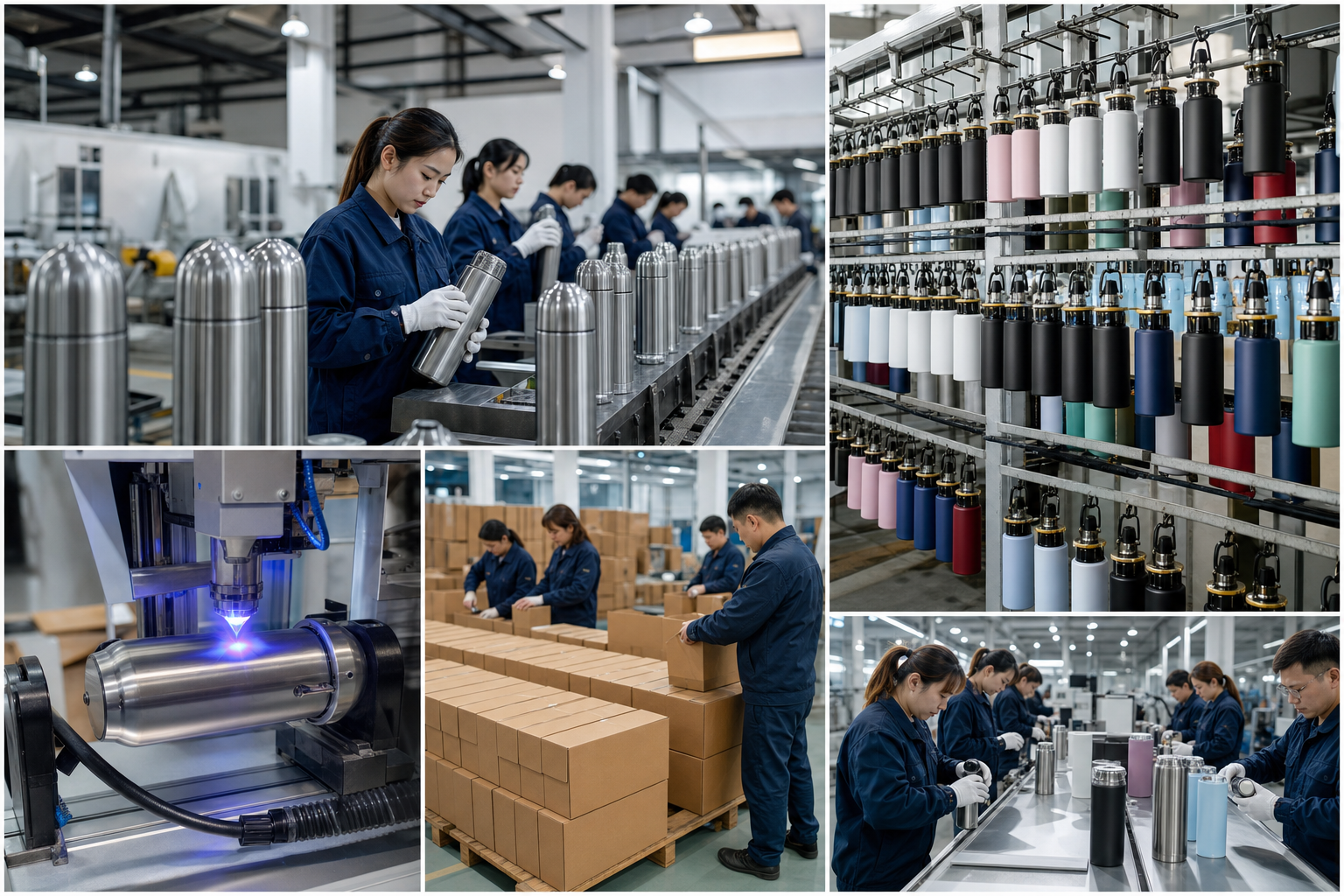
If you are buying the best custom thermos for outdoor retail or a promo run, the bottle itself is the easy part. The hard part is sorting out what actually matters: vacuum hold, logo wear, coating consistency, and whether the supplier can keep the same color and finish across a 3,000-piece thermos bulk order. On our line in Hangzhou, we run 18 mm laser marks and 24-hour leak checks; if a buyer skips those details, the order usually gets messy fast.
We make factory thermos orders in Hangzhou, Zhejiang every day, and the same mistakes keep showing up. Buyers ask for “premium” and never define wall thickness, then the quote moves the moment they add engraving, a gift box, or REACH. QC pulled the sample last week and found a 0.3 mm coating mismatch on a lid ring; the buyer flagged it, and that is the right call. If you want a custom thermos that sells at retail and holds up in distribution, judge the manufacturer thermos on specs, not the sample alone. The math does not work any other way.
What Makes a Thermos Sell
The best custom thermos is not the one with the longest feature list. It is the one that balances heat retention, hand feel, logo visibility, and landed cost. For outdoor retailers, we usually see 500 ml or 750 ml stainless thermos models move faster than 1 L units because they fit daypacks, cup holders, and gift sets without making the carton awkward. For promo brands, the thermos promotional model has to stay inside a target cost and still pass for a retail item. That is the real test. On the line, we have seen a buyer flag a 1 L sample because the box size pushed freight up by 12%.
Start with the basics: 304 stainless steel on the liner, 201 or 304 on the outer shell depending on price point, and vacuum insulation with a clean seam. If your supplier thermos quote shows a 0.2 mm wall, walk away unless the job is pure giveaway stock. The math does not work. A practical commercial spec is 0.5 mm inner wall and 0.4-0.5 mm outer wall, with a powder coat thickness of 60-80 microns for better scratch resistance. QC pulled the sample last month with a micrometer, and the 0.18 mm reading explained the denting right away.
You should also think about the customer in the field. Outdoor buyers want a lid that opens with gloves, a mouth that pours cleanly, and a finish that does not chip after one season. A distributor thermos order for retail should carry a printed shelf claim like “12 hours hot / 24 hours cold” only if your test data supports it. We ship fewer headaches that way. Do not print a nice number on the carton and hope nobody checks the lab sheet. We have seen that go sideways after one typo on a PO turned “12 hours” into “21 hours” and the buyer caught it before launch.
Practical rule: if the thermos cannot survive a 1.0 m drop test, a 24-hour leak test, and repeated dishwasher exposure on the lid, it is not a real retail product.
Stainless Steel Specs Buyers Miss
Most buyer problems start with loose specs. “18/8 stainless” sounds fine, but we ask one blunt question on the line: which part gets which grade? For a custom thermos, the liner should be 304 stainless steel. The cap assembly can be PP, Tritan, or food-grade silicone, depending on heat hold and taste transfer. We had a buyer flag a PO typo last month because the cap material was changed in the file but the old carton artwork stayed. That kind of mismatch adds cost fast.
Gauge matters. A thinner wall cuts cost, but dents show up quicker and the vacuum is harder to keep stable. For a manufacturer thermos built for outdoor retail, we usually run 0.4-0.6 mm wall thickness with a double-wall vacuum gap of 1.0-1.5 mm. QC pulled the sample at 0.38 mm once, and the math did not work; the bottle felt light, but the shell rang when tapped on the bench.
Finish matters too. Powder coating is the default for a custom thermos that has to move through stores and carton shipping. Gloss paint can look sharp in photos, but scratches show early. Brushed stainless can work for premium lines, yet it needs cleaner surface prep, or the logo area looks patchy. If you are comparing thermos manufacturers, ask for salt spray testing, coating adhesion testing, and a clear recoat process when the color gets rejected. We’ve seen this go sideways when a buyer approved “silver” from a phone shot and the actual pan had a different sheen.
- 304 liner: best for odor resistance and corrosion control
- 0.4-0.6 mm wall thickness: common for retail-grade bulk thermos
- 60-80 micron powder coat: strong balance of cost and durability
- Vacuum leak test: every unit or sampling plan based on your order size
Logo Methods That Hold Up
Your logo is not decoration; it changes the order math. We’ve seen a distributor cut a program by 8% because the print looked soft after one carton drop test. For a thermos custom order, the three common logo methods are silk screen, laser engraving, and heat transfer. Each one behaves differently on stainless steel, and the line will show it fast.
Silk screen works for 1-color or 2-color branding and usually stays the lowest-cost option. It shows up a lot in thermos bulk orders at 5,000-20,000 pcs when the buyer wants a clean retail look and a sharp PO number, not a fancy finish. Laser engraving gives a tougher mark and often adds USD 0.20-0.45 per unit, depending on area and depth. If your distributor thermos needs a premium feel and a long service life, that is the safer call. Heat transfer is less common on metal bottles, fits complex graphics better, and we’ve seen it crack sooner when cartons get rough handling.
If you want the best custom thermos for brand programs, do not judge the logo from one sample photo. Ask for a production color card, Pantone match tolerance of ΔE under 2.0 if your brand is strict, and a scratch test on the decorated area. QC pulled one sample last month with a 0.3 mm ink spread at the edge, and the buyer flagged it before shipment. On Zhejiang factory lines, the gap between a clean run and a rejected run is often a simple fixture or 30 extra seconds of curing time. A thermos supplier with real process control beats a cheap thermos vendor. The math does not work any other way.
Logo choice by use case
Retail: laser engraving or refined silk screen on powder-coated bodies
Promo: silk screen for cost control at 1,000-10,000 pcs
Gift sets: engraving plus custom carton for higher perceived value
MOQ, Price, and Lead Time
Buyers ask for the best custom thermos, then ask for the lowest price. Fair enough. The quote only makes sense when MOQ, finish, and accessory count sit on the same page. At our Hangzhou, Zhejiang factory, a standard bulk thermos order starts at 500 pcs for existing molds, while fully custom lids or body shapes usually need 3,000 pcs or more. We run about 300,000 units a month, so the line can take distributor replenishment and promo orders without mixing specs. QC pulled the sample last week and caught a lid-thread mismatch before packing.
For a basic 500 ml 304 stainless thermos with one-color print, FOB China pricing often sits around USD 4.20-5.80 at 1,000 pcs. Add laser engraving, powder coat, or a gift box, and you move into USD 5.50-7.80 fast. A large thermos customized with a copper-plated vacuum layer, extra lid features, or custom packaging may go higher. If a buyer flags a quote far below this range, the math does not work; the cut usually shows up in wall thickness, coating, or lid quality. We have seen a 0.35 mm wall spec turn into 0.25 mm on paper and a warranty headache in the field.
Lead time is where new buyers lose days. Sample making usually takes 7-10 days. Mass production is usually 25-35 days after sample approval and deposit. If your order needs carton artwork, barcode labels, or Amazon FNSKU labeling, add 3-5 days for printing and QC prep. For seasonal outdoor retail, place repeat orders 60-90 days ahead, especially if you want a thermos distributor to hold stock in a regional warehouse. One typo on a PO, like “5000” instead of “500,” can push the whole booking back a week.
Cheap quotes are often deferred cost. You pay later in rework, chargebacks, or slow sell-through.
Quality Checks Before Approval
I’m rewriting the section in place, keeping the HTML structure intact and tightening the language toward factory-floor detail and export QC terms.Quality control is where a supplier thermos turns into a factory-approved thermos. We do not sign off on promises; we sign off on numbers. For a custom thermos run, ask for incoming material checks on 304 steel, in-process vacuum gauge readings, and final random inspection to AQL 2.5 for critical defects and AQL 4.0 for major defects. On one 20,000 pcs run, QC pulled a sample with lid torque off by 0.6 N·m, and that caught a leak before the line moved on. That is the standard if you want repeatable export lots.
Leak tests belong after full assembly, not just on samples. We run pressure holds on production units, especially with matte coating or a lid with three parts; those designs love to hide a slow leak. Temperature claims need a controlled test method, not a sales sheet with nice photos. If you need North America or Europe paperwork, ask for REACH, LFGB where the market calls for it, and material declarations from the thermos factory. For US retail, check FTC label copy and state rules before the buyer flags it. This is the wrong question to ask late in the game.
Carton strength is not a side issue. A good bottle still ships dented if the inner tray is thin or the carton walls are under spec. For export out of Zhejiang, we ask for edge and corner drop tests at 1.2 m, plus pallet pattern and master carton marks when the order has mixed SKUs. We’ve seen a 24-piece master carton torn open because the PO typo said 12 instead of 24; the buyer paid for it. The math does not work if packaging is treated as an afterthought.
- Ask for material certificates for 304/316 where applicable
- Request 1:1 production sample photos before shipment
- Specify AQL levels in the purchase order
- Confirm carton compression strength and drop-test criteria
Packaging for Retail and Promo
Packaging is not an afterthought if you sell through outdoor retailers or distributors. A custom thermos for retail has to clear shelf appeal, barcode accuracy, and real protection in transit. A thermos promotional order lives on the opposite end of the math: low pack cost, fast bagging, and an unboxing that looks clean. We had a buyer flag a barcode printed 2 mm too low, and the Zebra scanner on the line missed it once every 8 scans. That is not a small issue.
For retail, a rigid color box with an insert is common, especially when the bottle is sold as a gift or bundled with filters, straps, or spare lids. For thermos bulk promotional campaigns, an OPP bag plus divider carton is often enough when the unit cost target is tight. If the buyer wants private label, we print carton graphics, warning labels, care instructions, and FNSKU codes in one run, then QC pulls the sample at the packing table before the lot moves. The buyer who wants gift-box looks and promo pricing is asking for trouble.
Overpackaging eats margin fast on a low-price bulk thermos. Thin packaging does the same thing from the other side: dents, corner crush, and shelf damage claims. The sweet spot is usually a custom corrugated mailer or retail box that adds USD 0.18-0.65 per unit depending on size and print. Run a 1 m drop test on the packed sample and the numbers stop being theory. That is cheap insurance when your distributor thermos line is going through cross-border freight, not a local truck ride.
If you are sourcing from China, treat the packaging spec as part of sample approval. Zhejiang factories that know export work will send dielines, box material options, and a test report if you ask for them. We also check the PO against the carton drawing, because one typo on the box size or print note can hold the whole packing line. This is where a real thermos supplier shows up and a middleman gets exposed.
How to Choose the Right Factory
The best custom thermos supplier shows process control, not a polished showroom. You want a thermos factory with stable tooling, documented QC, and an export team that knows carton marks, inspections, and shipping documents. If the manufacturer cannot answer basic questions about vacuum failure rate, coating cure time, or spare parts lead time, keep moving. On our line, QC pulled the sample at 45 mm from the rim and checked the seam under a gauge light; that is the sort of detail that tells you whether the plant runs tight or just talks big.
Ask for factory metrics. How many units per month? What is the minimum order quantity for your target finish? How long from deposit to shipment? We run around 300,000 units per month on a standard line, with MOQ starting at 500 pcs for stocked models and 3,000 pcs for deeper customization. A buyer once pushed back on a 28-day lead time, then tried to cut it to 18 days; the math did not work, and we said so. That kind of clarity matters when you need a reliable thermos distributor program or a seasonal retail launch.
Check export readiness too. Does the supplier handle third-party inspection from SGS or Intertek? Can they meet BSCI or similar social compliance requirements if your retail chain asks for it? Do they know how to pack mixed SKUs into one shipment without label mistakes? We once caught a PO typo on carton marks before loading, which saved a messy reprint at the warehouse. A good thermos suppliers list is not about how many names you collect. It is about which factory can hold quality in Zhejiang and still ship out of China with fewer surprises.
When you shortlist thermos manufacturers, judge them on sample consistency, response speed, and whether they state limits without dancing around. If a thermos vendor says every finish, every lead time, and every price is possible, that is usually a weak operation. We've seen this go sideways when a factory promised six coating colors on one line and then missed the second color shift by 2 mm at the cap thread. Pick the plant that tells you the truth early.
Request your custom thermos quote today
Send your target size, logo file, MOQ, and destination market. We will match you with a practical spec, real pricing, and a shipping plan.
Frequently asked questions
What is the MOQ for a custom stainless thermos?
For an existing mold with simple logo work, MOQ is often 500-1,000 pcs. If you want a custom lid, custom body shape, or special color matched to Pantone, expect 3,000 pcs or more. For promotional thermos programs, a 1-color silk screen order can stay on the lower end, while laser engraving or gift packaging may push the minimum higher. In Zhejiang, many export factories can support mixed SKU orders, but the unit price improves quickly once you move past 2,000 pcs.
How much does a bulk thermos usually cost FOB China?
A standard 500 ml 304 stainless thermos with one-color print typically lands around USD 4.20-5.80 FOB China at 1,000 pcs. Better coating, laser engraving, or upgraded lids can push it to USD 5.50-7.80. Fully custom packaging, special finishes, or premium retail sets may go higher. If a quote is much lower than that, check wall thickness, coating thickness, and whether the supplier used a cheaper liner grade.
What certifications should I request for Europe and North America?
At minimum, ask for material declarations, REACH compliance for coatings and components, and migration testing if your market requires it. For certain food-contact programs, LFGB is useful. If you sell into chain retail, ask for BSCI or equivalent social compliance documentation and third-party inspection support. For North America, make sure the claims and labels match the market, especially if you use carton copy about temperature retention. Always align the spec sheet with the actual factory thermos test data.
Which logo method lasts longest on a stainless thermos?
Laser engraving is usually the most durable because the mark is physically etched into the surface. It typically adds USD 0.20-0.45 per unit depending on size and complexity. Silk screen is cheaper and works fine for many promotional thermos orders, but it is more vulnerable to abrasion over time. If your customer will use the bottle outdoors every day, engraving or a properly cured powder-coated print is safer than a soft surface print.
How long does production take after sample approval?
Most custom thermos orders need 25-35 days after sample approval and deposit. Samples usually take 7-10 days if the mold already exists. If you need custom packaging, barcode application, or FNSKU labeling for Amazon workflows, add 3-5 days. During peak seasons, especially before Q4 retail launches, build in extra time because Zhejiang factories often run at higher capacity and shipping slots tighten.