Key Takeaways
- Most best custom vacuum bottle orders land at 500-3,000 pcs MOQ, with FOB China pricing often starting around USD 3.20-6.80 depending on size and decoration.
- A 0.4 mm 304 stainless body with double-wall vacuum and 6-12 hours hot/24 hours cold performance is a realistic commercial target, not marketing fluff.
- Laser engraving is durable but slower; silk screen and heat transfer are cheaper for promotional thermos runs, usually saving 8-18% on decoration cost.
- A Zhejiang thermos factory with 300,000 units/month capacity and 30-45 day lead time can handle retail replenishment if your artwork and packaging are frozen early.
If you are buying the best custom vacuum bottle for outdoor retail or a promo program, do not treat every stainless thermos like a generic cup with a lid. It is not. On our line, QC pulled the sample and the cap leaked after a 1.2 m drop test, so the seal mattered more than the artwork. Wall construction, vacuum quality, cap design, coating, and logo method all change your landed cost, complaint rate, and how the bottle sells in store.
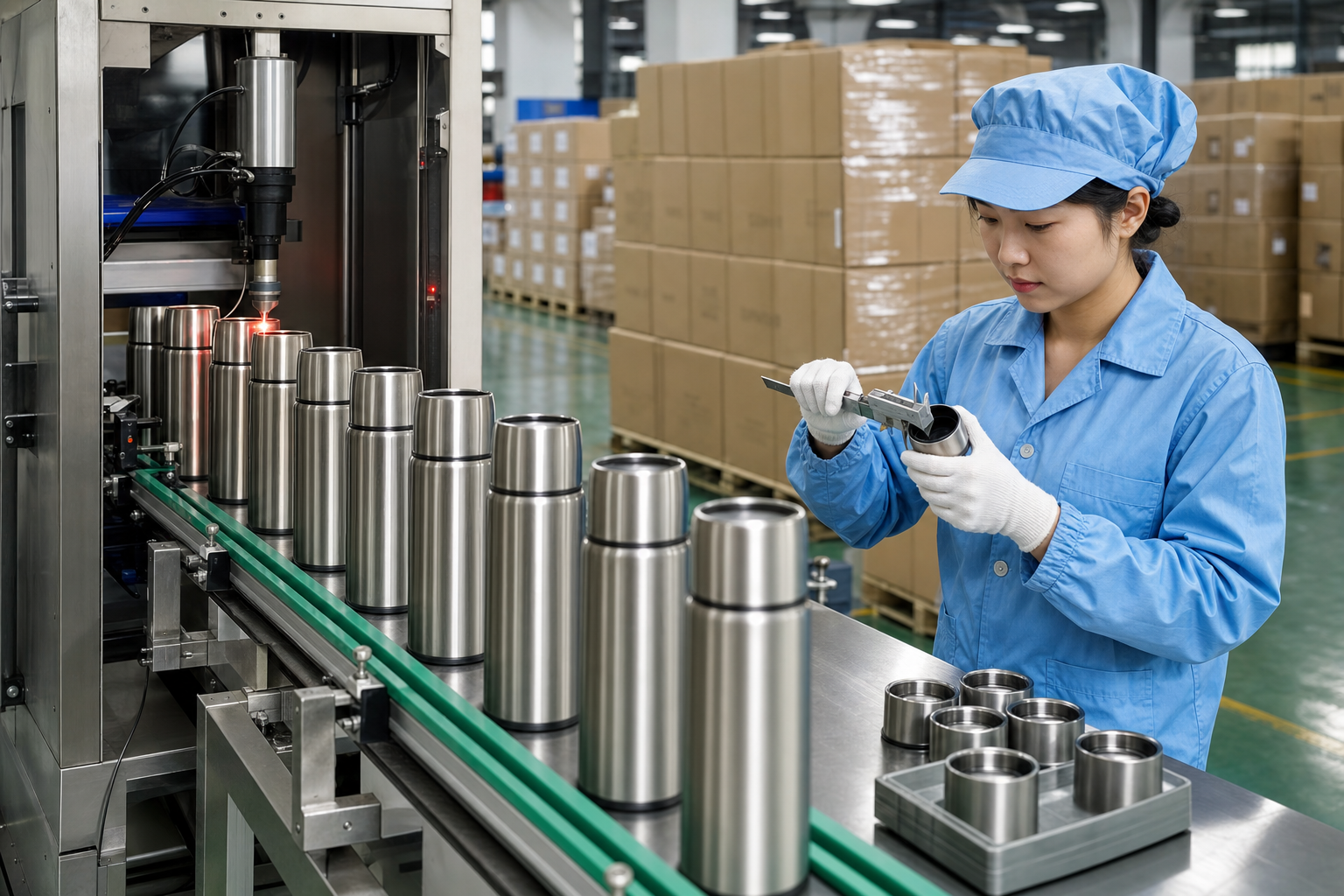
We build thermos bulk orders in Zhejiang, China, and the same mistake shows up every week: buyers start with a color chip and a logo file, then a PO typo or the wrong lid insert costs them a week. 304 steel, 18/8 on the inner wall, a 0.4 mm body, and a 35-day lead time matter more than a pretty render. If you want a custom thermos that feels premium, ships without dents, and passes REACH or FDA checks, spec it like a product manager. The math does not work any other way.
What makes the best custom vacuum bottle
The best custom vacuum bottle is not the one with the highest vacuum claim. That is the wrong question to ask. It is the one that fits your channel, margin, and failure tolerance. For outdoor retailers, we usually start with a 500 ml or 750 ml stainless thermos, powder-coated, with a screw cap that survives a 1.2 m drop test and a body that still looks good after mixed-carton shipping. For promo brands, lead time and print area carry more weight, so a simpler cap and a flatter shoulder usually win. QC pulled the sample once the buyer flagged a dent on the bottom ring, and the whole spec changed.
Start with the basics: inner and outer walls should be 304 stainless steel for most retail use, with some buyers specifying 316 for higher corrosion resistance on premium lines. A common build is 0.35-0.45 mm wall thickness, double-wall vacuum, and a copper-plated inner layer for better thermal retention. On the line, we check cap torque at 2.2 N·m because a loose lid kills thermal performance fast. Realistic performance is 6-12 hours hot and 18-24 hours cold depending on size and lid type. If someone promises 48 hours on a 500 ml bottle, ask for test data. The math does not work.
In Zhejiang, China, we get better results when the buyer defines the use case first: hiking, commuting, gym, or giveaway. That one decision changes the neck width, cap style, and even the carton spec. A PO typo once listed a 28 mm neck as 26 mm, and we had to remake the cap inserts before shipment. A factory thermos for retail needs to survive more abuse than a thermos promotional item, and your supplier should say that plainly.
Specs that actually control performance
Buyers fixate on insulation claims and skip the parts that make those claims hold up on the line. That is the wrong question to ask. If you want a customizable thermos that ships the same way every lot, lock four specs first: material grade, wall thickness, mouth size, and lid seal. We’ve seen a 0.05 mm change turn a clean 12-hour result into a noisy one in QC.
- Steel grade: 304 is the normal bulk thermos spec; 316 is the upgrade when the bottle faces salt, acid, or harder wash cycles.
- Body thickness: 0.35-0.45 mm is the range we run; below 0.30 mm, the shell starts to feel soft in hand and dents easier in carton packing.
- Mouth diameter: 45-55 mm makes filling and washing easier, and the buyer flagged one 38 mm sample because ice cubes jammed at the neck.
- Seal material: silicone gaskets need to be food-grade and removable, or the wash crew will call it a headache after the first return batch.
Thermal performance needs a repeatable test, not a sales phrase. Many factories use an internal method close to ASTM-style retention checks, then run inverted leak tests, hot-fill cycles, and lid torque checks with a torque wrench set to the target N·m. If a supplier says “no leakage” and stops there, the math doesn’t work. Ask for the sample report, the starting water temperature, the room temperature, and the exact readout times.
For North America and Europe, the pack spec matters too. A bottle can pass the heat test and still fail in transit if the cap pops open or the print rubs off in a 1-meter drop; we’ve shipped cartons that looked fine until the buyer opened three outer boxes and found corner crush marks. A good thermos manufacturer gives you the full packaging stack-up, not just a hero shot.
Logo methods and decoration choices
Your logo method changes how buyers judge the bottle. We’ve seen a simple one-color silk screen work fine for a 5,000 pcs mailer run, then the same art look cheap on a retail shelf. If the buyer wants a premium line, laser engraving or a powder-coat underlay is usually the better call. The choice comes down to artwork complexity, color count, and how hard the end user will treat the thermos.
Laser engraving gives a permanent, clean mark, but it is usually monochrome and works best on bare steel or coated surfaces with clear contrast. Silk screen is the lower-cost option for simple logos, and on a 10,000 pcs run it keeps unit cost down, though it can wear faster if the bottle gets scrubbed hard. Heat transfer and UV print give more color options, but they need tighter process control and push the price up. A thermos customizable for retail should let you pick the print method and the bottle finish under it. We run a line test on the first 20 samples before we greenlight production.
If you are comparing custom thermos options, ask your thermos vendor for a decoration durability sample: tape test, abrasion rub, and dishwasher warning. QC pulled a sample last month and the buyer flagged a faint edge lift after 50 rubs, so we stopped that artwork file before mass run. For outdoor retailers, I’d pick laser or powder-coated print because the product still looks decent after weeks in a backpack. For thermos promotional campaigns, price matters, and silk screen can cut unit cost by USD 0.15-0.40 per piece at higher volumes. This is the wrong question to ask if you only look at decoration cost and ignore failure rate.
Do not forget the cap. A sharp engraving on the body means little if the lid branding looks off by 2 mm. Good manufacturers in China will line up the artwork on body, cap, and box so the set feels like one item, not three separate PO decisions. We once shipped a lot where the buyer’s PO typo put the lid logo on the wrong side, and the rework took 12 days instead of 3.
MOQ, price, and lead time realities
Buying a custom thermos comes down to MOQ versus unit price. We run into this every week. For a standard stock shape with simple decoration, a serious thermos factory in China usually starts at 500 pcs. Once you ask for a custom mold or a special lid, MOQ can move to 3,000 pcs or more. If a supplier says 100 pcs on a fully custom bottle, that is sample pricing, not a production plan.
For FOB China pricing, a basic 500 ml stainless vacuum bottle with one-color logo usually lands around USD 3.20-4.20 at 1,000 pcs. Add a premium lid, powder coating, laser engraving, or gift box, and the number moves to USD 4.80-6.80 or higher. The buyer often pushes back on this, but the math does not work any other way: every extra step adds labor, and labor on the line in Zhejiang still costs money.
Lead time matters just as much as unit price. A good thermos manufacturer in Hangzhou or Ningbo can normally quote 30-45 days after sample approval and deposit. If the artwork changes after that, the clock starts over. QC pulled the sample last week and found a label file typo on the PO; that sort of slip can burn 7 days fast. For seasonal outdoor retail, that delay kills margin because the bottle misses the summer or holiday window.
Be direct with your supplier and ask for a full cost split: bottle, decoration, packaging, carton, and freight basis. You will spot a weak quote fast. We ship these quotes all the time, and the cheapest one usually has no real QC budget and no room for AQL inspection. That is the wrong question to ask. Ask where the money goes.
Compliance and quality control
For Europe and North America, compliance is not optional. We ship custom thermos orders with material declarations, and when the market asks for it, third-party reports for REACH, FDA-style food contact, and heavy metal limits in decoration inks or coatings. On one retail chain job, the buyer flagged a missing lot code on the carton label, so we tied traceability to lot number and production date at the line, not after packing.
Quality control should be written into the purchase order. A solid baseline is AQL 2.5/4.0 for critical and major defects, though some distributor programs push appearance to 1.5. We run leak tests, temperature retention checks, lid torque checks, and packaging drop tests before shipment. Photo reports are not enough. QC pulled a sample with a 0.3 mm cap gap once, and that bottle would have leaked in transit.
Factory audits matter too. If you want a thermos partner for repeat orders, ask whether the site has BSCI, ISO 9001, or other social and quality certifications. A certificate does not make a bottle good by itself, but it does show whether the supplier keeps records and follows process. In Zhejiang, the better plants usually can show defect logs, a calibrated torque tester, and a rework area with clear tags by shift.
A practical buyer asks for three things before PO release: a signed golden sample, a packed carton spec, and a test plan with acceptance criteria. The math does not work any other way. We have seen this go sideways from a typo on a PO that changed the carton count from 24 to 12, then the buyer blamed the factory after the shipment landed short. A supplier who knows thermos production will not fight this; they know how disputes happen and how fast they cost money.
How to choose a China supplier
Picking a thermos supplier in China is less about the website and more about the evidence. Ask how many bottles the factory runs each month, which shapes stay in stock, and how much stays in-house. A serious thermos maker should give you numbers, decoration methods, and the exact QC gate, whether that is after vacuum sealing or before carton packing. If the answer stays broad, the quote will be broad too.
Look for a thermos distributor or thermos vendor that handles packaging and paperwork, not just bottle supply. For outdoor retailers, that means barcode labels, FNSKU if needed for Amazon, master carton marks, and retail-ready inserts. We had one buyer flag a PO because the carton label missed a 12-digit SKU by one character. For promo brands, speed matters, but consistency across every shipment matters more.
We run production in Zhejiang, China, and the best clients send a clean spec sheet: capacity, finish, logo file, target price, target carton count, and destination market. That lets the factory quote straight. It also keeps you from paying for five rounds of revision because someone forgot to define the cap color. A good supplier will tell you when a request is expensive, impossible, or not worth the tooling fee. That honesty saves more money than a low opening quote.
If you are comparing thermos manufacturers, ask for samples from the same mold but with different decoration methods. QC pulled the sample at the 3-meter drop test once and the print cracked on one finish, not the other. You learn fast which supplier understands surface prep, which one understands packing, and which one is just forwarding emails from a trading desk. In Zhejiang, that difference shows up on the line.
Get a quote for your custom thermos
Send your capacity, logo file, target price, and market. We will quote a practical factory thermos option, not a vague catalog guess.
Frequently asked questions
What is a realistic MOQ for a custom stainless thermos?
For a stock shape with simple logo work, 500 pcs is a normal MOQ in China. If you change the lid, base, or mold, expect 3,000 pcs or more. For very simple promotional thermos orders, some factories will quote 300 pcs, but the price is usually 15-30% higher than a true bulk thermos run. If you want a sustainable program with repeat orders, build around 1,000-3,000 pcs so the factory can stabilize color, print, and packing.
How much should I budget per piece FOB China?
For a 500 ml stainless thermos, a common FOB China range is USD 3.20-4.20 at 1,000 pcs with one-color decoration. Add powder coating, laser engraving, premium packaging, or a better lid, and you may move to USD 4.80-6.80. 316 steel, gift sets, or complex prints can go higher. Freight is separate. If you are buying thermos bulk for retail, ask for a full cost breakdown so you can compare bottle, print, box, and carton costs separately.
Which decoration method lasts longest?
Laser engraving usually lasts the longest because it is physically marked into the surface. On a powder-coated body, it can give a sharp premium look that survives repeated washing. Silk screen is cheaper, but it can wear if the bottle is scrubbed hard or dishwasher use is frequent. UV print and heat transfer give more color options, but durability depends on coating prep and curing. For a custom vacuum bottle sold outdoors, I normally prefer laser or a high-bond print system over a basic promotional thermos screen print.
What compliance documents should I ask for?
Ask for food contact material declarations, REACH-related test results for EU shipments, and any FDA-style or LFGB-related documents your market requires. If coatings or inks are used, ask about heavy metals and migration testing. For quality control, request a signed golden sample, AQL inspection criteria, and a pre-shipment leak test report. If the thermos manufacturer cannot provide lot traceability, that is a problem for retail buyers in Europe and North America.
How long does production usually take?
A standard custom thermos order usually needs 30-45 days after sample approval and deposit. If you are adding a new mold, special packaging, or complex multi-color decoration, the timeline can extend to 50-60 days. In Zhejiang, China, a factory with strong scheduling discipline and 300,000 units/month capacity can handle repeat orders efficiently, but only if your artwork and packaging are approved early. Late changes are the fastest way to lose a shipping window.