Key Takeaways
- PP promo bottles usually land at USD 0.68–1.95 per unit at 3,000 pcs FOB China, depending on capacity and print
- For a reliable cap and body, ask for 1.8–2.5 mm wall thickness and a leak test at 1.2 bar for 30 seconds
- A simple single-color logo is fastest; laser or 1-color silk screen typically adds 2–4 days, full wrap printing more
- If you sell into Europe or North America, require food-contact docs, REACH support, and AQL 2.5/4.0 inspection before shipment
If you are sourcing the best promotional polypropylene bottle, the real question is not what looks good. It is whether the bottle survives a 1.2 m drop in transit, prints cleanly on the line, clears REACH and food-contact checks, and still leaves margin after freight. Polypropylene earns its place because it is light, takes impact well, and is cheaper to tool and mold than many other custom drinkware materials. We have seen buyers fixate on a glossy sample and miss a cracked cap after carton drop test. That is the wrong question to ask.
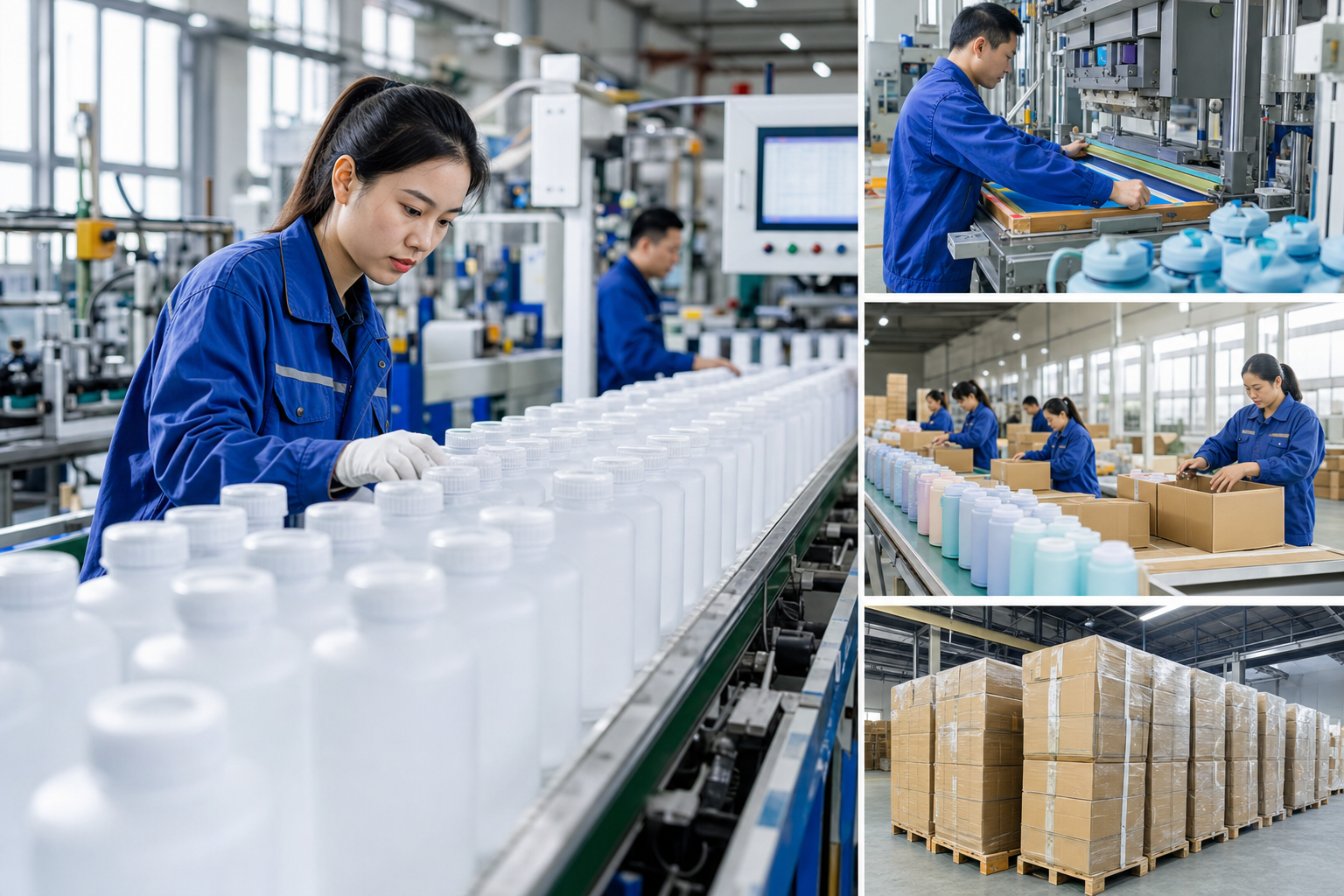
A good promo bottle is not just a material choice. Wall thickness, cap fit, leak performance, odor control, decoration method, and color match all have to stay in line from sample to bulk. On our Hangzhou floor, QC pulls samples against a 0.3 mm wall-thickness gauge, and we ship over 600,000 units a month with a standard MOQ of 3,000 pieces and lead times of 18-25 days depending on tooling and print. The buyer flagged a logo shift on a PO once; we caught it before the run started. Miss that step, and the math does not work.
Why polypropylene wins for promo
Polypropylene is not glamorous. We run it because it survives the line. For a promotional bottle, that matters more than polished copy. PP is light, resists common chemicals, and takes knocks better than brittle low-cost plastics. If your buyer is a distributor canteen, distributor drinkware, or distributor growler channel, the bottle has to handle warehouse forklifts, carton compression, and rough end-user use without showing scuffs after week one. QC pulled a sample after a 1.5 m drop test, and that tells you more than a sales brochure does.
For the best promotional polypropylene bottle, you want a resin grade that is food-contact safe, odor-controlled, and stable enough for repeated injection molding. PP usually sits in the 0.9–1.5 g/cm³ density range, and the finished bottle often weighs less than equivalent Tritan-style or metal custom drinkware. That lighter weight cuts freight. On a 20GP or 40HQ from China to Europe or North America, the numbers move fast. We have seen the buyer flag a 2 g weight swing on a 600 ml bottle, and they were right to push back.
There is also a pricing reason buyers choose PP. A basic 500–750 ml canteen custom order can come off the mold at a lower tool and unit cost than a comparable custom growler with more parts and tighter fit-up. If the program is volume-driven and the logo is doing the heavy lifting, PP is a solid canteen promotional platform. If you need insulation, this is the wrong material. If you need value, PP usually wins. The math does not work the other way, and we have seen that go sideways on MOQ 5,000 pcs orders when the cap thread spec got copied wrong on the PO.
Practical rule: if the bottle’s job is to carry a logo, not hold heat for 12 hours, polypropylene is usually the cleanest sourcing decision.
Specs that actually matter
Buyers often send only a logo and a capacity for a best promotional polypropylene bottle. That is not enough. We need the full spec sheet to quote cleanly and keep the line from stalling on tooling. Start with capacity, overall height, neck finish, cap type, and wall thickness. For most promotional bottles, 1.8–2.5 mm wall thickness is the working range. Thinner bottles feel flimsy in hand; thicker ones slow the cycle and push unit cost up.
Cap design changes the whole order. A snap cap with a tether works for school use and sports promo packs. A screw cap with a gasket fits bags and mixed retail cartons better. We ask for a drop test and a leak test every time. On assembled units, we usually run 1.2 bar air pressure for 30 seconds, then a 1-meter drop test on six faces for sample approval. The buyer flagged a “no leak” note on the PO once, but skipped the test method; that is the wrong question to ask.
Color is another spec that gets ignored until QC pulls the sample. Clear, translucent, and solid PP behave differently on the line. Translucent natural PP gives a sharper logo; solid colors need stronger ink contrast. If you are buying from canteen suppliers in Zhejiang or anywhere in China, ask for a master color chip and a Pantone target. A ΔE under 2.0 is a fair target for promotional work. Anything looser starts to look off in bulk.
- Capacity: 400 ml, 500 ml, 650 ml, 750 ml, or 1,000 ml
- Wall thickness: 1.8–2.5 mm
- MOQ: 3,000 pcs standard; 1,000 pcs possible on stock molds
- Lead time: 18–25 days after sample approval
Print methods and decoration
Decoration is where a custom canteen order either looks sharp or looks like a rushed giveaway. On polypropylene, we run silk screen printing, heat transfer, pad printing, and label application when the artwork calls for it. For a best promotional polypropylene bottle, silk screen is still the workhorse. It stays economical, holds registration on flat or lightly curved panels, and the line can keep pace without chasing defects.
Laser engraving is not the right call for PP. It is plastic, not metal or coated glass. For buyers who want a cleaner retail look, a matte PP body with one-color silk screen usually beats a cluttered multi-color print. We had one buyer flag a 4-color gradient on a 750 ml bottle; the proof looked busy, and the math did not work on a 10,000-unit run. Keep the artwork tight. One logo, one web address, maybe a 12 mm capacity mark. That is easier to hold across the batch.
Check print durability with abrasion testing. A solid factory in Zhejiang should show rub-test results, and if the bottles are going to retail instead of a one-off canteen promotional giveaway, ask for 100-cycle tape test results before mass production. QC pulled the sample and the logo lifted at the corner once because the curing oven sat 8 degrees low. If you need canteen customizable artwork across multiple SKUs, the factory should split each print file and mark every carton by variant. We ship that way because one mixed pallet can wipe out distributor margin fast.
What to ask your canteen vendor
Ask for ink type, curing temperature, print coverage, and whether the logo lands on an embossed or recessed panel. Those details change adhesion and registration. A competent canteen manufacturer will give you the print tolerance before you ask twice. If they dodge that question, we’ve seen the order go sideways on the first 500 pcs.
Compliance for Europe and North America
For buyers in Europe and North America, compliance is not optional. The best promotional polypropylene bottle is the one that clears customs, passes retail screening, and does not set off complaint emails from your customer. Ask for food-contact declarations, REACH support for the EU, and FDA food-contact documents for the US. If the bottle uses a sports cap or straw, check the migrating parts too. We have seen a cap seal pass while the straw softens in hot water at 60°C. That is a bad week.
Do not accept a vague “safe material” statement. Ask for the resin grade, supplier declaration, and test report number. We run this every week on the line in Zhejiang, and a proper factory should hand over SGS, Intertek, or TÜV reports without a song and dance. If your buyer wants retail shelves or Amazon, you will also need carton labels, FNSKU application, and batch traceability. The math does not work if the PO says 10,000 pcs and the artwork file shows a different SKU code.
Inspection matters as much as paperwork. For export shipments, AQL 2.5 for major defects and 4.0 for minor defects is a common baseline. Check flash, sink marks, logo misprint, cap fit, and contamination. QC pulled the sample on a 500 ml bottle last month and found 3% cap failure because the gate was not balanced during molding. You do not want that on a container load.
In China, a factory that handles compliance well will talk in documents, not promises.
MOQ, pricing, and freight reality
Pricing for a custom canteen order is not set by the mold alone. Bottle size, wall thickness, cap tooling, print color count, and carton spec all move the number. On our line, a 0.8 mm shift in wall thickness can change scrap and cycle time. For a 500–650 ml promotional PP bottle from China, 3,000 pcs with a basic print usually lands around USD 0.68–1.20 per unit FOB. Add a custom cap, 4-color print, or retail box, and USD 1.35–1.95 is normal. The buyer who says "just quote the bottle" is asking the wrong question.
If you are comparing canteen manufacturers, do not stop at unit price. Compare landed cost, because freight, rework, and rejects will eat the gap fast. We had a buyer flag a PO typo on carton count once, and the shipping math broke before production even started. A slightly higher ex-factory price from a Zhejiang canteen factory with cleaner QC records can win once the defect rate stays low. A 20HQ can hold roughly 25,000–35,000 simple PP bottles depending on size and packaging, so carton size matters more than most buyers expect. We run tape tests on packed cartons before booking space. Freight punishes sloppy packing.
Lead time is another real cost. Stock molds can ship in 12–18 days after sample approval; fully custom tooling may take 30–45 days for mold making before production starts. If you need a canteen distributor replenishment schedule, ask the supplier to confirm daily output, not just monthly capacity. QC pulled the sample and checked cap torque at 1.2 N·m before we released the line. At BottleForge in Hangzhou, we run more than 600,000 units per month across multiple production lines, which helps when a buyer needs repeat orders without resetting the whole project.
- Typical FOB China: USD 0.68–1.95 per unit
- Tooling: USD 1,500–6,000 depending on complexity
- Sample time: 5–9 days
- Mass production: 18–25 days after approval
Choosing a factory partner
Not every canteen factory is ready for export work. Some are fine for domestic wholesale, but they slip on carton marks, artwork files, and color control from one run to the next. You need a canteen manufacturer that knows distributor drinkware, not just one that throws out a low quote. Ask straight about mold maintenance, print control, and final inspection. If they outsource all three, you will spend your time fixing problems instead of shipping bottles. We run a 12-cavity line, and the first thing I check is whether their QC room keeps the same master sample on the shelf.
Look for a supplier that can support both canteen distributors and brand owners. That means carton labeling for mixed SKUs, print files set up the right way, and packing that does not fall apart at the pallet stage. A good canteen supplier should also tell you what will fail before you pay for it. If the bottle has a thin neck and a wide side logo, the print area will distort at the shoulder. That is the wrong question to dodge. A practical vendor flags it early, not after the buyer flags it during pre-shipment inspection. On one job, QC pulled the sample because the logo shifted 3 mm to the left on the second carton.
For buyers sourcing from China, Zhejiang still ranks high because the supply chain sits close together: resin, mold repair, screen printing, and carton work are all within a short truck run. That cuts lead time and cuts excuses. We ship faster when the mold shop is 20 minutes from the line, and that matters more than a glossy brochure. The best promotional polypropylene bottle is rarely the fanciest one; it is the one a disciplined factory can repeat at scale with the same fit, finish, and print every time. We have seen this go sideways when a supplier chased a cheaper cap and the leak rate jumped from 1% to 6% in one batch.
If you are comparing custom canteen, customized canteen, or customizable growler programs, ask the factory for samples from at least two export batches. One batch tells you nothing. Two batches tell you whether they can hold color, threading, and lid torque when the line is busy. A sales deck will not show that. We did a check on a 500 ml sample run last month, and the second batch matched the first within AQL 2.5, which is the only number that matters when the buyer is pushing for a firm reorder.
Request a quote with your bottle spec
Send capacity, logo file, target market, and annual volume. We will price the bottle, print, packaging, and freight-ready carton plan from Zhejiang.
Frequently asked questions
What is the best promotional polypropylene bottle capacity for giveaways?
For most B2B promotions, 500 ml to 650 ml is the safest range. It is easy to carry, inexpensive to ship, and large enough for a visible logo. If you are targeting school, fitness, or outdoor channels, 750 ml works better. A 500 ml PP bottle usually weighs around 70–95 g, while a 750 ml version is often 95–130 g depending on wall thickness and cap. That weight difference matters if you are shipping 10,000 units from China or splitting inventory across multiple DCs.
How much should I budget per piece from a canteen manufacturer in China?
For a simple printed PP bottle, budget USD 0.68–1.20 FOB China at 3,000 pieces. If you add a custom cap, multi-color print, or retail packaging, expect USD 1.35–1.95. Tooling may cost USD 1,500–6,000 once if the shape is new. Freight to Europe or North America can add more than 20% to landed cost on small orders, so you should always calculate total cost, not just ex-factory price.
What documents should I request from canteen suppliers?
Ask for food-contact declarations, resin specification, REACH support for EU shipments, and if needed FDA-aligned documentation for the US market. For export orders, request carton dimensions, gross/net weight, HS code guidance, and a pre-shipment inspection report. If you are selling through retail or Amazon, ask for batch traceability and FNSKU labeling support. A serious canteen supplier in Zhejiang or elsewhere in China will provide these without drama.
Can I order a custom drinkware sample before mass production?
Yes, and you should. A sample normally takes 5–9 days if tooling exists, or longer if the mold is new. For a custom canteen or customized drinkware project, check logo placement, cap fit, smell, and leak performance before approving the order. We recommend a sample approval record signed by both sides, because once production starts, changes after that point can easily delay shipment by 5–10 days.
How do I know if a canteen distributor order is export-ready?
Your order is export-ready when the supplier can confirm AQL levels, packaging dimensions, compliance docs, print files, and shipping labels before production begins. Ask for a clear approval chain: artwork, sample, pre-production sample, then mass production. If the factory cannot explain how they control defects under AQL 2.5/4.0, they are not ready for export retail. A good canteen factory will also provide photos from line inspection and final carton checks.