Key Takeaways
- Best promotional Tritan bottles usually cost USD 1.25-3.80 FOB and start at 1,000-3,000 pcs MOQ.
- For EU and North America, ask for REACH, BPA-free declaration, and migration or food-contact documentation before ordering.
- A 1L Tritan bottle with a PP lid and silicone seal is usually the most saleable promotional format.
- Laser engraving, silk screen, and 1-color pad print each change cost, lead time, and perceived quality differently.
If you are buying the best promotional Tritan bottle, you are not buying plastic. You are buying a repeat-use branded item that has to survive carton drop tests, shelf handling, logo decoration, and buyer complaints. A bottle that looks fine in a catalog but cracks after one dishwasher cycle or comes back smelling like packaging will cost more than the FOB price. We have seen a 500 ml sample fail at the cap threads after a 1.2 m drop, and that is the kind of problem that shows up after the PO is already signed.
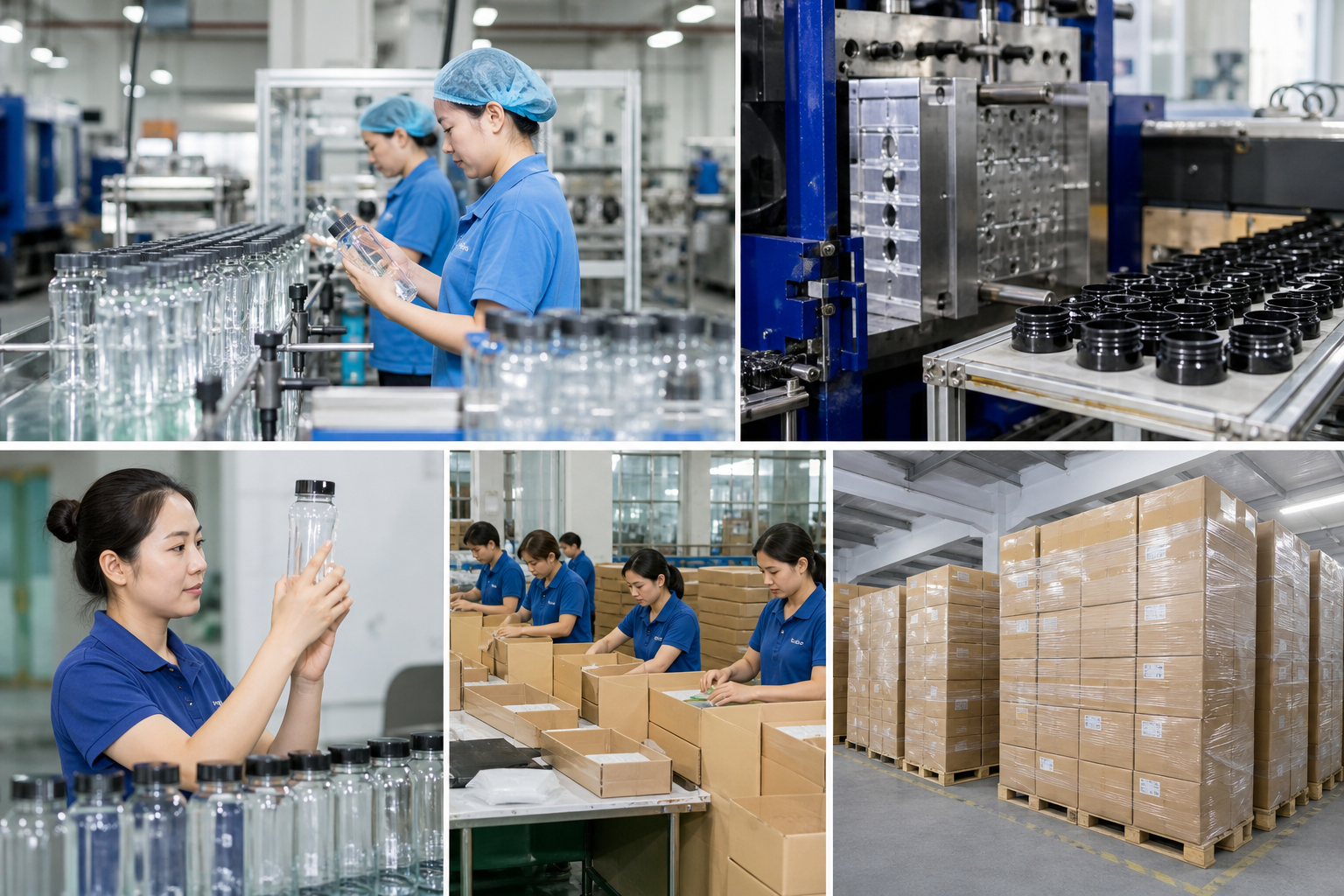
We build custom drinkware in Zhejiang, China, and the pattern is steady: the buyers who get fewer headaches ask about resin grade, lid construction, decoration area, and test reports before they talk about colors. The wrong question is, “What is the cheapest bottle?” The math does not work. A decent promotional Tritan bottle usually lands at USD 1.25-3.80 FOB Ningbo depending on capacity, lid type, and print. For most programs, the right MOQ is 1,000-3,000 pcs, with a normal lead time of 20-35 days after sample approval. QC pulled the sample on the line after a 24-hour odor check, and that is where practical buying starts.
What makes Tritan worth buying
Tritan is a copolyester, and that matters because buyers keep putting it next to PET, AS, or low-grade PP that looks clean on day one and turns cloudy after a few ship cycles. We run those samples through drop tests and hinge checks, and Tritan holds its shape. That is why it sells on a promo shelf: clear body, better impact resistance, and a premium look that takes print well without fighting the artwork.
When you spec a custom drinkware program, do not stop at “BPA-free.” Ask for the resin sheet and check which parts are Tritan, PP, or silicone. We see this all the time on custom canteen orders: Tritan body, PP lid, TPE or silicone gasket. That is fine. What is not fine is a hinge that gives out after 3,000 opens, a lid that starts to warp at 60-70°C, or a shoulder wall that feels soft in hand. For a promo bottle, wall thickness usually lands around 1.0-1.5 mm, depending on capacity and geometry. The wrong question is “Is it BPA-free?” The better one is whether the part stack can survive the line and the buyer’s real use case.
In Zhejiang, the factories that ship Tritan every week know the material is not a magic label. You still need the dryer set right, stable injection pressure, and post-molding checks at the gate and shoulder. QC pulled a sample last month because the gate mark was too visible under light, and the buyer flagged it before packing. If a supplier cannot explain blush, sink, or why one cavity runs 0.2 mm off, you are not talking to a serious canteen manufacturer.
Pick the right bottle format
The best promotional Tritan bottle is the one your channel can move. A 500 ml gym bottle sells cleanly in retail and corporate gifting. A 750 ml or 1L bottle works better for sports campaigns, campus programs, and distributor drinkware sets. For a premium look, we run clear bodies with matte lids and a stainless steel accent ring; the buyer flagged a fully glossy sample as “too cheap” on a PO, and he was right.
Think use case first, not decoration. A custom growler-style Tritan jug can work for outdoor promotions, but the lid and handle are where the trouble starts. A slim 600 ml bottle packs easier and cuts freight. A wide-mouth bottle handles ice better, but the cap has to pass torque and leak testing. On one 3,000-piece run, QC pulled the sample and found a 0.8 mm gap at the closure, so we switched the spec before shipment. For larger orders, we usually recommend a 750 ml straight-wall bottle because it gives enough print area, better carton efficiency, and a solid hand feel.
- 500-600 ml: best for giveaways, event swag, and lower freight cost
- 750 ml: best all-rounder for retailer and distributor programs
- 900 ml-1L: best for premium campaigns and sports channels
If you are sourcing from a canteen factory, ask for carton dimensions and net weight early. A 1L bottle that saves 20 g in resin may look good on paper, but if the base flexes or the body deforms in hot stacking, the math does not work. We ship a lot of these, and we’ve seen that go sideways when buyers skip the drop test and go straight to artwork approval.
Decoration changes the whole quote
The logo method changes the quote more than the bottle shape does. It shifts yield, unit price, and complaint rate. On a promotional Tritan bottle, silk screen is still the lowest-cost common option for 1-color logos and 3,000-piece runs. If the buyer wants a clean canteen promotional item at a tight target, we run silk screen first. Laser engraving only works on the cap, sleeve, or a metal accent; Tritan body engraving is the wrong question to ask.
For a buyer of customizable drinkware, the decoration choice should match the channel. Retail and corporate gifting usually want a sharper imprint, while distributor campaigns care more about speed and landed cost. A 1-color silk screen setup usually adds USD 0.08-0.25 per piece, depending on size and placement. Once you move to UV print or a full wrap, the line slows down and lead time stretches. We had one PO with a typo on the logo size, and QC pulled the sample before print; that saved a 2,000-piece rework.
Ask these questions before approving artwork
- What is the maximum print area in mm?
- Will the logo survive 50+ dishwashing cycles?
- Is the decoration on the bottle body, lid, or sleeve?
- Do you use pantone matching or visual matching only?
For a custom canteen program, the safer setup is one bottle model, two lid colors, and one decoration method. That keeps the MOQ under control and cuts the chance of color drift between samples and production. We’ve seen this go sideways when a buyer pushed for three print methods on one order; the math doesn’t work, and the factory floor spends all day resetting screens.
Compliance is not optional
If you sell into Europe or North America, compliance is part of the product. It is not paperwork you collect later. For the first round, ask for food-contact declarations for every wetted part, plus REACH support for the EU and a BPA-free statement that names the tested parts. If the bottle goes to hot or cold drinks in the US, the buyer will often ask for migration data or a supplier declaration tied to FDA food-contact expectations. We keep the file with the BOM on the line, because a loose certificate gets rejected fast.
We see too many canteen suppliers send one generic certificate for a whole product family. That does not pass. You need the exact item, exact material code, and exact date. If a lid uses TPE, the gasket needs its own file. If the bottle has a stainless steel insert, trace that too. On one order, QC pulled the sample and found the PO said 304 stainless while the spec sheet said 201. The buyer flagged it, and the shipment stopped. Serious canteen manufacturers in Zhejiang give part-by-part declarations, test reports, and batch traceability.
For customs and retail compliance, you may also need carton marking, country of origin, and barcode support. If your program is for Amazon or a similar channel, pre-assigning FNSKU labels and carton labels at factory level saves days. Do not leave that to the warehouse if you are shipping customized drinkware across 8 SKUs and 2 colorways. We ship this way because the math does not work when labels are added after packing.
Buyers who skip compliance checks usually find the problem after goods are on the water. At that point, the cheapest fix is not cheap.
What MOQ and pricing really mean
On paper, every canteen vendor says they can do a low MOQ. On the line, the math changes fast. For a standard Tritan bottle, the realistic order band is 1,000 pcs for stock-color production and 3,000 pcs or more for fully custom color matching, special caps, or printed packaging. If you want a unique mold, the tooling cost can range from USD 4,000-15,000 depending on geometry and lid complexity. QC pulled the sample on a 27 mm cap once, and the buyer still pushed for 500 pcs at the same price. That is the wrong question to ask.
A simple 500-600 ml bottle with a standard cap may quote at USD 1.25-1.75 FOB. A 750 ml bottle with a better lid, matte finish, and one-color logo often lands in the USD 1.80-2.60 range. A premium 1L model with a more complex carry handle or metal accent can reach USD 2.80-3.80. These are normal export numbers from China, not special deals. If a quote comes in far below that, ask what material, closure, or testing has been removed. We have seen a PO typo on lid color turn a 12-day run into 18 days because the line had to stop and rework.
For a distributor canteen program, the hidden cost is usually packaging. If you need individual boxes, hang tags, barcode labels, and palletized export cartons, add USD 0.18-0.60 per piece depending on the format. A good canteen distributor will ask for this early; a weak one will leave it out and then blame freight. On a 10,000 pc shipment, that gap is not small. We ship enough cartons to know where the money goes.
How to choose the right supplier
Choosing a canteen manufacturer is production control, not sales talk. You want a factory that can show monthly output, process control, and inspection records. In our Zhejiang plant, we watch the line at the 8-cavity mold and the overnight packing count; if a plant cannot run 300,000-500,000 units per month across drinkware lines, tight ship dates turn into a gamble. This is the wrong place to chase the lowest quote.
Look for a customizable canteen partner with in-house molding, decoration, and packing. Outsourced printing can work, but it adds a handoff; one missed curing time on the pad printer and the logo rubs off. Ask whether they use AQL inspection, usually AQL 2.5 for major defects and 4.0 for minor defects on export orders. Ask for photo reports of the first 5 cartons, not just one sample. If you are comparing canteen manufacturers, the better one will talk straight about shrinkage, lid tolerance, and seal hardness. QC pulled the sample on one order after the gasket was 0.3 mm thin.
Also check export discipline. Can they print shipping marks correctly? Can they support mixed SKUs? Can they hold a reorder color within a Delta E tolerance you can live with? A serious distributor canteen supplier in China will point out the weak spot instead of selling perfect stories. We have seen a PO typo on carton count turn a smooth shipment into a four-hour wait at the loading dock.
Make the bottle easier to sell
Your bottle has to fit the channel. A customized canteen for employee gifts should look premium and pack flat in a 600 mm export carton. A distributor growler for sports or outdoor channels needs a stronger handle and a cap that opens with wet hands. A custom growler format works only if the carry point and leak test pass transit; QC pulled the sample after a 1.2 m drop, and that told us more than any sales pitch.
Think about the resale story before you sign off the sample. Can your sales team explain why this bottle is different in 15 seconds? Is it dishwasher-safe? Is it impact resistant? Does it fit standard cup holders? Does it open with one hand? Those are the questions that sell. The buyer flagged a typo on the PO once, and the math still did not work because the hook was weak. A bottle that clears those points is easier to position as customized canteen merchandise, whether you sell as a brand owner, a canteen distributor, or a promotional agency.
If you need a broader assortment, pair Tritan bottles with related custom drinkware items so you ship one coordinated program instead of loose SKUs. That gives you better freight use and lets your buyer see a set, not a random sample box. It also helps when your account wants a canteen customizable program with two colorways and three logo placements without opening a new mold for every variant. We run this on the line all the time.
Request a Tritan bottle quote today
Send capacity, logo method, packaging, and target market. We will match the right canteen manufacturer setup in Zhejiang, China.
Frequently asked questions
What is the best size for a promotional Tritan bottle?
For most B2B programs, 750 ml is the safest choice. It has enough capacity for sports and office use, but it still packs efficiently. A 500-600 ml bottle is better for event giveaways, while 900 ml-1L works when you want a premium look. In China, the 750 ml format is often the easiest to keep within a 1,000-3,000 pcs MOQ without pushing the unit cost too high. If you want a bottle that your distributor channel can move quickly, 750 ml usually gives the best balance of price, print area, and carton density.
How much should I pay for a custom Tritan bottle?
A normal export price is about USD 1.25-3.80 FOB depending on size, lid, decoration, and packaging. Simple stock-color models with one-color printing sit near the low end. Better lids, matte surfaces, or premium boxes move the price up. If a supplier in Zhejiang quotes well below USD 1.00 FOB for a fully customized item, ask what has been reduced. It is usually wall thickness, print quality, or testing. For a serious promotional program, the total landed cost matters more than the cheapest factory quote.
What compliance documents should I request?
At minimum, ask for food-contact declarations for all wetted components, REACH support for the EU, and a BPA-free statement that names the tested parts. If the bottle includes a silicone gasket or TPE seal, those materials should be listed separately. For North America, many buyers also ask for migration or FDA-related food-contact support depending on channel. A good canteen supplier will provide batch traceability, carton markings, and a sample linked to the test report. Do not accept a generic certificate that does not match your exact SKU.
Can I order a low MOQ with custom logo and packaging?
Yes, but expect the unit cost to rise. A workable MOQ is often 1,000 pcs for stock-color bodies and 3,000 pcs for more custom setups. If you want private packaging, barcode labels, and a unique lid color, you may need to spread the setup cost across more pieces. In our Hangzhou-area supply base in Zhejiang, many factories can do low MOQ, but the best pricing usually appears once you pass the 3,000 pcs mark. For one-off test programs, keep the structure simple and avoid too many custom parts.
Is Tritan better than stainless steel for promotional drinkware?
It depends on the channel. Tritan is lighter, clearer, and usually cheaper to decorate, so it works well for promotional and retail-style campaigns. Stainless steel is better when insulation and premium thermal performance matter. If your customer wants a visible liquid level, a lighter freight profile, and a modern look, Tritan is usually the better commercial choice. If you are building a premium custom growler or insulated program, stainless may make more sense. For mass canteen promotional orders, Tritan often delivers the best balance of price and presentation.