Key Takeaways
- A serious wholesale drink bottle program usually starts at 1,000 pcs MOQ for stock shapes and 3,000 pcs for custom molds.
- In China, a realistic OEM lead time is 25-35 days after sample approval; add 7-12 days for sea freight to major ports.
- For stainless steel bottles, 0.4-0.5 mm inner wall thickness is common; anything thinner often means denting and poor heat retention.
- AQL 2.5 for major defects and 4.0 for minor defects is a practical baseline for drinkware wholesale inspections.
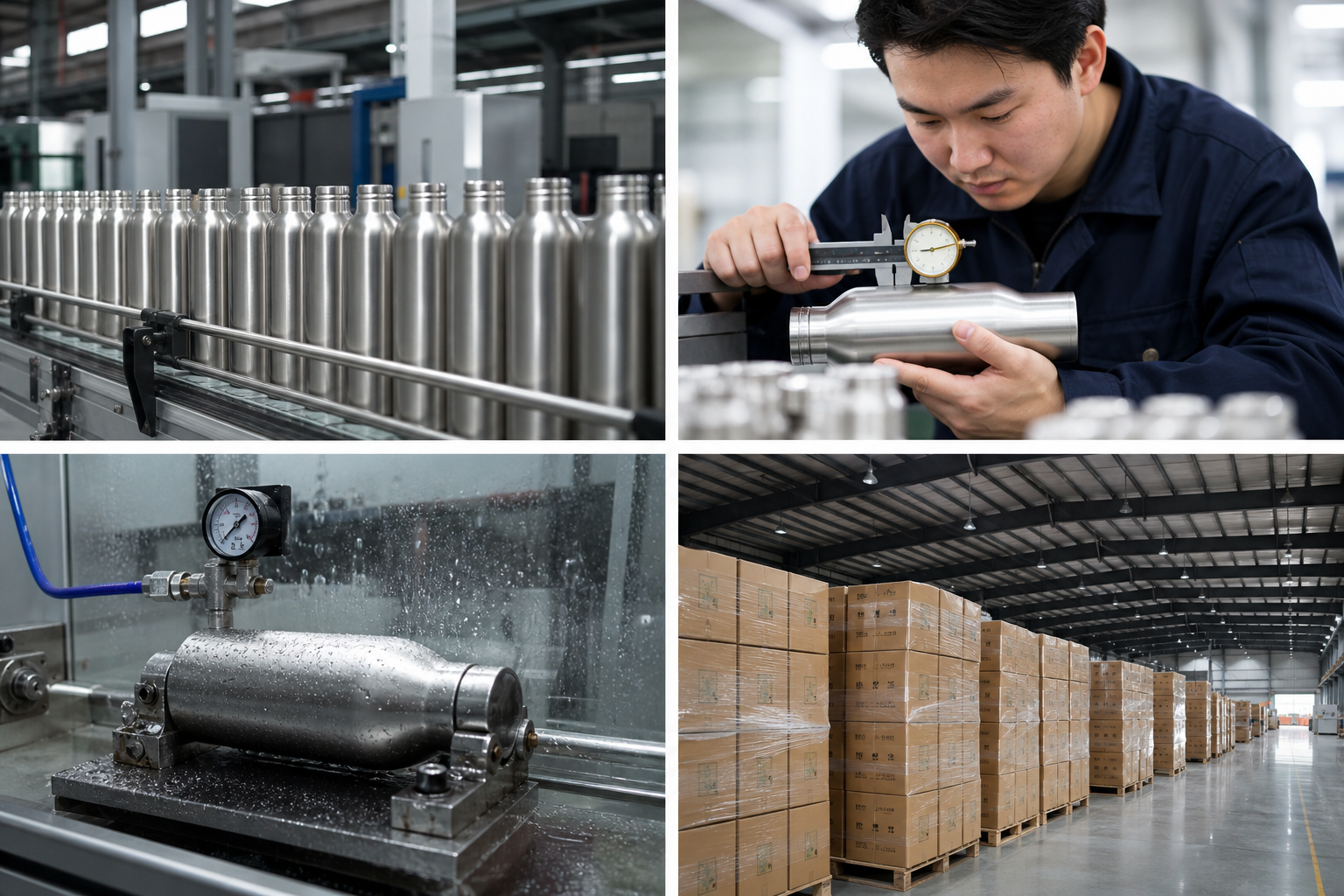
If you are buying the best wholesale drink bottle, you are not buying a bottle alone. You are buying unit price, coating life, leak test results, compliance papers, and whether the line can still hit your reorder 45 days later. In Zhejiang, plenty of suppliers can send a quote in 2 hours; far fewer can ship bulk drinkware with QC records that hold up when the buyer asks for traceability.
For procurement managers and brand owners, the real decision is channel fit: canteen wholesale for outdoor retail, drinkware wholesale for corporate gifting, or bulk growler and bulk canteen programs for specialty accounts. The wrong question is “what is the cheapest bottle?” Ask what fits the material, capacity, MOQ, and the papers your market needs, such as FDA, LFGB, REACH, or BSCI. BottleForge Industrial in Hangzhou runs 320,000 units per month, with standard MOQ from 1,000 pcs for stocked shapes and 3,000 pcs for custom tooling. QC pulled a 24-hour leak test sample last week and found a cap torque issue at 18 N·m, which is the kind of detail that saves a buyer from a messy PO rewrite later. That is the benchmark to compare against when buying from China.
What buyers really mean by best
Buyers ask for the best wholesale drink bottle, but they usually mean one thing: the lowest landed cost that still passes inspection. Unit price alone will fool you. A bottle at USD 1.85 FOB Ningbo can look better than one at USD 2.20, then the math goes bad when 3% leak, 8% of lids need rework, or the REACH file is missing and the shipment sits 12 days instead of 18.
For bulk drinkware, three points decide the order: material consistency, decoration durability, and factory control. Stainless steel is still the safer pick for premium retail and corporate runs. Tritan fits lighter canteen programs. Glass works for low-odor beverage lines, but the packing quote climbs fast because of carton partitions and breakage risk. If you want wholesale drinkware that can survive Amazon, retail, or distributor channels, ask for test data, not a glossy catalog. On our line in Zhejiang, QC pulled the sample with a 1.2 mm wall callout and a laser-etched logo after the buyer flagged a PO typo; the first version looked fine until we ran the drop test. Some factories still send a hand-finished sample in 5-7 days. That is not the same thing as mass production.
Use one buyer rule: if the supplier cannot put wall thickness, lid seal material, and test standard in writing, keep looking. We see this go sideways when a PO says "500ml" but the drawing calls for 550ml, and nobody catches it until cartons are packed.
Choose the right bottle format
Different channels need different bottles. A canteen bulk program for hiking shops should not be set up the same way as an alcohol flask wholesale bulk order for a souvenir distributor. Same story for beer growler wholesale bulk versus beer tumbler bulk for hospitality. Shape, closure, and decoration method decide where the order breaks first. We have seen a buyer flag a 0.3 mm lid gap on the line and stop the whole PO.
Common B2B formats
- Canteen wholesale: usually 350 ml to 1,000 ml, light in hand, easy to pack, often powder coated or brushed. For a 500 ml model, QC pulled the sample after a 72-hour salt test because the coating was too thin at the weld seam.
- Wholesale growler: usually 1.9 L / 64 oz with a wide mouth, strong handle, and a pressure-safe lid system. If the cap spec is loose, the math does not work for draft beer accounts.
- Alcohol flask bulk: typically 6 oz to 8 oz, thin body, leak-tight cap, often stainless steel with brushed or leather wrap options. Ask for odor testing and edge deburring; a cheap flask fails both, and the buyer will notice fast.
- Beer tumbler wholesale: 16 oz to 20 oz, double-wall insulation, suitable for bars, breweries, and gift boxes. We ship these a lot for promo sets, but the print tolerance has to stay tight or the logo looks off on the shelf.
For bulk growler and beer growler in bulk orders, check whether the cap uses silicone, PP, or threaded stainless steel components. For alcohol flask in bulk, ask for odor testing and edge deburring; cheap flasks fail on both. If you are buying bulk canteen or wholesale canteen for outdoor brands, a 0.5 mm 304 stainless body with 18/8 material is a practical specification. It is not fancy, but it ships well and it sells well. Zhejiang factories that run one category every day usually beat general traders, because they know where the dent shows up first, where the laser mark burns, and which weld line will trip QC.
Materials and specs that matter
Material choice is where most sourcing mistakes start. Buyers ask for “stainless steel” and stop there. That is too vague. For the best wholesale drink bottle, lock down grade, gauge, finish, and insulation structure before the PO goes out. We had a buyer flag a spec sheet once because the lid insert was never named.
For stainless steel wholesale drinkware, 304/18-8 is the baseline. If you are selling into Europe, ask about LFGB on contact parts and REACH on coatings and plastics. For North America, FDA food-contact declarations are expected, but you still need to verify the sealing ring and lid insert. If the supplier offers 316 stainless, pick it for salt exposure, acids, or long offshore transit; it raises cost by about 8% to 15%, and the math usually does not work for standard drinkware wholesale programs. QC pulled the sample on the line and checked the gasket edge for flash before we released it.
Wall thickness is not marketing fluff. A 0.4 mm wall on a beverage bottle may be fine for light corporate gifting, but for beer growler bulk or hard-use outdoor canteens, 0.5 mm is safer. On insulation, ask for the vacuum level and temperature retention test method, not just “12 hours hot.” A decent double-wall bottle should typically hold above 60°C after 6 hours under standard room conditions, depending on size and fill ratio. Powder coating should pass cross-hatch adhesion and 48-hour salt spray when you are selling into premium channels. We run that adhesion check with a cutter blade and tape pull, and a supplier in Zhejiang who can quote these numbers is usually more serious than one who only talks about color count.
MOQ, pricing, and lead times
If you are comparing suppliers for canteen wholesale or wholesale growler programs, MOQ changes the math more than most buyers expect. Stock shapes usually start at 500 to 1,000 pcs per color, while custom molds start at 3,000 pcs and often 5,000 pcs if the lid is new. We run this every week. The best wholesale drink bottle is the one that matches your sell-through, not the one with the lowest printed price.
Typical FOB pricing from China for stainless steel drinkware looks like this: a basic 500 ml single-wall bottle at USD 1.20 to 1.80; a double-wall insulated bottle at USD 2.40 to 4.80; a 64 oz beer growler wholesale unit at USD 5.50 to 9.80 depending on structure and decoration; an alcohol flask wholesale bulk order at USD 0.95 to 2.10. QC pulled the sample and checked the lid gap at 0.3 mm on one run. These ranges are broad, but they are good enough to catch a quote that does not add up.
Lead time matters too. For a normal bulk drinkware order, plan 7 days for samples, 25 to 35 days for production after sample sign-off, and 10 to 18 days if you need special packaging. We once had a buyer flag a PO typo on carton size, and that extra reprint cost 4 days on the line. A factory in Hangzhou, Zhejiang that promises 10-day production for custom laser engraving on 10,000 pcs is probably squeezing somewhere you will not like. Ask how many units per month the plant can actually finish, not how fast sales can answer email.
Testing, compliance, and QC
Good sourcing starts with stopping bad surprises at the dock. A real wholesale drinkware supplier should hand over a QC plan, not just glossy photos. For export orders, ask for inspection records at AQL 2.5 major and 4.0 minor defects. For retail programs, some buyers push the major defect limit down to 1.0 on lid fit and sealing rings. We run this check on a 20-piece pull sample, and if the PO says “white” but the carton label says “off white,” the line already has a problem.
Test the bottle the way the buyer will use it. Leak resistance, thread smoothness, odor, coating adhesion, dishwasher wear, and carton drop performance all need a spot on the checklist. For bulk canteen and canteen bulk orders, do a 24-hour inverted leak test on a sample from each carton lot. For beer growler wholesale bulk and wholesale growler programs, check lid torque and handle pull strength with a torque wrench set to the spec sheet, then pull the handle until it meets the stated kg load. For alcohol flask wholesale and alcohol flask wholesale bulk, verify seam integrity and cap retention after thermal cycling. If the bottle has a printed logo, run a tape test and a rub test after 50 wash cycles. We’ve seen buyers skip the rub test and then get a logo complaint after the first commercial dishwasher run. That’s the wrong question to ask.
Good QC is not expensive. Replace 2% of a bad shipment, pay freight twice, and handle one angry customer, and the math gets ugly fast.
Compliance files should include material declarations, test reports, and BSCI or factory audit support if the program calls for it. A supplier in China that will not share documents before PO usually has a thin file. We’ve had a buyer flag a missing LFGB page on a 1,200-unit order, and QC pulled the sample until the paper trail was fixed. That is not a paperwork issue; it is a risk issue.
Custom branding that survives shipping
Decoration is where a lot of wholesale drink bottle orders go sideways. A logo can look clean in the sample room, then fail after carton drop tests, line vibration, ice bucket rub, or one dishwasher run. We see it on the line all the time. Pick the method by channel, not by habit. Laser engraving holds up on stainless steel, which is why buyers use it for premium wholesale drinkware and corporate gifts. Silk screen stays cheaper for a simple one-color logo, but the ink needs proper curing time or QC will pull the sample. Heat transfer and full-wrap printing suit complex artwork, yet the setup cost rises fast and the reject rate can climb if the art file is messy.
If you are sourcing beer tumbler bulk, laser or pad print usually gives better wear resistance. For canteen wholesale and bulk canteen items sold through outdoor shops, powder coat plus laser reveal has outlasted plain print in our shop tests. We run a 72-hour salt spray check on those finishes. For alcohol flask in bulk, keep the decoration tight. Small flat areas do not like oversized artwork, and curved walls throw off logo position by 2 to 3 mm if the jig is sloppy. The same issue shows up on growler wholesale orders: the wider body gives more logo space, but the math does not work if the factory ignores alignment marks.
Ask for a pre-production sample with the final carton, insert, and barcode label. If you sell through Amazon or distributor channels, FNSKU or EAN placement has to land exactly where your warehouse team expects it. We once saw a PO typo move the barcode 15 mm to the left, and the buyer flagged it before packing started. A good factory in Zhejiang treats packaging as part of the product, not a side job.
How to shortlist suppliers
Do not start with the lowest price. Start with production fit. A factory that turns out 320,000 units a month can still be the wrong partner if its main run is private-label sports bottles and you need wholesale canteen or beer growler orders with tight finish control. We have seen the wrong lid mold burn two weeks.
Ask five questions and keep the answers in writing. On the line, QC pulled the sample before we quoted:
- What is your monthly capacity by product line?
- What is your standard MOQ for stock and custom orders?
- Which tests do you perform before shipment?
- Can you share recent export markets and compliance documents?
- What is your real lead time after sample approval?
If the answers stay vague, you are probably dealing with a trader or a factory that does not control enough of the process. That is the wrong supplier for brand work. A loose line can leave you with a neck finish off by 0.2 mm or a coating gloss that shifts 5%. The better wholesale drink bottle supplier makes reordering simple six months later, with the same carton count, the same label placement, and no scramble at QC. We ship from Zhejiang all the time, and the math does not work any other way.
Source your wholesale drink bottle with fewer surprises
Send your spec sheet, target MOQ, and destination market. We will quote the right bottle, not just the cheapest one.
Frequently asked questions
What is a realistic MOQ for the best wholesale drink bottle?
For stock shapes, 500 to 1,000 pcs per color is common. For custom tooling or a new lid, expect 3,000 pcs minimum, sometimes 5,000 pcs if you want a unique mold. If you are doing canteen wholesale or bulk drinkware with simple logo work, the MOQ can be lower than a fully custom wholesale growler. Always ask whether the MOQ is per SKU, per color, or per decoration method, because that changes your actual commitment. A good factory in Zhejiang should state this clearly before sampling.
How much should I budget per unit from China?
For a standard stainless bottle from China, budget roughly USD 1.20 to 1.80 for single-wall, USD 2.40 to 4.80 for double-wall insulated, USD 5.50 to 9.80 for beer growler wholesale bulk, and USD 0.95 to 2.10 for alcohol flask wholesale bulk. Decoration, packaging, and freight add on top. If a quote is far below these ranges, check the material grade, wall thickness, and lid quality. Cheap drinkware bulk pricing usually shows up later in leakage claims or carton damage.
What documents should I request before placing an order?
At minimum, request material declarations, food-contact compliance documents, and the factory’s QC plan. For Europe, ask for LFGB or relevant migration test support and REACH on coatings and plastics. For North America, FDA food-contact declarations are standard. If you are buying wholesale drinkware for a retail account, ask for AQL inspection criteria, carton packing specs, and sample photos of the final print. For larger programs, BSCI or a factory audit summary helps. If a supplier in China hesitates to share these, they are not ready for serious procurement.
What lead time should I expect for bulk canteen orders?
For standard bulk canteen or wholesale canteen items, 25 to 35 days after sample approval is realistic in China. Add 5 to 7 days for sampling if the shape already exists, or 10 to 15 days if you need a custom color or packaging. Sea freight to Europe or North America usually adds 7 to 18 days depending on the port and routing. If a supplier promises custom production in 10 days, they are usually talking about a very small run or they are leaving out inspection and packing time.
Which decoration method lasts longest on wholesale drinkware?
Laser engraving is usually the most durable on stainless steel because it does not rely on ink adhesion. For printed logos, properly cured silk screen can work well, but it must pass rub and wash tests. For beer tumbler bulk and beer tumbler wholesale bulk, laser or baked-on print is safer than cheap pad print. On powder-coated bottles, laser reveal often looks premium and holds up better in shipping. If your channel is corporate gifting or premium retail, durability matters more than decoration cost by a few cents.