Key Takeaways
- A workable MOQ for a custom wholesale glass bottle is often 3,000-5,000 pcs, not 500.
- Standard wall thickness for retail-safe glass drinkware is usually 2.0-3.0 mm; anything thinner needs stronger QA.
- FOB pricing for simple decorated glass bottles often starts around USD 0.48-1.20 per unit at bulk levels.
- Ask for AQL 2.5/4.0 inspection, REACH alignment, and carton drop-test data before you approve production.
If you are sourcing the best wholesale glass bottle, you are not buying glass alone. You are buying breakage control, fill speed, freight efficiency, and fewer customer complaints after launch. A bottle that looks clean in photos can still fail on wall thickness, neck finish, decoration adhesion, or carton compression once it leaves Zhejiang and hits a warehouse in Europe or North America. We have seen a 0.2 mm wall variance turn into a cracked pallet after the buyer flagged it on a 1.2 m drop test.
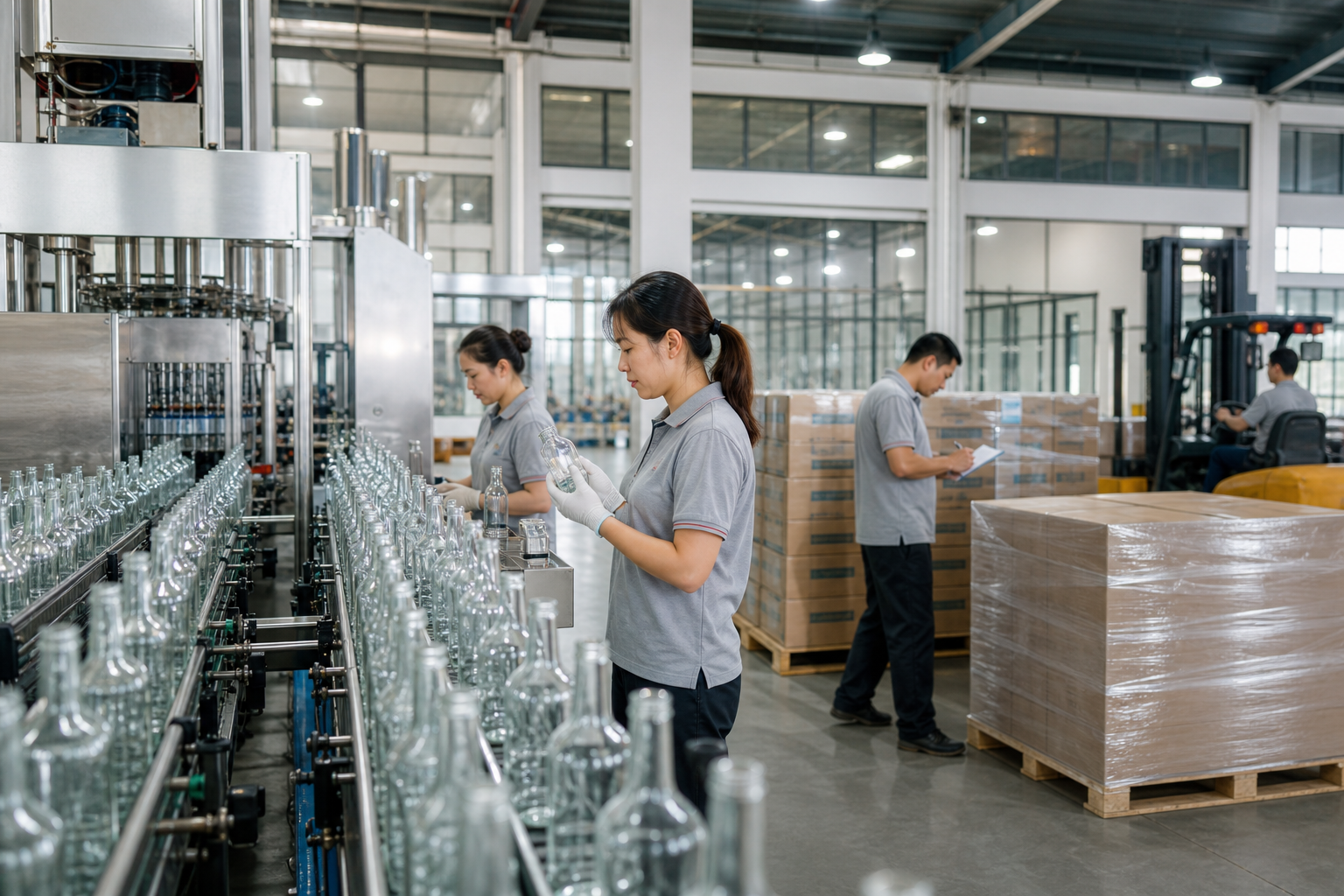
The right way to buy wholesale drinkware is as a technical order, not a catalog choice. You need the right borosilicate or soda-lime body, a stable mold, tolerances you can measure, and a supplier that can keep the line on schedule. At BottleForge Industrial in Hangzhou, Zhejiang, we run 400,000 units per month across glass and stainless lines, with typical MOQ starting at 3,000 pieces and normal lead time around 25-35 days depending on decoration. A buyer once sent us a PO with the neck finish code typed wrong by one digit; the math does not work if that gets missed, so we check it at the gauge station before production starts.
What makes a bottle actually wholesale-ready
The best wholesale glass bottle is not the cheapest one. It is the one that gets through production, packing, freight, and shelf handling without creating hidden cost. For wholesale-ready work, we need the same mouth finish, the same base weight, and the same decoration placement on every batch. QC pulled a 500 ml sample from three pallets last month, and the logo sat 1.5 mm off on one run; that is where trouble starts. If you are buying for retail, e-commerce, or hospitality, repeatability matters more than a perfect sample under a light box. This is the wrong question to ask: does it look good once?
Start with measurable specs. For a standard glass bottle, ask for wall thickness in the 2.0-3.0 mm range, neck finish drawings, capacity tolerance of ±5%, and weight tolerance of ±3%. We check that with a caliper and a go/no-go gauge on the line, not by eye. For a bulk canteen or bulk drinkware program, those numbers decide cap fit, leak rate, and carton damage. A PO typo on the neck finish can turn into a 10,000-piece headache fast. In Zhejiang, plenty of factories can make a clean sample; fewer can hold those tolerances when you scale, and the math does not work if the lot drifts.
- Capacity: 250 ml, 500 ml, 750 ml, or 1,000 ml with measured fill line.
- Glass type: soda-lime for cost, borosilicate for thermal shock resistance.
- Finish: lug cap, screw cap, cork, swing-top, or custom closure.
- Packing: egg crate, divider box, or molded pulp for export cartons.
Glass types and where each fits
Do not let a sales quote blur soda-lime and borosilicate. Soda-lime is the line we run for cost-sensitive beverage programs. It fits water bottles, tea bottles, and most canteen wholesale orders. Borosilicate usually lands 20-40% higher per unit, but it takes heat shock better and earns its keep on hot-fill or premium retail SKUs. For a wholesale drinkware item built for cold beverages, soda-lime is usually the right call. QC pulled a 2.2 mm wall sample on the caliper, and the buyer flagged a 1.6 mm corner as a risk for breakage in transit.
For a best wholesale drink bottle program, the glass has to match the use case. A 500 ml soda-lime bottle with a 2.2 mm wall and silicone gasket works for juice, infused water, or cold brew. For a bulk growler or beer growler bulk order, we care more about body thickness and closure strength than a fancy shoulder line. If you are sourcing alcohol flask bulk or alcohol flask wholesale bulk for bars or gift sets, surface finish and closure consistency carry the risk, because a 0.3 mm print shift or a chipped rim shows up fast on the shelf. We had one buyer push back on a matte spray because the bottle looked clean in photos but showed fingerprint marks on the line.
Typical sourcing ranges
- Soda-lime bottle: FOB USD 0.48-0.95 at 5,000 pcs.
- Borosilicate bottle: FOB USD 0.95-1.85 at 3,000 pcs.
- Decorated retail bottle: add USD 0.08-0.30 for printing or frosting.
MOQ, pricing, and lead time realities
Buyers often ask for 300 pieces to test the market. Fair point. A mold line in Zhejiang does not care about that plan. We run better on stable volume. For a custom shape, the normal MOQ sits at 3,000-10,000 pieces, and the gap comes from mold complexity plus decoration steps. For stock shapes with logo printing, 1,000-2,000 pieces is possible, but the unit price climbs fast and carton packing starts to eat the landed cost. Last month, QC pulled a sample with a 1.8 mm mouth chip, and the buyer still pushed for the 300-piece price. The math does not work.
Lead time changes with the process. Plain stock glass bottle orders can ship in 15-20 days. Screen printed or frosted orders usually need 25-35 days. Add custom caps, sleeves, or color coating, and you are looking at 35-45 days. For a launch in Europe or North America, work backward from vessel booking and customs clearance, not just the production slot. A clean purchase order should include the factory schedule, an inspection date, and a 7-10 day buffer for rework. We ship this way because a missed ship date costs more than one extra week on the line. One PO we saw had the carton size typed as 32x28x22 cm, then the buyer flagged it because the actual master carton was 34x30x24 cm.
Good sourcing math is simple: one delayed 40-foot container can wipe out the savings from a lower unit price.
For wholesale drinkware, ask for the quote on an FOB China basis first, then compare landed cost. A bottle at USD 0.72 FOB from Zhejiang can still beat a cheaper-looking USD 0.61 quote once you factor in breakage, repacking, and higher defect rates. We checked one shipment with 4.6% breakage at packing, and the low quote turned ugly fast. This is the wrong question to ask if you only stare at unit price.
Testing and compliance you should demand
If you sell into the EU or North America, compliance is not optional. We ask for a food-contact declaration, REACH support for restricted substances, and a written statement that the ink or coating is food-contact safe. North America buyers often want CPSIA-style lead and cadmium paperwork too, even on a 500 ml glass bottle that is never going near a kid's product. I have seen POs rejected over a missing batch number on the test report, so the paper trail matters as much as the bottle.
Inspection should be specific. We run AQL 2.5 for major defects and AQL 4.0 for minor defects on a normal retail order, then QC pulls samples for cracks, chips, bubbles in the neck finish, crooked logos, and cap leakage. For a beer growler wholesale bulk program, pressure and closure tests are the right call; for an alcohol flask in bulk order, seal integrity and print position decide whether the line passes. Ask for carton drop-test data and stack-test performance on glass. The wrong question is, “Does it look fine?” Shipping damage usually starts with weak packing, and we have seen 3 mm of extra headspace fix a problem that a thicker bottle could not.
- Documents: food-contact declaration, REACH support, product spec sheet, test reports.
- Inspection: pre-shipment inspection, photo/video evidence, random carton opening.
- Packing tests: 3-layer or 5-layer export cartons, ISTA-style drop testing where relevant.
Decoration choices that change your cost
Decoration is where a wholesale canteen order or wholesale growler project blows past budget. A simple one-color screen print may add only USD 0.08-0.15 per unit at scale, and on a clean run that is the number we actually see. Frosted acid etch looks premium, but it raises rejects when the pattern registration is tight; QC pulled one sample at 0.8 mm off center and the whole batch stopped. Laser engraving is cleaner on metal than glass, so for a best wholesale glass bottle program, you usually choose screen print, decal, hot stamping, or spray color. The wrong decoration can push your defect rate up 2-5% and turn a good factory quote into an expensive headache. The math does not work if you chase every effect.
Choose decoration by sales channel, not by mood board. For retail, a clean logo on the shoulder or center body is easy to run and easy to sell. For hospitality or bulk drinkware promotions, a durable single-color print usually beats multi-step art that looks good in renderings and wears badly on the line. If you are making beer tumbler bulk or beer tumbler wholesale bulk products for events, prioritize legibility under low light; we have seen the buyer flag artwork that disappeared once the room was dim. For alcohol flask wholesale, matte finishes and tight lid fit matter more than the branding method itself. You want the decoration to survive handling, not just photography. The wrong question is not "what looks best?"
Ask the supplier how decoration changes yield. A factory in Zhejiang that is honest will tell you the scrap rate, the rework rate, and whether the design needs a 1.5 mm safety margin around the logo. On the line, we check that against the pad printer frame and the cure oven before we release the run. We have also seen POs with a center-logo note typed as 0.15 mm instead of 1.5 mm, and that typo cost a day of sampling. That is the kind of detail that separates experienced sourcing from guessing, and it is the wrong place to cut corners.
How to choose the right supplier in China
The supplier you want is the one who can answer technical questions without drifting into marketing language. If you ask for a neck finish drawing, they should send the PDF. If you ask for carton count per pallet, they should know the number. If you ask for monthly output, they should give a real figure, not “large capacity.” At BottleForge Industrial in Hangzhou, Zhejiang, we keep a caliper on the packing table and a rule on the line: if the answer is vague, the buyer will catch it before the first container leaves the gate.
When you compare suppliers in China, check mold ownership, line stability, sample turnaround, document quality, and how they handle a correction request. This is the wrong question to ask as a slogan exercise; ask for the mold number, the cavity count, and the last inspection sheet. A good wholesale drinkware supplier will confirm whether the mold is new or existing, whether the sample is hand-blown or machine-made, and whether the production piece will match the sample within normal tolerance. For canteen bulk or canteen wholesale orders, that matters because buyers reorder the same SKU for months. On a 58 mm cap, even a 0.3 mm fit issue shows up fast. We have seen this go sideways when a buyer approved a hand sample, then the first 5,000 pieces arrived with a slightly different shoulder line. The math does not work if a lower FOB price turns into rework and freight delays.
- Ask for: factory profile, output by category, recent test reports, and export markets served.
- Check: ISO or BSCI audits if your retailer requires them.
- Confirm: sample lead time, mold lead time, and whether tooling is included in the quotation.
Buying patterns for different channels
Your channel sets the spec. On Amazon or a similar marketplace, the carton, barcode placement, and drop-test result matter as much as the glass. We have seen buyers lose a full week because the FNSKU label was 3 mm off and the prep center rejected the pallet. If you sell through distributors, carton count per case and reorder consistency drive the order more than a fancy silhouette. For a premium brand, a heavier base and cleaner decoration can support a higher price, but the landed cost still has to work. The wrong bottle for the channel is dead inventory.
For e-commerce, a 500 ml glass bottle with a fitted cap, shrink band, and a tight carton spec usually runs cleaner. For hospitality, 750 ml or 1,000 ml is the safer call if the bottle has to survive repeated washing; we test those on the line with a 60°C rinse cycle before QC signs off. For seasonal beverage promotions, a bulk growler SKU can move fast if the closure torque and carry handle hold up. If you are mixing glass with wholesale drinkware or wholesale canteen programs, put the SKUs into one container and one booking. That is the cleaner play. It cuts paperwork mistakes and saves a real day at the loading window.
Buyers who treat bulk canteen, growler wholesale, and alcohol flask wholesale bulk as three separate jobs often pay for it twice. We run into this when the PO says one thing and the carton mark says another; one typo can hold the shipment. Bundle tooling, packing, and QC under one supplier if the factory can keep AQL 2.5 and the same mold line across items. The math does not work when you split every small order into its own box. One container, fewer headaches, better price.
Request a factory quote with real specs
Send your capacity, closure, decoration, and target MOQ. We will quote from Zhejiang with practical pricing, lead time, and packing options.
Frequently asked questions
What is a realistic MOQ for the best wholesale glass bottle?
For a custom wholesale glass bottle, 3,000-5,000 pieces is a realistic starting MOQ in China. If you need a new mold or special decoration, 5,000-10,000 pieces is more normal. Stock shapes with logo printing can sometimes start at 1,000-2,000 pieces, but your unit price usually rises by 15-30%. In Zhejiang, factories optimize around batch runs, so very small orders are possible but rarely economical. If you want the best balance of price and flexibility, aim for one full production run, not a trial order that forces the factory to over-handle the job.
How much should I expect to pay per unit?
For simple soda-lime glass drinkware wholesale programs, FOB China pricing often starts around USD 0.48-0.95 at 5,000 pieces. Borosilicate models usually run USD 0.95-1.85 depending on size, wall thickness, and closure. Decoration adds cost: screen printing may add USD 0.08-0.15, frosting or special coating can add USD 0.15-0.30. If you are sourcing a beer growler bulk or alcohol flask wholesale item, hardware and packing can push the total higher. Always compare FOB plus freight, breakage allowance, and carton cost, not unit price alone.
What tests should I ask for before shipping?
Ask for food-contact documentation, REACH support, and a pre-shipment inspection using AQL 2.5 for major defects and AQL 4.0 for minor defects. For glass bottles, you should also request carton drop tests, closure leakage checks, and visual checks for chips, bubbles in critical areas, and logo misalignment. If the order is for beer growler wholesale bulk or alcohol flask in bulk, ask for closure and seal integrity tests. For EU retail, make sure the decoration inks and coatings are suitable for food-contact packaging. Good suppliers in Zhejiang will have these reports ready, not after you ask three times.
How long does production usually take in China?
Plain stock glass bottle orders can often ship in 15-20 days once the order is confirmed. Printed, frosted, or otherwise decorated wholesale drinkware usually takes 25-35 days. If you need a new mold, custom cap, or special carton structure, plan on 35-45 days. At our Hangzhou, Zhejiang factory, normal lead time is about 25-35 days for most export programs, assuming artwork and samples are approved quickly. Add 7-10 days of buffer if you are shipping into a fixed launch date or a busy freight season.
How do I choose between soda-lime and borosilicate glass?
Use soda-lime if you want cost control for cold beverages, retail water bottles, or canteen wholesale programs. Use borosilicate if the bottle needs thermal shock resistance, hot-fill tolerance, or a more premium feel. Soda-lime is usually 20-40% cheaper, but borosilicate performs better in heat cycling. For a best wholesale glass bottle program, the right choice depends on use case: cold juice, infused water, and general bulk drinkware usually favor soda-lime, while hot tea or premium gifting lines may justify borosilicate. The wrong glass type costs more later through returns and replacements.