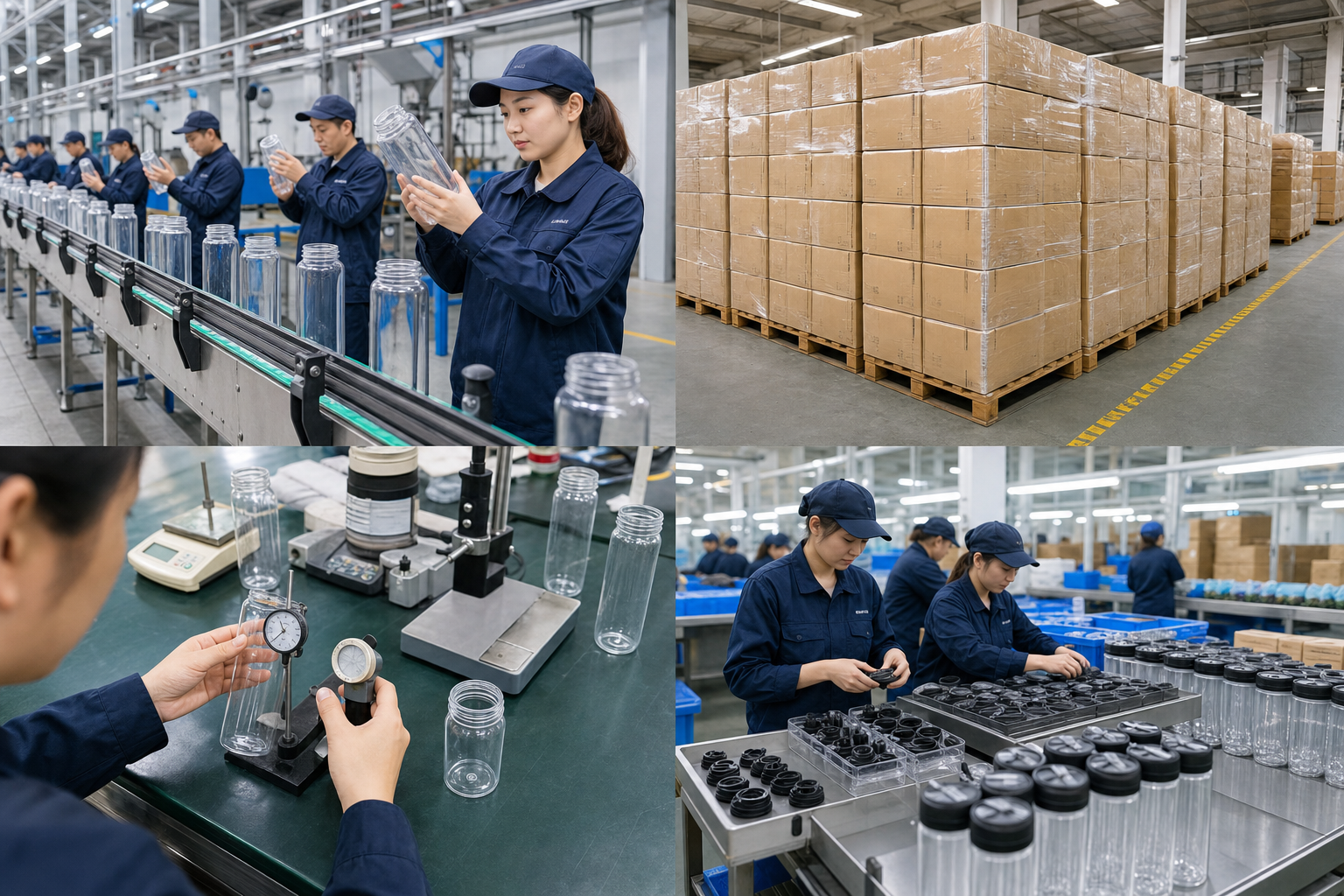
Key Takeaways
- A real wholesale Tritan bottle program usually starts at 3,000 units, with samples at 500 units and 20–30 day lead times.
- Ask for resin traceability, REACH and LFGB or FDA declarations, and AQL 2.5/4.0 inspection plans before you approve mass production.
- For retail-ready bulk drinkware, keep wall thickness around 1.8–2.5 mm and test lid torque, leak rate, and drop resistance.
- In Zhejiang and across China, factories that produce 300,000+ units per month can still miss quality if they cannot control molds, caps, and decoration.
If you are sourcing the best wholesale tritan bottle, the first question is not “which bottle looks good?” It is whether the factory can hold the same wall thickness, clarity, lid fit, and drop resistance across 5,000 or 50,000 units without eating your margin in rework. Tritan sells for good reasons: light weight, BPA-free, stable for cold drinkware. But a bottle that looks fine in a showroom can fail on the line when the mold gate leaves a haze line or the cap torque drifts by 0.3 N·m.
For procurement managers and brand owners, the real comparison starts with resin grade, mold quality, decoration method, and compliance before anyone argues about Pantone. We run a 500-unit MOQ for sampling, 3,000 to 10,000 units for production, and 20 to 30 days after artwork approval. That is normal in Zhejiang if the supplier injects, trims, and assembles in-house. If they outsource half the job, the schedule gets messy fast. QC pulled the sample on a 1.2 mm wall check last week, and the buyer flagged a typo on the PO before we packed the first carton.
What makes Tritan worth sourcing
Tritan is a copolyester we use on cold drinkware because it stays clear, takes a hit better than standard PET, and still looks clean on shelf. If you're building the best wholesale tritan bottle program, that matters. We have seen 3% breakage drop to under 1% on pallet shipments once the bottle wall and cap fit were set right, and the buyer stopped paying for cracked cartons on Amazon FBA.
But Tritan is not magic. The wrong question is “is it Tritan?” The real check is the resin grade and what the bottle will face: repeated washing, acidic drinks, or 70°C filling for a short hold. On the line, QC pulled the sample and checked the resin lot against the spec sheet before we released it. For export orders, ask for batch-linked FDA food contact, REACH, and LFGB test reports if you sell into Germany or broader EU retail. A Zhejiang factory should hand over the resin spec sheet, test PDF, and lot code without making excuses.
For procurement, compare the bottle against the channel, not against a brochure. A 600 ml Tritan bottle for gym retail, a 1 L canteen wholesale program, and a promotional bulk drinkware campaign need different cap threads, print zones, and carton counts. We had one PO where the buyer wrote “1L” in the note and the artwork file showed 1000 ml; that typo cost a week. If a supplier pushes the same structure on every order, the math does not work. You're buying stock shapes, not engineering.
How to judge factory capability
A supplier worth your time talks in numbers first, not in color cards. Ask for monthly output, mold count, and in-house process control. A serious Zhejiang plant we run can ship 300,000 to 600,000 drinkware units per month, with 12 to 20 injection machines and separate lines for lids, seals, and carton packing. If they cannot tell you where the cap gasket comes from or how many cavities sit in the mold, delays are already baked in.
For a wholesale tritan bottle order, check these points:
- MOQ: 3,000 units for standard colors, 5,000 to 10,000 for custom Pantone matching.
- Lead time: 20 to 30 days after sample sign-off; 35 to 45 days for new molds or complex decoration.
- Inspection: AQL 2.5 for critical defects, 4.0 for minor cosmetic issues.
- Packing: drop-tested cartons, usually 24 or 48 pcs per export carton depending on size.
Do not skip cap tooling. This is where a lot of wholesale drinkware jobs go sideways, not on the bottle body. We have seen a buyer flag a 0.3 mm thread mismatch after the first sample run, and the whole order had to wait while the tool shop corrected it. A lid should pass at least 3,000 open-close cycles in internal tests, and the thread must stay aligned after hot-water sanitation. If the supplier says “no problem” but shows no torque spec or leak test data, the math does not work.
In China, a factory that replies fast is not automatically a factory that can repeat quality. In Zhejiang, the plants worth keeping are the ones that show inspection records, pressure-test notes, and a real defect log, not just promises.
Specs that actually affect sales
Buyers fixate on capacity and miss the details that drive sell-through. Wall thickness, neck finish, gasket material, and decoration method all change how the bottle feels on the shelf and how it runs on the line. For most wholesale canteen and wholesale drinkware programs, 1.8 to 2.5 mm is the range we run. Thin walls feel flimsy in hand. Go too thick and the math gets ugly fast: higher resin cost, heavier cartons, and longer cooling time at the mold.
Use this as a sourcing baseline for a best wholesale drink bottle project:
- Capacity: 500 ml, 600 ml, 750 ml, and 1,000 ml are the easiest sizes to merchandise.
- Body weight: often 90 to 180 g depending on size and structure.
- Lid system: flip top, screw cap, carry loop, or straw cap depending on channel.
- Decoration: silk screen, laser engraving, or water-transfer for a cleaner premium look.
If you are also buying bulk canteen or canteen bulk products, keep the design language simple. A buyer once flagged a six-color body with a soft-touch spray, and the PO came back with a note: “too many parts, too many problems.” North America and Europe usually want a clear bottle, one or two PMS colors, and a lid that closes the same way every time. Overbuilt shapes are harder to pack, harder to ship, and harder to reorder. Repeatability beats novelty in bulk drinkware. Push the story into packaging, inserts, and retail display. The bottle itself should stay easy to make.
One more point: Tritan works for cold drinks, not every liquid on the shelf. We had QC pull a sample that had been run with a flavored protein drink for 12 days, and the odor complaint came back fast. If your line also includes a bulk growler or beer growler bulk range, use separate materials and closures. A beer tumbler bulk or beer tumbler wholesale bulk program has different odor retention and impact requirements than a sports bottle. Keep the categories clean, or you will create compliance issues and buyer confusion.
Pricing by order size and decoration
Buyers asking for the best wholesale tritan bottle usually mean best landed cost at scale. We run the math on FOB China, carton, inland trucking, and decoration loss, not a nice-looking factory quote. For a standard 600 ml Tritan bottle with one-color print and basic carton pack, FOB China usually sits around USD 1.20 to 2.10 per unit at 3,000 to 10,000 pieces. Lid structure changes the number fast. A premium bottle with double-wall construction, silicone sleeve, or custom tooling moves up quickly, and the buyer who said “why is it only 8 cents more?” got the sample back with a thicker cap and a cleaner seal ring.
Decoration is where drinkware wholesale budgets slip. Screen printing stays the cheapest route for simple branding. Laser engraving looks clean on certain caps or metal accents, but on a Tritan body it is often the wrong question to ask. If you want full-wrap artwork, expect a higher setup fee and a slower sign-off cycle; on one job the PO had “1 color” typed in twice, and QC pulled the sample before print because the art file had a second PMS tone hidden in the background. Setup charges usually run USD 50 to 300 per color or process.
For procurement, compare total cost by channel:
- Promo channel: one-color print, standard box, lowest unit cost.
- Retail channel: better surface finish, barcode-ready packaging, carton test at 10 kg, and cleaner shelf presentation.
- Amazon or DTC: FNSKU label placement, polybag rules, and carton dimensions matter as much as bottle cost.
If you are moving into alcohol flask bulk, alcohol flask wholesale, or alcohol flask wholesale bulk lines, do not assume the same vendor logic applies. Those SKUs often use 304 stainless, thinner walls, and different compliance checks. Same story with wholesale growler and growler wholesale orders: the closure and pressure tolerance matter more than body decoration. We have seen this go sideways when a buyer copied a Tritan spec sheet into a growler PO and the cap torque test failed at 12 N·m. Keep each category on its own sourcing sheet.
Compliance and testing you should demand
Compliance comes before sampling. We treat it as supplier qualification, not a file chase after the first mold is made. For export to Europe and North America, your Tritan bottle program needs material declarations, migration testing, and batch records you can trace back to the line. At minimum, ask for FDA food contact, REACH declaration, and LFGB testing for any part that touches liquid or the mouth. If the bottle uses a silicone gasket, that gasket needs its own papers. We once caught a PO typo on the gasket material code, and QC pulled the sample before shipment.
Testing needs to go past a clean lab PDF. Ask for:
- Leak test at room temperature and after thermal cycling
- Drop test from 1.2 m or higher, depending on your channel
- Dishwasher or handwash durability if the product claim requires it
- Odor and stain resistance for flavored drinks
A Zhejiang factory that knows export will keep internal QC records and can send samples to SGS, Intertek, or TÜV-style labs when the order calls for it. You do not need every test on every run. You do need a test plan before the first 5,000 pcs move. The math does not work any other way. We ship too much drinkware to gamble on one seal design that starts leaking after two hot-water cycles and turns into 800 returns.
For wholesale canteen and canteen wholesale deals, use the same standard. The cap, gasket, and body need matched specs, even on a simple bottle. We ask for a defect standard, photos of failed samples, and rework rules before production starts. One buyer pushed back on a 2 mm cap tolerance; we adjusted the tooling and the reject rate dropped from 6% to under 1%. If a factory will not have that conversation, stop there.
How customization protects margin
The gap between a commodity bottle and a margin-making brand item usually comes down to how you handle customization. Buyers in drinkware wholesale should not stamp on decoration just because the factory offers it. Add the feature that helps sell-through or brings the reorder back. We run this on the line all the time: a clean one-color logo on a clear Tritan bottle can beat a busy print when the customer is a gym chain, an outdoor shop, or a corporate gift buyer.
Good customization options usually include:
- Silk screen printing for simple logos and 5-7 working day turnaround
- Laser marking for subtle branding on small areas
- Custom lid colors matched to PMS or Pantone references
- Packaging inserts, belly bands, and retail sleeves
If you are buying wholesale growler or beer growler wholesale bulk items, the decoration plan changes fast. Those bottles sell on capacity, leak resistance, and cap strength. A beer growler in bulk order may need a different handle geometry than a sports bottle, and a beer tumbler wholesale bulk program may need double-wall insulation instead of clear Tritan. We had a buyer flag a PO typo once—same artwork, wrong closure spec—and the math did not work after retooling. One mold should not try to cover three markets.
For a best wholesale tritan bottle line, margin usually comes from repeatable SKUs, not one-off art. Keep 2 to 4 core capacities, 3 colorways max for stock programs, and reserve full custom for orders above 5,000 pieces. QC pulled the sample, checked the lid gap at 1.2 mm, and the numbers held. That is how seasoned buyers keep dead stock down and still stay open for retail and promo accounts.
Request factory quotes with real specs
Send your target capacity, MOQ, artwork, and compliance needs. We will price the best wholesale tritan bottle options with export-ready details from Zhejiang, China.
Frequently asked questions
What is a realistic MOQ for a wholesale Tritan bottle?
For most export factories in China, a realistic MOQ is 3,000 pieces for a standard wholesale Tritan bottle. If you want custom Pantone colors, special lids, or new molds, expect 5,000 to 10,000 units. Sample orders are usually 100 to 500 pieces, but sampling costs can be higher per unit. In Zhejiang, a factory with stable production may still ask for a higher MOQ if the design needs a new cavity tool or custom gasket. Always separate prototype MOQ from mass-production MOQ so you do not compare the wrong numbers.
How much should I budget per unit FOB China?
For a standard 500 to 750 ml Tritan bottle with one-color printing, FOB China pricing often sits around USD 1.20 to 2.10 per unit at 3,000 to 10,000 pieces. Complex lids, double-wall builds, premium packing, or custom molds can push it above USD 2.50. If you are buying drinkware bulk for retail, budget for cartons, barcodes, and any FNSKU labeling as separate costs. Shipping from China to Europe or North America can easily add 12% to 35% depending on season and freight mode.
Which compliance documents should I request?
Ask for FDA food-contact declarations, REACH compliance, and LFGB testing if you sell into the EU. If the bottle uses silicone or TPE parts, those components need separate declarations. For wholesale drinkware, also request a material specification sheet, batch traceability record, and recent third-party test reports from SGS, Intertek, or another recognized lab. If the supplier cannot link the report to the exact model and resin batch, treat the paperwork as incomplete. Good factories in China understand this and provide it before mass production.
How do I check if the bottle will leak in shipping?
Request a leak test at room temperature and after thermal cycling. A practical factory test is to fill the bottle, close it, invert it for 24 hours, then shake and inspect the cap seal. For export cartons, ask for vibration or drop testing at 1.2 m or higher, depending on your channel. The lid torque and gasket compression matter more than the bottle body for leak risk. If you are sourcing canteen bulk or wholesale canteen orders, insist on the same test plan because cap failures create the highest return rate.
Can I use Tritan for growlers or alcohol flasks?
Usually not for traditional growler or alcohol flask bulk programs if you need pressure resistance, odor control, or a metal-flask market look. Tritan works very well for clear cold drinkware, but a bulk growler or beer growler wholesale bulk order often needs different structures and closures. Alcohol flask wholesale and alcohol flask wholesale bulk products are normally stainless steel or other materials chosen for alcohol compatibility and premium feel. Match the material to the use case rather than forcing one resin into every category.