Key Takeaways
- Typical MOQ for blender bottle promotional orders starts at 3,000 units, with sample lead time of 7-10 days
- FOB pricing for a basic 600 ml shaker often lands around USD 1.20-2.80 depending on material, print, and lid type
- AQL 2.5 for major defects and 4.0 for minor defects is a practical inspection baseline for custom drinkware
- A Zhejiang canteen manufacturer with 300,000 units/month capacity can handle distributor drinkware programs faster than a trading-only vendor
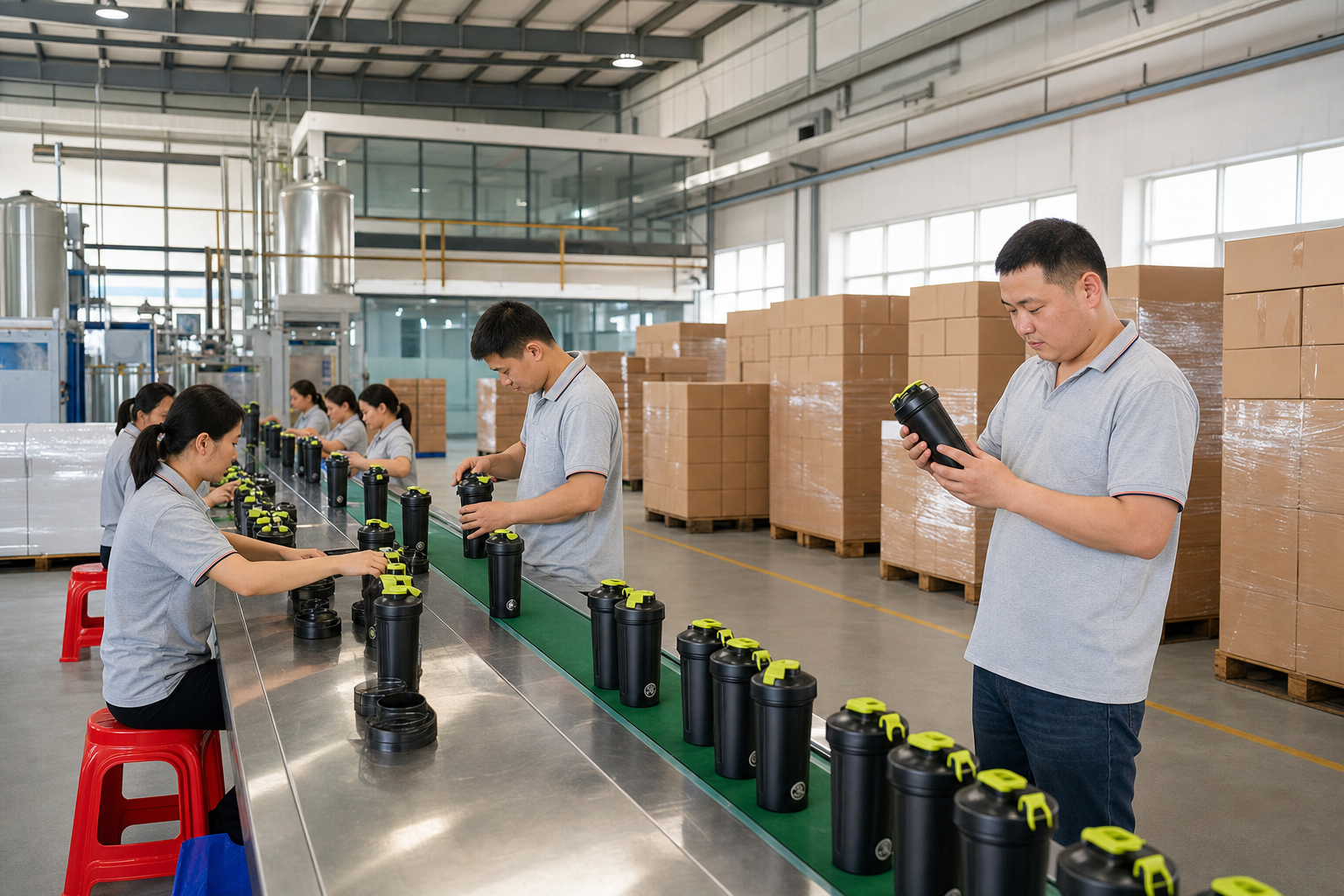
If you are buying blender bottle promotional products for retail, gyms, supplements, or distributor programs, the risk is not the artwork. It is the gap between what you want and what the factory line is set up to make. A 600 ml shaker can look simple and still fail on leak resistance, lid fit, or print durability if you skip the basics. We run this check on every sample, and QC pulled one lid last week that missed the cap torque by 0.8 N·m.
At BottleForge in Hangzhou, Zhejiang, we see this every week from Europe and North America: buyers want custom drinkware that hits the right FOB price, passes REACH or FDA expectations, and ships on time without rework. The buyer flagged a PO typo on a 5,000 pcs order before production, and that saved a week. This is the wrong question to ask if you start with artwork first. You need to think like a sourcing manager, not a merchandiser. The difference between a clean order and a headache is usually 3 technical details, a sensible MOQ, and a lead time that matches a China factory schedule.
What buyers mean by promotional
When buyers say blender bottle promotional, they mean a shaker bottle for giveaways, retail bundles, gym campaigns, or distributor packs, not a premium sports flask. Simple. The promotion is the product, not just the logo. We run these for end users who twist the cap, shake hard, and wash the bottle the same night. If the lid leaks or the whisk ball sounds off, the buyer flagged it before the campaign even finished.
For a standard 600 ml PP shaker, the spec is practical: body wall thickness around 1.0-1.5 mm, BPA-free copolyester or PP, screw lid with a gasket, and a snap cap that keeps working after repeated open-close cycles. That is the real job. If you want a premium feel, move to Tritan or a double-wall canteen custom build, but the quote climbs fast. A shop floor call will ask for fill volume, lid color, print area, and the drop test requirement before they send pricing. QC pulled the sample on a 1.2 mm wall once, and the buyer still asked for a tighter lid fit. That is the right question. Vague briefs bring vague numbers.
- Basic MOQ: 3,000-5,000 pcs
- Sample time: 7-10 days
- Mass production: 25-35 days
- Typical carton pack: 24-50 pcs
Choose the right bottle structure
For promotional shakers, the structure drives the sale more than the print. A single-wall bottle is lighter and cheaper, so it fits distributor canteen runs and e-commerce bundles. A double-wall version feels better in hand, cuts condensation, and can support a higher shelf price, but it also adds cost and usually pushes lead time out by 5-7 days. We had one buyer ask why the same mold could not handle both a custom canteen and a custom growler. Wrong question. A growler moves liquid; a shaker mixes protein powder or supplements, and the spec follows that job.
Our common material picks are PP for budget, Tritan for clear walls and impact resistance, and stainless steel for a premium line. A stainless custom drinkware shaker can run 18/8 steel with 0.4 mm or 0.5 mm gauge, but the math only works if the margin can carry it. On the line, we often see buyers request a powder-coated exterior, laser logo, and matte finish for canteen customizable programs. QC pulled the sample on one order because the coating on the 2nd piece scratched at the cap thread. That is the kind of detail that decides whether the item feels like a real customized drinkware piece or a cheap promo.
Do not pay for premium structure if the buyer will only judge unit cost. Pay for structure when the brand story can carry it.
As a canteen supplier in China, we match structure to channel:
- Gym giveaway: lightweight PP shaker
- Retail bundle: Tritan shaker with 100 ml and 300 ml markings
- Premium resale: stainless or double-wall customized canteen style
- Distributor launch kits: one hero item plus lower-cost add-ons
Print methods that survive washing
Your decoration method decides whether the order looks sharp at delivery and still holds up after 30 dishwasher cycles. For blender bottle promotional jobs, silkscreen is still the cheapest route for one or two colors. A one-color print on a 600 ml shaker may add only USD 0.05-0.12 per piece, while laser engraving on stainless canteen customized products usually adds USD 0.20-0.60 depending on size and layout. Full-wrap UV print looks good on a sample table, but we always check adhesion and abrasion resistance first. QC pulled the sample after 12 wash cycles, and the edge lift showed up on the handle side.
Buyers often send canteen customized, canteen customizable, and customized drinkware in one RFQ, then expect one print spec to cover all three. That is the wrong question to ask. The line needs separate artwork and placement notes. If you want a logo on both sides, write both sides. If you need PMS matching within a Delta E of 2.0, say it in the PO. If you want a dishwasher-safe claim, ask for the test method. A good canteen manufacturer will not guess. Guessing gets you rejects, not savings.
What to specify in your print brief
- Artwork format: AI, PDF, or vector EPS
- Number of colors: 1, 2, 3, or full color
- Logo location: front, back, lid, or wrap
- Durability target: hand wash only or dishwasher safe
- Color tolerance: PMS reference or sample match
If you are building a distributor drinkware program, keep one version simple and one version premium. We run that split on the line all the time. It gives canteen distributors a clean upsell path, and it saves them from answering 10 extra questions on a 300-piece MOQ. One buyer once typoed the lid print as “front lid,” and the proof came back wrong; that kind of miss is easy to avoid with a tighter spec sheet.
Pricing, MOQ, and lead time
Most buyers start with price, but price only matters after the order spec is locked. For a standard blender bottle promotional order from China, FOB Zhejiang at 3,000 pcs usually lands at USD 1.20-2.80 each for PP or Tritan shakers, depending on lid style, print method, and package insert. Add a stainless steel ball, molded handle, or custom mixing insert, and the math moves fast. A customized growler or insulated canteen custom build sits higher, often USD 4.80-12.00 FOB for a mid-range spec. We had one buyer flag a PO that said “2-colour logo” but the artwork file had three colors; that kind of typo changes the unit price on the line.
Lead time gets buyers in trouble when they ignore the sample path. A canteen factory in Hangzhou or elsewhere in Zhejiang can usually turn samples in 7-10 days and run 25,000-50,000 units in 25-35 days after material approval. If you need FNSKU labels, retail cartons, or barcode stickers for Amazon or a regional distributor network, add 3-7 days. We ship that every week. What does not work is asking for a new mold, Pantone match, and export carton redesign in 10 days. The math does not work. QC pulled one sample with a 1.2 mm lid gap, and that lot stopped the line until the tool was adjusted.
For canteen distributors and canteen vendors, the cleanest way to protect cash flow is staged buying:
- First order: 3,000-5,000 pcs, 1 print method, 1 carton spec
- Second order: add one premium color or lid option
- Third order: move into a customizable canteen variant or stainless upgrade
This keeps MOQ under control and gives you real sell-through data before you commit to a bigger distributor canteen run. We’ve seen this go sideways when a buyer jumps straight to 20,000 pcs without a market test, then spends two months trying to clear slow stock.
Compliance and inspection basics
If you sell into Europe or North America, compliance is not optional. For custom drinkware, ask for material declarations, REACH-compliant inputs where relevant, and food-contact documents before you send any deposit. If the bottle touches food or drink, we should be able to show test reports for FDA expectations, LFGB where your buyer asks for it, and migration data when the resin or coating changes. A real factory in China knows this language. A trading middleman often just forwards your email and waits for a reply.
Inspection is where a lot of canteen suppliers save money, then lose the order. We run AQL 2.5 for major defects and 4.0 for minor defects unless your spec is tighter. Check leaking lids, print offset, color shift, sharp edges, and odor. For a blender bottle promotional order, leakage is the first fail point, then cracked caps and poor thread engagement. We’ve seen buyers argue about a 1 mm gap on the lid seat, and they were right to push back. Confirm the drop test too, usually 1 meter onto concrete from three angles, because that is what breaks in a retail carton.
Ask for these documents before deposit:
- Material specification sheet
- Food-contact or migration test report
- Carton drop test standard
- Photo inspection references
- Production sample approval record
China has a lot of canteen manufacturers, but the useful split is simple: the good ones handle export papers cleanly, the bad ones only talk unit price. We ship from Zhejiang every day, so the paperwork stack is routine here. QC pulled the sample, checked the lid torque, and found one PO typo on the carton mark before the line moved on. The math doesn’t work if the supplier can’t pass documents and inspection on the first round.
How distributors should source
If you are a canteen distributor, the job is not to chase the lowest bottle price. Your sales team has to sell it, your customer has to reorder it, and your warehouse has to move it without dented cartons or cracked lids. We run the line for that every week. Pick a custom canteen or blender bottle promotional item with tight SKU control. Ten lid colors and six body shades look good on a quote sheet, then the margin disappears in packing changes and pick errors.
The distributor programs that hold up usually have three tiers: a low-cost entry model, a mid-tier customizable drinkware model, and a premium canteen customized model for accounts that pay for margin. One factory can cover all three if the brief is clean. A Zhejiang canteen vendor with molding, printing, and assembly under one roof will move faster than a buyer chain built on three subcontractors. We had a PO last month with the logo position typed as 15 mm too low, and QC pulled the sample before production. That is the difference when a client asks for 500 more units, a second logo hit, or a rush refill before a sports event.
For canteen promotional campaigns, ask for:
- Spare parts availability for 12 months
- Color repeatability across reorders
- Packaging that survives pallet transit
- Consistent printing on reorders within Delta E 3.0
That is how you get repeat orders. One shipment is easy. A real program needs a supplier who can quote custom drinkware and customized canteen lines without turning the purchase into a back-and-forth mess. We ship these every week, and the buyer flagged it fast when a hinge pin spec was missing from the sample sheet. Ask for the boring details first; the math does not work any other way.
Request a quoting sheet for your shaker order
Send your target MOQ, logo artwork, and carton spec. We will quote direct from Zhejiang with clear pricing, samples, and lead time.
Frequently asked questions
What is the usual MOQ for blender bottle promotional orders?
For a standard PP or Tritan shaker, MOQ usually starts at 3,000 pcs. If you want a new mold color, custom packaging, or stainless parts, 5,000 pcs is more realistic. Some canteen manufacturers in Zhejiang can lower the first run to 2,000 pcs, but the unit cost often rises by 15-25%. If you need mixed SKUs, ask for a split MOQ policy instead of forcing one design to carry the whole order.
How much should I budget per piece FOB China?
A basic blender bottle promotional shaker often lands at USD 1.20-2.80 FOB China for 3,000 pcs. The lower end is simple PP with one-color silkscreen and standard carton packing. Tritan, multi-color print, custom measuring marks, or premium lids push the price higher. A stainless custom growler or insulated customized canteen can move into USD 4.80-12.00 FOB depending on gauge, finish, and tooling.
Can I get samples before placing a bulk order?
Yes. Expect 7-10 days for a pre-production sample if the mold exists and the artwork is ready. If you need a new Pantone match, special lid, or engraving proof, allow 10-14 days. A serious canteen factory in China will send a photo sample, then a physical sample, then a signed approval record before mass production starts. Do not skip that step if you want fewer disputes later.
What compliance documents should I ask for?
At minimum, ask for material declarations and food-contact test support. For Europe, REACH-related documentation is common; for North America, buyers usually want FDA-aligned support and migration testing where relevant. If your product is stainless steel, ask for the grade and thickness, such as 18/8 with 0.4 mm gauge. If you sell through retail channels, keep the test reports on file in case a distributor or marketplace requests them.
How do I reduce defects on a custom drinkware order?
Use a clear pre-production sample, approve one reference master, and specify AQL 2.5 major and 4.0 minor defects. Confirm lid torque, leak test criteria, and print placement before production. For blender bottle promotional orders, leakage and cap cracks are the main risks, so ask the factory to test at least 100% of lids for fit and do random fill-and-shake checks. A Zhejiang supplier with in-house QC will usually handle this better than a reseller.