Key Takeaways
- For a bulk gym water bottle, expect MOQs from 500 to 3,000 pcs depending on material, lid, and print method.
- A practical factory lead time is 20-35 days after sample approval; complex custom shaker bottle orders can take 40 days.
- For export, ask for REACH, FDA, LFGB, or ASTM documents as needed, plus AQL 2.5/4.0 inspection terms.
- A $0.12 lid upgrade or 0.5 mm thicker wall can reduce leakage and returns more than a fancier print ever will.
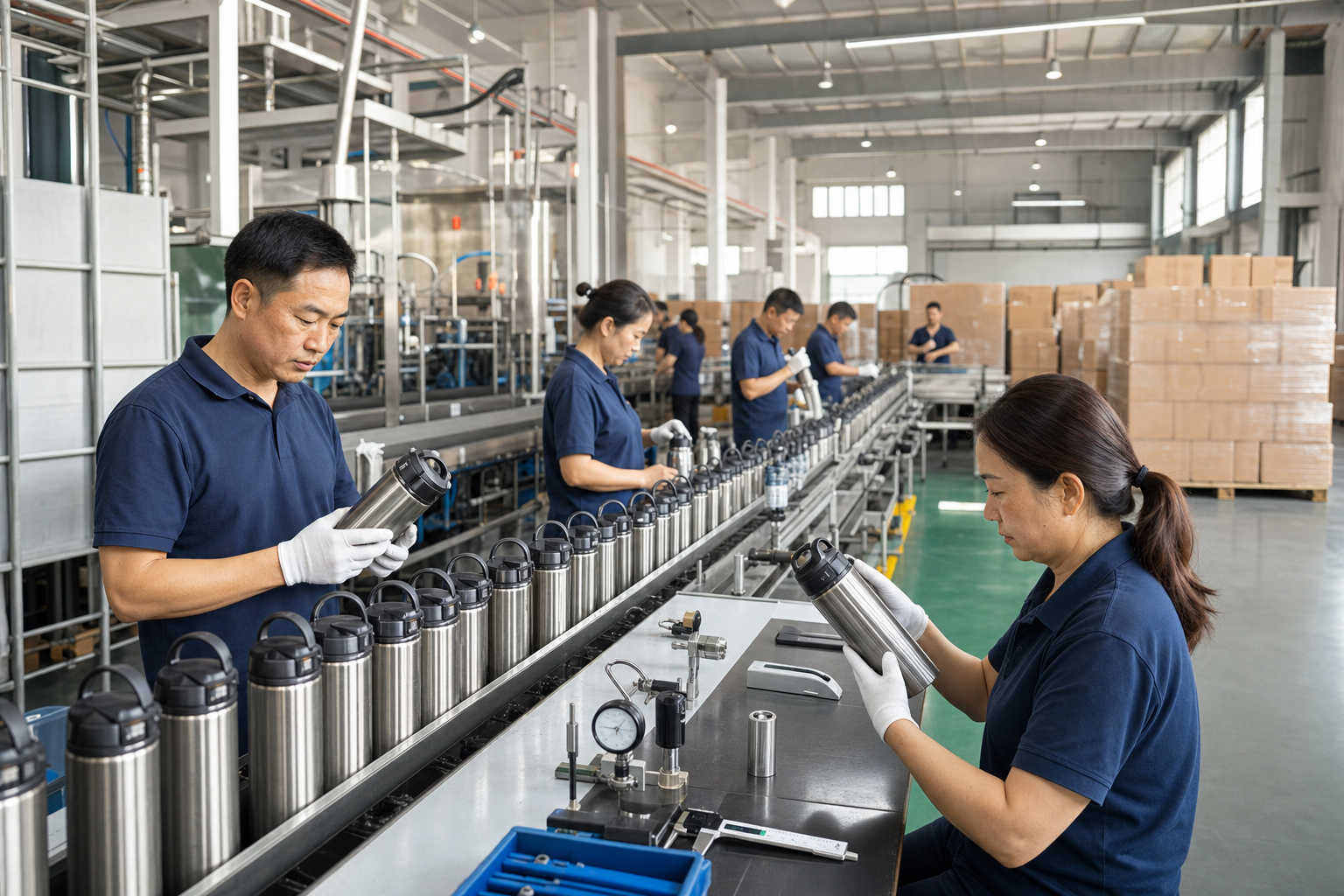
If you are sourcing a bulk gym water bottle program for a fitness brand or gym chain, the usual mistake is simple: buyers start with the logo and skip the spec. That is how you end up with bottles that leak in lockers, pick up odor after 2 weeks, or arrive with print that peels after one dishwasher cycle. On our line in Zhejiang, the gap between a good order and a bad one is often a 0.5 mm wall thickness call or a lid gasket that adds $0.03 and saves the whole shipment.
A proper sourcing plan should lock down use case, material, decoration, compliance, and shipment math before you send a quote request. We run 300,000 units per month in Hangzhou, but that number means nothing if your MOQ, lead time, and test standard do not line up with your channel. QC pulled the sample for a torque check at 1.8 N·m last week and found the cap spec was fine, but the buyer had typed the PO with the wrong lid code. For gyms, distributors, or e-commerce, this is not a decoration buy. You need a custom gym water bottle that survives daily handling, not a desk sample that looks good in photos.
Choose the right bottle structure
For gym use, structure matters more than branding. A bulk fitness water bottle for daily weight-room use is not the same job as a bulk shaker bottle for protein mixing, and forcing one format to do both jobs usually causes complaints on the line. If the buyer wants fast hydration, a 650 ml or 750 ml sports bottle with a one-hand flip lid works. If the account is a supplement brand or gym store, a 28 oz or 32 oz custom shaker bottle with a mixing ball or mixer insert sells better. We shipped both last month, and the buyer flagged the shaker lid when the torque was off by 0.3 N·m.
Pay attention to the mouth opening, lid torque, and base diameter. A bottle that is too tall and narrow will tip in cardio rooms and car cup holders. A wide-mouth customized fitness water bottle is easier to clean, but it splashes if the cap design is weak. For a customizable gym water bottle, ask the factory for CAD drawings and a sample with the actual cap color, logo placement, and closure type. Do not approve from a flat mockup alone. QC pulled the sample on a 72 mm base, and the math did not work for a standard cup holder.
Practical spec ranges
- 550-750 ml: general gym hydration
- 800-1000 ml: high-volume fitness floor use
- 28-32 oz: bulk shaker bottle for supplements
- 1.0-1.2 mm: common wall thickness for Tritan-style bottles
Pick materials that survive use
Material choice sets the user feel and the paperwork. For Europe, a custom sports water bottle usually needs tighter material files than a domestic promo run. We run Tritan, PP, PETG, stainless steel, and aluminum on different lines, and each one fails in its own way. Tritan stays clear and takes a hit well. PP keeps unit cost down. Stainless steel gives thermal performance. If the buyer wants a custom fitness water bottle for retail shelves, Tritan or double-wall stainless steel is the safer call. For a distributor fitness water bottle program with a tight target, PP or single-wall Tritan usually makes the math work.
Do not ignore odor, staining, and heat tolerance. A cheap custom gym water bottle can warp at 60-70°C when the resin grade is weak. We had one buyer flag a cap that picked up dish soap smell after 8 wash cycles, and that turned into a claim, not a design debate. For hot-wash use, ask for the material declaration and test reports, especially for the EU. Zhejiang factories that ship every week should show REACH traceability and, for food-contact items, the matching test files. QC pulled the sample on a 0.8 mm wall bottle once because the cap torque dropped after repeated washing; that is the kind of detail that saves you. If your buyer is a gym chain, the first complaint is usually smell, stains, and caps that loosen after repeated cleaning.
Ask for the exact resin grade, not just “food grade.” That phrase by itself is too vague to protect you in a claim.
Understand decoration and logo limits
The logo method decides how your custom logo shaker bottle ages on the line. Silk screen is the low-cost choice for one to three colors, and we run it fast, but it can scuff if the bottle goes through abrasive washing. Laser engraving stays put on stainless steel and some coated surfaces. It is not the right call for every customizable shaker bottle. Pad print fits curved lids and small parts. Heat transfer and UV print show more detail, though they need tighter process control. We had a buyer flag a faint edge lift on a UV sample after 50 wash cycles, so we now ask for print adhesion testing, dishwasher resistance, and a sample check before approval.
For a bulk sports water bottle order, keep the decoration readable at arm’s length. Gym members do not stop to inspect fine detail. A clean 1-color logo at 35-45 mm wide often beats a crowded full-wrap design, and that math is usually the part people miss. If your brand is selling a customizable sports water bottle or distributor shaker bottle, send production-ready artwork: vector files, Pantone references, and a clear no-print zone around the cap threads, grip ridges, or molded logo panels. One PO typo on a 38 mm logo once turned into a 4-day redraw. That is the wrong question to ask if the goal is to ship on time.
For deeper process comparisons, review silkscreen vs laser engraving for drinkware before you approve artwork.
Verify factory capacity and MOQ
Factory capacity is boring until your launch slips three weeks and the buyer starts asking who missed the date. A real Hangzhou plant may quote 300,000 units a month across several bottle lines, but your SKU may sit on one injection machine, one blow molder, and one printing booth. Ask for the full route: injection, blowing, assembly, printing, packing, carton loading. If you order a custom made shaker bottle with multi-part lids, the bottleneck is usually lid assembly. We saw one case where QC pulled the sample and the lid spring clip was 0.8 mm off spec.
MOQ has to fit the channel. For a standard bulk gym water bottle in one color with one logo, 500-1,000 pcs can work. For a custom sports water bottle with new tooling or a lid with three parts, 2,000-3,000 pcs is the normal range. If a supplier says 100 pcs on a fully custom mold, the math does not work. Ask for FOB terms, sample fee policy, and a clean lead-time split: sample in 5-10 days, mass production in 20-35 days, and 5-7 days for sea-freight packing prep. We once caught a PO typo on a 24,000 pcs order where the buyer wrote 240,000, and that kind of mistake burns time on the line.
If you are new to order planning, read MOQ explained for custom drinkware orders before you commit to a SKU plan.
Check compliance before you price
Compliance comes first. Price comes after. If the bottle is going to Europe, we ask for REACH and food-contact test reports before we quote. For the US, the supplier should show FDA food-contact support and the papers your importer will ask for at customs. On stainless steel jobs, we also want heavy metal migration data where it applies. Last month QC pulled a sample with a mixer ball and the nylon cap passed, but the steel ball had no separate file; that one weak part would have sunk the whole carton.
Packaging gets buyers in trouble more than the bottle does. A retail sleeve with the wrong ink set or a gift box with off-spec recycled board can fail a launch. We run carton drop tests to 60 cm, check barcode placement, and count master cartons one by one before the line closes. If you sell through Amazon or a 3PL, send the FNSKU, polybag warning text, and carton label spec in writing. The buyer flagged one PO typo here before: “1,200 pcs” became “1200ctns,” and the math did not work.
For factory capability and testing documentation, see drinkware quality control and compliance standards.
Price the order like a buyer
When you ask for a quote on a customizable fitness water bottle, do not stop at unit price. Price the whole shipment. A $1.28 bottle with a $0.22 cap, $0.08 logo, and $0.16 carton is not the same as a $1.45 all-in quote from another supplier. Packaging, freight mode, and claim rate move the number fast. We see this every week on the line. In Zhejiang, plenty of factories quote FOB Ningbo or FOB Shanghai, and that only helps if you know what is left out.
Typical pricing for a bulk fitness water bottle looks like this: PP promo bottle at $0.55-$1.10 FOB, Tritan-style bottle at $1.20-$2.80 FOB, and double-wall stainless at $3.80-$8.50 FOB depending on finish and accessories. A custom shaker bottle with extra inserts, scale markings, and premium lid hardware goes higher. If you distribute into gyms, the margin is usually won in packaging efficiency and carton density, not by shaving $0.03 from the lid. The buyer flagged a sample once because the carton was 2 cm wider than the PO said, and that one typo changed the loading plan. Ask for carton dimensions, pcs/carton, and container loading estimates, then run the freight per unit properly. The math does not work any other way.
If your channel includes marketplaces or subscriptions, compare your plan with Amazon FBA drinkware sourcing requirements before final pricing.
Send your spec and get a real factory quote
Tell us your target price, MOQ, logo method, and market. We will quote the right custom sports water bottle, not a generic sample.
Frequently asked questions
What MOQ should I expect for a bulk gym water bottle?
For a standard bulk gym water bottle with one logo and a common lid, MOQ usually starts at 500 to 1,000 pcs. If you want a custom mold, special finish, or mixed-color lids, 2,000 pcs is more realistic. For a bulk shaker bottle with extra parts, MOQ often rises because each component adds setup time and assembly labor. In Zhejiang, factories export a lot of these orders, but they still need minimum run sizes to keep printing and packing efficient. Always ask whether MOQ is per color, per artwork, or per SKU.
How long does production usually take in China?
A realistic schedule is 5 to 10 days for sample approval and 20 to 35 days for mass production after deposit and artwork confirmation. If you order a custom made shaker bottle with new tooling, extra mixing parts, or metal components, plan on 35 to 45 days. A factory in Hangzhou, Zhejiang may be able to move faster, but only if your artwork, packaging, and compliance documents are complete. Freight time is separate: 5 to 7 days by air, about 18 to 30 days by sea to Europe or North America depending on the port.
Which material is best for a custom gym water bottle?
It depends on use and price point. PP is the cheapest for promo and distributor gym water bottle programs, usually around $0.55 to $1.10 FOB. Tritan is better for clarity and impact resistance, often $1.20 to $2.80 FOB. Stainless steel is the premium choice for insulated products, usually $3.80 to $8.50 FOB. For a customizable sports water bottle, Tritan often gives the best balance of appearance, safety, and durability. If the bottle will be washed daily in a gym, check odor resistance and lid seal performance, not just the material name.
Can I put a dishwasher-safe logo on the bottle?
Yes, but you need to choose the right decoration method. Laser engraving on stainless steel is the most durable option. Silk screen can work well on a custom sports water bottle if you use a good ink system and test it for 50 wash cycles. UV print and heat transfer can look sharp, but they need tighter process control. If the product is a custom logo shaker bottle for retail, ask for adhesion testing and a post-wash sample before you approve mass production. Do not assume a logo will survive because the sample looked fine on day one.
What should I ask for before I place the order?
Ask for a sample, full specification sheet, carton dimensions, FOB price, testing documents, and lead time by stage. For Europe, ask for REACH-related material documentation; for the US, ask for the food-contact compliance file your importer needs. If you are buying as a distributor shaker bottle program, also request packing details: units per carton, carton weight, palletization, and barcode placement. A good supplier in China should answer these without hesitation. If they cannot, you are still in the quoting stage, not the buying stage.