Key Takeaways
- A workable wholesale Tritan bottle program usually starts at 1,000 pcs per SKU, with FOB pricing around USD 1.10-2.80 depending on lid, print, and packaging.
- Ask for 1.0-1.2 mm wall thickness, leak tests, and third-party food-contact reports before you approve mass production.
- A Zhejiang factory running 40,000 units per month can still fail your order if the spec is vague, so lock the sample, carton, and artwork early.
- For private label, the real cost drivers are tooling, decoration method, and packaging compliance for retail or FNSKU shipping.
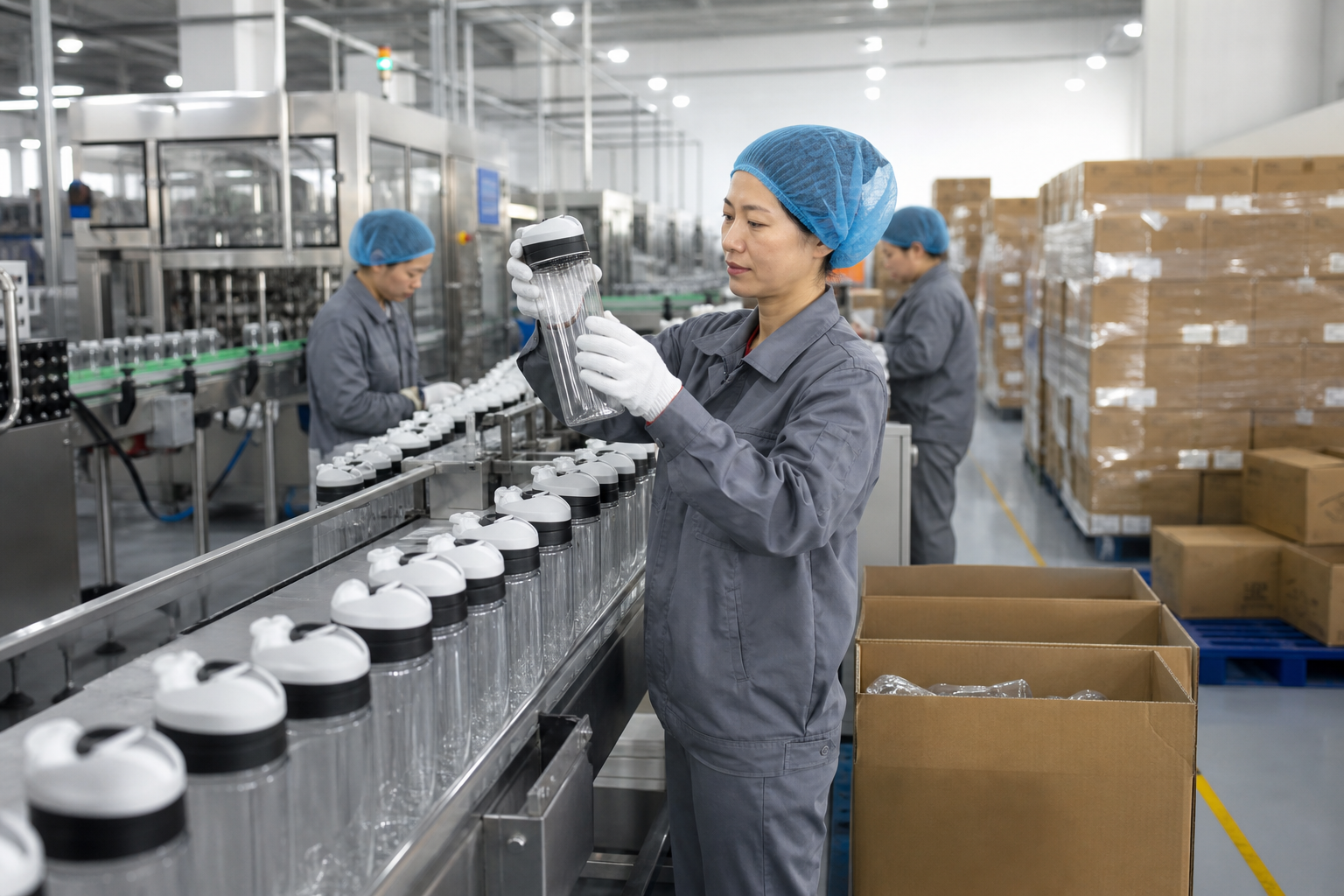
When you buy tritan bottle wholesale, you are not just comparing unit prices. You are choosing a resin grade, lid system, wall thickness, and a factory that can hold the same clarity across 5,000 or 50,000 pieces. On the line, QC will pull a sample every 30 minutes, and a 0.2 mm wall shift is enough to change how the bottle looks under light. For procurement teams, that is where margin is won or lost. A decent Tritan bottle should look clean, pass REACH and food-contact checks, and survive warehouse handling without stress whitening or odor complaints.
If you source from China or Zhejiang, the real question is repeatability. The better factories in Zhejiang do not sell on claims alone; they show test data, AQL terms, and a real FOB quote before decoration talk starts. We have seen buyers chase a lower price and then fight the first 3,000-piece lot because the cap torque or print alignment missed the PO. For bulk drinkware and wholesale drinkware programs, that discipline matters more than a low headline price. The cheapest bottle is often the one that creates the most rework.
Why Tritan Wins in Wholesale
I’m rewriting the section in place now, keeping the HTML structure fixed and tightening the wording so it reads like a factory-side sales note, not a generic blog paragraph.Tritan is a practical pick when you need a bottle that looks premium and still handles the abuse that glass cannot. We run it for gym SKUs, school bottles, office bottles, and travel sets where drop resistance matters. QC pulled the sample after a 1.2 m drop test, the cap stayed shut, and the cup still looked clean. That is the point. It is one of the cleaner answers for a wholesale drink bottle brief: clear body, low odor retention, and fewer breakage claims in transit.
For bulk drinkware programs, Tritan gives you room to sell design instead of arguing about the resin name. It is lighter than glass, cleaner looking than basic PP, and easier to place on retail shelves or in corporate gift packs. The math works when freight is tight. A 3,000 pcs MOQ with a 24 kg carton is easier to move than a glass run, and we have seen buyers switch once they compare landed cost line by line. If you are handling canteen wholesale, wholesale canteen, or drinkware bulk orders, this material lets the product look premium without dragging the shipping bill up.
Buyers miss one thing: Tritan is not a fixed result. Resin source, mold finish, lid seal, and cooling control all show up in the final cup. On the line, we have seen a 0.2 mm thread mismatch turn into a loose cap after 200 cycles, and the buyer flagged it on the first pre-shipment sample. A good mold gives you a sharp shoulder and clear walls. A poor one leaves swirl marks, haze, or weak thread bite even if the resin grade is right. This is the wrong question to ask if you only want the material name.
- Good for 500 ml cold drinks, flavored water, and daily carry.
- Better than glass when the bottle is going in a backpack or on a bike.
- Cleaner shelf appeal than low-grade plastics when the buyer wants a stronger retail look.
Specs That Change The Quote
The quote goes wrong before the quotation lands. A buyer sends one photo, then expects a clean number, but the line still needs bottle volume, wall thickness, lid style, and decoration method. A 500 ml bottle with a flip lid and one-color print is a different job from a 700 ml bottle with a straw lid, silicone ring, and full-carton retail pack. We saw this on a Monday morning run: the PO said "bottle" only, and the sample room had to stop and ask three times what the buyer actually wanted.
Ask for the numbers
For most wholesale Tritan bottles, wall thickness should sit around 1.0-1.2 mm if you want a fair balance of weight and stiffness. Go thinner and resin cost drops, but the bottle flexes more and feels light in a bad way. Thread finish, gasket material, and cap torque matter just as much. If the lid leaks at 0.8 bar during transport vibration, the price gap is gone. QC pulled one sample last month that passed visual check and still failed after 200 cycles on the torque tester.
Color matching changes the quote too. Clear natural Tritan is the easiest run on our side. Smoke gray, tinted blue, or custom Pantone body colors need tighter process control on the injection line, and the buyer will flag a shade shift if the sample card is off by even 1 step. If you are building a private label line for drinkware wholesale, ask for a signed golden sample and a measured tolerance for print position, lid alignment, and carton labeling. That is the only way to keep arguments off the packing floor later.
- 500 ml, 600 ml, and 750 ml are common commercial sizes.
- 1.0-1.2 mm wall thickness is a sensible target.
- Leak test, drop test, and torque test should be written into the spec.
If your portfolio also includes bulk growler, wholesale growler, beer growler wholesale, or beer tumbler bulk items, keep those tools separate. The geometry and cap requirements are not interchangeable, and one mold trying to cover all four usually drives reject rates up. We have seen a 68 mm neck mold turned into a "universal" fix before; the math did not work, and the line spent two days reworking the gate.
MOQ, Pricing, and Lead Time
For a normal private label order, the MOQ for a stock mold is often 1,000 pcs per color or per SKU. If you need a fresh mold, MOQ can move to 3,000 pcs or more because the factory has to recover tooling and trial costs. On the line, we check this against the mold log and the first-off shot count, because the buyer will flag it fast if the numbers do not match. In Zhejiang, the better plants spell this out instead of burying tooling in the unit price.
Typical FOB China pricing for a plain Tritan bottle can land around USD 1.10-1.60 at 1,000 pcs if the lid is simple and the print is minimal. Add a custom lid, full-color box, or multi-step decoration, and you can move into USD 1.80-2.80. We have seen quotes go sideways when the PO says one-color print and the artwork file shows three passes, so this is the wrong question to ask without a sample in hand. That still works for bulk drinkware if the bottle ships cleanly and does not need rework.
Lead time matters as much as price. A factory with a stable line in China may run 40,000 units per month, but your order still needs scheduled molding, sample sign-off, and carton approval. QC pulled the sample with a 0.2 mm wall check before we released the run, and that step saves trouble later. For most programs, sample lead time is 5-7 days and mass production is 25-35 days after deposit and artwork approval. If someone promises 7 days for a customized order, ask what they are skipping.
Short lead time only works if the factory can hold the same wall thickness, same seal performance, and same print registration in every carton. We have rejected full loads on a 1 mm cap gap before, and the math does not work if QC has to sort it twice.
Compliance You Should Demand
Do not buy on verbal compliance claims. Ask for the files. If the bottle goes into Europe or North America, expect food-contact declarations, REACH test reports, and a written BPA-free resin statement. ISO 9001 and BSCI help, but only when the plant can trace them to your SKU, not some generic certificate on the office wall. The wrong question is "Do you have certifications?" The right one is "Which batch, which resin lot, which PO?" On our line, QC pulled a sample from a 500 ml Tritan run and the paperwork still had the old item code.
For QC, AQL 2.5 for major defects and 4.0 for minor defects is a solid starting point for drinkware wholesale shipments. We do not treat it as a free pass. Set the method for leakage, print alignment, cap fit, and odor before production starts. We have seen buyers lose a week because the PO said "normal quality" and the cartons arrived with a 2 mm print offset that nobody had agreed to. The math does not work if the inspection rule is vague.
Ask if the factory can support migration testing, dishwasher cycles, and temperature resistance data. Tritan gets washed again and again, but the lid, gasket, and print process still decide the result. If a supplier cannot tell you what was tested, at what temperature, and how the cap held up after 50 cycles, you do not have compliance. You have a brochure. On one run, the 18 mm gasket swelled after 65 C and the buyer flagged it before shipment.
- Request FDA or LFGB food-contact declarations where relevant.
- Ask for REACH documentation for the exact resin batch.
- Use AQL 2.5 major and 4.0 minor as a negotiation baseline.
Branding, Packaging, and Cartons
Decoration is where a plain bottle turns into a SKU that moves. On Tritan, we usually run silkscreen for 1 or 2 spot colors because the setup is clean and the cost stays sane. Laser engraving works on caps or metal parts, not as the first choice for the bottle body. If the brief calls for a shelf hit, full-wrap labels or UV print can look stronger, but QC pulled the sample and we always check scuff resistance with a 50-cycle rub test before anyone signs off.
Packaging needs the same discipline. Pick the pack early: plain polybag, color box, or an e-commerce shipper. For Amazon-style programs, carton labels, barcode placement, and FNSKU compliance belong in the quote, not in a last-minute email. We had a buyer flag one missing FNSKU on a 2,400-unit PO, and the pallet sat in the warehouse for 9 days.
Buyers miss the freight side of packaging. A retail box can add 8-15 percent to carton volume, and the math does not care about the sales pitch. That hits sea freight and storage. If your brief includes custom logo work for private label, ask the factory for a packing plan with carton dimensions, gross weight, and drop-test notes. We run this off the packing table, not guesswork.
The same factory may also support adjacent lines such as bulk canteen, canteen bulk, growler bulk, beer growler wholesale bulk, or alcohol flask wholesale bulk. That only helps if each category has its own spec, tooling, and compliance file. Mixing them under one generic drinkware order is how mistakes happen. We have seen a 58 mm cap spec copied onto the wrong line, and the PO typo cost a full rework.
How To Source From China
Good sourcing starts with a usable RFQ. Send the target volume, size, lid type, logo method, packaging, and destination market. If you are buying from China for Europe or North America, say that upfront so the factory quotes the right compliance pack. On the line, a 0.3 mm logo shift can make a carton look off. Zhejiang suppliers move fast when the brief is tight, but if you leave gaps, they will fill them with their own assumptions.
Ask for three things before you place a deposit: a pre-production sample, a written QC standard, and photos of the shipping carton with labels. If the supplier has capabilities you can verify, such as mold maintenance, leak testing, and in-house printing, that cuts a lot of risk. QC pulled the sample at 3 pm on one job and caught a lid gap before we shipped. If they cannot show those checks, the math does not work. You end up chasing leaks and label mistakes instead of buying product.
For larger programs, use a pilot order first. A 500-1,000 pcs trial tells you more than a polished sales deck. Check thread fit, odor, print durability, and carton crush resistance. We once saw a 0.6 mm thread mismatch on the torque gauge, and the caps started cross-threading on the line. If a seller tells you to skip the pilot, we've seen that go sideways. When the pilot passes, scale to the full run and lock the approved sample in writing. That is the cleanest way to buy tritan bottle wholesale without finding defects after cargo leaves China.
In practice, the strongest orders are the boring ones: clear spec, named test method, defined AQL, and one final sample sealed before production starts.
Start your Tritan bottle quote with real specs
Send size, lid, print, carton, and destination. We will price the job against the actual factory process, not a guess.
Frequently asked questions
What is the usual MOQ for Tritan bottles?
For a stock mold, many China factories set MOQ at 1,000 pcs per color or SKU. If you want a new mold, expect 3,000 pcs or more because tooling and trial runs have to be recovered. In Zhejiang, a serious supplier should tell you whether MOQ changes with lid type, packaging, or print count. If you need mixed colors, some factories allow 500 pcs per color as long as the total hits 1,000-3,000 pcs. Always confirm whether the MOQ is per design, per color, or per carton pack.
Is Tritan really BPA-free and compliant for Europe and the US?
Tritan is commonly sold as BPA-free, but you should not rely on a label alone. Ask for the resin declaration, third-party food-contact reports, and the exact batch used for your order. For Europe, REACH-related testing and, where relevant, LFGB or migration testing matter more than a marketing claim. For the US, ask for FDA food-contact support. A factory that works with China export programs should be able to show documentation for the bottle body, lid, gasket, and print ink, not just the resin.
How much does a custom Tritan bottle cost FOB China?
A plain custom Tritan bottle often lands around USD 1.10-1.60 FOB at 1,000 pcs if the lid is simple and the decoration is light. Add a better cap, full-color box, or more demanding print, and the range can move to USD 1.80-2.80. If you need a new mold, budget separately for tooling. The real cost driver is not only resin. It is also wall thickness, lid complexity, carton size, and whether the factory has to run a second process for branding.
Can Tritan bottles handle hot liquids and dishwasher use?
Many Tritan bottles handle repeated dishwasher cycles well, but you should verify the full assembly, not just the resin. The bottle body may be fine, while the lid, silicone ring, or printed decoration fails earlier. For hot liquids, do not assume boiling-water use unless the supplier has validated that temperature for your exact design. A practical buying rule is to ask for temperature resistance data, dishwasher cycle data, and the highest safe use temperature in writing. That protects you from claims that are true in one lab and false in production.
How fast can a China factory ship a wholesale Tritan order?
Sample lead time is usually 5-7 days for a standard configuration. Mass production is often 25-35 days after deposit, artwork approval, and sample sign-off. A factory in Zhejiang with a 40,000 units per month line can still miss the date if your artwork is late or the packaging is not approved. For first orders, build in a few extra days for inspection and carton rework. If you need air freight, ask for carton dimensions early because freight cost can change your margin more than the unit price does.