Key Takeaways
- The drinkware market 2026 is being led by reusable bottles and insulated tumblers, with custom orders often starting at 1,000 units.
- For B2B drinkware, the fastest-moving segments are 12 oz to 24 oz travel tumblers and 20 oz to 32 oz bottles.
- FOB China pricing for mainstream stainless steel drinkware typically lands around USD 2.40 to 6.80 per unit, depending on wall thickness and decoration.
- Buyers who require REACH, LFGB, or ASTM-related testing should budget 7 to 18 days extra for validation and sample approval.
If you are planning range resets, supplier audits, or 2026 launch calendars, the drinkware market 2026 is not a simple “more cups, more bottles” story. Buyer demand has split into clear lanes: corporate gifting, retail private label, fitness, travel, school, and promo runs. We see brands in China and especially Zhejiang push for 30-day or even 18-day lead times, lower MOQs, and tighter REACH, food-contact safety, and carton pack-out checks. QC pulled a sample last week for a 2 mm lid gap, and the buyer flagged it before the cartons left the line.
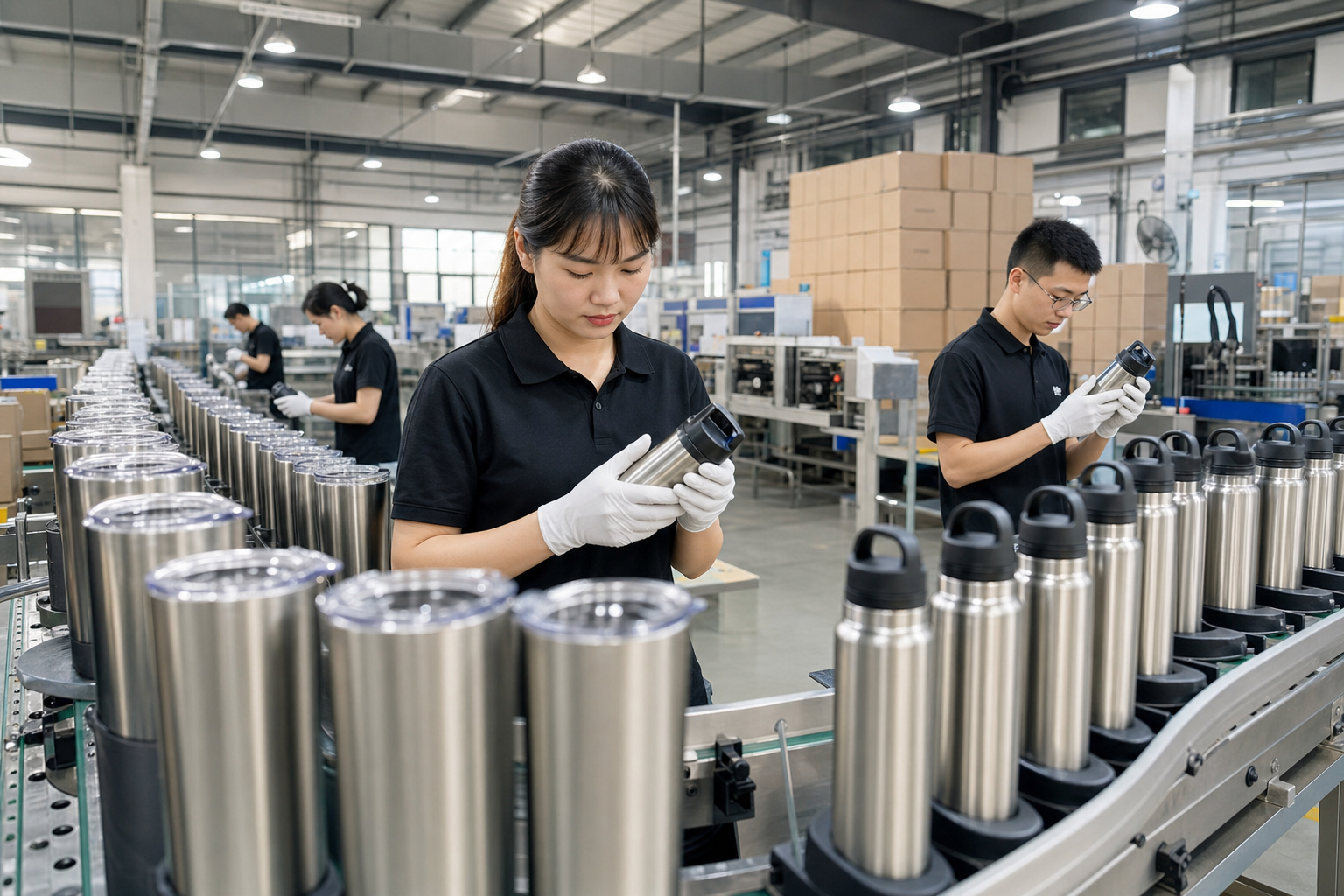
The real question for strategy teams is not whether demand exists. It is which segments can justify tooling, inventory, and decoration capacity without tying up cash. At BottleForge Industrial in Hangzhou, we run about 2.4 million units per month across stainless steel, Tritan, glass, and plastic drinkware, with standard custom MOQ from 1,000 to 3,000 pieces depending on SKU and finish. That is the number to benchmark against if you want to buy into the reusable bottle market. One PO typo on a 3,000-piece order once turned “304 stainless” into “201 stainless,” and the math did not work for anybody.
Market size and where it sits
The first mistake is to treat drinkware as one bucket. It is not. The drinkware market 2026 breaks into separate demand pools: reusable water bottles, insulated tumblers, travel mugs, glass infusers, kids’ bottles, and promo cups. Each one runs on a different margin stack, print setup, and reorder pattern. A retail buyer cares about sell-through; a brand owner cares about logo placement and ship date; a distributor watches carton count and replenishment cost. On the line, we see that split every week. QC pulled a sample with a 1.2 mm lid gap, and the buyer flagged it before mass production.
For planning, reusable bottles still anchor volume. In Zhejiang and other export-heavy manufacturing zones in China, most repeat orders sit in 500 ml to 750 ml bottles and 12 oz to 24 oz tumblers. That is because those sizes fit shelf depth, gym use, and corporate gift budgets. A 16 oz single-wall bottle may leave the factory at USD 0.85 to 1.60 FOB, while a 20 oz double-wall vacuum tumbler with powder coating and laser logo often lands at USD 4.20 to 6.80 FOB. The spread shows where margin sits. It also shows where freight and testing pressure will hit. We had one PO last quarter with “20oz” typed as “200z”; the math does not work if the spec sheet is sloppy.
What strategy teams should watch:
- Fastest reorder cycles: 60 to 120 days for private label B2B drinkware.
- Standard production lead time in China: 25 to 35 days after sample approval.
- Tooling-backed custom projects: 20 to 45 days extra if new molds are required.
Growth usually comes through repeatable formats, not random one-offs. That is why unit mix by SKU tells you more than headline category size. If your range leans on novelty shapes, you get swings. If your assortment is built on standard diameters, two lid types, and 304 stainless steel bodies, forecasting gets cleaner. We run into this all the time: a buyer wants “something new,” then asks for a 3,000 pcs MOQ on a shape that needs a fresh mold and a new leak test. That is the wrong question to ask.
Why reusable wins in 2026
The reusable bottle market is still the cleanest growth engine in the category. Policy pressure helps, and retailer targets matter, but none of that counts if the bottle fails in daily use. Buyers do not reorder because the carton says “eco.” They reorder after a drop test, a lid cycle check, and a logo that still looks clean after 20 washes.
In 2026, reusable drinkware is settling into three design standards. First, lighter weight: we see 0.4 mm to 0.5 mm stainless steel wall thickness on the PO, not the old heavy body that pushes up freight. Second, better lids: PP and Tritan lids with one-handed operation are winning against basic screw caps in travel and sports. Third, more honest sustainability: buyers want recyclable packaging, but they do not pay extra for vague claims without material specs on file.
Here is the part people in Zhejiang already know: the market rewards boring reliability. A 24 oz vacuum bottle with a 304 inner wall, 201 outer wall if the buyer is price-sensitive, a silicone gasket, and a powder coat that passes tape test can beat a fancier item with weak threads or bad carton design. QC pulled the sample on a 0.5% vacuum leak target last week, and that number is what keeps the line moving. If the supplier misses it, the green story goes nowhere because returns kill margin.
In 2026, sustainability is no longer a selling point by itself. It is a filter. Performance still closes the order.
For B2B buyers, the right assortment is built on repeatable base bodies, then split by lid type, colorway, and branding method. That is the cleanest way to sell reusable drinkware without betting on a one-off SKU. We ship that way every week.
Custom drinkware trends that stick
Some custom drinkware trends are real. Some are catalog noise. In 2026, we track the ones that cut buyer friction or bring repeat orders. Matte powder coating still sells because it hides fingerprints and keeps a premium look for about USD 0.15 to 0.35 per unit extra. Laser engraving keeps moving because it holds up on abrasion tests and the buyer does not come back with ink-compliance complaints after the first shipment.
Print method choice is not a cosmetic call. It changes MOQ, setup cost, and defect rate. Screen printing is still the low-cost option for one-color logos on 5,000 pcs and up, while laser engraving works better on stainless steel and removes ink compliance questions. UV printing fits multi-color graphics, but the line needs cleaner surface prep and tighter tolerance control. QC pulled the sample on a 0.3 mm edge smear last month. If you want the practical breakdown, your team should compare silkscreen vs laser engraving for drinkware before you lock the artwork.
Size standardization is another trend that holds. The market keeps coming back to 12 oz, 16 oz, 20 oz, 24 oz, and 32 oz. Odd sizes slow reorders. Standard sizes improve carton loading and make replenishment from China easier. That matters when a distributor is building mixed pallets and a brand owner needs exact FNSKU or retail barcode labeling for Amazon or regional chains. We had one PO last quarter with “24oz?” typed in the notes. The buyer flagged it, and we stopped the line before the wrong mold got booked.
Trends that actually affect sourcing:
- Soft-touch finishes are gaining ground in premium corporate gifts, especially for 500- to 1,000-piece orders.
- Clear Tritan bottles are growing in school and fitness channels, where buyers want the product to look clean on shelf.
- Dual-purpose lids, like sip-and-straw lids, lift conversion in travel retail, and the math works better than adding a second SKU.
- Minimal branding is beating large surface graphics in premium segments because the artwork survives handling and returns look cleaner.
If you are buying from China, ask for the artwork method first and tie it to the material. Do not ask a Zhejiang factory to “make the logo nice” and expect the same result across 8,000 units. Specify size, print area, Pantone reference, and acceptable tolerance before sampling. We ship cleaner jobs when the buyer sends that sheet up front, and we have seen this go sideways when they do not.
Segments with the best growth
The strongest growth segments in 2026 are not the biggest by units. They are the ones that keep margin healthy and bring repeat POs. For most B2B drinkware teams, three segments deserve attention. We see this on the line every week.
First: insulated tumblers. The 20 oz and 30 oz formats keep moving because they fit commuting, desk use, and gift sets. A good double-wall tumbler with 18/8 stainless steel inner body, 0.4 mm wall, and a secure lid can price far above a basic bottle, especially when the buyer wants gift packaging. FOB China usually lands at USD 3.80 to 7.50, depending on finish and lid complexity. QC pulled the sample on one 30 oz run because the lid thread was 0.3 mm off, and that killed the seal.
Second: kids’ bottles. Parents and school buyers care about leak resistance, lighter weight, and safe materials. This segment is price-sensitive, but it reorders well if the product survives daily use. Tritan bodies and BPA-free lids still sell, but the lid mechanism has to stay simple enough for small hands. MOQ usually starts at 3,000 pieces because color matching and lid tooling add real setup cost. The buyer flagged one PO because they wrote “kids botle” on the spec sheet, and that typo nearly caused the wrong cap to go into production.
Third: corporate and event gifting. This is where custom drinkware trends move fastest. Companies want low-friction SKUs, usually 500 ml to 750 ml, with logo application that looks sharp in photos and on office desks. This segment rewards fast sampling, consistent carton marks, and clean compliance docs. It also takes higher margins when the print is tight. We had a buyer push back on a 7-day sample target; the math didn’t work with laser marking, so we held to 12 days and shipped a clean first round.
There is a fourth segment worth watching: travel tumblers for road and rail commuters. These products need cup-holder dimensions, spill-resistant lids, and neutral colors. A 70 mm base fits most car holders; a 75 mm base causes complaints fast. If you are building a retail strategy in Europe or North America, this is one of the easier crossover categories because it sits between mass and premium assortments. We’ve seen this go sideways when the lid clip is too stiff and the buyer gets returns after the first road test.
Pricing, MOQ, and lead times
Buyers ask for “market data,” then shop the wrong line item. We run on four numbers: MOQ, unit price, lead time, and defect tolerance. If those do not line up, the SKU will not scale in your channel. Simple as that.
At a Zhejiang export factory, standard MOQ for a plain stainless steel bottle is 1,000 pieces. A bottle with a special lid, two-color print, or mixed finishes usually starts at 3,000 pieces. On our line, sample approval comes first; after that, production takes 25 to 35 days. New molds, custom cartons, or third-party testing push it out further. One PO typo we see all the time is “REACH” written as if the lab slot is instant. It is not. Add 7 to 18 days for REACH or LFGB coordination, depending on the lab queue and whether the artwork or resin spec gets changed midstream.
Price bands in custom drinkware for 2026 are wide, but they are not random. A basic 500 ml PP bottle usually lands at USD 0.70 to 1.40 FOB. A 20 oz stainless steel tumbler with vacuum insulation and one-color logo sits around USD 4.20 to 6.80 FOB. A powder-coated gift tumbler with laser logo and custom box can go above USD 7.50. Freight, duty, and fulfillment often add 25% to 55% to landed cost, and carton efficiency matters more than most buyers think. The math does not work if you ignore it.
Ask for the QC standard before you compare quotes. If one factory prices lower but inspects at AQL 4.0, while another is at AQL 2.5, you are not buying the same product. QC pulled the sample on one batch and found 3 leaking lids in 200 pieces. That is the problem. The cheap quote turns expensive fast when scratches, seepage, and logo drift hit warehouse intake.
What to specify in sourcing
Good sourcing starts with a tight spec sheet. If you are building a 2026 range, the RFQ should go past color and capacity. Put the material grade, wall build, closure type, decoration method, carton test requirement, and compliance files on the first page. Buyers in Europe and North America will ask for documents before they talk price. We ship a lot of quotes from Hangzhou, and the ones that close are usually the ones that read like a factory order, not a wish list.
For stainless steel, write 304 or 18/8 for the inner contact layer and state the wall thickness in millimeters, not “premium.” On one PO last month, the buyer flagged “1.0 wall” because the unit was missing mm. For glass bottles, ask for borosilicate if thermal shock is part of the brief. For plastic, name the resin and the test standard. If you need retail-ready packaging, ask for master carton dimensions, pallet pattern, and barcode placement at RFQ stage. The math does not work if you leave that for later.
A practical RFQ checklist:
- Capacity in ml and oz, plus target weight range.
- Material grade and wall thickness, for example 0.4 mm stainless steel.
- Decoration method, color standard, and logo size tolerance.
- Testing requirements such as REACH, LFGB, FDA-style food contact testing, and drop tests.
- Packing spec, inner box style, and whether FNSKU or retailer barcodes are needed.
If you are buying B2B drinkware at scale, ask for a sample plan with a pre-production sample, golden sample, and mass-production reference sample. QC pulled the sample on our line at 2.5 mm decal offset, and that one sheet saved a dispute later. Without that paper trail, “slight color variation” turns into a long email chain. We have seen it go sideways on multi-SKU programs, especially when one buyer wants the same body across three channels.
The market is still moving toward fewer, better, repeatable SKUs. That helps procurement teams because repeatability cuts rework and claim risk. It also helps brand owners because one base body can carry new art, new lids, and new packaging without rebuilding the whole program. We run that way for a reason—once the line is stable, the next order ships cleaner.
Plan your 2026 drinkware range with real numbers
Send us your target price, size mix, and compliance needs. We will map the MOQ, lead time, and decoration options that actually fit your channel.
Frequently asked questions
What is the most important segment in the drinkware market 2026?
The most important segment is still reusable bottles, but insulated tumblers are growing faster in many channels. For planning, focus on 20 oz to 24 oz tumblers and 500 ml to 750 ml bottles. In FOB China terms, those SKUs usually sit between USD 2.40 and 6.80 depending on material, lid, and decoration. If you are buying from Zhejiang, ask for 1,000 to 3,000 unit MOQ and 25 to 35 day lead times so your forecast is realistic.
How do custom drinkware trends affect pricing?
Custom drinkware trends directly change pricing because decoration method, finish, and packaging affect labor and QC. A one-color screen print may add only USD 0.08 to 0.20 per piece, while laser engraving or multi-color UV printing can add USD 0.25 to 0.80. Powder coating usually adds another USD 0.15 to 0.35. If you want premium appeal without blowing up cost, standardize the body and vary only the lid, logo, and box.
What MOQ should I expect from a China supplier?
For most B2B drinkware from China, expect 1,000 pieces for standard stainless steel bottles and 3,000 pieces for more customized models. If you need custom lids, special mold work, or unusual colors, MOQ can rise to 5,000 pieces. In Zhejiang factories, that is normal because setup cost is real. Lower MOQs usually mean higher per-unit price, so compare landed cost, not just factory quote.
What compliance documents matter most in Europe and North America?
For Europe, buyers usually ask for REACH-related material declarations, food-contact documentation, and sometimes LFGB testing depending on the product and channel. For North America, many teams want FDA-style food-contact support, plus CPSIA-style documentation if the product is for kids. Add test reports for lids, silicone gaskets, and inks if they touch the beverage contact area. Budget 7 to 18 extra days if third-party testing is required.
Which sizes should I prioritize for 2026 assortment planning?
Prioritize 12 oz, 16 oz, 20 oz, 24 oz, and 32 oz. Those sizes cover corporate gifts, retail, fitness, commuting, and school use without fragmenting inventory. If you need a tighter assortment, 20 oz and 24 oz are the most versatile for the reusable bottle market, while 16 oz and 20 oz are the safest for desk and travel mug programs. Standard sizes also improve carton efficiency and make replenishment from China easier.