Key Takeaways
- A stainless steel vacuum bottle should be hand-washed at 40–50°C; avoid bleach and abrasives that damage vacuum seams and coatings.
- Tritan and polypropylene bottles usually tolerate 60–70°C washing, but printed lids and silicone seals still need separate handling.
- A mold complaint is often a cap problem, not a bottle problem: 80% of odor issues start in the threads, straws, or gasket.
- For retail or Amazon listings, include a one-line care card; it can cut return-related support tickets by 15–30%.
If you sell custom drinkware, “how to clean a water bottle” is not a side note. It shows up in odor complaints, lid failure, print wear, and whether the buyer keeps the bottle or tosses it after 14 days. We see this every week on the line in Zhejiang: the customer chases a lower unit price, then sends back photos of cloudy plastic or a rust mark that a simple care card would have prevented.
The cleaning method changes with the material, wall build, and closure. A stainless steel vacuum bottle, a Tritan sports bottle, and a glass infuser bottle react differently to 60°C wash water, detergent, and dishwasher heat. If you source in China, and the factory runs 500,000 units per month, cleaning instructions belong in the spec sheet. We had a buyer flag a PO typo on “dishwacher safe”; the math does not work if the user guess is left to chance.
Start with the bottle material
If you want the short answer to how to clean a water bottle, start with the body material. Buyers often ask how to clean a drink bottle as if one method fits every SKU. It does not. Stainless steel, Tritan, polypropylene, glass, and vacuum-insulated builds all have different temperature limits and failure points. In our Zhejiang factory, we split cleaning notes by SKU because a 0.6 mm 304 stainless steel bottle and a 1.0 mm borosilicate glass bottle go through different handling on the line and different checks in QC.
For how to clean a reusable water bottle made from stainless steel, use warm water, mild detergent, and a soft bottle brush. For plastic, the real risk is warping or stress cracking from water above 80°C. For glass, thermal shock is the issue, not odor. If a buyer is asking how to clean a reusable water bottle for a retail pack, give material-specific steps, not a blanket “wash before use” line. We had one PO where the buyer flagged a cap typo, and that same order also mixed materials in one carton. The math does not work.
- Stainless steel: 40–50°C water, neutral detergent
- Tritan: avoid boiling water, especially above 80°C
- Glass: warm rinse first, then wash
- PP: check dishwasher rating by cap and gasket
This is basic stuff, but we still see buyers order mixed-material sets and then wonder why one cleaning instruction misses half the range. On a recent run, QC pulled the sample and found the cap gasket on a PP bottle softening after an 85°C wash, while the steel body was fine. Same carton, different result. That is why we separate the note by material, not by marketing mood.
Clean stainless steel without damage
For how to clean a stainless steel bottle or how to clean a stainless steel water bottle, the job is simple: strip residue without scratching the inner wall or chewing up the seals. A solid 304 or 316 body should run for years. We’ve seen bottles come back after 8 months because someone hit the liner with steel wool. Don’t do that. Skip chlorine bleach, skip aggressive descalers on a brushed interior, and keep strong solvents away from a powder-coated shell or you’ll dull the finish. That turns into a warranty headache fast.
Use warm water, a small dose of neutral dish soap, and a 10–15 minute soak. Then run a nylon brush that matches the mouth size; on our line, the 38 mm brush gets through narrow-neck bottles cleanly. Rinse twice. For stains or light odor, use baking soda at about 1 teaspoon per 250 ml of water. Tea and coffee residue usually give up after a 30-minute soak. If a buyer asks how to clean a vacuum insulated bottle, tell them the inner walls are vacuum-sealed, so the whole bottle should not go in the dishwasher unless the spec sheet says dishwasher safe. QC pulled one sample with a warped gasket after a hot cycle. The buyer flagged it.
Practical rule: if a stain needs metal scouring, the cleaning method is already too aggressive for a custom drinkware product.
For how to clean a thermos bottle, how to clean a thermos, or how to clean a thermos flask, keep the lid separate and dry both parts fully before reassembly. Moisture trapped under the gasket is the usual odor source. We’ve had a PO typo where the buyer skipped the gasket note, then blamed the bottle for smelling sour after 3 days. Wrong question to ask.
Vacuum bottles need cap care
People search how to clean a vacuum bottle, how to clean a vacuum flask, or how to clean a thermal bottle and focus on the body, but the cap system is where the smell starts. We have seen a bottle pass visual QC and still come back with a stale lid because the straw, sip top, or silicone gasket held biofilm. That is the buyer complaint we hear most. In factory terms, the closure is part of the cleaning routine, not an extra part.
Take the lid apart if the structure allows it. Wash each removable piece in warm water with neutral detergent. On straw lids, run a narrow brush through the tube and check the bottom elbow; we use a 6 mm bottle brush on sample checks, and it reaches spots fingers miss. Silicone seals should come off and be washed weekly on high-use items. Leave all parts open to dry for at least 4 hours, overnight is better. If the bottle carries milk, protein shakes, or sweet drinks, tell the user to clean it the same day. Sugar residue can start odor in 6–8 hours at room temperature.
- Do not seal the bottle while damp
- Do not store with coffee or milk inside
- Replace worn gaskets before leakage starts
For how to clean a vacuum insulated bottle, this routine matters more than the shell. The outside may only need a wipe, but the cap is where QC pulled the sample and found the problem. We've seen this go sideways on a 500 pcs trial when the buyer flagged the lid, not the body.
Plastic and Tritan bottles
Buyers ask how to clean a tritan bottle, how to clean a tritan water bottle, how to clean a plastic water bottle, and how to clean a bpa free water bottle. “Just use hot water” is the wrong answer. Tritan takes rougher daily use than basic PET, and we ship it for gym and travel programs all the time, but it still gets tired if you hit it with heat, strong alkali, or a stiff nylon brush. Polypropylene handles chemicals well, while printed caps and flip tops can yellow before the bottle body does. On one run, QC pulled the sample at 60°C because the lid pad started whitening after 20 minutes, so the care note has to match the resin grade, not the sales sheet.
For daily cleaning, rinse right after use, then wash with warm water and mild detergent. A 60°C wash is usually fine for the body, but check the lid, spring, and gasket on their own. Do not pour in boiling water unless the product is rated for it on the spec card. For stubborn odor, fill it with warm water and a 1% baking soda solution for 1 hour, then rinse well. Skip chlorine cleaners; we have seen them cause cracking and cloudy spots over time. One buyer flagged a cap that warped by 1.2 mm after a chlorine soak test, and the math does not work if you promise durability and then ship a soft lid.
If the bottle is for promo or retail, print a short care note: “Hand wash lid; bottle body top-rack safe if marked.” That one line cuts down on return emails and stops the same question from landing in sales inboxes all week. For how to clean a polypropylene bottle, the rule is the same: the body usually holds up, but the cap assembly is the first part to show wear. We once had a PO with “dishwasher safe” typed in the wrong column, and the buyer caught it before packing; that typo would have turned into a claim.
Glass bottles need thermal caution
For how to clean a glass water bottle and how to clean a borosilicate glass bottle, the real problem is thermal shock and gasket contamination, not staining. Borosilicate takes temperature swings better than soda-lime glass, but a bottle pulled from 4°C storage and filled with near-boiling water can still split if the jump is too fast. We have seen this go sideways on the line. If you ship glass drinkware from China into Europe or North America, that matters because a lot of end users still think “glass” means dishwasher-proof and crack-proof.
Start with warm water and a mild detergent. If the bottle has a silicone sleeve, pull it off once in a while so trapped moisture does not sit under the edge and smell sour. If there is a bamboo cap or composite lid, do not soak it. Wipe it with a damp cloth and dry it right away. For stubborn tea marks, we run a 15–20 minute soak on the glass body and use a soft brush, usually a 28 mm bottle brush on the sample bench. Keep the temperature swing under about 40°C between the liquid and the glass surface during normal use. The buyer flagged a PO once because the care note said “hot water rinse” and nothing else.
Glass is often the easiest body to clean, but the weakest carton in transit. If you are a distributor, your packaging spec needs drop protection, edge clearance, and a spare gasket bag if the design uses one. 6 pcs per inner carton sounds neat on paper; the math does not work if the carton wall is too thin. QC pulled the sample from a 1 m drop test, and the lid gasket was still fine while the corner of the box failed. That is the part buyers forget until the first claim report lands.
Build cleaner products at the factory
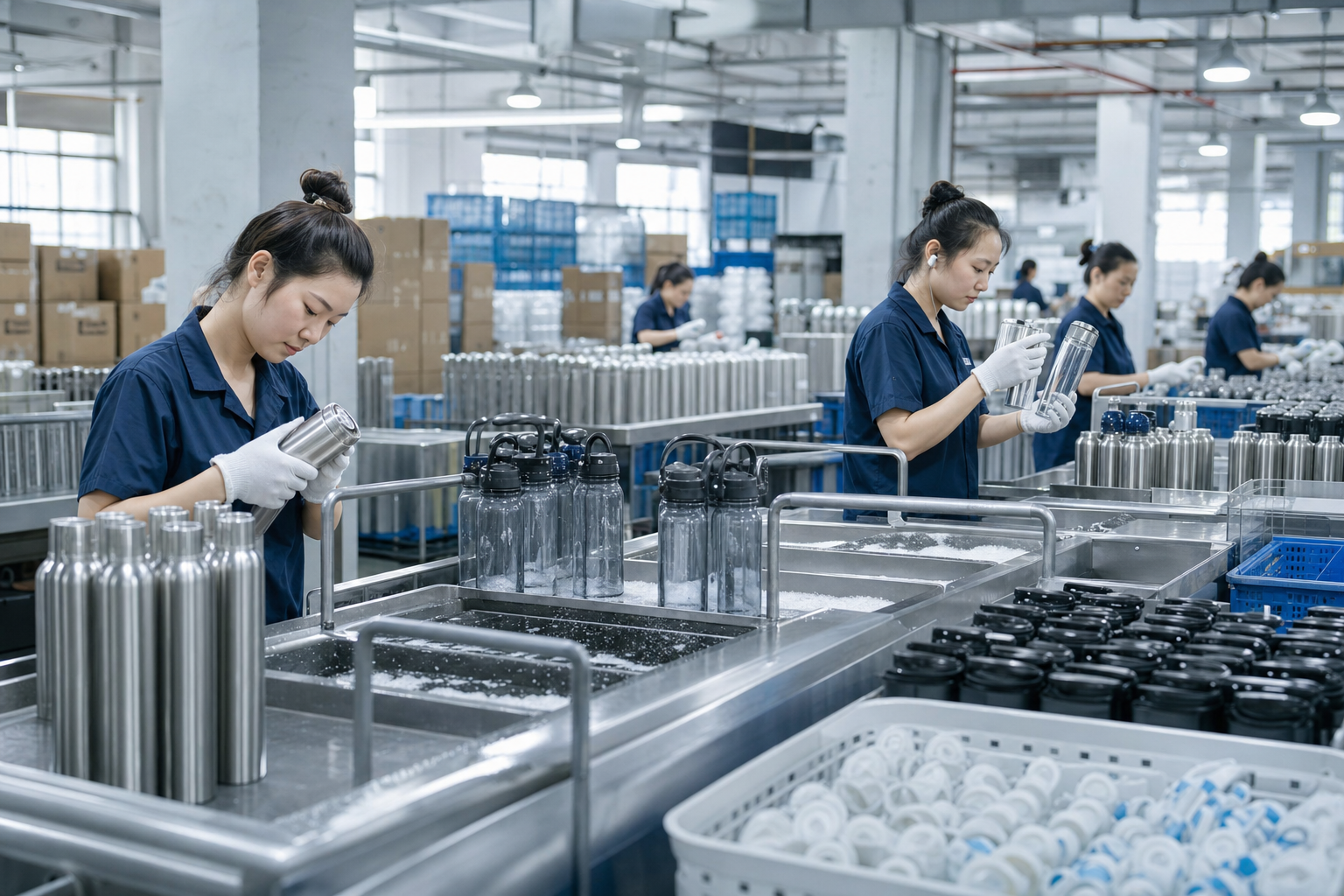
If you are sourcing custom drinkware, cleaning performance has to be built into product development, not patched in after the first complaint. A smooth interior radius, fewer hidden cavities, and a lid that comes apart in under 20 seconds all change how to clean a water bottle on the sink line. We run that test on the Zhejiang floor with a 5 mm brush and a stopwatch. A pretty sample that traps residue is a problem, not a selling point.
At the manufacturing stage, ask for:
- Material declarations: 304, 316, Tritan, PP, or borosilicate
- Compliance: REACH, food-contact documentation, and relevant ASTM or LFGB reports where applicable
- QC standards: AQL 2.5 for major defects, AQL 4.0 for minor defects
- Care labeling: printed or inserted instruction card
A serious export factory in China should talk lead time, not just push samples across the table. We ship from lines where MOQ is 3,000 pieces and the normal lead time is 25–35 days after sample approval for custom decoration and special caps. The buyer flagged a PO typo once and the cap spec went sideways, so we caught it before mass production. If your cleaning guidance needs a special lid design, bring it up at quote stage. The math does not work any other way. It is cheaper to adjust a gasket channel than to answer 5,000 end-user complaints after shipment.
Need cleaner drinkware specs for your next order?
Send your bottle type and decoration method. We’ll suggest a practical care instruction, MOQ, and lead time that fits your market.
Frequently asked questions
How often should a reusable water bottle be cleaned?
For daily use, wash a reusable water bottle after every fill if it held coffee, tea, milk, juice, or sports drinks. For plain water, a full wash every 24 hours is the safe baseline. If the bottle uses a straw lid or a silicone gasket, clean those parts every 1–2 days because residue builds there first. In warm climates, odors can appear in less than 48 hours if the bottle is sealed while damp. For retail care labels, we usually recommend: rinse after use, wash daily, and dry fully before closing.
Can I put a stainless steel vacuum bottle in the dishwasher?
Sometimes, but not by default. Many stainless steel vacuum bottles are technically dishwasher resistant on the body, yet the lid, gasket, print, or powder coat may not be. Heat and detergent can damage seals or fade decoration. If the bottle uses vacuum insulation, repeated high-heat cycles are a bad idea unless the spec sheet clearly says dishwasher safe. For B2B buyers, the safe route is hand wash at 40–50°C and separate the cap parts. That reduces warranty issues and keeps the finish looking better for longer.
How do I remove smell from a thermos flask?
Start with the cap, not the shell. Wash the body with warm water and neutral detergent, then soak the lid, gasket, and any straw parts separately. A baking soda solution at about 1 teaspoon per 250 ml of warm water works well for light odor. Leave it for 30–60 minutes, then rinse twice and air dry overnight. If smell remains after cleaning, the gasket may have absorbed residue and should be replaced. For protein shakes or milk, same-day cleaning is non-negotiable.
What is the best cleaning advice for Tritan bottles?
For Tritan bottles, use mild detergent, warm water, and a soft brush. Avoid boiling water and harsh alkali cleaners because they can cloud the material or stress the cap. The body may tolerate 60–70°C washing, but the lid assembly often cannot. If your Tritan product is marketed as BPA free, do not assume that means it is heat proof. It only means the resin formulation is different. For buyers, the safest instruction is hand wash the lid and check the product data sheet for the body’s temperature limit.
What should I print on a custom bottle care card?
Keep it short and specific. A good care card says: rinse after use, wash with mild detergent, hand wash lid, do not use bleach, dry fully before closing, and do not store milk or juice overnight. If the item is glass, add a note about thermal shock. If it is stainless steel vacuum insulated, note that the bottle should not be microwaved or frozen. For Amazon FBA or retail packs, a 40–60 word care card is usually enough and avoids customer confusion.