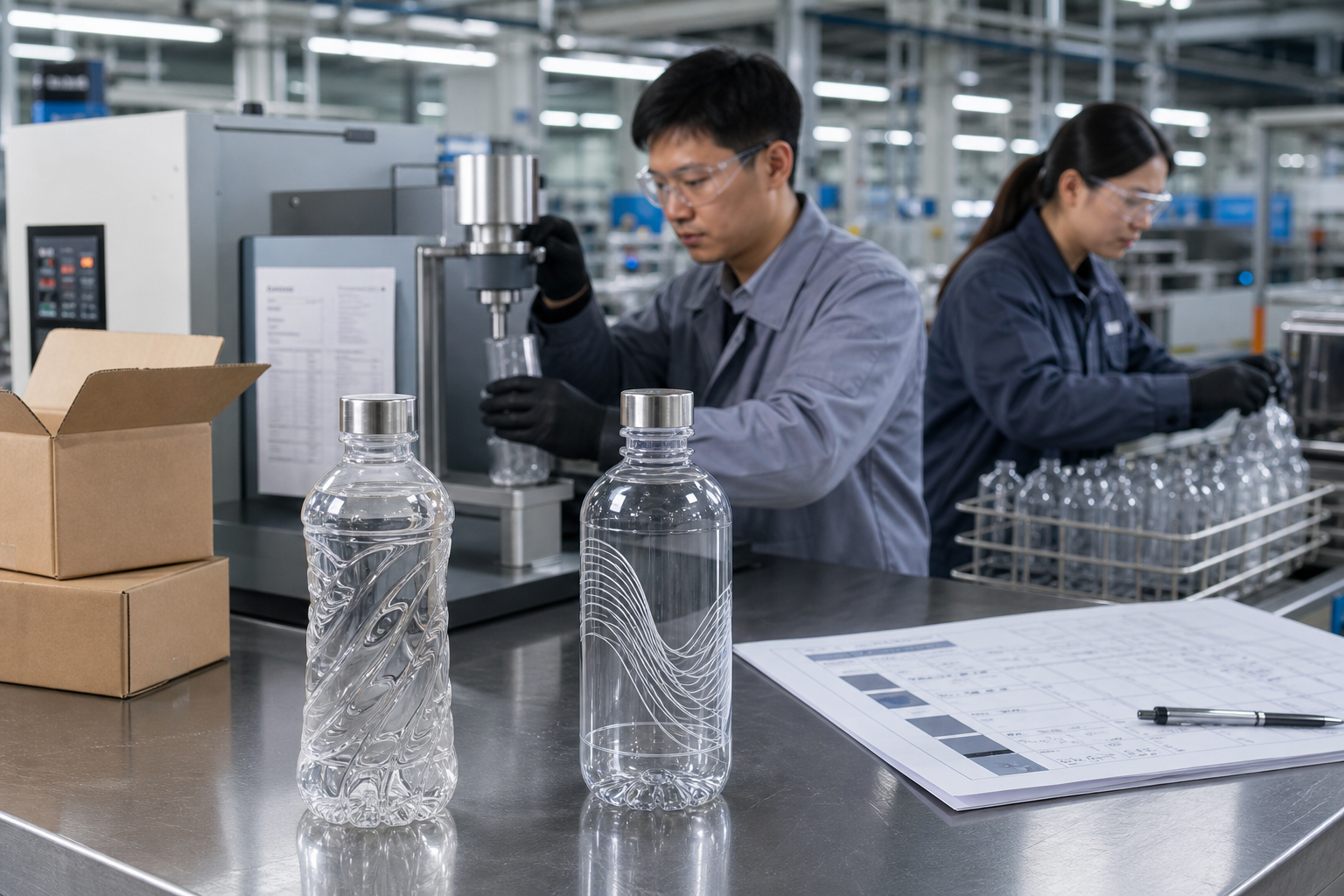
Key Takeaways
- IML decoration typically survives 100+ dishwasher cycles better than standard silkscreen plastic on PP bottles.
- Silkscreen can cost about USD 0.03-0.12 per bottle; IML often adds USD 0.08-0.25 depending on artwork and MOQ.
- For high-volume runs, a practical MOQ is 3,000-5,000 pcs for silkscreen and 10,000 pcs for IML tooling and print setup.
- If your bottle will be chain-store washed or rubbed in transit, choose durable decoration first and save aesthetics for second.
If you are buying decorated bottles at volume, the first question is not which finish looks better on day one. It is which in-mold label water bottle decoration still looks acceptable after 50, 100, or 200 wash cycles, rough cartoning, and a few months of retail handling. That is where the gap between IML printing and silkscreen plastic shows up fast.
We run production in Zhejiang, China, and the answer depends on your sales channel, price point, and how hard the bottle gets knocked around. We had a buyer flag a PO with “50,000 pcs” and no decoration spec at all; QC pulled the sample, and the logo started scuffing after two dishwasher cycles. The math does not work. Pick the decoration the same way you pick wall thickness or cap torque: by test data, not by habit.
What actually fails first
Most buyers say the print “fades.” We see abrasion first. Then chemical attack. Color shift comes later. On a plastic bottle, the weak point changes with the decoration method and the resin. With standard silkscreen plastic, the ink sits on top of the wall, so sleeves, conveyor rails, carton friction, and dishwasher detergent hit it first. If the cure is weak or the bottle surface energy swings outside spec, QC pulled the sample and the logo came off with a fingernail.
An in-mold label water bottle fails in a different way. The graphic goes into the wall during molding, so the label sits under heat and pressure and gets protected by the bottle body. That does not make it bulletproof. It shifts the failure point. On PP and some HDPE structures, we usually see the bottle take the abuse before the graphic gives up. We had one buyer flag a 0.3 mm wall variation at the gate, and that told us more than the artwork did.
For buyers in Europe and North America, this is the right question to ask, because retail returns eat margin fast. A 2% decoration defect rate on a 50,000-piece order is 1,000 units to rework, and the math does not work once freight and labor get added. On one Zhejiang line running 500,000 units/month, we run a 24-hour rub test before we ship, because nobody wants 1,000 bottles back in cartons. The wear case drives the spec: gym use, school use, gift use, or repeated dishwasher cleaning.
- Surface print: lower setup cost, faster artwork changes, easier to scuff
- IML: higher mold cost, better abrasion resistance, cleaner long-run appearance
- Best use case: 50,000+ pcs, repeat-wash, premium retail
IML versus silkscreen tests
If you want a practical comparison, run two tests: an abrasion rub test and a dishwasher cycle test. We usually pull decorated samples after curing, then again after pack-out. For abrasion, a 500 g load over 50 cycles already shows the weak spots. A decent silkscreen print may show edge wear, gloss loss, or color thinning. A properly made in-mold label water bottle should show far less change because the ink layer is locked into the wall, not sitting on top of the polymer.
Dishwasher testing gives a cleaner answer. We ship a lot of PP bottles through this check, and the line tells the story fast. Silkscreen often starts to dull after 10-20 cycles if the ink system is not built for alkali detergent and heat. A well-made IML bottle can hold its look for 50-100 cycles, sometimes more, depending on resin, label film, and dishwasher temperature. If the bottle is PP and the label is a compatible film, IML usually beats surface printing. If mold venting is poor or the cavity has contamination, the buyer flags bubbles or edge lift on the first review.
Real-world buyer note: no decoration survives abuse if the base bottle is too soft, the wall is uneven, or the ink was rushed through curing. We had one PO with “10,000 pcs” typed as “10000pccs,” and the sample still failed because the wall thickness drifted 0.3 mm from side to side. In Zhejiang, we see this all the time on low-cost programs: the decoration gets blamed, but the real issue is process control.
Typical test outcome snapshot
- Silkscreen plastic: visible wear after 20-50 rub cycles, variable dishwasher resistance
- IML printing: better edge retention, stronger chemical resistance, higher setup discipline required
- Buyer priority: if you need a retail shelf life of 12 months, IML usually wins
Cost and MOQ reality
People like to talk about decoration as a design choice. On the line, it is a cost line. A basic silkscreen job on a standard 500 ml bottle might add USD 0.03-0.12 per unit, depending on color count, print area, and whether we need a second pass with the pad printer. For an in-mold label water bottle, the added cost is often USD 0.08-0.25 per unit, and it can go higher if the artwork has gradients or if the mold needs a tweak of 0.2 mm on alignment.
MOQ changes the math. For silkscreen, a practical MOQ is often 3,000-5,000 pcs if the bottle body is already in production. For IML, a lot of China factories ask for 10,000 pcs or more because label setup, mold timing, and print waste have to be spread across more units. We had a buyer push back on this last season, and the answer was simple: 2,000 pcs does not pay for a full IML run. If your annual volume is 100,000 pieces or more, IML starts to work. If you are testing a new SKU with 2,000 units, silkscreen is the safer first step.
Do not skip the hidden cost of a bad decoration call. If a grocery chain rejects 1 pallet because the logo rubbed off in a 48-hour transit test, the savings vanish fast. We have seen this go sideways. That is why brand owners should compare total landed cost, not just the factory quote. Ask for FOB China pricing, carton drop tests, and one post-wash sample set before you commit. QC pulled the sample, and the scratch mark showed up after 20 rubs.
For volume programs, the cheapest decoration is the one that stays on the bottle and does not come back as a return.
Where silkscreen still makes sense
Silkscreen is not obsolete. We still run it when the buyer wants fast artwork changes, a lower start-up cost, or a 500-piece trial before the main order lands. Seasonal colors, limited editions, and short promo runs fit it well. We can change a one-color logo in 24 hours if the line is open; a label tool change does not enter the picture. For distributor jobs, that speed often beats a tougher decoration.
It also holds up fine on bottles that are not going through repeated hot washing. A sports bottle used for events or office giveaways may only need moderate abrasion resistance, not a 200-cycle dishwasher story. If your standard allows some wear after 6 months, silkscreen is the cheaper route. That is the right tradeoff. The wrong question is “which decoration looks best forever?” Ask what the bottle will actually face. If you print “dishwasher safe” on the spec sheet, QC will test that claim.
We tell buyers to lock down the ink system, curing method, and test result, not just “logo printed.” One PO we saw had a typo on the finish spec, and the buyer flagged it after the first pre-production sample. A supplier in Zhejiang should be able to tell you whether the ink is UV-cured, heat-cured, or solvent-based, plus how it behaves on PP, PET, or Tritan. If the factory cannot name the test standard, the math does not work. You are buying guesswork, not decoration.
- Best for: promotions, short runs, lower MOQ
- Risk: lower abrasion resistance and weaker dishwasher performance
- Ask for: curing spec, adhesion test, and sample wash report
Where IML earns its keep
IML earns its keep when the bottle has to look good after hard use. School accounts, gym retail, and subscription packs all fall into this bucket, especially when the buyer says the bottle will go through a dishwasher every week. An in-mold label water bottle gives a cleaner, built-in look than surface printing, and the decoration is much harder to peel or scratch off. We’ve seen silkscreen fail after 40 cycles; IML usually stays put.
From the floor side, IML also keeps logo placement steady across a 60,000-unit run. Once the mold, label stock, and heat settings are locked in, the color registration stays repeatable. That matters when you ship 60,000 or 120,000 units in separate container loads. The first carton and the last carton need to match. In our Hangzhou plant, we run around 500,000 units a month across the relevant bottle lines, and QC pulled the sample at 12:30 because a 0.8 mm shift showed up on one cavity. That is normal line control, not magic.
There are trade-offs. IML needs higher tooling spend and tighter process control from day one. The label film, electrostatic placement, and molding temperature all have to stay in range. If a factory gets sloppy, you see trapped air, print drift, or lifted edges. The math does not work if you want cheap and perfect. When the process is right, though, it is the stronger durable decoration option. For premium private label, IML is usually the safer long-term bet.
Good fit when:
- You need 20,000+ pcs per SKU
- The bottle is washed often, by hand or machine
- You want a more premium, integrated appearance
- You can accept a longer lead time, usually 30-45 days after approval
How to specify the right test
Do not ask for “good quality” and hope the factory reads your mind. Put the test on the PO. For abrasion, we write a dry rub test with a weighted cloth or eraser method, then fix the acceptance point after 50 cycles. For dishwasher, lock down temperature, detergent, and cycle count. A commercial spec we ship on the line is 65-70°C for 25 or 50 cycles. If your customer is in Europe, ask whether the print must survive normal household dishwasher use, then put that exact line in sample approval.
Set the acceptance standard too. AQL is for sampling defects, not for print wear, but it still matters. We often see buyers use AQL 2.5 for critical appearance checks and AQL 4.0 for minor cosmetic items. Fine. That does not replace a real wear test. Ask for a pre-production sample, a golden sample, and a retained sample. Then run all three after 24 hours, after pack-out, and after thermal cycling. QC pulled the sample at 6 a.m. once and found the silkscreen started to haze after the second wash; the buyer had written “no visible change” and that was too loose.
If the supplier is in China, ask for clear photos and a test report before shipment. If you are sourcing from Zhejiang, a decent factory will usually know how to support REACH-related material documentation, FDA-related material declarations for the U.S. market, and traceable lot control. We also check the lot code on the carton and the ink batch, because one PO typo on “dishwasher safe” vs “dishwasher test” can turn into a claim later. Decoration is only one layer of the job, but it is the layer your customer sees first and complains about fastest — so the spec has to be boringly clear.
- Define rub cycles, wash cycles, temperature, and detergent
- Use AQL for appearance, not as a substitute for durability testing
- Require golden sample approval before mass production
Request a decoration test spec today
Send your bottle size, artwork, and target volume. We will quote silkscreen or IML with real lead time, MOQ, and wash-test expectations.
Frequently asked questions
Does an in-mold label water bottle always beat silkscreen in dishwasher tests?
Usually yes, but only if the bottle material, label film, and molding process are correct. On a well-made PP bottle, IML can often stay legible after 50-100 dishwasher cycles at 65-70°C. A standard silkscreen plastic logo may start to dull or scratch after 10-20 cycles if the ink system is basic. But a poor IML process can fail too: trapped air, edge lift, or label shift will ruin the result. Ask for a dishwasher protocol, not just a marketing claim.
What is the price difference for durable decoration on volume orders?
For a 500 ml bottle, silkscreen usually adds about USD 0.03-0.12 per piece, depending on colors and print area. IML often adds USD 0.08-0.25 per piece because of label film, setup, and higher process control. On a 50,000-piece order, that difference can be USD 2,500 to 6,500 or more. If returns from rubbed-off logos are likely, the higher decoration cost is often cheaper than rework and replacement.
What MOQ should I expect for IML printing versus silkscreen?
A practical MOQ for silkscreen is often 3,000-5,000 pcs if the bottle is already in production. For IML, many factories in China prefer 10,000 pcs or more because label setup and print waste need to be spread over more units. Some Zhejiang factories can support smaller pilot runs, but the unit cost rises fast. If you are testing a new SKU, silkscreen is usually the lower-risk launch option.
Can silkscreen plastic still be a good choice for retail bottles?
Yes, if the bottle is not expected to be washed often or dragged through hard retail handling. A clean one- or two-color logo can look very good and keep your initial cost low. It is a sensible option for promotional bottles, seasonal campaigns, and short runs under 5,000 units. Just do not promise high dishwasher durability unless the ink, curing, and substrate have been tested for it.
How should I write the decoration spec in my purchase order?
State the bottle material, decoration method, color count, and required performance test. For example: PP bottle, IML decoration, 1 artwork, pass 50 dishwasher cycles at 70°C, no visible logo loss beyond minor gloss change. Or: silkscreen plastic, 2 colors, pass 50 dry rub cycles with no major edge loss. Also specify AQL level for appearance, golden sample approval, and whether the packaging must carry FNSKU or barcode labels.