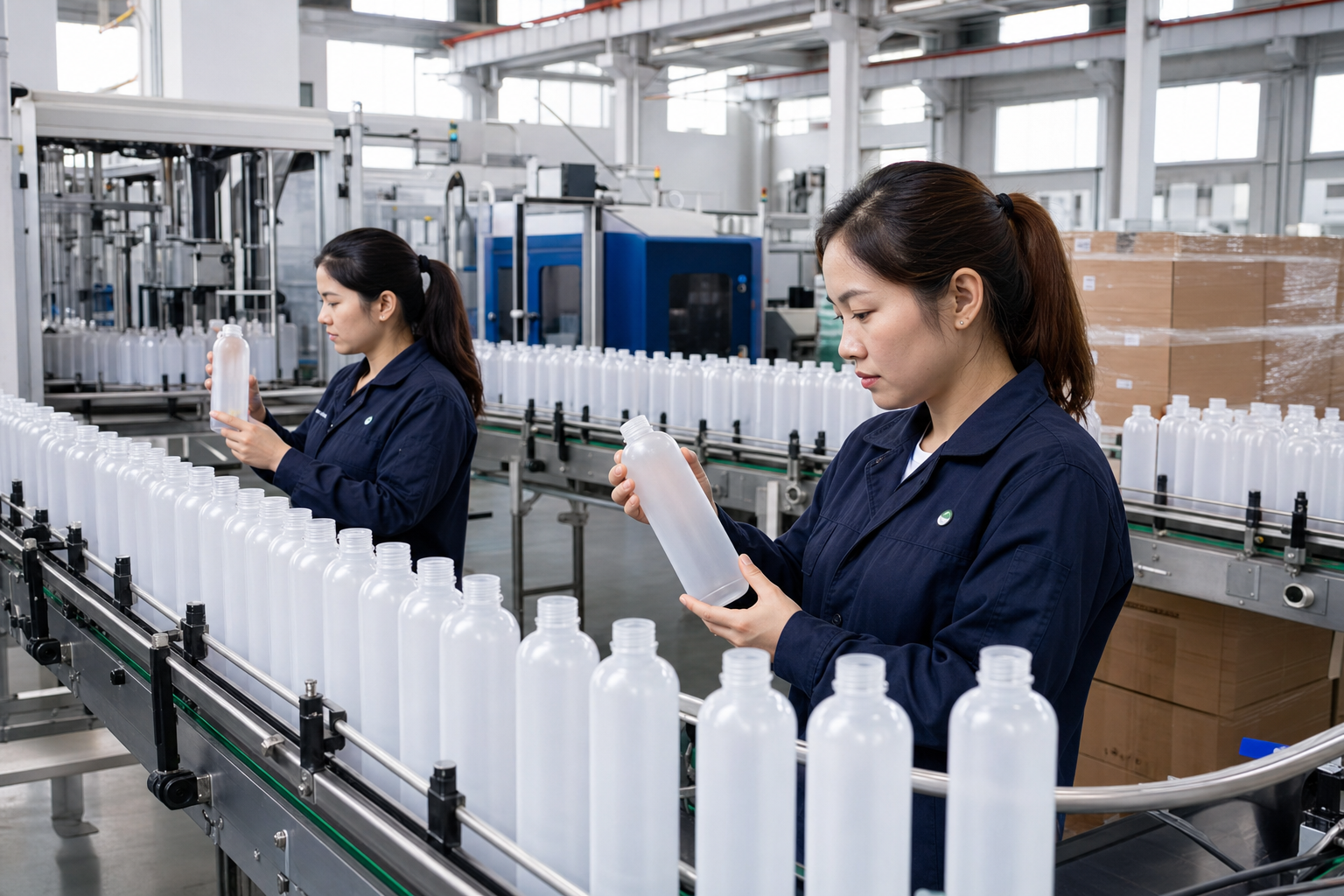
Key Takeaways
- A polypropylene bottle for promotional gifts usually lands in the USD 0.55 to 1.60 range at 3,000 to 10,000 pcs, depending on capacity and print method
- PP is lighter than stainless steel and lower risk for large giveaway programs, but you need the right lid and wall thickness to avoid deformation
- For Europe and North America, ask for REACH, LFGB where relevant, and food-contact declarations before confirming artwork
- A 20 to 30 day lead time from Zhejiang is realistic for standard molds; custom tooling and special lids add time
If you are sourcing a polypropylene bottle for promotional gifts, you are balancing unit cost, print quality, and whether the bottle survives real use. A cheap giveaway helps nobody. We have seen a 500 ml PP bottle pass a drop test on the line, then fail when the lid hinge was molded 0.3 mm off and the buyer flagged it on the first sample. For conferences, employee kits, schools, gyms, and ecommerce inserts, PP works because it is light, tough, and easy to ship. That matters in China, where freight and carton count can decide whether the campaign stays in budget.
The right call is not just finding a polypropylene bottle for sale online. You need to check resin grade, wall thickness, lid design, decoration method, and compliance. Our factory in Zhejiang runs more than 180,000 units per month, with common MOQ starting at 3,000 pcs and normal lead time around 20 to 30 days after sample approval. QC pulled the sample with a caliper at 1.8 mm wall thickness, and we still had to correct a PO typo where the buyer wrote 30,000 instead of 3,000. That is the level of detail a B2B buyer should ask for before placing an order.
Why PP Fits Promo Programs
Polypropylene is a practical pick for a polypropylene bottle for promotional gifts because it keeps unit cost down, stays light in the carton, and does not crack easily in normal daily use. On our line, a 500 ml PP bottle typically weighs about 65-80 g, so freight stays sane and the risk of breakage is lower than glass. It also takes bright masterbatch well, which matters when the buyer wants a bottle matched to PMS colors instead of a plain stock item.
PP also works for seasonal runs and high-volume handouts. If you need a polypropylene bottle for giveaways at a conference, a product launch, or a university event, you are not buying a forever bottle. You need clean print, stable color, and a line that can ship 500, 5,000, or 50,000 pieces without drama. We ran a 12-day PP sample schedule last month; the same shape in glass would have taken 18 days and the cartons would have been a headache. For polypropylene bottle for business use, the math works because resin cost stays steady and the injection cycle is fast.
There is a limit, and some buyers push past it. PP is not the right answer if the brief calls for premium thermal retention or a heavy retail feel. We had one buyer flag a PO typo on a 750 ml campaign bottle, then ask if we could make it feel like a metal flask; the answer was no, and the math does not work. For polypropylene bottle for businesses that need executive gifting, PP can still serve as an outer shell or a lightweight campaign bottle, but the positioning has to stay honest. That is the right question to ask for polypropylene bottle for companies that use the item as a brand touchpoint, not the main product.
Good promo drinkware is not the cheapest item you can buy. It is the item that can be produced in the right quantity, printed cleanly, and shipped without damage.
Specs That Change Cost
When a buyer asks for a polypropylene bottle for promotional gifts, the quote moves on a short list of specs. Capacity leads the pack. A 500 ml bottle is the safest pick for events and commuting. A 700 ml or 750 ml format fits a polypropylene bottle for gym programs, a polypropylene bottle for fitness promotions, or a polypropylene bottle for cyclists, but the price climbs because the resin load goes up and the carton pack gets bulkier. On one 750 ml job, the buyer wanted the same unit price as 500 ml. The math does not work.
Wall thickness catches a lot of first-time buyers off guard. A normal PP promo bottle runs about 0.8 mm to 1.5 mm, depending on the shape and whether the bottle is squeeze-style or rigid. We check it with a caliper on the line. Thin walls cut unit cost, but they also raise the risk of panel distortion when cartons get stacked tight or the shipment sits in heat. For a polypropylene bottle for schools or a polypropylene bottle for students, we push a firmer body and a lid that keeps working after repeated open-close cycles. QC pulled a sample at 0.7 mm once; it bowed after two days in the hot room.
Cap design is another cost driver buyers miss. A plain screw cap is the cheapest route. A flip lid, carry loop, or dust cover adds mold work and hand assembly. If the bottle is for a polypropylene bottle for kids or a polypropylene bottle for children, the cap also needs to stay spill-resistant and easy to wash. For a polypropylene bottle for athletes or a polypropylene bottle for runners, one-hand opening matters more than a fancy shape. We had a PO once with “screw cap” in the spec and “flip lid” in the artwork file. The buyer flagged it, and we had to re-quote.
- Low-cost spec: 400 to 500 ml, single-color molding, simple screw cap
- Mid-range spec: 500 to 750 ml, one-color logo print, carry loop or sport lid
- Higher-value spec: custom Pantone body, multi-color print, molded grip or special cap
For a polypropylene bottle for sale online, the spec sheet can hide the real cost. Ask for net weight, carton count, and sample photos from the actual mold stage. We ship a lot of these, and the gap between a 38 g stock bottle and a 52 g custom one is where buyers get burned. That is the wrong question to ask if you only compare the front-page price.
Decoration That Holds Up
Branding is where a lot of promo jobs miss the mark. A polypropylene bottle for promotional gifts has to look clean at handover and still pass inspection after people throw it into bags, lockers, and car cup holders. We usually start with silkscreen, heat transfer, pad printing, or a label. For a straight logo, silkscreen keeps cost down. For small text, gradients, or a 3-color mark, the real test is whether the print stays sharp on a curved PP wall. On our line, a 0.3 mm shift is enough for the buyer to flag it.
If you are running a polypropylene bottle for marketing campaigns across several regions, keep the print zone simple. A logo centered on the body is easier to hold than a tiny wraparound graphic. This is the wrong question to ask if someone pushes for more coverage; the math does not work when the bottle has a tapered shoulder. We see it go sideways when factories rush the job at the 1,000-piece sample stage. Ask for a pre-production sample with the exact ink and curing profile, then check rub resistance after 50 to 100 abrasion cycles if the program is sensitive.
For polypropylene bottle for swag and polypropylene bottle for employees, the mark should be calm and durable. Internal programs fail when the item looks like a cheap giveaway, not a useful bottle. A clean one- or two-color print usually beats a crowded layout. For polypropylene bottle for conferences and polypropylene bottle for events, the goal changes: you need fast recognition from 3 to 5 meters, so high-contrast printing and a cap color that pops work better. QC pulled the sample last month because a white logo on frosted PP disappeared under hall lighting.
Decoration also affects compliance. Some inks and coatings pass for outside branding but leave odor or a tacky feel, and that is enough to sink a shipment. Ask the supplier in Zhejiang to confirm the print system meets REACH expectations for your market, and if the bottle goes into food-contact use, request the full declaration set. We check this with a simple wipe test at the packing table; if the ink transfers, the job stops. That is standard work, not a favor.
Best Use Cases By Segment
PP bottles are not for every program, but they fit more segments than most buyers expect. For a polypropylene bottle for schools and a polypropylene bottle for students, the job is simple: low breakage, 3 to 5 color options, and a lid that rinses clean. We usually keep the bottle light for backpacks and price it so the MOQ does not eat the whole budget. On campus handouts, carton packing matters too; 48 pcs per carton moves cleaner than a loose pack. QC pulled one sample with a lid thread wobble, and the buyer flagged it fast.
For a polypropylene bottle for gym, polypropylene bottle for fitness, polypropylene bottle for athletes, polypropylene bottle for runners, and polypropylene bottle for cyclists, use comes first. A secure cap, a body that sits in cup holders or bottle cages, and a mouth opening that lets people drink on the move. A 650 ml to 750 ml size usually sells better than a small bottle here. This is the wrong question to ask if someone is chasing fancy print only. We had a PO typo once where 750 ml was written as 570 ml, and the math did not work.
Hospitality buyers also use this category. A polypropylene bottle for hotels works well as a branded welcome item, especially next to refill stations in a lobby or gym. A polypropylene bottle for restaurants and a polypropylene bottle for cafes make more sense when the client wants takeaway water, staff use, or a small retail add-on. Here, the bottle is part of the service flow, not just a giveaway. We ship these with simple lids because one extra part means one more failure point on the line.
For a polypropylene bottle for children, safety and plain handling matter more than flashy styling. Keep the lid low part count and leave off loose accessories. For a polypropylene bottle for companies that need event kits, the cleanest route is a spec sheet with capacity, color, logo method, carton count, and compliance docs. We ran a 24-hour lid pull test on one batch, and the buyer still asked for a second check on the hinge. Fair ask. It keeps the order moving.
Match the bottle to the channel, and the order gets easier to run. A polypropylene bottle for business gifts does not need premium construction. A polypropylene bottle for businesses doing mass distribution needs repeatable output, the same print position, and the same carton count on every pallet. We quote those jobs differently because they are different buying problems. One sample can look fine; 5,000 pcs tell the real story.
MOQ, Price, And Lead Time
Most buyers open with price. The better question is whether the factory can hit your campaign date. In Zhejiang, a standard polypropylene bottle project with an existing mold usually starts at 3,000 pcs MOQ. For custom colors or a special lid, 5,000 pcs is the safer number. If you need a new mold, the tool cost often runs from a few hundred USD to a few thousand USD, and that bill lands before the first mass run.
For a standard polypropylene bottle for promotional gifts, FOB China pricing usually sits around USD 0.55 to 1.60 per piece at mid-volume, if the print is simple and the packing is ordinary. At the line, a 1-color silk screen and a plain export carton keep the price down. Smaller orders, a 2-piece lid, or full-color decoration push it up fast. If you are comparing a polypropylene bottle for sale online with a direct factory quote, check whether the online price includes print, carton inserts, and export cartons. Many quotes leave those out. The math does not work if you miss them.
Lead time needs to be set with a calendar, not a hope. A straightforward order can move in 20 to 30 days after sample confirmation. We once had a buyer flag a PO typo on the lid color code, and QC pulled the sample back for a fresh check the same day. If you are ordering polypropylene bottle for giveaways tied to a conference date, leave space for artwork correction, sample approval, and transit. Sea freight from China may add another 20 to 40 days depending on destination. Air freight moves faster, but we only see it make sense for urgent, high-value programs.
Payment terms are often 30 percent deposit and 70 percent before shipment, though repeat accounts may negotiate differently. If the project involves polypropylene bottle for ecommerce or FNSKU labeling, tell the supplier early. The packing line needs to know whether each unit gets a barcode sticker, polybag, or retail box. A missing label instruction on a 10,000 pcs order creates rework, and we ship those cartons twice. This is the wrong question to ask after packing starts.
Quality Checks Before Shipment
If you are buying from China, quality control is not optional. A solid supplier should show incoming resin checks, in-process visual inspection, and final lot sampling, with records from the line—not a blanket “checked” stamp. We usually run AQL 2.5 for major defects and 4.0 for minor defects on promotional bottles; the math changes fast if your buyer wants tighter limits, but for a standard PP bottle this is the baseline that makes sense.
Before shipment, check odor, cap torque, leak resistance, and print adhesion. A bottle can pass size and color, then fail because it smells off straight out of the carton or the lid backs off after 200 km of transit vibration. For Europe, ask for REACH documentation. For food-contact use in a regulated market, request the food-contact declaration and the test report number. North American buyers often ask for ASTM or FDA-related compliance statements, and the PO should say which use case they mean; otherwise QC pulled the sample from the wrong spec and we all lose a day.
A factory in Zhejiang should also show carton drop testing or a transit simulation for big orders—usually 1.2 m drop height, 6 faces, with the same outer carton you will ship. That matters when we ship polypropylene bottle for swag or polypropylene bottle for conferences in mixed cartons with pens, notebooks, and other promo items. Weak packaging is the wrong question to ignore: the bottle can arrive intact, yet the outer box is crushed and the buyer flags it before the goods even hit the shelf.
Ask for a final inspection photo set before release. It should show body color, logo placement, lid alignment, carton labeling, and pallet condition, plus one close shot of the barcode if the buyer wants warehouse scanning. If the order goes to three distribution centers, make sure the supplier can split cartons by SKU without mixing artwork or stuffing the wrong 6-digit item code into the master carton. That sounds basic, and still a PO typo or mixed label run is where the first orders go sideways.
Sourcing From Zhejiang Smartly
Zhejiang works as a sourcing base for drinkware because the supply chain sits close together. Molding, printing, packaging, and export handling are often within one industrial zone, so we can cut a 12-day handoff to 6 or 7 days if the line is running clean. That still does not make every factory equal. You need to check capacity, QC discipline, and whether the quote comes from real production data or a trader’s stock sheet. On a 500 ml polypropylene bottle job, we once found a supplier quoting 20,000 pcs while their injection machine log showed only 12,000 pcs/month.
For a polypropylene bottle for promotional gifts program, ask three straight questions. Can they hold the order volume? Can they match your artwork on the first sample? Can they show compliance for your market? If the answer turns fuzzy, the low price is fake. A manufacturer in China should talk clearly about resin grade, mold status, print setup, and packing method without hiding behind sales fluff. QC pulled the sample on one run and found a 1.5 mm cap gap; the buyer flagged it before the PO went out.
For repeat buyers, the win is a stable spec that can be reordered without a redesign. That is how a polypropylene bottle for business programs becomes a working procurement item, not a yearly scramble. Once the mold, color chip, and print file are locked, you can ship the same bottle for employees, schools, restaurants, or event campaigns and keep the unit cost in line. We had one PO typo on a 30,000 pcs order, and the wrong carton count nearly threw the pallet plan off by 18 cartons.
If you are building a long-term promotional line, watch lifecycle cost before you chase the lowest unit price. The right supplier in China will help cut breakage, trim freight, and standardize packaging. We run into this all the time: a buyer pushes for a cheaper bottle, then pays back the savings in cracked lids and extra cartons. That is the wrong question to ask. A stable sourcing channel beats a one-off deal.
Source your PP promo bottle with confidence
Send your target quantity, logo file, and delivery market. We will match the right PP structure, print method, and compliance set from Zhejiang.
Frequently asked questions
What is the usual MOQ for a polypropylene bottle for promotional gifts?
For standard molds, many factories in Zhejiang can start at 3,000 pcs. If you want custom color matching, special lids, or full print wrap, 5,000 pcs is more realistic. New tooling usually needs a separate mold charge. For very simple stock items, some suppliers will quote lower, but you should check whether the price includes printing, cartons, and export packing. A realistic planning window is 20 to 30 days after sample approval, not including sea freight.
Is PP safe enough for food-contact promo bottles?
Yes, if the resin, additives, and inks are suitable for food-contact use and the factory can document it. For Europe, ask for REACH-related documentation and the correct food-contact declaration. For North America, buyers often want supporting compliance statements depending on the exact application. Do not rely on a generic PDF. Ask for test references tied to the actual bottle, lid, and decoration method you are buying.
What printing method lasts best on PP?
For simple logos, silkscreen is usually the best balance of cost and durability. It works well on flat or gently curved surfaces and is common for polypropylene bottle for business and event use. If you need multiple colors or fine detail, heat transfer or pad printing may be better, but the cost goes up and setup becomes more sensitive. Always request a pre-production sample and do a rub test before approving mass production.
How much does a polypropylene bottle for sale online usually cost in bulk?
At mid-volume, you often see FOB China pricing around USD 0.55 to 1.60 per piece, depending on capacity, mold complexity, and print method. A simple 500 ml bottle with one-color print sits near the lower end. A larger bottle with a custom lid or full-color branding can move well above that. Always confirm whether the quote includes cartons, inserts, and export packaging, because online listings often leave those out.
Which buyers use PP bottles most often?
They are common for schools, students, gym programs, employees, conferences, events, hotels, restaurants, cafes, and ecommerce inserts. They also work for giveaways and swag because they are light and easy to distribute at scale. The key is matching the bottle design to the use case: rigid and spill-resistant for children, functional and larger for athletes or cyclists, and visually clean for corporate campaigns.