Key Takeaways
- A recycled stainless steel bottle typically costs USD 0.18 to 0.55 more per unit than standard 304, depending on recycled-content percentage and paperwork.
- Post-consumer recycled steel is still limited in 2026; many Chinese suppliers can only offer 20% to 60% recycled content with a mill certificate.
- Expect MOQ around 3,000 to 5,000 pieces for verified recycled-content programs, with 35 to 50 days lead time in Zhejiang.
- For compliance, ask for ISO 14021 claims support, REACH confirmation, and a traceable mill certificate tied to each coil batch.
If you are sourcing a recycled stainless steel bottle in 2026, accept one thing early: recycled content is no longer a marketing novelty, but it is still not a standardized commodity. In China, including Zhejiang plants, supply depends on grade, scrap source, and how much paper your buyer wants on file. Some mills can supply post-consumer recycled steel with a mill certificate. Others only issue a blended recycled-content declaration.
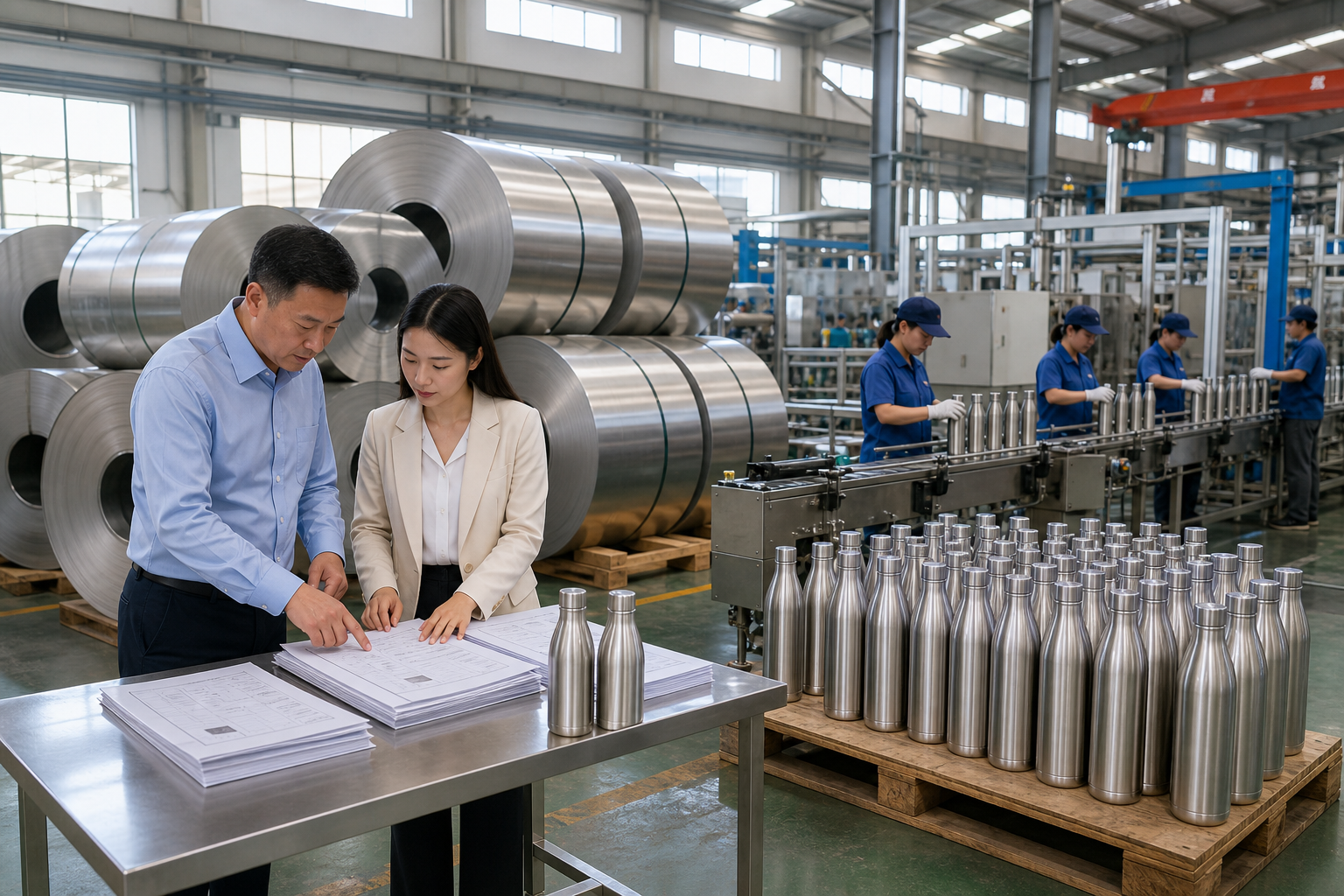
That gap matters. A bottle can say circular drinkware on the sales sheet, but retail, Amazon, and corporate ESG teams will ask where the scrap came from, how it was melted, and what the certificate actually states. We had a buyer flag a PO typo on “recyled” before QC even pulled the sample. At BottleForge Industrial in Hangzhou, we run about 600,000 units a month, MOQ is usually 3,000 pieces per SKU, and once material is in hand the lead time sits at 35 to 45 days.
Where circular drinkware is headed
Circular drinkware is moving from a niche pitch to a normal procurement line, but the market is still sorting out what is real and what is recycled wording. In 2026, the stronger programs pair recycled stainless steel bodies, reduced packaging, repairable lids, and clear end-of-life instructions. That beats a shiny “100% recycled” claim with no traceability. We saw one buyer flag a PO because the carton spec said 40 g paperboard, then the sample arrived with 52 g and no disposal note.
From the factory floor, the next step is tighter batch segregation and cleaner certificates from the mill. We run barcode tracking on 18-20 pallets at a time, and QC pulled one sample because the melt lot on the cert did not match the laser mark on the cup body. In Zhejiang, more suppliers are buying traceability software because export customers ask for proof before artwork. Good. That is the right order. It rewards serious factories and cuts out vague claims.
If you are building a sustainability line, keep the spec tight: state the recycled-content percentage, require the mill certificate, define the claim language, and choose a supplier that can hold stock. A recycled stainless steel bottle should be a buying decision, not a branding gamble. We have seen this go sideways when a buyer wrote “recycled steel” on the PO and left the rest open; customs asked questions, and the shipment sat for 12 days. The math does not work if the paperwork is loose.
Request a recycled-content quotation
Send your target percentage, bottle style, and annual volume. We will tell you what is реально available in China, what the mill can prove, and the true landed cost.
Frequently asked questions
Can you really get 100% post-consumer recycled steel in drinkware?
Sometimes, but not consistently. For mass-produced drinkware, 100% post-consumer recycled steel is rare and usually limited to special programs with higher MOQ, often 5,000 to 10,000 pieces. Many mills in China and Zhejiang can supply blended recycled content instead, such as 30% to 80%, with a mill certificate. If a supplier says 100% and cannot show heat-level traceability, treat it as a marketing claim, not a verified specification. For many buyers, 60% to 80% documented recycled content is the realistic balance between proof, cost, and lead time.
How much more does a recycled stainless steel bottle cost in 2026?
A documented recycled stainless steel bottle usually costs USD 0.18 to 0.55 more per unit than a standard stainless version, based on the same shape and decoration level. If you want stronger documentation, third-party verification, or a higher recycled-content percentage, the premium can reach USD 0.70 or more. For a 500 ml vacuum bottle, that premium sits on top of the normal material and processing cost, so the final landed price depends on print method, packaging, and whether you ship FOB China or DDP. The cheapest quote is often missing traceability.
What paperwork should I ask for from the supplier?
Ask for a mill certificate tied to the coil or heat number, a factory recycled-content declaration, REACH confirmation for coatings and lid materials, and food-contact documentation for the inner wall and closures. If you need a formal sustainability claim, request the recycled-content basis by weight and the exact wording that can appear on packaging. For Europe, retailers may ask for additional substantiation; for North America, marketplace compliance and labeling accuracy matter. If the supplier cannot connect the certificate to a production lot, the document is weak.
What MOQ should I expect for recycled-content custom bottles?
For verified recycled-content programs, MOQ is usually 3,000 to 5,000 pieces per SKU. If you want special color coating, bamboo parts, or custom packaging, the MOQ may rise to 10,000 pieces. In Zhejiang factories, smaller orders are possible, but the recycled material premium becomes less efficient and lead time often extends beyond 45 days. At BottleForge Industrial, standard output is about 600,000 units per month, but special material runs still need clean batch planning and procurement approval before production starts.
Will recycled stainless steel affect bottle performance?
Not if the alloy, forming, and weld quality are controlled. A recycled stainless steel bottle can perform like any other stainless bottle when the chemistry meets spec. You should still lock wall thickness, usually 0.35 mm to 0.45 mm for insulated bottles, and require leak testing, drop testing, and AQL inspection. Recycled content does not excuse poor manufacturing. If performance changes, the problem is usually sourcing control, not recycling itself.