Key Takeaways
- Big-box programs now expect 100% carton barcode accuracy and 3-layer master carton protection for retail shipment.
- Retail certification has shifted from “nice to have” to baseline: REACH, LFGB, FDA, and BSCI are often reviewed before sample approval.
- Sustainable packaging is judged on materials, ink choice, and cube efficiency, not just a recycled logo on the box.
- Most retail buyer drinkware requirements now include AQL 2.5/4.0 inspection terms, 30-60 day lead times, and traceable lot codes.
Retail buyers for drinkware in 2026 are asking for tighter paperwork and fewer surprises. If you are pitching a big-box program, the buyer is not stopping at shelf appeal. They want carton specs, barcode placement, drop-test data, REACH paperwork, and proof that the pack can survive a DC run without chargebacks. That is the standard in Europe and North America now.
The common mistake is treating packaging, sustainability, and certification as three separate selling points. Buyers do not split them that way. They see one risk file. If you make in Zhejiang or source from China, you need clean retail documents, lead times that hold, and packaging that fits the retailer’s distribution model. At BottleForge in Hangzhou, we run 1.2 million units per month across multiple drinkware lines, and QC pulled the sample if a barcode sat 2 mm off center. Capacity means little if the spec sheet is sloppy.
What buyers actually check first
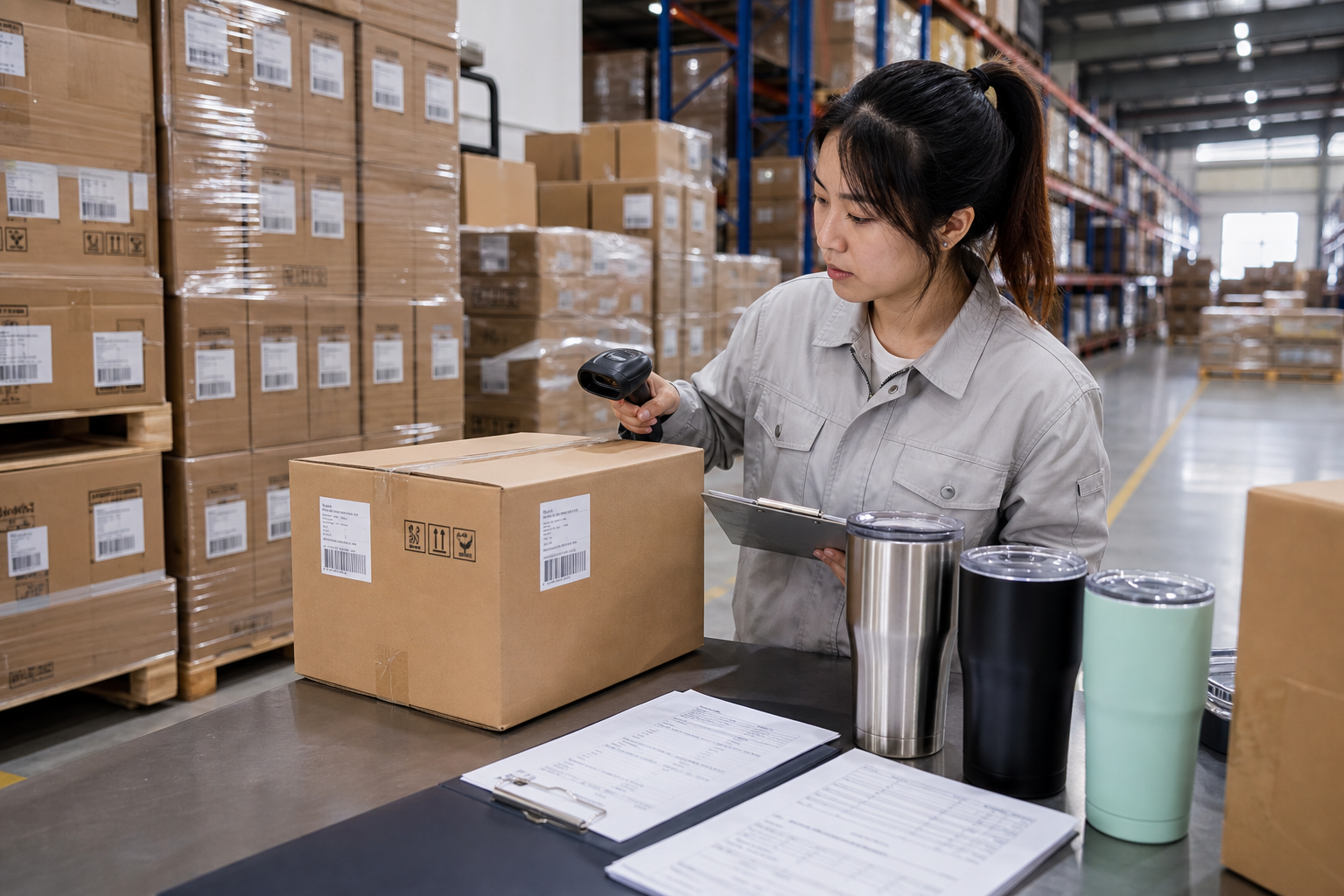
Retail buyers do not start with design. They start with risk. We ship enough cartons to know the first question is simple: can you hit the delivery window, fit the case pack into their warehouse, and keep the goods from bouncing around on the line-haul? A procurement team will check those points before anyone talks about matte finish or print color.
Big-box buyers usually ask for these items before they open a broader commercial discussion:
- Outer carton dimensions, gross weight, and pallet pattern
- UPC/EAN placement and scannability at 100% first-pass rate
- Drop-test expectations, often 1.0 m or 1.2 m depending on channel
- Proof of retailer compliance documents, including materials declarations
- MOQ and replenishment lead time, usually 3,000-10,000 units per SKU
If your team cannot send exact data within 24 hours, the buyer flags it as a weak shop. We see this go sideways when a PO has a typo in the carton count or the barcode is printed 2 mm too low, then QC pulled the sample and the whole file got reopened. In Zhejiang, the better suppliers keep a retail file ready: carton specs, lab reports, care labels, and a packaging mockup that matches the real print file. They do not want a fancy deck. They want a supplier who knows how a DC works.
Practical point: a stainless tumbler that is well made but packed in weak outer cartons will still get rejected by retail. The product and the package are judged together.
Packaging is now part of compliance
Retail packaging used to sit in the branding deck. In 2026, it sits in the compliance file. Retail buyer drinkware specs now call out carton board grade, print ink limits, drop-test results, and how much void space you can ship. That is how North American and European chains cut breakage and keep freight under control.
For drinkware, sustainable packaging is not just kraft paper on the outside. Buyers check whether the pack can be recycled in their market, whether the inks carry heavy metals, and whether the structure cuts air in the carton. We once ran an audit where the buyer flagged a 6% void ratio on a tumbler shipper; the math did not work for them. On a 40HQ, an 8% carton-volume gain can mean 1,000 to 1,800 extra units, depending on bottle size.
Common packaging expectations now include:
- FSC-certified paperboard or equivalent sourcing proof
- Paper-based inserts instead of EVA foam where possible
- Single-item inner packing that prevents scuffing at AQL 2.5
- No loose plastic bags unless the retailer specifically allows them
- Retail-ready case packs with easy-open tear strips for DC handling
We keep it straight with buyers. If a vacuum flask needs a PE sleeve to stop rub marks, say it upfront. Do not promise a plastic-free pack if the coating fails a 1.2 m drop test; QC pulled the sample and the corner chip showed up in the first drop. Buyers accept a trade-off. They do not accept a surprise on the PO.
Sustainability must be measurable
“Sustainable” means little unless you can show the numbers. Retail buyers ask for material percentages, recycling route details, and proof that a packaging change does not trigger damage claims. We had a buyer flag one carton because the artwork said “eco” but the spec sheet had no weight split. That kind of gap kills trust fast.
What they want is measurable content. A 30% PCR lid. A 100% recycled paper insert. An 18 g cut per retail box. If the buyer is in Europe, expect questions on packaging EPR obligations, market-specific recycling marks, and whether the claim holds up under local rules. In North America, shelf look and freight density get more attention, but the packaging story still has to stand up on paper and at customs.
The line-side test matters too. Sustainable packaging has to survive real shipping, not just a mockup on a desk. A thin corrugated box that fails compression on a 5-high pallet stack creates more waste, not less. We run BCT checks, humidity testing, and carton burst strength targets for a reason. One 2 mm carton wall saved on cost can come back as a crushed case and a chargeback. That is the wrong trade.
Buyers are not paying for sustainability language. They are paying to cut risk, waste, and retail shrink.
Certifications are a gate, not a bonus
Retail certification is no longer a sales extra. It is the gate. Before a PO gets signed, the buyer or QA team usually wants material proof, factory files, and a clean paper trail. If we cannot send the right file pack within 24 hours, the deal stalls. For importers running 8 to 20 SKUs across spring and holiday resets, that delay gets expensive fast.
The exact documents change by item and market, but the usual pack includes:
- REACH test reports for EU-bound products
- FDA food-contact declaration for US market programs
- LFGB where required by the buyer or destination market
- BSCI, SMETA, or similar factory social audit results
- ISO 9001 if the buyer wants a basic quality framework
Do not dress up a certificate as a guarantee. A BSCI audit does not tell you a tumbler will survive a 1.2-meter drop test, and one lab report on one resin lot does not cover the next 50,000 pieces. Buyers know the difference. The real question is whether the factory runs a controlled line: IQC at incoming, inline checks during production, AQL 2.5 on finished goods, and lot codes that trace back to the shift. We had a buyer flag a PO once because the carton artwork said “304 stailess” — one typo, and the file came back.
A good supplier also keeps retest dates tight. We run a 12-month document refresh calendar, with the COA and test report dates tracked by month, so nothing expires in peak season. QC pulled the sample on a Thursday, and the report was already 11 months old; that file would have killed the listing. That is not paperwork for paperwork’s sake. It keeps the line moving and the buyer from asking for a restart.
Private label needs retail-ready structure
Private label drinkware is harder now. Buyers want speed, and they want the program to look like it came out of a retail system that has shipped 50,000 units without drama. SKU logic needs to be clean, carton size needs to stay consistent, and decoration has to survive the rough handling on the line and in transit. A glossy render does nothing at the DC. The product has to scan, stack, and ship.
For brand sales teams, retail buyer drinkware requirements get specific fast. A buyer may ask for:
- Master carton labels with SKU, color code, and quantity per case
- FNSKU or retailer-specific barcoding for Amazon-linked programs
- Hangtag or belly-band placement that does not cover safety text
- Retail-ready packaging with no mixed-language confusion
- Decoration durability for at least 100 dishwasher cycles, if claimed
Build the pack for the channel, not for the sample room. A club store case pack needs a different carton structure than an independent specialty shop display box, and a Walmart-style replenishment flow is not the same as a DTC add-to-cart order. The buyer flagged this on a 24-pack tumbler program last quarter: same bottle, wrong pack logic. We fixed the outer carton to 410 x 310 x 280 mm, and the approval moved.
At our Hangzhou plant, we see approval time drop by 20-30% when the first sample lands with final artwork, carton data, and compliance docs in one shot. QC pulled the sample, checked the print against the PO, and found one typo in the case count before it went out. That is retail-ready. No drama. Just complete.
How to sell like a supplier, not a designer
Brand sales teams like to open with colorways, matte sprays, and lifestyle shots. Fine for a first click. Big-box buyers buy on repeatability. They want the same coating six months later, the same cap torque, the same insert count in the carton. If your pitch sounds like a design studio, the buyer flags it fast.
Lead with the factory facts. Use the numbers. A solid sales call should cover MOQ, lead time, carton quantity, and test standards. We ship programs like this: 5,000 units MOQ, 35-45 days production, 0.8 mm 304 stainless body, AQL 2.5 major and 4.0 minor, and REACH-compliant materials. That tells the buyer you know retailer compliance and line control. It also tells them you can scale without drama.
Be clear on what changes fast and what does not. Laser engraving is cleaner for compliance-heavy runs; full-color wrap graphics often need longer curing and extra carton protection. If the retailer wants a gift box, say 7-12 days added and whether the master carton goes from 24 pcs to 18 pcs. We had one PO typo where the buyer wrote “gift box included” but forgot the inner tray, and QC pulled the sample before packing started. Buyers hate surprises. This is the wrong question to ask late.
That is the shift in 2026. You are not selling a mug or bottle. You are selling a retail program that already has packaging, sustainability data, and certification built in.
Build retail-ready drinkware programs that get approved
Send your target market, carton spec, and compliance needs. We will help you shape a drinkware program buyers can actually sign off.
Frequently asked questions
What are the most common retail buyer drinkware requirements in 2026?
Most buyers want three things first: compliant materials, retail-ready packaging, and proof you can ship consistently. Expect requests for REACH, FDA, or LFGB documents depending on market, plus BSCI or similar factory audit results. On packaging, they may require barcode placement, case-pack specs, and damage resistance in a 1.0 m drop test. For private label programs, MOQ is often 3,000-10,000 units per SKU, with 35-50 day lead times. If you cannot provide a complete compliance file and carton spec within 24 hours, the buyer usually moves on.
What does sustainable packaging mean to a retail buyer?
It means measurable reductions, not slogans. A buyer may want FSC paperboard, reduced plastic content, or a 20% cut in packaging weight. They also care about whether the pack survives warehouse handling. A recycled paper box is useless if it crushes under a 5-high pallet stack. In Europe, packaging claims are often checked against local recycling rules and EPR obligations. In North America, cube efficiency and shelf presentation matter a lot. The best answer is to show material percentages, packaging drawings, and test results together.
Which certifications matter most for drinkware retail programs?
For Europe, REACH is usually the first document checked, and LFGB may be requested for certain food-contact programs. For the US, FDA food-contact declarations are standard. Retail buyers also often ask for BSCI, SMETA, or ISO 9001 to show your factory system is controlled. These are not the same as product performance tests, so you still need drop, leak, and coating durability data. A certificate alone will not win approval. Buyers want a package of proof: factory audit, material compliance, and repeatable QC records.
How much packaging detail do big-box buyers expect?
More than most suppliers think. They often want outer carton dimensions, gross weight, carton quantity, pallet pattern, and barcode placement before sample approval. Some retail programs also require tear-strip case packs or shelf-ready boxes. For drinkware, inner protection matters because dents, scratches, and lid deformation create chargebacks. A buyer may reject a pack if the product shifts too much in transit, even if the bottle itself is fine. If your packaging design saves 10% in freight but increases damage by 2%, it is not acceptable.
How can a supplier improve approval speed with retailers?
Send a complete retail file with the first sample. That means product spec sheet, carton drawing, compliance docs, test reports, and final artwork in one package. Keep the SKU naming simple and consistent. If you manufacture in Zhejiang or elsewhere in China, make sure your factory can answer technical questions the same day. Buyers move faster when they see control. In practice, complete documentation can cut approval time by 20-30%, especially for seasonal or private label drinkware programs.