Key Takeaways
- A workable MOQ for a first beer tumbler order is often 1,000 units, with 30 to 45 days production after sample approval.
- For durable branding, 304 stainless steel with 0.4 to 0.5 mm wall thickness and 40 to 60 micron powder coat is a safe baseline.
- Ask for REACH, LFGB, ISO 9001, and AQL 2.5 inspection records before you approve any shipment from China.
- A Zhejiang factory with 300,000 units per month is more likely to handle repeat orders, mixed SKUs, and seasonal demand without delays.
If you are comparing beer tumbler suppliers, do not stop at the sample photo and unit price. The real gap is behind the quote: 304 stainless steel, weld quality, print durability, carton packout, and whether the line can repeat the same result on the next 5,000 units. We run this every day in Zhejiang. A serious factory will talk about production flow first, because that is what protects your margin.
For buyers in Europe and North America, the same mistake shows up again and again. They buy customized drinkware from a trading company that sends a fast quote, then QC pulls the sample and finds thin coating, weak leak testing, or missing compliance papers. If you want custom drinkware that lands cleanly in retail, horeca, or promo channels, you need a supplier in China that can show process data, not just a catalog. We had one PO last month with a “beer tumbler” typo, and the buyer flagged it before print plates were made. That kind of slip costs money. Same story with a custom growler or a broader canteen custom program.
Start With the Factory, Not the Quote
When you compare beer tumbler suppliers, the first question is simple: are you dealing with a factory or a reseller? A real canteen manufacturer or beer tumbler factory can name the steel source, the polishing method, the line speed, and the inspection plan. A middleman usually sends a quote and stops there. That gap matters when you are running distributor drinkware, retail, or canteen promotional programs, because we have seen a 12-day slip turn into an angry buyer call over one missed ship date.
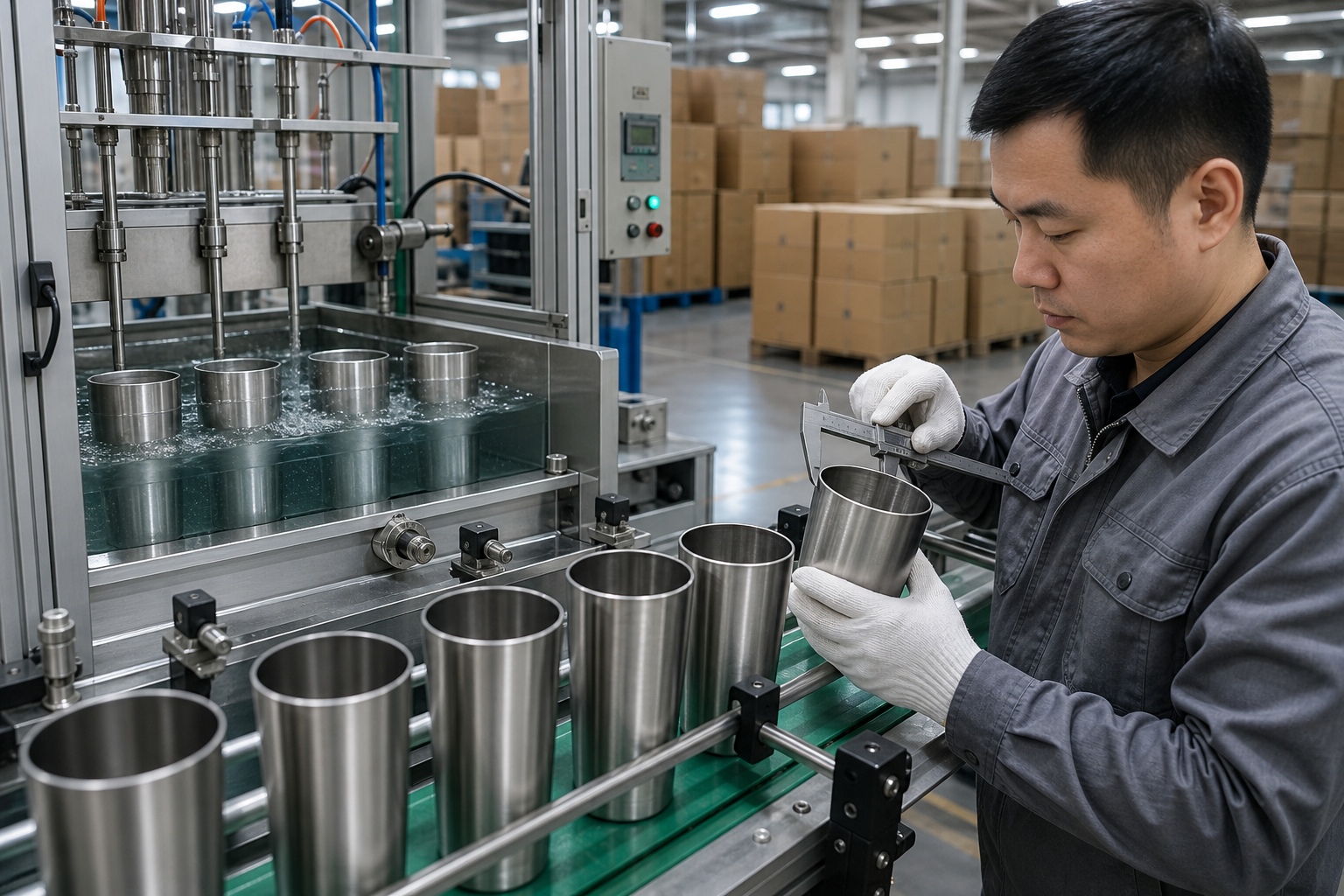
Look for proof of production control. A serious supplier should show sample lead time, mass production lead time, and capacity by line. In Zhejiang, a strong factory may run 300,000 units per month across multiple product families, and that is what separates a 1,000-piece test order from a reorder landing on time. Ask who owns the mold, who signs off pre-production samples, and who handles nonconforming stock. If the answers stay vague, you are probably not talking to a canteen supplier or beer tumbler specialist that can support repeat business. QC pulled the sample at the packing table, and the buyer flagged a 2 mm print shift before the cartons left the line.
What to ask first:
- What is your exact MOQ by decoration method?
- Do you produce in-house or subcontract printing?
- Which QC checkpoints happen before packing?
- Can you support custom canteen and customizable drinkware programs in the same plant?
If the supplier can handle a customized canteen or custom growler order with the same discipline, that usually means the operation is built for export, not just domestic trading. We run into this all the time: one buyer sent a PO with the wrong cap code, and the whole carton label had to be redone before loading.
Choose Materials That Hold Shape
Beer tumblers live or die on construction. For stainless steel, 304 is the practical default for most export programs. If the line goes into salty coastal use or long-service hospitality accounts, 316 is worth a quote, but the math does not work unless the buyer really needs that extra corrosion resistance. Wall thickness usually sits around 0.4 to 0.5 mm for mainstream double-wall tumblers. We have run 0.35 mm samples before; QC pulled the sample, dented it with a thumb press, and the buyer flagged it on the spot. Too thin feels cheap. Too heavy adds freight fast.
For beer service, temperature retention and lip comfort matter more than a glossy spec sheet. Double-wall vacuum construction cuts condensation and keeps cold drinks usable for hours, and that is the point. A clean rim and a consistent weld line matter if your buyer is a distributor canteen channel, a hospitality chain, or a retail account that checks handling quality at receiving. We once had a PO with “weld lline” typed on it; the typo was harmless, but the buyer still asked for the seam photos before release. If your line also includes custom drinkware such as a custom growler or customized growler, keep the insulation spec aligned across the range so the assortment looks like one program, not three random items.
Finish is not just cosmetic. A powder coat around 40 to 60 microns gives better scratch resistance than a thin spray finish, and brushed steel hides handling marks better than mirror polish. We measure coating with a micrometer, not by eye, because “looks fine” has sent more samples back than bad artwork. For canteen customizable programs, the same material logic applies: the product has to survive transport, shelving, and repeated use without going soft after the first month.
Practical rule: if the sample feels light, flexes under pressure, or shows weld distortion, do not fix it with branding. Redesign the body first.
Buyers in China sourcing from Zhejiang get the best result when they specify wall thickness, finish, and lid tolerance in the RFQ instead of asking the supplier to choose. We run faster when the drawing calls out the numbers: 0.45 mm body, 50 micron coat, lid tolerance within 0.3 mm. That is the right question to ask.
Branding That Survives Use
I’m rewriting the section with tighter B2B language, keeping the HTML structure intact and adding concrete factory details where the draft was generic. The main constraint is preserving every tag and the internal link while stripping the AI-style filler.Decoration is where a lot of custom drinkware programs fall apart. A logo can look clean on day one and still peel, fade, or drift a few millimeters if the supplier does not control curing and surface prep. For beer tumbler suppliers, the usual options are silkscreen, laser engraving, heat transfer, and UV print. Each one has its own MOQ, cost, and wear resistance. If you want a real comparison, read a process guide like silkscreen vs laser engraving for drinkware before you approve the artwork. QC pulled a sample off the rack last week with a 1.8 mm logo shift. That is the kind of miss that turns into a claim.
Laser engraving is usually the toughest choice on stainless steel, but it is not the right answer if the retail brief calls for a color mark. Silkscreen works well for one to three spot colors and is often the lowest-cost route on larger runs. UV print fits complex art, but it needs tighter surface control and a cleaner line. For a canteen distributor or canteen vendors program, consistency beats novelty. The logo has to sit in the same spot, at the same size, across every SKU. We run a 120 mesh screen for these jobs, and that is where the line either holds or slips.
Ask for Pantone matching, vector file checks, and a clear durability target. A factory that knows custom-logo work will tell you straight whether dishwasher cycles, abrasion, or alcohol exposure will break the finish. If the supplier cannot say what survives 20 washes at 65 C, the math does not work. For a beer tumbler suppliers program inside a broader custom drinkware line, keep the rules simple. One body style, one print system, one packaging spec. That is how you avoid mixed cartons and buyer complaints. The jig on our line keeps placement within 2 mm, and that is the standard you should ask for.
For seasonal campaigns, canteen promotional orders look easy on paper, but the real cost sits in artwork changes, plate fees, and carton upgrades. A good canteen vendor will list those separately so you can see where the margin goes. This is the wrong question to ask if you only compare unit price. We have seen a 5,000-piece order lose money because the buyer changed the logo twice and added a stronger carton after the first drop test. The quote should show those charges up front, not after the PO lands.
MOQ, Price, and Lead Time
Price only means something when the spec is locked. A basic 16 oz stainless beer tumbler with one-color print usually lands around USD 2.10 to 3.20 FOB China, but the number shifts with finish, lid type, and carton style. We check wall thickness with a micrometer before we quote, because 0.4 mm and 0.5 mm do not cost the same. Add laser engraving, premium powder coat, or a custom lid and the price moves fast. If a supplier gives you one number without steel grade, thickness, print method, and packing details, that quote is not real.
For first orders, 1,000 pieces per color or per logo position is a practical MOQ. Some beer tumbler suppliers will take 500 units, but the unit cost usually climbs enough to wipe out the saving. We have seen buyers push hard on MOQ, then come back after the setup charge is split over fewer cartons. Production after sample approval is usually 30 to 45 days. In peak season, add another 7 to 10 days for container space and export handling. The line does not move until sample sign-off, pre-production checks, and carton approval are done, and a lid torque test or a 60 cm carton drop test will stop a weak order fast. In Zhejiang and across China, the factories that keep repeat business are the ones that lock those points before the run starts.
Typical order structure:
- Sample lead time: 5 to 7 days
- Mass production: 30 to 45 days
- Standard MOQ: 1,000 units
- Factory capacity: 300,000 units per month on a mature line
If you also buy canteen custom or canteen customized products, ask whether the plant can run them under one production calendar. That is the right question. It cuts duplicate freight charges for distributor drinkware accounts that ship mixed SKUs, and it avoids a PO typo on carton count turning into a one-day delay at packing.
Check Compliance Before You Pay
For Europe and North America, compliance is not a box to tick. It decides whether the pallet clears receiving or sits at customs for 12 days. Ask for ISO 9001, BSCI if your chain requires social audits, and material declarations that back REACH for the EU. For beverage-contact parts, we still see buyers ask for LFGB on coatings, lids, and seals. If the beer tumbler has plastic parts, the supplier should name the resin and show migration test support, not hand-wave it.
QC needs numbers. AQL 2.5 is standard for major defects on finished goods, while cartons and accessory packs may run different sampling levels. Ask how they test leaks, vacuum retention, 1 m drop resistance, and print adhesion. One buyer once flagged a PO because the spec said 304 stainless but the lid insert material was left blank. That kind of typo causes real back-and-forth. If the same factory also makes a custom growler, ask whether the lab pulls the same routine for both lines or treats the tumbler as a separate setup. The answer tells you how the line is run.
Do not skip packaging. A weak inner box can wreck an otherwise good mug in sea freight or Amazon handling. If you sell through FBA, ask for carton compression targets, FNSKU label placement, and drop-test history. We ship plenty of 6-pack inner cartons, and the wrong 2 mm tray can turn into crushed corners by the time it lands in Los Angeles. A supplier exporting to the US and EU should know when foam is enough and when a molded tray saves money. This is the wrong question to ask after the goods are packed.
For a canteen manufacturer or canteen manufacturers program, the rule is the same: trace every material, keep QC repeatable, and make sure the paperwork survives customs review. QC pulled the sample, checked the lot code, and matched it to the COA before release. If that chain breaks, the shipment slows down fast.
Shortlist Suppliers With Proof
The best way to choose beer tumbler suppliers is to compare proof, not promises. Start with three suppliers from China and send each one the same RFQ: product dimensions, wall thickness, steel grade, finish, decoration method, packaging, MOQ, sample time, and mass production time. Then line up the answers side by side. We’ve seen the math fall apart fast when a seller quotes low on day one and adds laser engraving, carton fees, or extra packing charges later.
Ask for live photos from the line, not catalog shots. We want to see polishing wheels, print stations, leak-test racks, and packing benches in use. If the supplier runs both customizable canteen and customized growler orders, ask how they keep SKUs apart; one wrong bin label and the buyer flags the whole shipment. A clean factory usually has a marked pallet zone and barcode stickers on the cartons. That matters.
Use this shortlist rule: if a supplier cannot explain why the sample differs from the mass production unit, do not place the order.
That matters in Zhejiang. Strong factories move fast, but weak vendors hide behind speed. You want the same print color, same lid fit, and same box spec on the reorder, not a story. If they can hold that for a canteen promotional run and a custom drinkware run, you are dealing with a stable supplier, not a one-off line that only looks good in photos.
Source Beer Tumblers With Fewer Surprises
Send your spec, target MOQ, and packing standard. We will quote the right build, test plan, and lead time from our Zhejiang production line.
Frequently asked questions
What MOQ should I expect from beer tumbler suppliers?
For a standard stainless beer tumbler, 1,000 units per color or logo is a realistic starting point from a serious China factory. Some will accept 500 units, but the unit price usually rises by 15% to 30%, and you lose leverage on printing, cartons, and freight consolidation. If you want mixed SKUs, ask whether the plant supports a canteen custom or customizable drinkware program under one production schedule. A real beer tumbler supplier in Zhejiang should tell you the MOQ by decoration method, not just give you one blanket number.
Is stainless steel better than glass for beer tumblers?
For export drinkware, stainless steel is usually the safer business choice. It handles shipping better, survives retail handling, and supports vacuum insulation if you want colder beer for longer. 304 stainless is the practical default; 316 is used when corrosion resistance matters more. Glass looks premium, but breakage and packaging cost can wipe out the margin on distributor drinkware orders. If you are also buying a custom growler or customized growler, stainless steel gives you a more consistent platform across the range.
How do I know if a supplier in China is a real factory?
Ask for production photos, QC checkpoints, and capacity by line. A real canteen factory or beer tumbler supplier should be able to show welding, polishing, print, and packing operations, plus certificates like ISO 9001 or BSCI where relevant. You should also ask for sample lead time, mass production lead time, and who owns the mold. If the answer changes every time you ask, you are probably dealing with a trader. In Zhejiang, strong factories usually answer with exact numbers, not marketing language.
Can I combine beer tumblers with canteen orders?
Yes, if the factory has enough process control. Many buyers bundle beer tumblers with canteen custom, canteen customizable, or canteen promotional items to reduce freight and simplify vendor management. The key is whether the supplier can keep decoration, packaging, and compliance separate by SKU. A canteen distributor or canteen supplier should ask for one master PO with clear line items, not force you into one generic spec that dilutes the product. Mixed orders work best when the products share similar materials and packing logic.
What compliance documents do EU and US buyers need?
For the EU, ask for REACH-related material declarations, LFGB if you need stricter food-contact support, and full traceability for coatings, seals, and plastics. For the US, many buyers also want FDA-related material statements and carton specs if the goods go through FBA. On top of that, AQL inspection records, ISO 9001, and test reports for leak resistance and coating adhesion are useful. If your program includes customized drinkware or a custom growler, make sure every component has the same document trail, not just the main body.